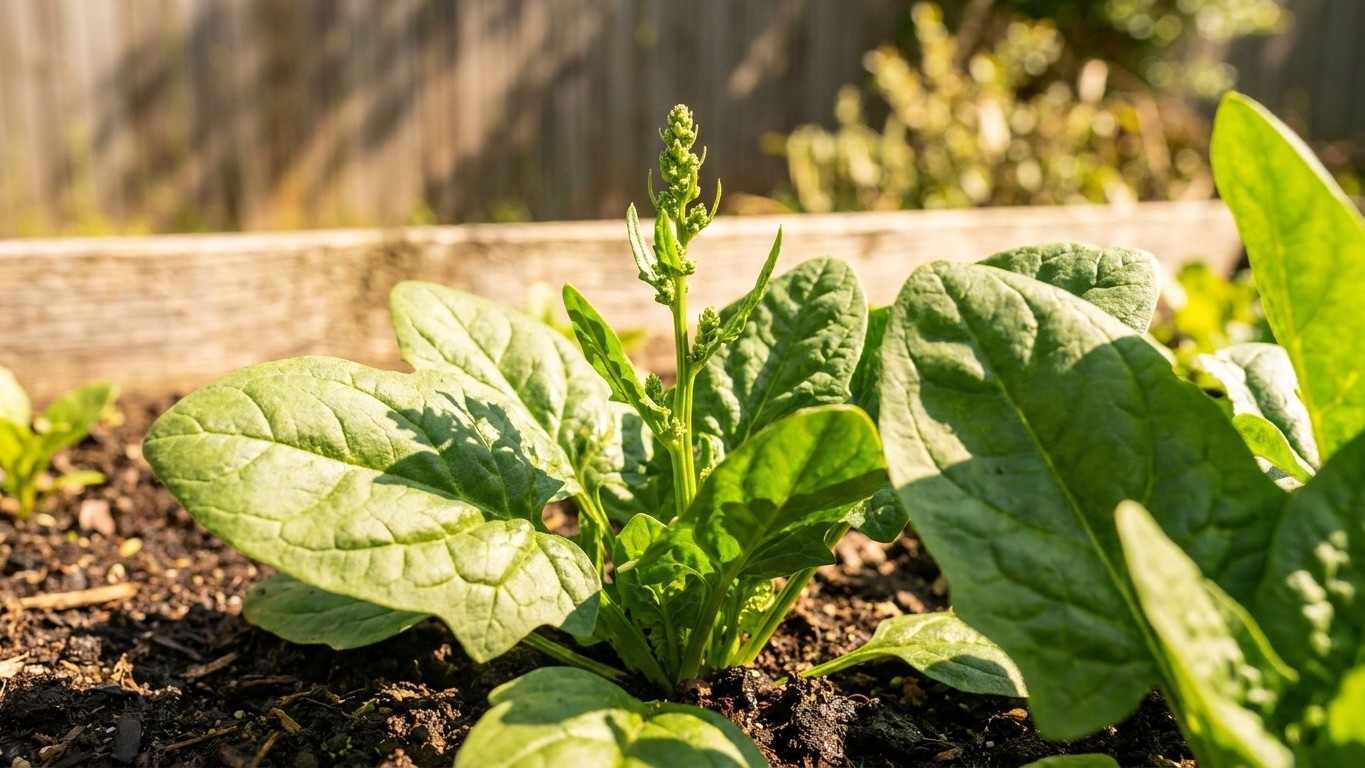

UF/IFAS Extension documents eleven garden pests across Florida, but only six of them actually feed on spinach: aphids, chilli thrips, eastern lubber grasshoppers, fall armyworm, root-knot nematodes, and whiteflies. The rest target palms, tomatoes, or cucurbits. When each one shows up depends on whether you garden in north Florida, where a real frost still shapes the calendar, or in the central and southern parts of the state, where the growing season runs backward compared to the rest of the country.
Which pests attack spinach in Florida
UF/IFAS Extension lists eleven pests for Florida gardens: aphids, chilli thrips (Scirtothrips dorsalis), cycad aulacaspis scale, eastern lubber grasshopper (Romalea microptera), fall armyworm, fire ants, hornworm caterpillars, melonworm, pickleworm, root-knot nematodes, and whiteflies. Spinach is a leafy, shallow-rooted crop grown in cool weather, and that narrows the list fast.
Cycad aulacaspis scale feeds on sago palms and other cycads, not on vegetable foliage, so it never touches a spinach bed. Hornworm caterpillars are Solanaceae specialists: they go after tomato, pepper, and eggplant leaves, and largely ignore spinach. Melonworm and pickleworm are both cucurbit feeders, built for squash, melon, and cucumber vines, so a spinach row planted well away from those crops rarely sees them. Fire ants deserve a mention because gardeners spot their mounds near beds, but they don’t feed on spinach leaves themselves. Their real role is protecting aphids and scale insects that produce honeydew, and their mounds can disturb shallow spinach roots when they build near a row.
That leaves six documented species that do feed on spinach, directly or through the root system: aphids, chilli thrips, eastern lubber grasshoppers, fall armyworm, root-knot nematodes, and whiteflies. None of the other five in the UF/IFAS list belongs on a spinach diagnosis, and treating for them wastes a spray or a trip to the garden center. Aphids and whiteflies are sap feeders that cluster on the undersides of leaves. Chilli thrips scrape at new growth and cause curling and bronzing. Eastern lubber grasshoppers are large, slow, and chew through whole sections of leaf tissue. Fall armyworm larvae feed inside the crown and leaf whorls, leaving ragged holes. Root-knot nematodes work underground, stunting the plant without leaving any visible insect at all.
This is a short list by design. UF/IFAS documents these six as feeding on garden vegetables broadly, including leafy greens like spinach, across the state. It does not publish a longer spinach-specific list, and padding it with more names from the general pest inventory would misrepresent what the source actually says.
When each one shows up, and what it does first
Spinach in Florida follows a calendar built around heat and day length, not around a single frost date. In north Florida, near the reference station used for these normals, the last spring frost falls between February 16 and March 7, and the first fall frost falls between November 26 and December 13, giving a real cool window on either side of summer. In central and south Florida the ground almost never freezes, so the season inverts: the growing months run through the cool part of the year, and summer becomes the obstacle rather than the reward.
The sowing signal for fall spinach is soil temperature, not the calendar page. Germination drops once soil runs above 80 F, so the fall window opens only after the soil has cooled below that line, not on a fixed date. Aphids and whiteflies are usually the first arrivals once seedlings are up, because both species persist year-round in Florida’s mild winters and simply move onto new tender growth as soon as it appears. Look for sticky residue on leaves, ants working the plants, or a small cloud of white insects lifting off when a leaf is brushed.
As the days lengthen and temperatures climb back toward the 75 F ceiling that spinach tolerates, chilli thrips and fall armyworm become more likely. Thrips show up as curled, silvery, distorted new leaves near the crown. Fall armyworm larvae leave ragged, irregular holes and can hollow out the plant’s center within days, since they feed heavily and grow fast in warm weather.
Eastern lubber grasshoppers tend to appear later in spring, as adults become mobile and hungry across yards and gardens; they are large enough to spot on sight, and the damage looks like whole leaf sections simply missing. Root-knot nematodes don’t have a single “arrival,” because they live in the soil year-round. Their damage shows up as stunted, wilting plants during any stretch of warm weather, worst where soil has stayed warm and moist for a long stretch, which lines up with the same warm-soil conditions that block fall germination in the first place.
Telling the damage apart from everything else
A spinach bed that looks bad isn’t automatically a pest problem. Spinach has a narrow comfort zone, best under 75 F, and a lot of what gardeners blame on insects is really heat, water, or disease pushing the plant past that line.
Wilting on a hot afternoon that recovers by evening is heat stress, not an insect, since spinach simply struggles once conditions push past its 75 F comfort range. Wilting that does not recover overnight, especially paired with yellowing lower leaves and stunted growth, points more toward root-knot nematode damage or a watering problem than toward anything chewing on the leaves.
| Symptom | Possible pest cause | Possible non-pest cause | What distinguishes it |
|---|---|---|---|
| Sticky residue, curled leaves | Aphids | None common | Visible clusters on leaf undersides |
| White insects lifting off leaves | Whiteflies | None common | Cloud of insects when disturbed |
| Ragged holes, chewed centers | Fall armyworm | Mechanical damage (wind, hail, foot traffic) | Larvae visible in whorl; mechanical damage has no droppings or larvae |
| Large missing leaf sections | Eastern lubber grasshopper | None common | Large, slow-moving insect visible on plant |
| Yellowing, stunted, non-recovering wilt | Root-knot nematode | Nutrient deficiency, poor drainage, disease | Digging a root shows galls or knots on nematode damage; deficiency shows uniform pale color across the bed |
| Curled, bronzed new growth | Chilli thrips | Herbicide drift, viral disease | Extension diagnosis needed if uncertain |
Anything with a pattern that doesn’t fit cleanly, especially discoloration spreading in blotches rather than from chewing, deserves a look from a diagnostic lab rather than a guess at home.
What actually works here, and what is a waste of time
On a cool-season crop with a short window, timing beats intervention almost every time. A floating row cover set down at sowing, before pests find the seedlings, keeps aphids, whiteflies, thrips, and armyworm moths off the plant without any product at all. Because spinach is grown for its leaves and eaten fresh, a physical barrier during the vulnerable seedling stage is usually more useful than reacting once damage appears.
Eastern lubber grasshoppers are large and slow enough to hand-pick in the early morning, when they’re sluggish, and removing nymphs before they mature cuts down the population walking through a bed later in the season. Rotating spinach away from beds that recently grew tomatoes, cucurbits, or other known nematode hosts reduces root-knot pressure, since nematodes build up wherever susceptible roots have sat in the soil.
Sowing before soil temperatures rise past 80 F, and pulling the crop before the season’s long days and heat push it toward the 75 F ceiling, matters more than any treatment applied after the fact. A gardener who plants late and lets soil warm up is fighting nematodes and heat at the same time, and no spray reverses that.
What doesn’t help: treating for pests not on this list, since fire ant bait or scale treatments do nothing for a spinach bed. Working wet soil to “get ahead” of pests compacts the root zone and stresses the plant more than most insects would. And once root-knot nematodes are established in a bed, there is no single fix within a season, since the population lives in the soil and outlasts the crop. This site does not name products, active ingredients, or dosages; what’s legally available and currently labeled for use in Florida changes, and that question belongs with a county extension office.
Where to check this for your own county
Everything above comes from UF/IFAS Extension, which documents pests at the state level. Pest pressure inside Florida varies a lot between a garden in Jacksonville, where real frost still shapes the calendar, and a garden in Miami or Fort Myers, where the season runs almost entirely through the cool months. What’s documented statewide is not the same as what’s active in one particular yard.
The single most useful next step is a call or visit to the county extension office, which can confirm what’s actually present locally and when it tends to show up there. County offices also run diagnostic labs that can confirm root-knot nematode damage from a soil or root sample, something no amount of looking at leaves from a distance can settle on its own.
If a symptom doesn’t match anything in this list, or if damage keeps recurring after a season of prevention, that’s the point to send a photo or a sample to the local office rather than guessing further from a screen.
Common questions
Do aphids and whiteflies stay active year-round in Florida?
Both persist through Florida’s mild winters far more than they would in states with hard freezes, which is part of why they’re usually the first pests to appear on new spinach growth rather than a midseason arrival.
Can spinach be grown through a Florida summer?
Not comfortably. Spinach grows best below 75 F and germination drops once soil passes 80 F, and north Florida alone averages 73.2 days a year at 90 F or higher, so summer is the obstacle season here rather than the growing season.
Does long summer daylight help or hurt spinach in Florida?
It hurts. Spinach bolts under long days combined with warmth, and the longest day at the reference location runs 13 hours and 58 minutes, well past the point where flowering gets triggered instead of leaf growth.
Is a pest found in one Florida county guaranteed to be in another?
No. UF/IFAS documents these six pests as feeding on garden vegetables across the state, but actual pressure in any one yard depends on local conditions, which is exactly what a county extension office can confirm.