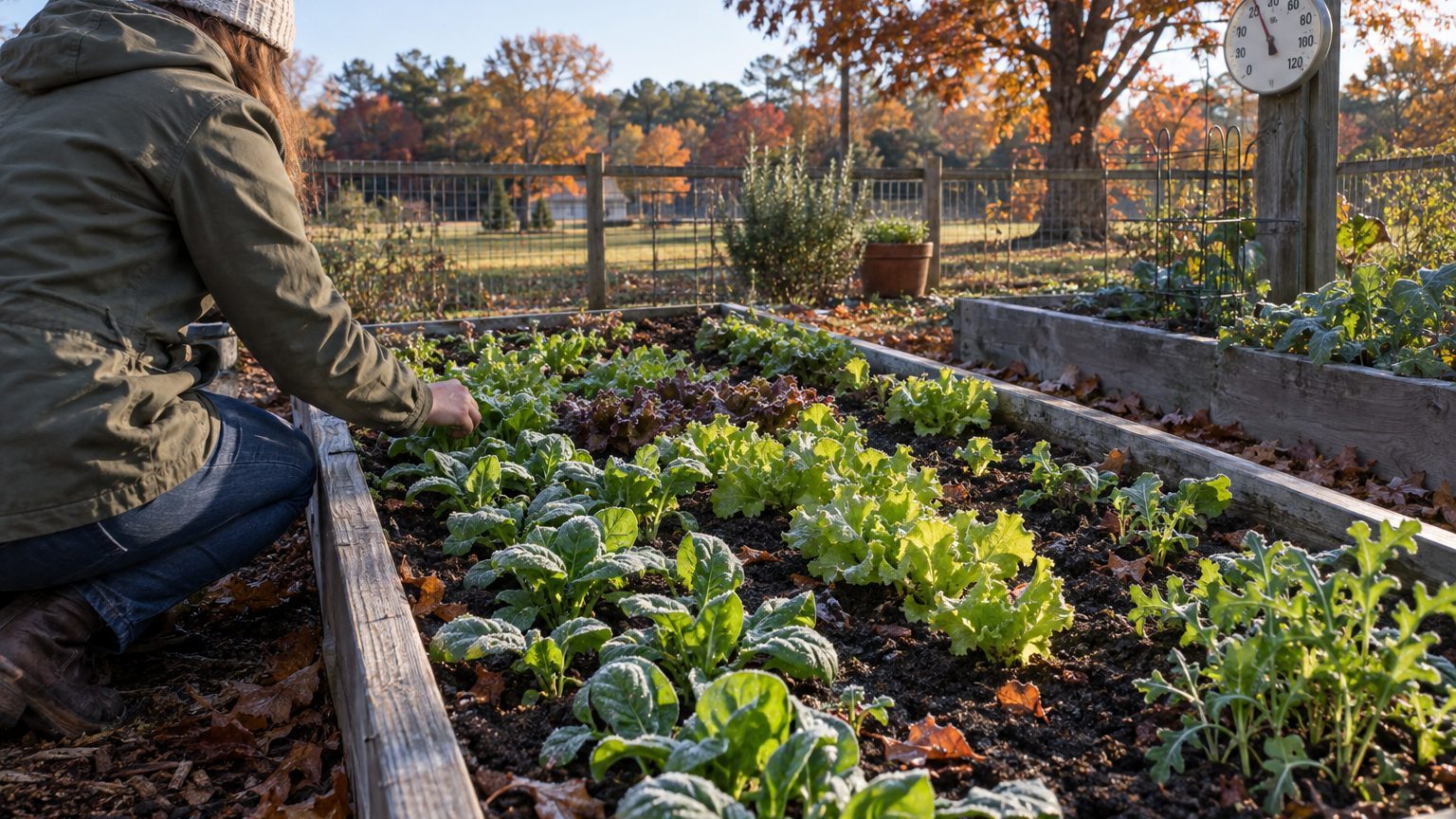

Sow winter salads in Ohio from late August through September, and finish by the first fall frost, which falls October 5 to October 15 in zone 6a. Hardy greens sown under a cold frame or low tunnel can go in a little later. Lettuce and arugula go in first, spinach and mâche last.
The short answer for Ohio
Counting back from that first frost is the whole method. The average last spring frost in zone 6a falls May 5 to May 15, and the average first fall frost falls October 5 to October 15. Both dates describe when a killing frost becomes likely. In any given year it can arrive earlier or hold off longer, so treat them as the middle of a range.
The reason to count backward is that fall plants stop growing as days shorten. A salad green sown in late August has warm soil and long days to reach good size. One sown in late October barely grows before winter. Packet days to maturity for lettuce, spinach and arugula count from sowing, but they assume spring-like growth. In fall, plan on noticeably longer.
In practice, the calendar splits by crop:
- Late August to early September: lettuce, arugula, mustard greens and other quick leaves that need time to size up before cold.
- September: kale, chard and baby-leaf mixes meant to be cut through late fall.
- Late September to early October: spinach, mâche (corn salad) and claytonia, which can sit as small plants through winter and take off in late winter.
Cold itself is rarely the limit for the toughest types. At the Columbus reference station, the mean daily minimum of the coldest month is 22.0°F. Spinach, mâche and claytonia take nights like that without help. Tender lettuce leaves do not, and they need a cover on the coldest nights. The varieties worth choosing for each slot are covered in The Best Winter Salads for Ohio, and the broader picture of growing through the season sits in Winter Salads for Ohio Gardens.
The last spring frost date matters at the other end. Fall-sown plants that overwinter wake up in March and bolt as spring warms. By the time May 5 to May 15 arrives, the bed is usually ready to hand over to summer crops.
What will not work here

Sowing after the first frost window and expecting a crop. Today is October 21, which is already past the average first frost in zone 6a. Seed scattered in an open bed now will germinate in the mild spells and then stall as days shorten. Spinach and mâche may still make it as small, dormant plants, particularly under cover. Lettuce and arugula sown this late will not size up outdoors before winter.
Head lettuce is the usual casualty. A full head needs weeks of steady growth, and in Ohio the window for that closes in October. Loose-leaf and baby-leaf types are cut young and recover, so they fit the short fall far better. Heading types belong in an early sowing under a tunnel, or in a spring bed.
August sowing has its own failure. Lettuce seed often refuses to sprout in hot soil, and midsummer beds in Ohio can stay warm well into September. Gardeners who sow on the right date and see nothing come up usually have a soil-temperature problem. Sowing in the shade of a taller crop, watering the row before and after, or starting seed indoors for a week or two helps.
Damp is the other problem. Ohio winters are cloudy and humid, and low tunnels trap that moisture. Tight spacing turns a tunnel into a mildew incubator. Leaf lettuce and spinach need air moving between plants, so thin to the spacing on the packet even when baby-leaf mixes tempt you to crowd them. Vent the cover on any day above freezing.
Finally, an average minimum of 22.0°F is the figure that decides whether a plant survives the cold here at all. A tender lettuce bed with no cover will have bad mornings. The hardiest greens shrug it off, but frozen leaves should not be picked until they thaw, or they bruise and turn slimy.
What changes across Ohio
There is no single answer for the state. USDA zones in Ohio run from 5b to 6b on the 2023 Plant Hardiness Zone Map, built on average annual extreme minimum temperatures. That is a real difference in how hard winter bites, and other parts of the territory differ. The dates above are for zone 6a, with Columbus as the reference city, so treat them as a middle case.
In the colder north and northwest, and on the higher ground of the northeast, the first fall frost tends to arrive earlier and winter lows go deeper. A gardener there should shift each sowing earlier, by a week or so, and lean harder on cover. Spinach, mâche and kale will still carry through. Lettuce is the first thing to give up.
Southern Ohio along the river sits in the warmer part of the range. Frost arrives later and winters ease off sooner, so the window stretches. Here the August heat is the bigger obstacle. Late sowings can run a little later than the middle-of-the-state calendar, and spring bolting comes earlier.
Near Lake Erie, the water slows the fall cooldown, which can delay the first frost. Local conditions can differ a lot from a few miles inland. A low spot where cold air pools frosts earlier than a slope nearby, even within one county.
To find your own zone, use the USDA Plant Hardiness Zone Map and enter your ZIP code. The map is the authority, and it takes half a minute.
Where to check this for your own county
A county recommendation beats a state one. The calendar here covers the whole state, built around zone 6a. Your county office knows the local frost pattern, the soils, and what has actually grown in nearby gardens.
Start with Ohio State University Extension. Look for its Ohio gardening calendar, then find your county office through the site. Ask the office, or look for local material, on two things:
- The planting calendar for your area, especially fall sowing dates for leafy greens and the expected first frost nearby.
- The vegetable varieties that have been trialed in your county, with notes on cold tolerance and bolting.
County staff and Master Gardener volunteers also hear which problems show up each winter, such as mildew under covers or deer in the tunnel. That advice rarely makes it into a statewide summary.
Use the state calendar as a first draft. If the county office gives a different date for fall sowing, follow the county.
Checking this against your own garden
Your own observations outrank every date here. Three are worth watching.
- Soil warmth by feel. Push your hand into the bed in the afternoon. If it feels hot, lettuce seed will struggle, so wait or shade the row. If it feels cool and pleasant, sow. A bed that stays warm longer than the neighbor’s is a sunnier, more sheltered spot, and it will stay productive later into fall.
- First true leaves. The first pair of leaves on a seedling is the seed’s own. The second pair, which look like the real plant, mean it has rooted and is ready to thin or cover. If your seedlings reach that stage by early October, the planting is on track. If they are still at seed leaves in late October, expect them to wait for late winter.
- Where frost shows first. On the first cold mornings, walk the yard and see where white frost lies on the grass. That spot is your cold pocket, and it needs cover first. The patch that stays green longest is the best place for tender lettuce.
Keep a simple note of each sowing date and what happened. After a season or two, you will have a calendar tuned to your own ground.
Common questions
Can I still sow winter salads in late October in Ohio?
Yes, with cover, and only for the toughest types. Spinach and mâche sown under a cold frame or tunnel in late October will mostly sit as small plants and start growing again in late winter. Lettuce and arugula sown this late will not give a fall harvest.
What is the last date to sow outdoors without cover?
Around the first fall frost, which falls October 5 to October 15 in zone 6a. Earlier is better for most greens. Spinach and mâche can go in right up to that window, while lettuce and arugula are best sown a month or more before it.
Do I need a tunnel or cold frame?
Not for the hardiest greens. At the Columbus reference station, the mean daily minimum of the coldest month is 22.0°F, and spinach, mâche, claytonia and kale handle that. Lettuce and other tender leaves need cover on the coldest nights, and cover also extends the harvest on everything else.
Does the calendar differ in northern and southern Ohio?
Yes. Ohio spans USDA zones 5b to 6b, so there is no single date. In the north, sow a week or so earlier and plan on cover. In the south, the window runs a little later, but August heat can make early sowings hard to germinate.