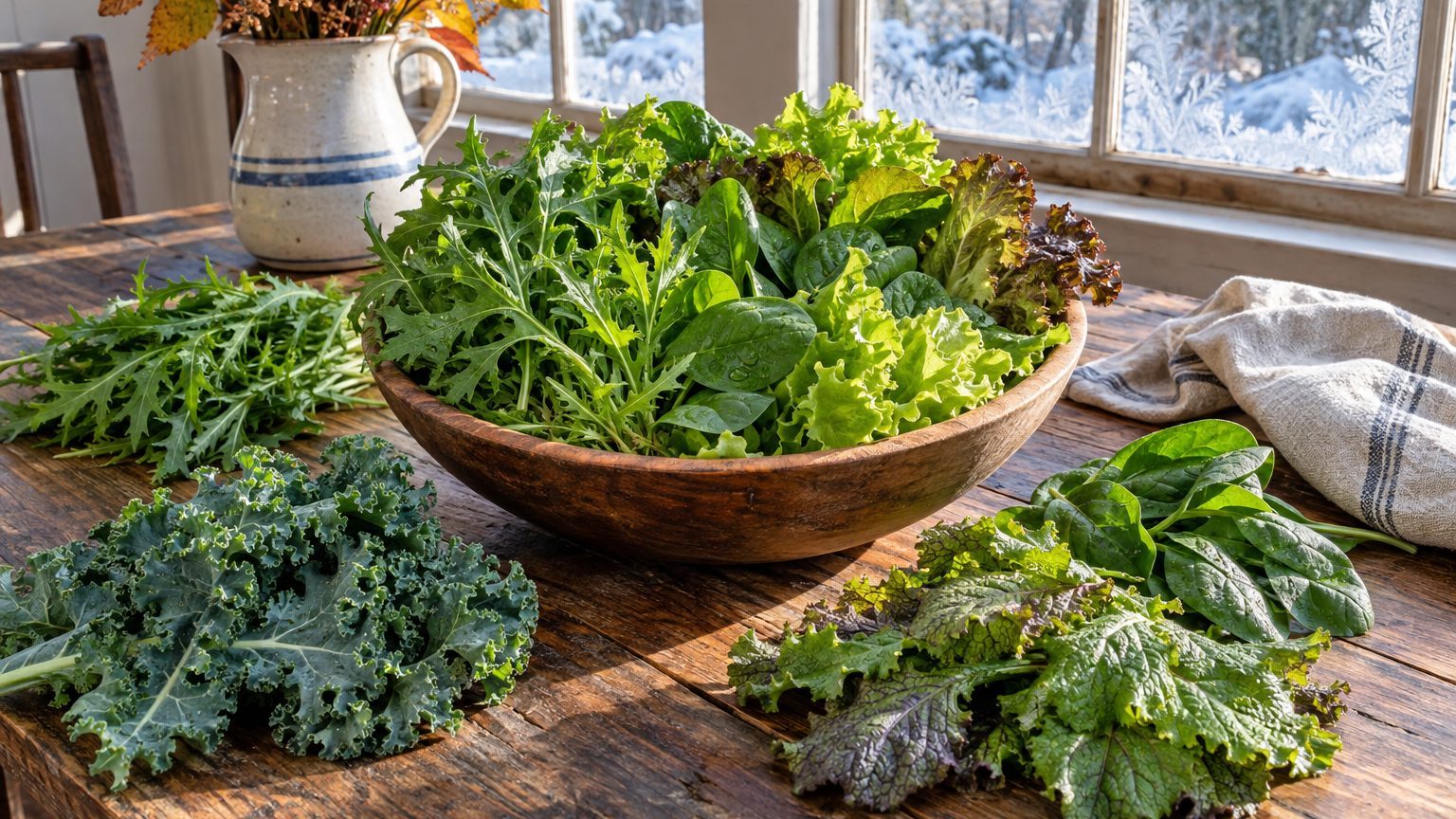

The best winter salads for Ohio are spinach, mâche, claytonia and baby kale for picking outdoors through the cold months. Mizuna, tatsoi and arugula work as quick fall cuttings, and cold-hardy lettuce and chicory do well when kept under a cover. The coldest month averages a nightly low of 22.0°F at the Columbus reference station, and most of these greens take that in stride.
The short answer for Ohio
That 22.0°F figure is the mean daily minimum of the coldest month (NOAA climate normals, 1991-2020). It describes a typical January night. It is not the record low, and it is milder than the worst night of a given winter. USDA hardiness zones, which run 5b to 6b across the state in the 2023 map, track the average yearly extreme minimum instead. Together the two numbers tell you that Ohio winters are cold enough to stop tender salads but rarely cold enough to kill the toughest ones.
The season matters as much as the cold. For zone 6a, the Ohio State University Extension gardening calendar puts the last spring frost between May 5 and May 15 and the first fall frost between October 5 and October 15. After mid-October, growth slows sharply. From roughly mid-November to late January, daylight is short, and plants mostly hold what they already have. Winter salad here is a stockpile: you grow the plant to near full size in fall, then harvest it slowly from the garden. The timing for that is laid out in When to Sow Winter Salads in Ohio.
Which type of winter salad should you grow in Ohio?
Choose by how much cold the plant tolerates and how fast it grows. The table sorts the common types.
| Type | Examples | Outdoor winter performance | Best use |
|---|---|---|---|
| Hardy leaf greens | Spinach, mâche, claytonia | Handle low-20s nights with no cover | The backbone of the winter bed |
| Kale and collards | Baby kale, young collard leaves | Very hardy, and the leaves taste sweeter after frost | Sturdy salad base |
| Mustards and Asian greens | Mizuna, tatsoi, arugula | Take frost, but hard freezes damage them uncovered | Fast fall cuttings, then cover |
| Chicories | Escarole, radicchio, frisée | Tolerate frost, and cold mellows the bitterness | Hearty, bitter salad mix |
| Cold-hardy lettuce | Small butterheads, red leaf types bred for winter | Leaf edges burn in hard cold | Needs a tunnel or cold frame |
If you grow only one type, make it spinach. It sows directly, survives uncovered, and comes back with warming days in late winter. Add mâche and claytonia and you have three crops that never need a cover to get through a typical Ohio January.
What will not work here

Heading lettuce and heading chicory sown after the end of summer will not finish. A full head of romaine or radicchio needs weeks of steady growth, and an October 5 to 15 first frost leaves little time before the short days arrive. A plant that is still small in mid-November stays small until February. Sow cut-and-come-again leaf types instead, which give a usable harvest from a young plant.
Sowing too early fails for a different reason. Lettuce seed germinates poorly when the soil is hot, and a July or early August bed in Ohio is often well past that point. Seeds that do come up bolt or turn bitter before the cool weather arrives. Spinach has the same trouble. Wait for the soil to cool, or shade the seedbed and water it, so the seed sits in a cooler spot than the open garden.
Why does a closed tunnel cause problems in an Ohio winter?
Ohio winters are damp and cloudy, and the humidity builds under plastic. Tightly spaced seedlings under a sealed cover invite gray mold and downy mildew, particularly on lettuce. Mild spells and sunny days can push a closed tunnel well above freezing in the middle of winter, so vent it on those days and close it before dusk. A row cover of lightweight fabric holds a few degrees of warmth and still lets air through, which makes it the safer choice for a first season.
Soil is the other trouble spot. Much of the state has clay-heavy ground that stays wet from November through March, and a wet bed holds cold. Mâche and spinach rot in standing water long before they freeze. A raised bed, even 6 to 8 inches high, drains faster and warms sooner after a cold snap. Heavy snow can also crush hoops, especially in the lake-effect belt of the northeast, so use sturdy supports and brush off wet snow after a big storm.
Finally, tender crops do not belong in a winter plan at all. Basil, summer lettuce varieties and anything that sulks at 32°F will fail by the first hard frost, no matter how many covers you stack on top.
What changes across Ohio
No single answer fits the state. The USDA Plant Hardiness Zone Map (2023, based on 1991-2020 normals) places Ohio in zones 5b through 6b. That spread in the average yearly extreme minimum is enough to separate a garden where kale shrugs off any winter from one where lettuce needs a tunnel. The Columbus figures above come from the middle of the range, and the frost dates cited are for zone 6a. Other parts of the state differ.
Gardeners in the north, along the lake and in the colder interior, should shift their plan toward the cold end. Sow a little earlier so plants reach size before growth stalls. Put a cover over everything beyond the hardiest greens. Expect spinach, mâche and kale to carry the winter while lettuce is a bonus. Snow cover helps here, because a blanket of snow insulates plants better than bare air, but it also adds weight to any frame.
In the south and along the Ohio River valley, winters are milder and the fall season runs longer. You can sow a little later, and more of the mustards and lettuces will hold up in the open. The risk flips to warm spells, which push plants into growth that a later freeze can damage. Elevation matters too. Hills and exposed ridges run colder than the valley below, and cold air pools in low spots on clear nights.
To find your own place in the range, look up your address on the USDA hardiness zone map. Do not guess from the nearest big city, because zone lines in Ohio run across counties.
Where to check this for your own county
Ohio State University Extension is the place to confirm anything in this article. Every county has an extension office staffed by educators and Master Gardener volunteers who know the local soil, microclimate and common problems. They answer garden questions for free and often publish short fact sheets for the growing season.
Two things are worth looking for. The first is the local planting calendar, which gives sowing windows tied to your area’s frost dates rather than the zone 6a averages used here. The second is the list of varieties that have done well in county or regional trials. A variety that holds through a northeast Ohio winter may differ from the one that performs best near the river, and trial notes often explain why.
A county recommendation beats a state one. Statewide advice, including everything above, averages a wide range of soils, elevations and winters. The local office sees what actually grew last year, and what failed, within a few miles of your yard. When the two disagree, go with the county.
It also helps to ask when the office last updated its guidance. Frost dates shift over the decades, and a calendar built on older normals can run off from current conditions.
For an overview of what to grow and why, the parent guide, Winter Salads for Ohio Gardens, covers the broader picture.
Checking this against your own garden
Your own observations outrank every date and zone above, and three of them cost nothing.
The first is soil warmth, which you can judge by feel. Push your hand a couple of inches into the bed in late summer. If it feels warm, like bathwater cooling off, lettuce and spinach seed will struggle to sprout. When it feels cool and comfortable, sowing can start. In late fall, a bed that still feels slightly warm to the touch is a sheltered spot, usually beside a south-facing wall or a fence, and it will hold greens longer than the open yard.
The second is the first true leaves. Seedlings open a pair of rounded seed leaves first, and the true leaves, which look like the adult plant, follow. Note how many days that takes after sowing in your own beds. A slow seedbed is cooler or shadier than you think, and it means later sowings will not reach size before winter. A fast one tells you that you can sow later than the calendar says.
The third is where frost shows up first on the lawn or on the car roof. White grass in the morning marks the cold pockets of the yard. The corner that stays green longest is your warmest spot, and the best place for the tender lettuce. Watch it through two or three frosts and you will know more about your microclimate than the zone map can tell you.
Common questions
Can you grow salad greens outside all winter in Ohio without protection?
Yes, with the right ones. Spinach, mâche, claytonia and kale usually survive typical Ohio winters in the open, especially under snow. Lettuce and the milder Asian greens generally need a cover, and in the coldest parts of the state a harsh winter can set back even the hardy ones.
What is the toughest winter salad green for Ohio?
Mâche, claytonia and kale rank among the hardiest. Spinach follows closely and has the most familiar flavor, so it is the easiest starting point for most gardeners.
Do I need a hoop house or cold frame?
Not to start. A bed of hardy greens does fine without one. A simple cold frame or low tunnel adds a few degrees and keeps the leaves cleaner, and it lets you harvest lettuce and mustards that would otherwise fail. Vent it on sunny days to avoid mold.
Is it too late to sow winter salads now?
By late October, it is late for most crops. Fast, hardy greens such as spinach, mâche, arugula and mizuna can still be sown under a cover, but expect smaller plants and a lighter winter harvest. Whatever you plant now will start growing again in late winter as the days lengthen.