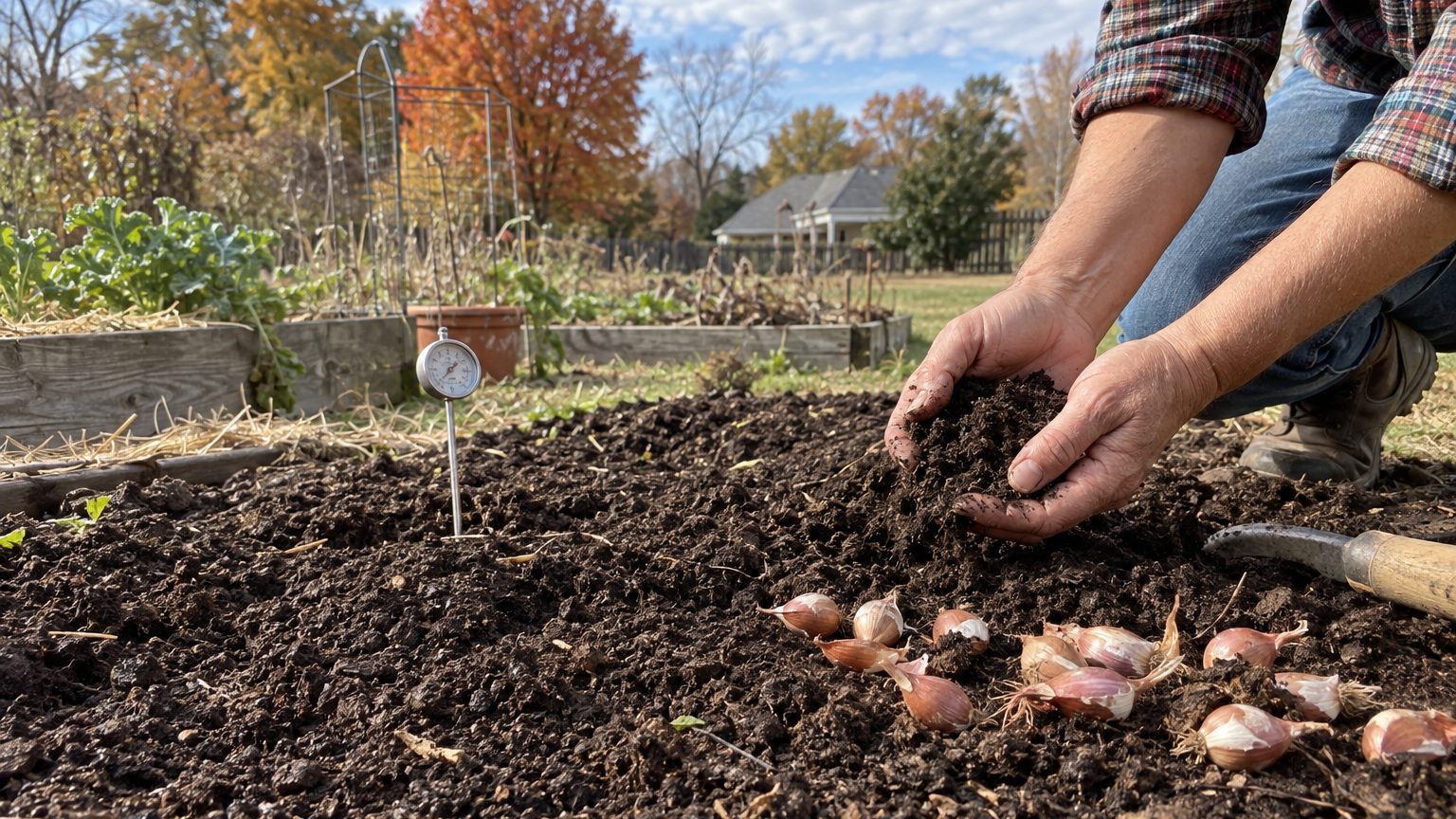

Plant shallots in New Hampshire in spring, as soon as the soil has thawed and drains freely. Near the reference weather station that means roughly mid to late April, and later inland and uphill. Fall planting can work in the milder spots, but the winters are hard enough that spring is the safer default. Choose early types, give the bulbs airflow, and ask the state extension service about varieties.
When the soil is warm enough in New Hampshire
The date most gardeners want is the last spring frost. At the airport reference station, NOAA’s 1991-2020 Climate Normals put the last 32°F freeze between April 16 and April 27, using the 30-70% probability band. That is a chance of frost, and a late cold snap can still arrive after the band closes. The station sits in a relatively mild spot. Suburban and rural gardens usually see their last frost one to two weeks later, and hill towns later still, so check your own county before you mark a calendar.
The soil follows its own schedule. It warms after the frost risk ends, and a bed can be frost-free in the air while the ground is still cold and wet. Shallot sets tolerate cold better than most vegetables and will put out roots in cool ground. What they cannot handle is cold ground that stays sodden. A set pushed into waterlogged April mud rots before it roots. So the frost date tells you when to start paying attention, and the soil itself tells you when to plant.
How do you tell the soil is ready for shallots?
Grab a handful of soil from below the surface and squeeze it. If it holds as a slick ball, wait. If it crumbles when you poke it, you can plant. A soil thermometer pushed into the soil in the morning gives a steadier reading than the air temperature does, and raised beds usually warm sooner than flat ground.
Plant the sets pointed end up, with the tip just at or below the surface. Shallots multiply, so each set becomes a cluster of bulbs, and crowding them cuts the size of every bulb. Mulch lightly once shoots are up, which also keeps weeds from stealing water from shallow roots.
Shallots share a lot with garlic. Both are alliums, both can go in the ground in autumn, and both need a bed that has not held onions, leeks, garlic or other alliums for several years. The general guide to Growing Shallots: One Bulb In, a Handful Out covers rotation and the basic planting method. The difference worth knowing is that shallots have thinner skins and less cold tolerance as small sets, so they need more protection through a New England winter than a garlic clove does.
At harvest, the tops yellow and fall over. Lift the bulbs and cure them somewhere dry, shaded and airy. Before you store anything, check each bulb. A soft neck or a moldy base ends the question, and that bulb goes in the trash or the compost. Never store it. A firm, dry bulb that looks fine can still be starting to spoil inside, so inspect the stored crop regularly rather than trusting the first look.
How long the season lasts here
The reference station has about 180 frost-free days if you count from the earlier ends of the two bands (April 16 to October 13) and about 182 from the later ends (April 27 to October 26). A garden away from the station will have fewer, sometimes by two to three weeks.
That window decides how many things you can do with it. A shallot crop planted in late April or early May reaches maturity in midsummer, which leaves plenty of room. The question is whether that room gets used. A second planting of sets in July is not a way to get a second bulb crop, because bulbs started that late do not have time to size up before the cold arrives. It does work for green shallots, harvested young as a fall crop, and for a bed of fall-planted sets that will overwinter. Succession sowing is a better fit for fast crops like lettuce and radishes. For shallots, the first planting is the one that counts.
A shorter window than the reference station’s, which is typical at elevation and in the northern part of the state, changes the tradeoffs. Sets are the dependable route because they already hold stored energy and start growing right away. Seed-grown shallots need a long head start indoors and then a transplant. That is only worth doing if you check the roots before moving them out. Look for white roots that fill the cell and hold the soil together. A seedling with thin, tangled or brown roots stalls in cold ground and loses the weeks you were trying to gain.
The same logic applies to the other end of the season. With the first fall frost band running October 13 to October 26 at the station, and earlier in colder pockets, late planting for green shallots has a hard stop. If the window in your garden looks tight, compare it with the short northern season described in Growing Shallots in Alaska, where every week of a late spring comes straight out of the crop.
A practical way to plan: write down the date you can first push a trowel into crumbly soil, and count forward to the date tops usually fall in your neighborhood. Gardeners who keep that note for two or three seasons get a better local calendar than any regional average. Your county extension office can supply the frost dates for your area and local advice on the planting window.
Heat and water in New Hampshire
Shallots are not a heat-stress crop here. The state’s summers are mostly mild, and hot spells tend to be short and scattered, so the question is not how to shade bulbs from the sun. The bigger risk in a cool, damp summer is disease. Wet foliage and slow drying favor downy mildew and gray mold on the leaves, and neck rot in the bulbs after harvest. Ripening also slows when the weather stays cloudy, which pushes the harvest later and shortens the time to cure in decent weather.
Water the crop evenly, keeping the soil moist but not soggy, and water at the soil rather than over the leaves. Give the plants room so air moves through the row. Stop watering once the tops start to fall over, since wet soil around a maturing bulb invites rot. If a rainy stretch hits at harvest time, lift the bulbs anyway and cure them under cover.
Should you plant shallots in fall or spring in New Hampshire?
The winter decides it. The mean daily minimum in the coldest month at Manchester is 17.1°F, and USDA’s 2023 Plant Hardiness Zone Map puts the state across zones 3b to 6a. That is a wide spread, and the difference matters. Where the ground freezes hard and stays wet through thaws, autumn-planted sets can rot or be heaved up out of the soil by repeated freezing and thawing. Spring planting avoids that. Where winters are milder and the soil drains quickly, fall planting produces larger bulbs that mature earlier, which is the reason to do it at all.
| Situation | Better choice | Why |
|---|---|---|
| Heavy, wet soil or a cold hill site | Spring | Sets rot or heave over the winter |
| Well-drained raised bed in the milder south | Fall, with a thick straw mulch | Earlier, larger bulbs the next summer |
| Unsure of the site | Spring | Lower risk of losing the whole planting |
If you try fall planting, put a few sets in first and see what comes through the winter before committing the whole bed. Gardeners in much colder climates face a harsher version of the same problem, and Growing Shallots in Wisconsin shows how they handle it.
Which shallots suit New Hampshire
Choose by type. A short season favors the earliest-maturing types, which are the ones that finish before cold and wet weather return in autumn. In a cool, humid climate, disease resistance comes first, because mildew and neck rot do more damage here than heat does. Look for types described as resistant or tolerant of mildew and for sets with firm, dry skins. If the site is humid or shaded, add airflow with wider spacing and open rows.
Sets that multiply into clusters are the surest bet for most home gardens, because they establish quickly and need no indoor head start. Seed-grown shallots are an option for gardeners who want to start inexpensively and have a bright indoor space. They take more handling and have to be checked at transplant time, which matters on a short season.
Variety names are a different matter, and it makes sense to leave them out. A name that does well in one county can fail in the next, and the only recommendation worth trusting comes from a local trial. University of New Hampshire Extension can tell you which named varieties have done well in the state, and your county office can narrow that to your own conditions. Ask them about earliness and mildew tolerance before you order anything.
Whatever you plant, save the best bulbs from your own harvest to replant, since shallots multiply year to year. Choose the firmest, driest ones with no soft spots, and discard any with signs of mold. Storing them for replanting follows the same rule as eating: inspect, and trust the inspection over appearances.
Common questions
When should I plant shallots in New Hampshire?
Plant in spring once the soil is thawed and crumbles in your hand. Near the reference station the last 32°F freeze falls between April 16 and April 27. Gardens inland, uphill or in the suburbs usually see it later, so plan on a week or two after those dates.
Is fall planting worth trying?
Only on well-drained ground in a milder part of the state, with a thick mulch. In colder, wetter sites the sets can rot or heave, and spring planting is the safer choice. Try a small test row before planting a whole bed.
Can I replant bulbs from my own harvest?
Yes. Shallots multiply, so a clean bulb becomes a cluster. Choose firm, dry bulbs with no soft necks and no mold at the base. Anything doubtful goes out.
What does a bad bulb look like in storage?
A soft neck, a damp or moldy base, or a bulb that gives under pressure. Any of these means the bulb is finished, and it should be discarded rather than trimmed or cooked. Check stored bulbs regularly, because spoilage can start where you cannot see it.
The USDA zone range of 3b to 6a is a statewide spread, and the gap between its ends is larger than the gap between many states. A garden in the far north and one near the coast can be in different growing worlds, so the local extension office is the best place to start.