
Across most of New Mexico’s lower, milder ground, plant shallots in fall. Where winters run hard and the soil stays frozen or soggy, plant in early spring. At the Albuquerque reference station, the last spring freeze falls between March 31 and April 12, and the first fall freeze between October 29 and November 9. Those dates, adjusted for your elevation, decide which season suits your bed.
When the soil is warm enough in New Mexico
The last spring freeze at the Albuquerque reference station falls between March 31 and April 12, according to the NOAA NCEI U.S. Climate Normals for 1991-2020 (the 30 to 70 percent probability band for a 32 F freeze). Treat it as odds. A freeze can still arrive after that window in any given year. These are airport numbers, too. Suburban and rural gardens usually see the last spring frost one to two weeks later, and high-country gardens later still, so check the dates for your own county before you mark a calendar.
How do you time spring planting?
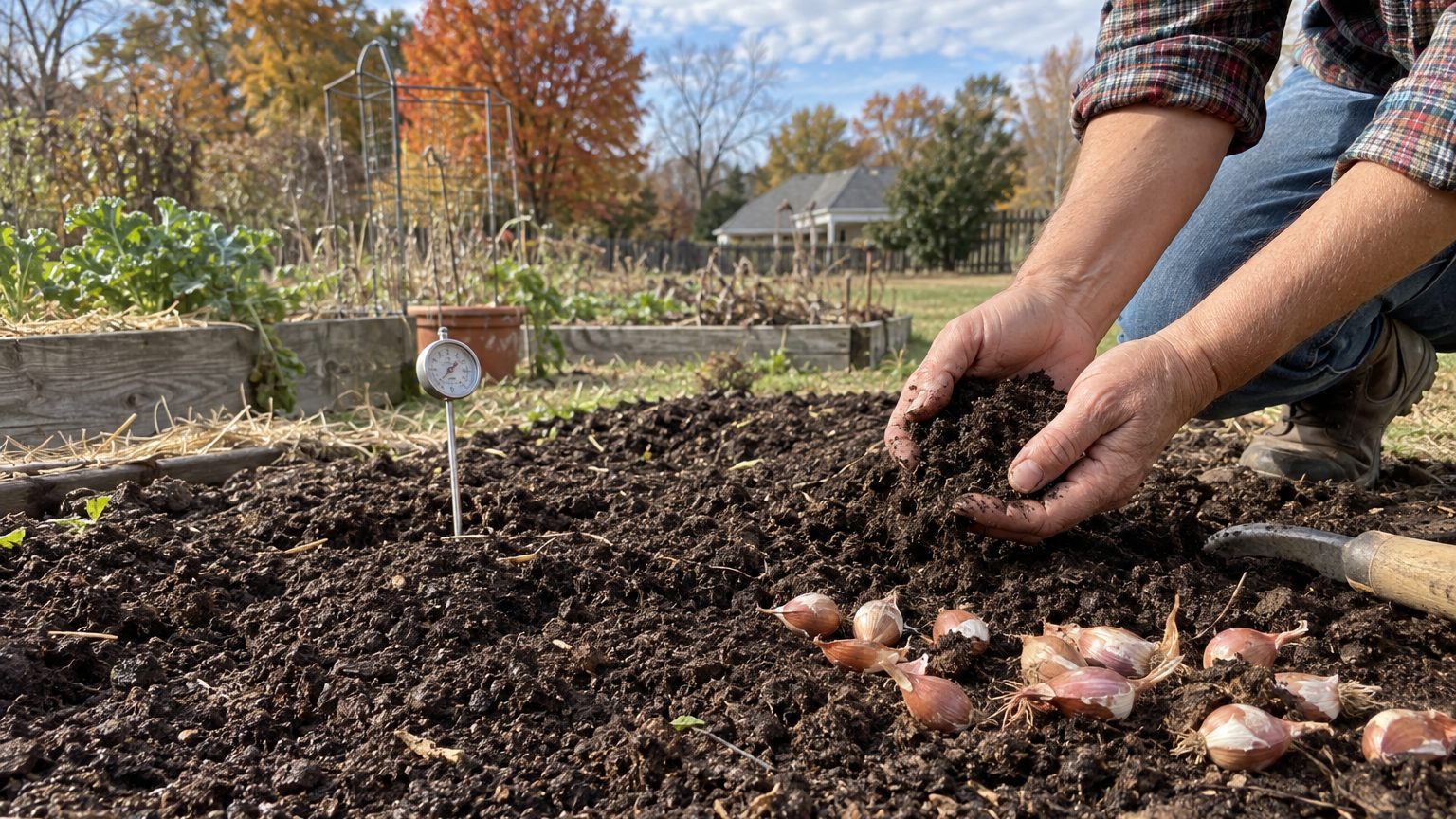
Shallot sets shrug off light frost, so you do not have to wait for the last freeze to pass. What they need is soil you can work. Squeeze a handful: if it crumbles and does not drip or hold a hard frozen clod, it is ready. Soil temperature trails the air by a few weeks, which means the ground is still cool when the frost risk ends and warms steadily after. That lag works in your favor. Cool soil lets roots establish first, and the warm soil that follows drives the leaf growth that builds the bulb.
In the Rio Grande valley that workable window opens in late winter to early spring. In the mountains and on the high plains, expect April or later. Plant sets with the tip just at or barely below the surface, because shallots are shallow-rooted and a deeply buried set struggles.
When should shallots go in the ground in fall?
Fall planting works on the reverse logic. Summer heat has to leave the soil first, and the first fall freeze window (October 29 to November 9 at the same station) is the marker. Aim to plant a few weeks before the ground freezes, early enough for roots to form and late enough that the tops barely grow. In Albuquerque-type conditions that points to October into early November. At higher elevations, where the ground freezes sooner, plant in September or early October.
The routine is much like growing shallots anywhere: plant one bulb, harvest a cluster. Garlic follows a similar autumn schedule, but shallot sets are smaller and sit shallower, so they are more prone to heaving out of the soil during freeze and thaw cycles. A layer of straw after the ground cools helps hold them in place.
Curing and storage deserve care. Once the tops fall over and dry, pull the bulbs and cure them in shade with good airflow. Before you store any, look at each one. The neck should be tight and dry, the skins papery, and the base firm and clean. A soft neck or a moldy base ends the question: that bulb goes in the trash, not the pantry.
How long the season lasts here
The reference station has roughly 200 to 223 frost-free days between the mean last spring freeze and the mean first fall freeze. That is a long window by northern standards, and it is the main reason New Mexico’s valleys can handle either planting season. Gardens outside the valleys get less. A garden a thousand feet or more above the Albuquerque airport can lose weeks at both ends, and a rural bed a few miles out of town often loses one to two weeks too.
A long window allows a second planting. Gardeners in the low and middle elevations can put sets in the ground in fall for early, larger bulbs, then add a spring planting to stagger the harvest. Shallots form bulbs in response to lengthening days, so a set planted late in spring has little time to build leaves before bulbing begins. Late plantings give smaller bulbs, though they still make fine green shallots for the kitchen. If you want a staggered supply, the best approach is to plant in two or three batches a couple of weeks apart early in the season, and the succession sowing approach used for other crops applies here with that day-length limit in mind.
A short window works differently. In high-country gardens, the first planting is the only planting, so the bulbs need every week they can get. This is where transplanting earns its place. Seed-grown shallots started indoors in late winter reach the garden with a head start, and the root check matters. Slide a plant out of its cell before transplant day. White roots holding the soil together are ready to go. A tangled, circling mass of roots has been in the flat too long and will take longer to recover. In a lowland garden with 200 or more frost-free days, direct sowing or planting sets often does just as well and skips that step.
Heat and water in New Mexico
Winter cold is the first thing to check, since it decides autumn against spring. The mean daily minimum in the coldest month at the Albuquerque reference station is 26.4 F. That is cold enough to stop growth but mild enough that the ground in the valley does not freeze hard for long, so fall-planted sets root in and wait. The state is not all valley, though. The USDA Plant Hardiness Zone Map (2023, built on 1991-2020 normals) places New Mexico anywhere from zone 4b to 9a, based on the average annual extreme minimum temperature. Zone 4b gardens in the northern mountains face a different winter from zone 8 gardens in the south.
| Winter conditions | Safer planting season | What goes wrong otherwise |
|---|---|---|
| Mild, ground rarely frozen for long (low valleys and southern lowlands) | Fall | Spring plantings bulb smaller because heat arrives quickly |
| Cold with repeated freeze and thaw (middle elevations) | Fall with mulch, or spring if the bed drains poorly | Sets heave out of the soil and dry out |
| Hard freeze, wet or snowy ground (northern mountains, high plains) | Spring | Fall sets rot in cold, saturated soil or heave |
Water is less of a problem in this state than gardeners expect. Much of New Mexico is dry, so winter rot is mostly a drainage story: heavy clay, a low spot where snowmelt collects, or irrigation left running into cold weather. Raised beds or a ridge of loose soil keep sets above standing water. Drip lines beat overhead watering because wet foliage and bulbs invite disease, and they use less water in a state where every gallon counts.
Heat arrives fast in the lowlands. Summers there are hot, and plants that have not grown enough leaves before bulbing starts will finish small, because each leaf contributes to a layer of the bulb. This is the argument for fall planting where winters allow it, since the roots and early growth are already in place when the days lengthen. For spring plantings, get sets in as early as the soil permits. Mulch holds soil moisture and shades the roots, and a bit of afternoon shade cloth helps in the hottest low-desert beds. Water deeply and less often, then ease off as the tops begin to yellow so the bulbs can finish and cure properly.
Late-summer monsoon storms are the last concern. Rain on bulbs that are still in the ground or curing outside is an invitation to rot, so pull them when the tops fall and cure them under cover. Gardeners next door in the low desert face an even harder summer, and growing shallots in Arizona shows how heat pushes the whole calendar earlier. For the opposite problem, where humidity and disease set the rules, look at growing shallots in North Carolina.
Which shallots suit New Mexico
Choose by type, and let your elevation and winter set the criteria. Where the season is short, in the northern mountains and high plains, favor the earliest-maturing types, whether grown from sets or from seed. They need to bulb before the heat and the end of the window catch them. A seed-grown type started indoors and transplanted can make up weeks, and sets planted at the first workable soil in spring are the other route.
Where summers are hot, which describes the southern and lowland valleys, look for types with strong, upright foliage and a habit of finishing cleanly. Then help them with the garden itself. Give each cluster room for airflow, mulch to cool the root zone, and an afternoon shade cloth in the harshest spots. A plant that stays cooler at the root keeps growing longer and builds a bigger bulb.
New Mexico is dry compared with much of the country, so disease pressure is lower than in humid states. It is not zero. Irrigated beds, a wet spring, and monsoon storms around harvest all raise the odds of fungal problems, so disease resistance is a reasonable second criterion, and good habits do the rest: rotate shallots away from onions, garlic, and leeks for a few years, since all of them share the same soil diseases, and clear old plant debris.
Skip variety names and go local. A cultivar that thrives at 5,000 feet near Albuquerque can fail at 7,000 feet near Taos, and the reverse is just as likely. The only recommendation worth trusting is one tested in beds like yours. Your county office at New Mexico State University’s College of Agricultural, Consumer and Environmental Sciences can tell you which varieties have been trialed in your part of the state and where to buy planting stock suited to it.
Buy sets or seed from a seed company rather than planting grocery-store shallots. Store-bought bulbs may carry disease and are not selected for your climate. Whatever you buy, check each bulb before planting: firm, dry, free of soft spots or mold.
Common questions
When should I plant shallots near Albuquerque?
Fall planting from October into early November suits the valley, since the first fall freeze at the reference station falls between October 29 and November 9. A spring planting as soon as the soil is workable also works. Gardens away from the airport run one to two weeks later in spring and earlier in fall, so adjust for your location.
Will fall-planted shallots survive winter in northern New Mexico?
It depends on elevation. Zones run from 4b to 9a across the state, and in the cold, snowy north, fall sets risk rot in saturated soil or heaving from freeze and thaw. Spring planting is the safer call there. If you want to try fall, use a well-drained raised bed and mulch heavily after the ground cools.
Do shallots need much water in the desert?
They need steady moisture while the leaves are growing, delivered deeply and not too often, ideally by drip. Cut back as the tops yellow so the bulbs can finish and cure. In winter, the risk is too much water in cold soil, not too little.
Can I grow shallots from seed in New Mexico?
Yes. Seed-grown shallots started indoors in late winter and transplanted early work well, especially in short-season high-country gardens where a head start matters. Check the roots before planting and handle them gently. Lowland gardeners with a longer window can often sow or plant sets directly instead.