
Shallots grow well in Arizona, but the calendar that works in most of the country doesn’t apply here. In the low desert, summer heat sets the limits, not winter cold. The reference station in Phoenix recorded 32°F in only 6 of 30 springs. Plant for the cool season, harvest before the furnace turns on, and treat the high country as a different state. For the full crop picture, see Growing Shallots: One Bulb In, a Handful Out.
When the soil is warm enough in Arizona
The date question has an odd answer in the low desert: there is no frost date to count from. NOAA’s 1991-2020 Climate Normals and daily records for the Phoenix station (USW00023183) show no freeze in most years. A rare cold snap can bring 32°F between late December and mid January. A frost date is a probability, not a promise, and here the probability is so low that it can’t anchor a planting schedule.
Frost was only ever a proxy anyway. Shallots care about soil temperature, and in most of the country soil warms after the last freeze, so gardeners wait for the frost to pass and then for the ground to follow. In Phoenix the sequence runs the other way. The soil is too hot for much of the year, and the question becomes when it cools enough for roots to establish. That puts planting in autumn, after the worst of summer has broken, and the bulbs spend the mild winter building roots and tops. Sets planted into hot soil sulk, dry out, or rot when irrigation is heavy.
Why a frost-based calendar fails here
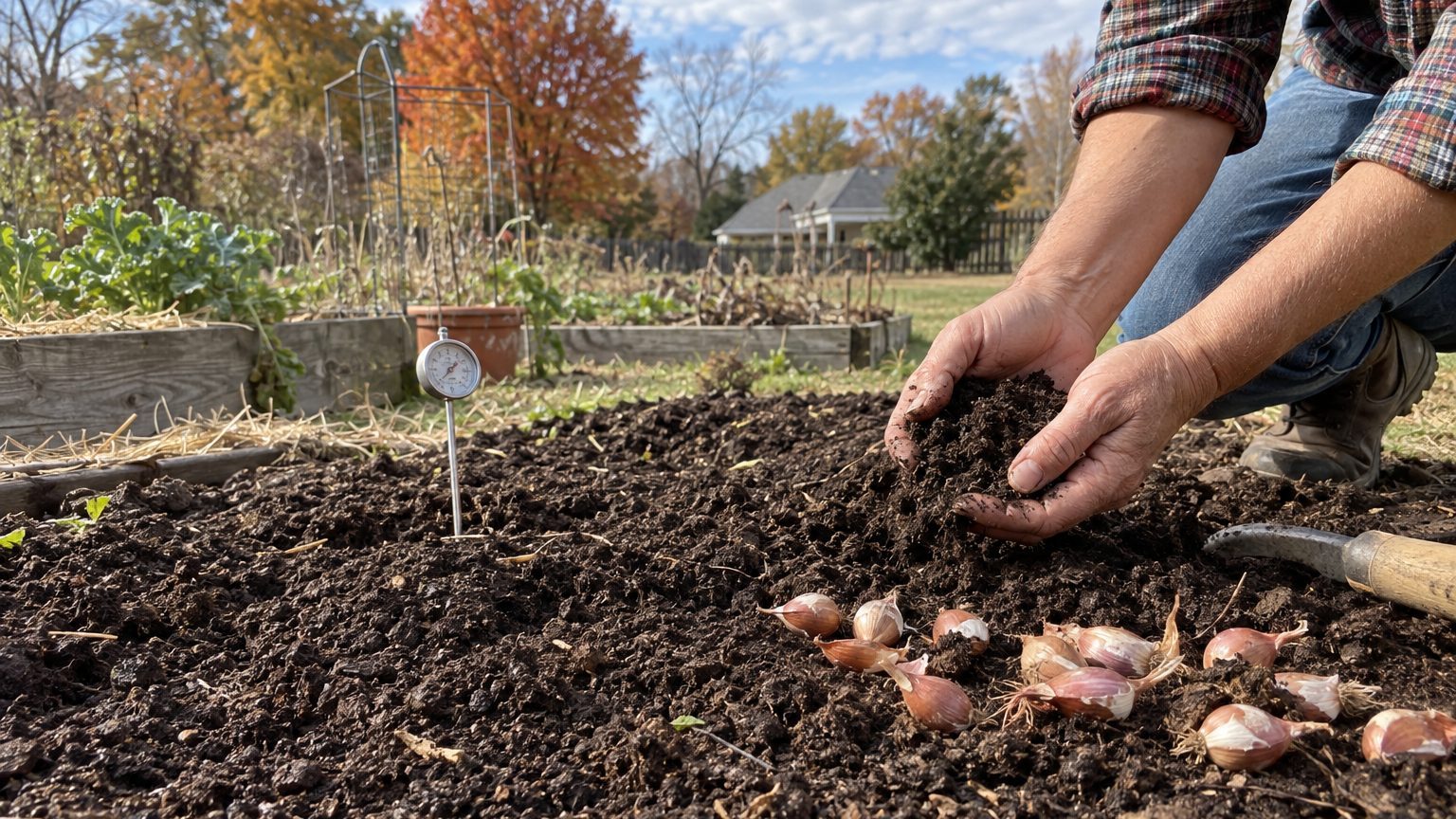
NOAA lists the frost-free season at the Phoenix station as 365 days. Any calendar built on “weeks after last frost” would be fiction. A better marker is the soil itself: if the top few inches still feel warm to the hand in the afternoon, wait. Watching a cheap soil thermometer for a week or two of steady cooling beats any printed date, and the dates differ across the Phoenix valley, Tucson, Yuma and the foothills.
The coldest-month figure explains why autumn works. The mean daily minimum of the coldest month at the Phoenix reference station is 45.3°F. Fall-planted shallots are rarely stressed by freezing at that level. They keep growing slowly through winter, which is how autumn planting produces larger, earlier bulbs than a spring planting squeezed in before the heat arrives.
What carries over from garlic
Much of the practice overlaps with garlic: autumn planting, curing, storage and allium rotation. The garlic section of this site covers those in depth, so this page won’t repeat them. The difference with shallots is mostly in scale and habit. Each planted bulb divides into a cluster, so spacing matters, and the tops are thinner and fall over earlier. Curing is easier in dry desert air, but keep the bulbs in shade, because direct sun on a pile of harvested shallots can scald them.
When you inspect cured bulbs, press the neck and check the base. A soft neck or a moldy base ends the question: that bulb goes to the compost, not the kitchen. A bulb that looks sound isn’t proof that it is sound, so handle each one before storing it.
How long the season lasts here
The usual subtraction (first fall frost minus last spring frost) doesn’t work in the low desert, because the facts for this territory don’t supply two dates. The spring figure is “no freeze in most years.” The fall one is “no reliable fall freeze.” NOAA’s frost-free season for Phoenix is 365 days, a number that is technically correct and useless for planning. The real window is the cool season between the end of the intense heat and its return. This page won’t put a day count on it, because the frost record can’t measure it.
What a long window allows is the point. In the low desert, the cool season is long enough to stagger plantings. A few bulbs set out every couple of weeks through the cooler stretch spread out the harvest and hedge against one bad week of weather. A spring sowing, by contrast, runs into rising heat before the bulbs size up. A well-timed autumn planting is the main event; spring is the backup, and an early spring planting of transplants is worth it only if the soil is workable and the tops can finish before it gets hot. The succession sowing guide on this site explains how to space those plantings.
Transplanting makes sense here for one reason: the window is generous at the front end. Starting bulbs in a protected spot and moving them out once the soil cools lets you avoid the hottest weeks without losing the cool season. Do the root check when you move them. White, firm roots mean the transplant is ready. Brown, soft or sparse roots mean waiting longer.
The high country is another story. Flagstaff and the northern plateaus freeze hard, and their windows are short. Gardeners there plant the way northern states do: the first sowing is often the only one, and a transplant has to earn its place. The USDA Plant Hardiness Zone Map (2023, built on average annual extreme minimum temperature) spans 4b to 10b across Arizona. That is a range, not a single zone, and the reference station for this page is Phoenix. If you garden anywhere else, treat the figures here as the low-desert case.
Heat and water in Arizona
This page doesn’t carry a verified count of days above 90°F or a summer rainfall total for the reference station, so it won’t quote either. Any number offered without a source would be a guess. The climate pattern itself isn’t in dispute: long, extreme summers, a monsoon season with pulses of humid air and sudden storms, and mild winters. Those are enough to explain the planting decision.
Autumn against spring comes down to the winter low. Where the ground freezes hard and stays wet, autumn-planted sets rot or heave out of the soil, and spring is the safer call. That describes the Arizona high country and much of the northern United States. A mild winter flips it. The Phoenix reference figure of 45.3°F for the coldest month means the soil never locks up, so autumn planting gives the larger, earlier bulbs that the method is known for. A cooler, damper climate has its own problems, and the page on Growing Shallots in New Jersey shows how a freezing, wet winter changes the answer. For a humid-summer case, look at Growing Shallots in Georgia.
| Factor | Low desert (Phoenix reference) | High country (Flagstaff area) |
|---|---|---|
| Winter cold | Mean daily minimum of the coldest month: 45.3°F | Hard freezes, ground can stay frozen |
| Safer planting season | Autumn | Spring, as soon as soil can be worked |
| Main risk | Summer heat shortening the season | Frost damage, short season |
Water is where the desert gardener has the most control. Shallots have shallow roots, so deep, infrequent soaking beats daily sprinkling, and drip lines keep the foliage dry. Mulch keeps the root zone cooler and cuts evaporation. As the tops yellow and fall over, ease off the water so the bulbs can cure. During monsoon season, wet soil plus heat is the setup for rot, so check drainage and skip irrigation after a storm. If a disease problem appears, the practice to reach for is rotation away from other alliums, not a product off the shelf.
Which shallots suit Arizona
Choose by type, not by cultivar name. This page can’t verify which named varieties have been trialled in Arizona, and a made-up recommendation is the quickest way to lose a gardener’s trust. The University of Arizona Cooperative Extension publishes what has performed in the state’s own conditions, and its county offices know the difference between Yuma, Tucson, the Verde Valley and Flagstaff. That local knowledge outweighs anything a general page can offer.
The types to look for follow from the climate. In the low desert, a short effective season favors the earliest-maturing types, the ones that finish bulbing before the heat arrives. Shallots that tolerate heat and have good airflow around the bulbs also do better, and the tolerance can be improved with spacing, mulch and afternoon shade at the root zone. Types sold as suited to mild winters, often described as short-day or day-neutral, make sense for the low desert, where daylight in the cool season is shorter than in northern states. In the high country, the criteria change: choose types that handle cold, and plan on spring planting.
Disease resistance matters less in a dry climate than in a humid one, but it isn’t irrelevant. Monsoon moisture and irrigation can create the conditions for fungal trouble, so a type that handles wet spells is worth asking about. Buy planting stock from a source that sells it for planting, not grocery-store bulbs, which may be treated to resist sprouting or may carry disease.
Both bulb-grown shallots and seed-grown types exist, and each suits a different gardener. Bulb-grown types are the faster route, and they are the usual choice for autumn planting. Seed-grown types start from tiny plants, which means more time in the ground. In either case, rotate: don’t plant shallots where garlic, onions or leeks grew recently, and see the garlic section of this site for how that rotation works.
Common questions
Can I plant shallots in Arizona in spring?
In the low desert it is a gamble. Spring plantings run into rising heat before the bulbs size up, so autumn planting is the main plan. In the high country, spring is the right season, because the ground freezes hard in winter.
Do shallots need a freeze to grow well?
No. The Phoenix reference station shows no freeze in most years, and fall-planted shallots grow through mild winters. A rare cold snap can bring 32°F between late December and mid January, and it is a risk for the high country far more than for the valley.
How do I know if a cured shallot is safe to store and eat?
Inspect each bulb by hand. A soft neck or a moldy base ends the question, and a bulb that looks sound isn’t proven sound. Cure in shade with good airflow, and check stored bulbs regularly rather than trusting a calendar.
Where do I find varieties that have been trialled in Arizona?
Start with the University of Arizona Cooperative Extension. Its county offices can tell you which types have worked where you live, from the low desert to the high country.