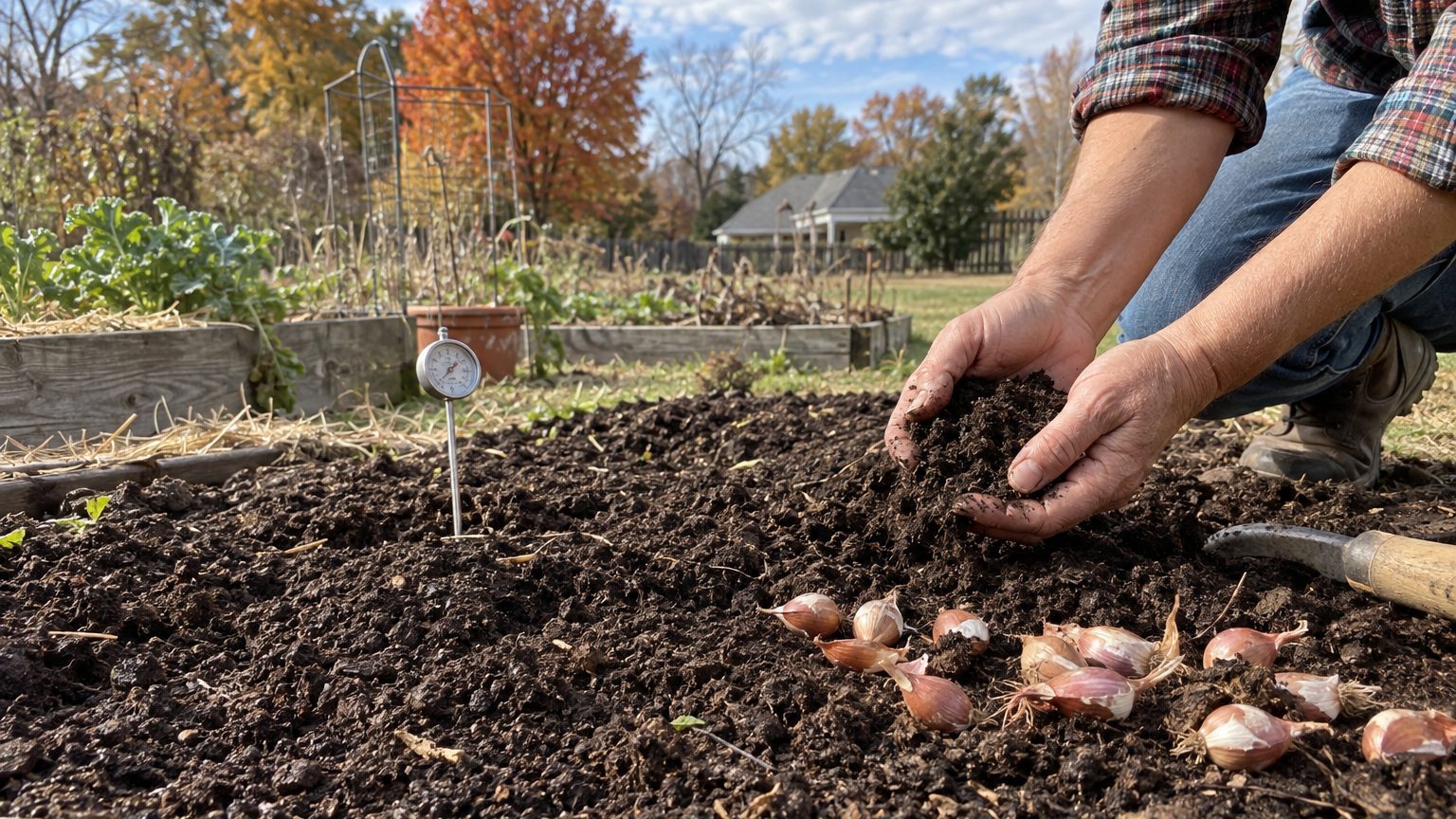

Shallots grow well in Ohio, and the calendar gives you two options. Plant sets in spring as soon as the soil can be worked, or plant in fall a few weeks after the first frost if the bed drains well. Spring is the safer call on heavy, wet clay and in the colder north. Humid summers set the real risk, so drainage and airflow matter more than heat.
When the soil is warm enough in Ohio
In zone 6a, the Ohio State University Extension Ohio Gardening Calendar puts the last spring frost between May 5 and May 15. That is an average, and some springs bring a frost after the window closes. Shallots don’t wait for that date, though. Soil condition decides the planting day, and the frost window is a reference point for everything else in the garden.
Sets, the small bulbs most Ohio gardeners plant, handle light frost without trouble. A bed still saturated from snowmelt is another matter, because roots need air and a cold, soggy bed invites rot. Wait until a handful of soil crumbles instead of smearing. In much of Ohio that happens from late March into April, weeks before the frost window ends, and a few days earlier in the south than along Lake Erie.
How do you tell when the bed is ready?
Squeeze a handful from a few inches down. If it holds a wet, slick ball, leave it alone and don’t walk on the bed, since compaction lasts all season. If it breaks apart, plant. Raised beds and gentle slopes dry out first, which is one reason experienced growers in clay country favor them.
Seed-grown shallots and indoor-started seedlings follow a different rule. Young seedlings are tender, so they go out after hard freezes are behind you, which brings the May 5 to May 15 window back into play. Harden them off for a week before planting.
Can you plant shallots in fall in Ohio?
Yes, and the logic matches garlic. Plant after the first fall frost window of October 5 to October 15, so roots form but tops don’t race ahead, then mulch once the ground cools. The garlic guides on this site cover depth, mulch and timing in detail. Shallot sets are smaller than garlic cloves, so they sit closer to the surface and heave more easily in freeze-thaw cycles. Mulch matters even more for them.
Whichever season you choose, keep alliums out of a bed where onions, garlic or leeks grew in the last few years. The rotation advice in the garlic guides applies to shallots without changes. For the crop in general, see Growing Shallots: One Bulb In, a Handful Out.
How long the season lasts here
Ohio State University Extension’s calendar for zone 6a gives a last spring frost of May 5 to May 15 and a first fall frost of October 5 to October 15. That is a comfortable window for a crop that finishes in midsummer.
What does that length allow? First, a real succession. Plant sets in batches two or three weeks apart from April into early May, and you can pull some young as green shallots while the main planting keeps sizing up. The succession sowing guide on this site lays out the spacing between batches. Second, a fall planting and a spring planting can run side by side, which spreads the harvest across a longer stretch of summer.
A window this long also makes transplanting worthwhile for seed-grown types. Start seedlings indoors in late winter and set them out in April. You can afford to handle the roots gently and take a week to harden them off, because there is time to recover from any setback.
There is a limit, though. Shallots form bulbs in response to lengthening days, and they need weeks of leaf growth beforehand. Sets that go in late, say in June, have too little leaf to feed the bulb and finish small. The season is generous, but it is no reason to put planting off.
The fall frost date matters least for the spring crop, since the bulbs are lifted and curing long before October. Its main job is to start the clock for fall planting. For comparison with a state that shares Ohio’s winters and a similar spring window, see Growing Shallots in Pennsylvania.
Heat and water in Ohio
Ohio summers are humid, with hot spells that come and go. Sustained scorching heat is not the pattern, and rain keeps arriving through the season, often in storms. Heat stress is a minor worry for shallots here. The problems come from wet leaves and warm, damp nights: downy mildew, leaf blights, and necks that stay green and slow to ripen. A wet July can delay the point at which tops fall and the bulbs begin to cure.
So the practices that matter are about moisture. Plant in a well-drained bed, space the sets so air moves between rows, and water at the soil line instead of over the foliage. Stop watering once the tops begin to yellow. The reverse climate shows the contrast: Growing Shallots in Florida deals with heat, while Ohio’s task is shedding water.
Should you plant shallots in fall or spring in Ohio?
The winter decides it. At Columbus, NOAA NCEI Climate Normals for 1991 to 2020 give a mean daily minimum of 22.0 F in the coldest month. The USDA Plant Hardiness Zone Map 2023 places Ohio in zones 5b to 6b, a system built on the average annual extreme minimum, so the northern edge runs colder than Columbus and the south runs milder. Dormant shallot bulbs tolerate that cold. What damages them is the combination of freezing and wet soil.
| Condition | Fall planting | Spring planting |
|---|---|---|
| Well-drained loam, milder winter | Larger, earlier bulbs | Reliable, a later harvest |
| Heavy clay that stays wet | Rot and heaving are likely | The safer choice |
| Colder northern Ohio | Needs deep mulch, with some risk | Usually the better call |
Autumn planting is grown for those bigger, earlier bulbs, and a mild winter on good drainage delivers them. Where the ground freezes hard and sits wet, sets rot or push up out of the soil by March. Spring planting dodges that.
When harvest comes, lift the bulbs once the tops have fallen and yellowed, and cure them somewhere airy and shaded. Inspect each one before you store it. A soft neck or a moldy base ends the question, and that bulb goes in the trash. A bulb that looks fine on the outside is not proof it is sound, so check the neck and base by touch as well as by eye.
Which shallots suit Ohio
Choose by type. Ohio’s frost-free stretch is long enough that you don’t need the very earliest types, so the season doesn’t narrow your options. Humidity does, which makes disease resistance the first thing to look for. Favor types with upright, healthy foliage that dries quickly after rain, and plan for airflow at the root zone with good spacing and a bed raised above the surrounding ground.
The other big choice is between sets and seed-grown shallots. Sets, which are small bulbs, are the simpler route and the one most Ohio gardeners take. Seed-grown types cost you early indoor work, but with the frost dates here there is room for it. Both go into a bed that has been free of other alliums for a few years.
Cultivar performance depends on local trials, where someone has grown a type through Ohio’s wet summers and freezing winters and watched what survived. A name from a catalog or a different state doesn’t carry that information, and a wrong guess costs you a whole season. Ohio State University Extension and your county extension office know which varieties have been trialed near you, and they can tell you which suppliers sell clean planting stock.
Buy sets from a reputable grower instead of planting grocery-store bulbs. Store-bought shallots may carry disease, and some are treated to stop sprouting. Look for firm, dry bulbs with no soft spots, and plant them promptly.
Common questions
When do you plant shallots in Ohio in spring?
Plant as soon as the soil is workable and crumbles in your hand, usually from late March into April. Sets tolerate light frost, so you don’t need to wait for the May 5 to May 15 last frost window in zone 6a. Seed-grown seedlings should wait until hard freezes are past.
Is fall or spring planting better in Ohio?
It depends on your drainage and winter. Fall planting gives larger, earlier bulbs on well-drained soil. Spring is safer on heavy clay and in colder northern Ohio, where wet, freezing ground can rot or heave autumn-planted sets.
Can I plant shallots from the grocery store?
It’s risky. Store bulbs may carry disease or be treated to prevent sprouting, and you don’t know whether they suit Ohio’s humid summers. Certified sets from a reputable supplier are the better route.
How do I know cured shallots are safe to store?
Inspect each bulb for a dry, tight neck and a clean, firm base. A soft neck or mold at the base means the bulb should be discarded, whatever the rest of it looks like. Don’t count on a set storage time, and check stored bulbs regularly.