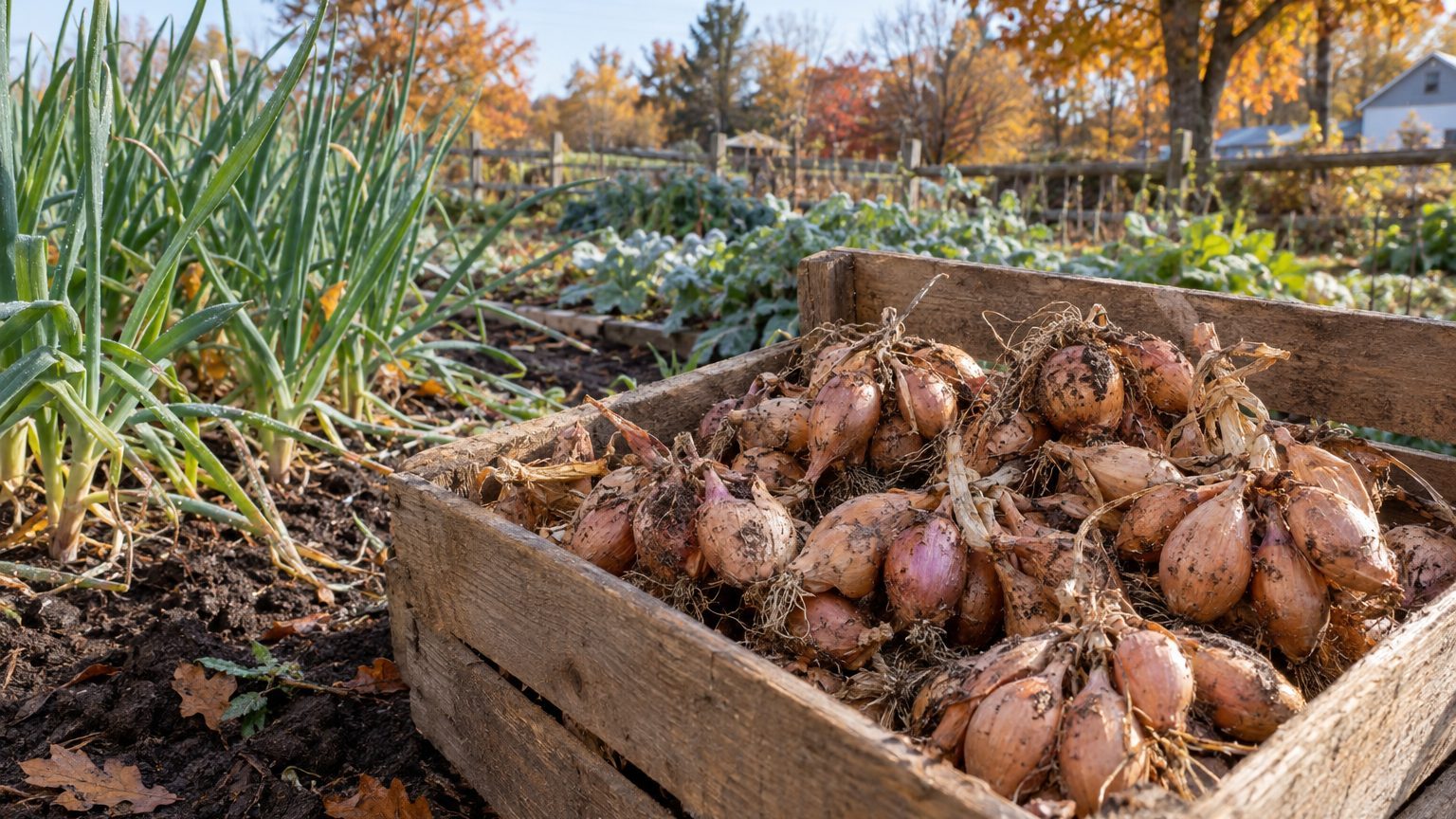

Wisconsin gardeners get the best results from hardy multiplier shallots grown from bulbs, planted in fall or as soon as the ground thaws. Seed-grown shallots started indoors are the second choice. The season is long enough for both, but it rewards varieties that size up quickly and cure well. Flavor and color come second to those traits.
The short answer for Wisconsin
Choose by type first and by variety name second. For most Wisconsin beds, that means a bulb-grown multiplier shallot (red, gray, or yellow-skinned) planted in the fall, with a seed-grown type as the fallback for anyone who misses the fall window. A multiplier planted in October gets its roots down before winter and starts growing the moment the soil thaws. That head start matters because shallots form bulbs in response to lengthening days, and the plant needs a full set of leaves before it does. Each leaf becomes a ring of the bulb, so more leaves by midsummer means bigger shallots.
The timing numbers explain why. For the Milwaukee reference station (NOAA 1991-2020 Climate Normals), the 30 to 70 percent probability band for a 32°F freeze on or after a given date runs from April 16 to April 29 in spring. In fall, that same band runs from October 17 to October 29. These dates mark when a freeze becomes a coin flip, so a given year can land well on either side. The same normals put the mean daily minimum of the coldest month at 17.2°F in Milwaukee. That is cold enough to need mulch over fall-planted bulbs, and it is far milder than the northern part of the state.
Which shallot types suit Wisconsin gardens?
Three types cover nearly every situation. The table sets them side by side.
| Type | How it starts | When it goes in | Best fit |
|---|---|---|---|
| Bulb-grown multiplier (red, gray, or yellow) | Single bulbs, each making a cluster | Fall, about four to six weeks before the ground freezes, or early spring | Most gardens; reliable flavor and good storage |
| Seed-grown shallot | Seed started indoors, then transplanted | Seed in late winter, transplants after hard freezes pass | Gardeners who missed fall planting; no disease carried over on bulbs |
| Spring-planted bulbs of any multiplier | Same bulbs, held over winter | As soon as the soil can be worked | Northern gardens where winter kills fall plantings |
Seed-grown varieties are sold by many seed companies, and they suit gardeners who like the idea of starting onions from seed. Bulb-grown multipliers are more forgiving and give the most dependable cluster of shallots from a single bulb. Choose whichever type fits your planting window, and check the specific variety’s days to maturity on the seed or bulb listing. The When to Plant Shallots in Wisconsin guide covers the dates in detail, and the overview in Growing Shallots in Wisconsin covers the rest of the season.
What will not work here

Planting too late in spring is the most common failure. Shallots set in late May or June meet warm soil and long days before they have grown many leaves. They respond by forming small bulbs, sometimes no bigger than a marble. A mid-April start gives the plant weeks of cool weather to grow tops. Since the spring freeze band runs through April 29 at the reference station, the aim is to plant as soon as the soil is workable and let a light frost pass over the new green shoots. Shallots tolerate light frost well once they are up.
Why do fall-planted shallots fail in some Wisconsin winters?
Bare ground in winter is the next problem. A coldest-month mean daily minimum of 17.2°F at Milwaukee means repeated freezing and thawing at the soil surface, even before the harsher cold farther north. Unmulched bulbs can heave out of the soil as it freezes and thaws, leaving roots exposed to dry wind. Mulch with several inches of straw or shredded leaves after the ground has frozen. Pull it back in early spring as shoots appear. Planting too early in fall causes a different mistake: bulbs that put up tall green tops before winter lose them to the cold, and the plant spends reserves it needed for spring.
The slowest varieties also struggle. The gap between the last spring freeze and the first fall freeze is generous at the lakeshore and shorter inland, and shorter still in the northern counties. A long-season variety sown from seed outdoors in May will not size up before fall. Seed-grown shallots have to be started indoors in late winter and transplanted after the hardest freezes are over. Direct-sown shallot seed also stays small in cold ground and gets outcompeted by spring weeds.
Wet soil defeats many beds before any weather does. Heavy clay stays cold and soggy in April, and bulbs sitting in it rot before they root. Humid summers add a second problem. Crowding plants close together keeps leaves wet after rain and dew, which invites fungal diseases. Space bulbs apart, give them a spot with morning sun and moving air, and water at the base. Overhead sprinklers in the evening make leaf diseases worse.
What changes across Wisconsin
Wisconsin has no single answer, because the state spans USDA hardiness zones 3b to 6a (USDA Plant Hardiness Zone Map, 2023). That is several zones, built on the average annual extreme minimum temperature. A garden in the far north and one near the southern border sit in different climates, and both can be right to plant shallots on different dates. Milwaukee’s coldest-month mean daily minimum of 17.2°F is a reference point for the southeast. It does not describe the north, where winters run well below it.
Lake Michigan matters at the edges. The lake delays the first fall freeze along the lakeshore, so gardens there get extra weeks of growth in autumn. Inland southern Wisconsin typically freezes in early October, which is earlier than the October 17 to October 29 band at the Milwaukee reference station. The north freezes far earlier than either. Those differences change fall planting too. Gardeners at the lakeshore can plant later and see bulbs establish. Inland growers should plant earlier to give roots time before the ground freezes.
Readers in the north or at higher, colder elevations should shift three things. First, favor spring planting of bulbs over fall planting, or plant fall bulbs deeper and mulch more heavily. Second, choose varieties with shorter days to maturity so bulbs finish before fall frost arrives early. Third, start seed-grown shallots indoors a little earlier, then harden the seedlings off for transplanting when the ground is workable.
To find your own zone, use the USDA Plant Hardiness Zone Map and enter your ZIP code.
Where to check this for your own county
The University of Wisconsin-Madison Extension is the best next stop. It runs the state’s land-grant extension service, with county offices staffed by local educators and Master Gardener volunteers. They know which soils stay cold and wet in your county, which spring frosts have been catching gardens, and which varieties actually perform in local conditions.
Look for two things there. The first is a planting calendar for onions, garlic, or shallots written for your part of the state. Onion-family crops share enough timing that a local onion or garlic calendar can guide shallots when no shallot-specific one exists. The second is any variety trial or recommended list for your county or region. A variety that did well in a university plot a few counties away is better evidence than a catalog description.
A county recommendation beats a state one. A statewide answer like the one above has to cover zones 3b to 6a, a lake that shifts frost dates, and soils from sand to heavy clay. Your county office can narrow that to a handful of varieties and a planting window of a week or two. When the county advice and the state advice differ, go with the county.
Calling or visiting the local extension office also gets you soil testing information. Shallots do best in loose, well-drained soil with a near-neutral pH, and a soil test tells you whether lime or compost is worth the money before you plant.
Checking this against your own garden
Dates on a calendar are averages, and your own bed outranks them. Three observations tell you more about your microclimate than any chart.
- Soil warmth by feel. In spring, squeeze a handful of soil from the planting depth. If it crumbles instead of forming a wet ball, and your hand does not feel numbed after a minute of holding it, the bed is ready. A bed that stays sticky and cold longer than your neighbor’s has poor drainage or shade, and it needs a later start or raised rows.
- First green shoots. For fall-planted shallots, note the date the first green tips break through the mulch. Compare it year to year. If shoots appear early each spring, your site warms fast, perhaps because of a south-facing wall or sandy soil. If they come late, plan on spring planting a few days later than the guidelines.
- First true leaves on seedlings. With seed-grown shallots, watch for the first true leaf after the thread-like seed leaf. Seedlings with true leaves are ready to harden off. Slow seedlings point to a chilly spot indoors.
Write the dates down. After two or three seasons you will have a local calendar more precise than any published for the state. Shallots show their readiness at the end too: tops that yellow and fall over in midsummer mean it is time to pull the bulbs and cure them.
Common questions
Can I plant shallots in fall in Wisconsin?
Yes, in most of the state. Plant before the ground freezes so roots form but tops stay short, then mulch after the ground freezes. In the colder north, spring planting is the safer choice.
Are seed-grown or bulb-grown shallots better?
Bulb-grown multipliers are easier and give clusters of shallots from each bulb. Seed-grown shallots cost less per plant and avoid disease carried on bulbs, but they need indoor starting in late winter and more attention.
How far apart should shallots be planted?
Set them apart, in rows spaced apart. Wider spacing helps leaves dry after rain in humid summers.
When are shallots ready to harvest?
When the tops turn yellow and fall over, usually in midsummer. Lift the bulbs and let them cure in a dry, airy spot until the necks are fully dry. Cured bulbs from a good season can store for months in a cool, dry place.