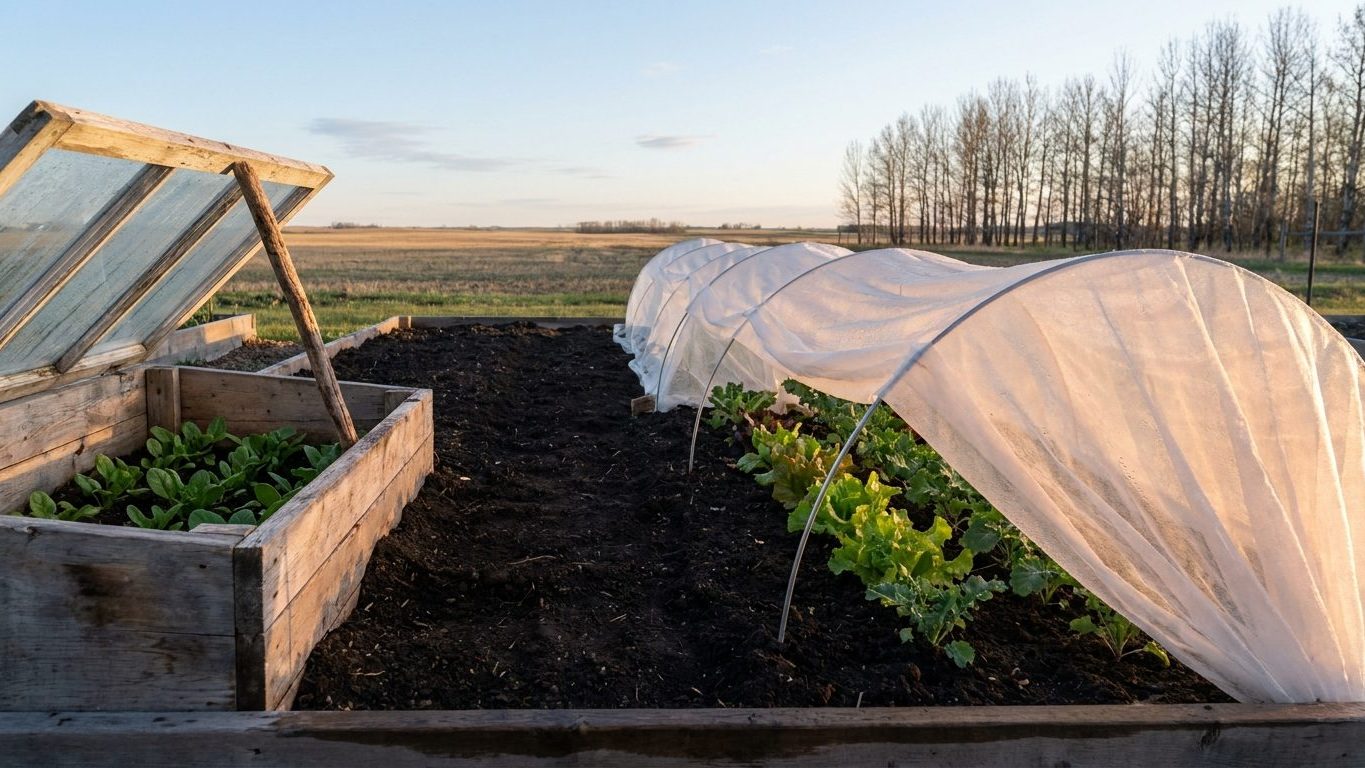

Lightweight floating row cover on hoops is the most useful season extender in Mississippi, and it works best in fall and spring. Cold frames and low tunnels come next, mainly for winter greens. Winters here are mild enough that the goal is gaining a few weeks at each end of the season. Heated greenhouses and heavy infrastructure rarely repay the cost.
The short answer for Mississippi
Start with the cold itself. At the Jackson reference station, the average overnight low in the coldest month is 36.6°F, above freezing. Most winter nights don’t threaten hardy vegetables. The danger is the occasional hard freeze, and a cover only has to carry a crop through a few of those nights. USDA zones across the state run from 7b to 9a, which tells you freezes happen everywhere, just not often or deeply in the south.
The dates matter too. At the Jackson airport station, the last spring frost falls between March 6 and March 22, and the first fall frost between November 7 and November 22. Those dates bracket the stretch when the chance of a 32°F freeze sits between 30 and 70 percent. That is the odds of a freeze, so a freeze can still arrive after the later date. Suburban and rural gardens usually freeze later in spring and earlier in fall than the airport, often by one to two weeks, and more at elevation.
Which extender fits which job?
Match the tool to the season. Covers earn their keep in the gap between a warm afternoon and a cold night, and Mississippi has a lot of those.
| Extender | Best use | Local caution |
|---|---|---|
| Lightweight row cover | Early tomato, pepper and squash transplants; fall lettuce and brassicas | Pull it back on warm days so plants don’t overheat |
| Heavier frost cloth | Hard-freeze nights in December through February | Too hot to leave on in a warm spell |
| Low tunnel with clear plastic | Winter greens, carrots, spinach | Needs venting by mid-morning on sunny days |
| Cold frame | Starting seedlings, holding greens through winter | Prop the lid open when the sun is out |
| Shade cloth | Fall lettuce and spinach germination in warm soil | Remove once nights cool |
For the wider picture on stretching the calendar, see Extending the Growing Season in Mississippi.
What will not work here
Sealed plastic is the first thing to fail. Clear plastic over hoops can climb far above the outside air on a sunny March afternoon, even when the night before dipped near freezing. A tunnel closed up all day will scorch seedlings. Humid air makes it worse, because trapped moisture sits on the leaves and invites fungal disease. Any plastic structure here has to be vented daily, and anyone who can’t be home to open it should choose fabric cover instead.
Can you grow tomatoes through winter in Mississippi?
No. A cover can push tomatoes a few weeks past the first fall frost, which comes between November 7 and November 22 at the reference station. It can’t keep a warm-season plant productive through December and January. Day length is short and soil is cold by then, so fruit stops setting and ripening. Peppers and eggplant behave the same way. Use covers on those crops to save the end of the season, and don’t expect winter harvests.
The second failure is trusting the average. A coldest-month low of 36.6°F sounds gentle, but it is a mean. Individual nights fall well below it, and a single hard freeze can kill uncovered transplants set out in early March. Planting on March 6 because it is the early end of the frost band is a gamble, since a freeze can still come after that date. Move out gradually, keep covers within reach, and cover when a freeze is forecast. The timing of that decision is covered in When to Cover Your Garden in Mississippi.
The third is expecting covers to substitute for heat in summer. Row cover and cold frames cool nothing. Shade cloth knocks back midday sun, but it can’t get lettuce through July. Fall crops that sprout poorly in hot soil do better with a lightly shaded seedbed than with any winter-style structure. Finally, heavy black plastic left on beds into late spring overheats roots in humid heat. Pull it before the soil warms past what the crop tolerates.
What changes across Mississippi
The state spans USDA hardiness zones 7b to 9a, and that spread means no single answer exists. The zone map is built on one variable, the average annual extreme minimum temperature. It describes how cold winters get at the worst, which is why a plant that survives in the south of the state may die in the north.
The Jackson reference point sits at 32.32 degrees north. Gardens in the northern counties lie farther north and tend to run cooler. They typically see the last spring frost later and the first fall frost earlier than the Jackson dates, so covers there matter at both ends of the season. Plan to hold tender transplants back past the Jackson window and to have frost cloth ready by late October. Higher ground behaves the same way, because cold air drains off slopes but sits in hollows.
On the Gulf side and in the southern part of the state, frost comes later and leaves earlier. A light cover may be all a garden needs to carry greens through most winters. A cold frame can serve through much of the year. Gardeners there can often put out warm-season transplants earlier than Jackson dates suggest, though a late freeze still happens occasionally.
Nobody should guess their own zone from a state average. The USDA Plant Hardiness Zone Map lets you enter a ZIP code and read the zone for that spot. Compare it with the 7b to 9a range before deciding how aggressively to extend either end of the season.
Where to check this for your own county
Your state extension service can tell you what works near you. In Mississippi that is Mississippi State University Extension, which has an office in or near every county. Look for two things: the local vegetable planting calendar, and any variety trials run in your county or a neighboring one.
The planting calendar gives sowing and transplant windows built on local frost records, which beats a reference-station date. Variety trial results show which tomatoes, greens and brassicas held up in local heat, humidity and disease pressure. Those results often change which crops are worth covering. A variety that bolts in a warm spring needs less protection than one that sulks in cold soil.
County advice outranks anything written at the state level. A statewide overview has to cover a long, varied map, and a county agent knows when the last freeze actually hit last year, which roads sit in cold hollows, and what pests showed up. Call or visit the county office before ordering hoops, fabric or plastic for a large bed. They may point you to a better-fitting cover or a variety that needs none.
Checking this against your own garden
Your own beds tell you more than any date. Three observations are enough, and none requires a tool.
Soil warmth by feel. Push a hand into the soil a few inches deep in the morning. If it feels cold and damp, seeds and transplants will sit idle. Do the same under a cover and in an open bed, and the difference shows what your extender is adding. A bed beside a south-facing wall will usually feel warmer than one in a low corner.
The first male flowers on squash. Male blooms open before female ones. When they appear, the plant is growing well, and a bed that flowers a week earlier than another is the warmer microclimate. Note which one it is and plant your most tender crops there next year.
The first true leaves. Seedlings first show rounded seed leaves, then leaves with the shape of the mature plant. Count how many days it takes in different spots. Slow growth under a cover usually means cool or overly shaded soil, while fast, leggy growth means it’s getting too warm and needs venting.
Write the dates down for a season or two. A notebook of when frost hit the roof, when the soil felt workable and when the first flowers opened will do more for your timing than a reference-station number. Frost often leaves a pattern in the yard, with white on the low grass and none near the house, and that pattern shows where covers matter most.
Common questions
What is the cheapest season extender for Mississippi?
Lightweight row cover draped over hoops or laid directly on hardy crops costs the least and covers the most use. Old sheets work for a single freezing night if you remove them in the morning.
When should I put covers on in fall?
Have them ready by late October. At the Jackson airport station the first fall frost falls between November 7 and November 22, and rural gardens often freeze one to two weeks sooner.
Can I leave plastic on a low tunnel all winter?
Only if you vent it. Mild, sunny winter days can heat a closed tunnel quickly, and trapped moisture raises disease risk. Open the ends or prop the plastic up on any sunny day.
Is the March 6 to March 22 window safe for tender transplants?
No. It marks when a 32°F freeze has between a 30 and 70 percent chance of still occurring at the Jackson station. Gardens in the north or at elevation can freeze later. Keep a cover handy and check the forecast.