
Collards do well in Colorado as a spring and fall crop, and the leaves taste best after cool nights and a light frost. On the Front Range, seed or transplants go in during May once the soil has warmed, and a second planting in midsummer matures into autumn. Winter sets the limit. A mean low of 18.4°F in the coldest month ends the standing crop that Southern gardeners pick all winter.
When the soil is warm enough in Colorado

At the Denver station (USW00003017), NOAA’s 1991-2020 Climate Normals place the last spring 32°F freeze between May 1 and May 11. That range comes from the 30-70% probability band, so a freeze after those dates can still happen in any given year. Denver sits at 5,280 feet on the plains. Mountain towns run far shorter seasons and can frost in July, and the western slope differs again.
Frost dates stand in for soil temperature. Collards want warm ground, and the soil warms after the frost risk ends, not on the same day. Seed sown into cold soil sits and may rot. Transplants set into it stop growing and stay stunted for weeks. Established plants take a light frost without trouble, but the roots work slowly in cold ground, so an early start rarely gains much.
How do you know the soil is warm enough for collards?
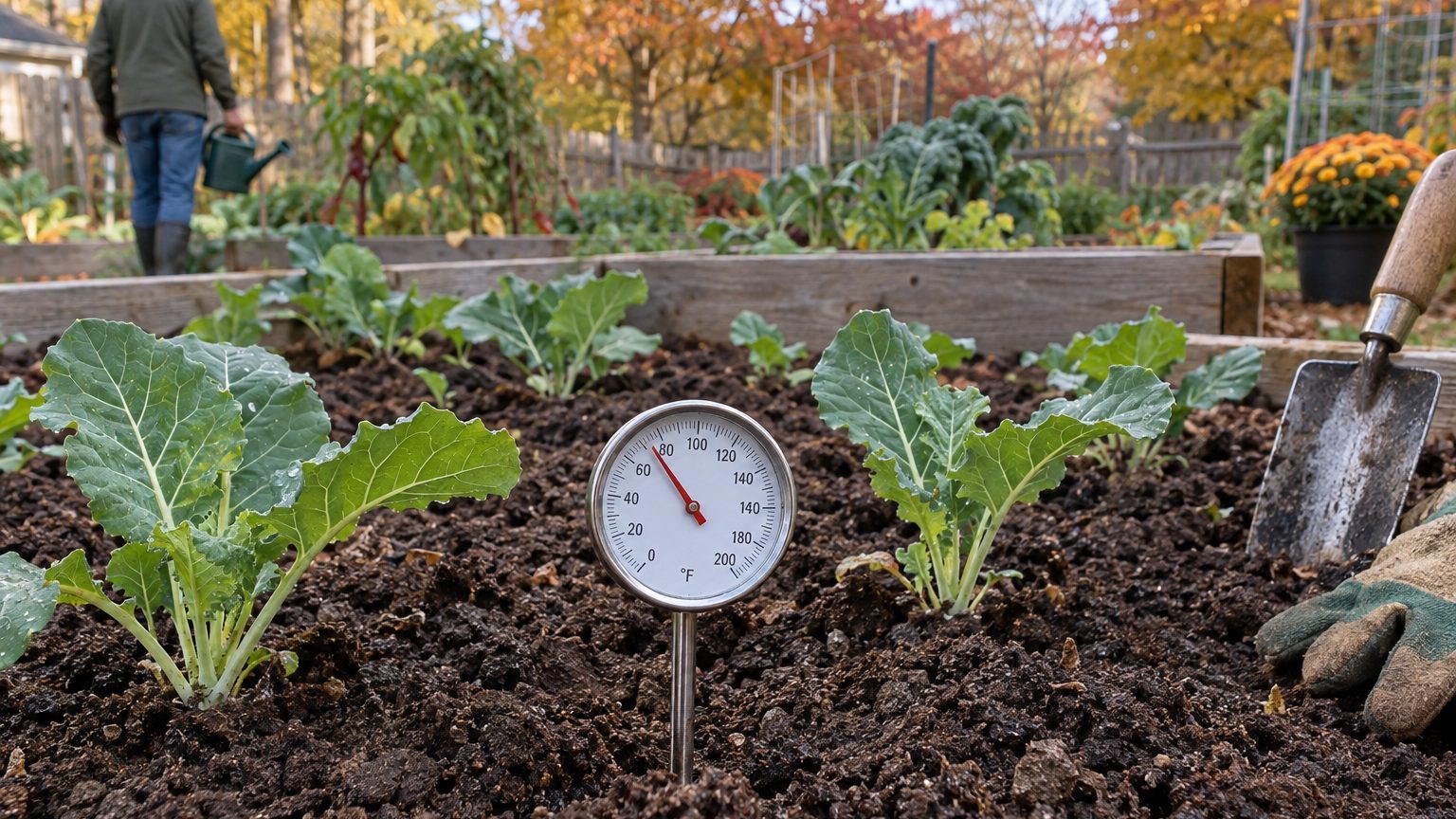
Use a soil thermometer. Push it into the soil in the morning, when the ground is at its coldest. Brassica seed germinates slowly in cold soil. A steady morning reading of warm soil over several days is a safer signal than any calendar date. Front Range springs swing hard, with a 70°F afternoon in April followed by snow, so one warm week proves little.
A raised bed or a patch against a south-facing wall warms sooner. So does soil under clear plastic or a layer of row cover, pulled back a few days before planting. Harden off transplants before they go out. Keep a sheet of row cover on hand for a late freeze, and give young plants a windbreak, because spring wind on the plains shreds new leaves.
In mountain towns the ground thaws and warms well after Denver’s dates. Gardeners there should use the soil thermometer and check local timing with Colorado State University Extension, which covers the state’s elevation bands. At that elevation, soil temperature should set the planting date, whatever a Front Range calendar says.
How long the season lasts here
The Denver station has about five months between the mean last spring frost (May 1 to May 11) and the mean first fall frost (September 30 to October 12). That is a long window for a cool-season leaf crop, and what matters is what it permits.
It permits two plantings. One goes in around the last frost and gives leaves through summer. The other is sown in midsummer so the plants reach full size as the nights cool. Many Front Range gardeners rate the fall planting higher. Leaves sweeten after a few frosty nights, and the cabbage worms and aphids that bother summer plants fade as temperatures drop. A second sowing also spreads the work and the harvest. The staggering logic is covered in Growing Collards: One Planting, Months of Harvest, and the succession sowing guide on this site gives the timing in detail.
Transplants are optional on the plains. Direct-seeded collards have enough time, and transplants mostly buy extra time in spring. In a mountain town with a short window the math changes. There the first sowing may be the only one, and a head start indoors can decide whether plants reach picking size before fall frost arrives.
Before buying or setting out any transplant, slide one out of its cell and look at the roots. White, firm roots that hold the soil together are what you want. Roots circling the bottom, turning brown, or smelling sour mean the plant will stall in the ground, and it is cheaper to pass on it. Tease out any lightly circled roots before planting.
Gardeners on the northern plains face a still shorter run, described in Growing Collards in North Dakota. A damp eastern climate brings a different set of problems, covered in Growing Collards in Pennsylvania.
Heat and water in Colorado

Summers on the plains are sunny and dry, with hot afternoons and cooler nights. That suits collards better than a humid summer would. Leaf diseases that thrive in damp air, such as mildew, are less of a problem, and the main stress is dry soil. Hot spells still toughen leaves and push plants toward bolting, so afternoon shade from taller crops, a thick mulch, and steady watering help. In a mountain garden with cool, wet spells, the trouble flips: slow growth and mildew replace heat stress.
Do collards survive a Colorado winter?
Mostly no. NOAA’s 1991-2020 normals put the mean daily minimum of the coldest month at 18.4°F in Denver. The USDA Plant Hardiness Zone Map (2023) spans zones 3b to 7b across the state, so Denver is the reference and other areas differ widely. Where the coldest month stays mild, collards become a standing crop, picked leaf by leaf from November into March. Here they are an autumn crop that ends at the hard freeze.
Light frosts sweeten the leaves, and mulch or row cover can stretch picking a few weeks. A run of hard frosty nights finishes the plants. Plan the bed around that end. The winter low, not the summer heat, decides how this bed is planned. Sow the second planting early enough that plants are full size before the first fall frost, which falls between September 30 and October 12 at the Denver station, then harvest steadily through October and November.
How much water do collards need on the plains?
Plan on steady watering from rain and irrigation combined, more during wind or heat. Water deeply and less often rather than a little every day. Drip lines or a soaker hose keep leaves dry and water at the root, and a layer of straw or shredded leaves slows evaporation. Swings between dry and soaked soil give tough, bitter leaves and encourage bolting.
Flea beetles, aphids, and cabbage worms are the usual leaf-eaters. Row cover set at planting is the best defense. Hand-picking worms and spraying aphids off with water handle small outbreaks. Rotation matters as well. Turnip and rutabaga are brassicas, and they share their pests and diseases with cabbage, kale, mustard, and collards. Planting collards where any of them grew last year rotates nothing. The rotation guide on this site explains how to space them out over several seasons.
Which collards suit Colorado
Variety names mean little without local trial results, and Colorado covers everything from zone 3b to 7b. A type that thrives in Denver may never mature in a mountain valley, and a list copied from a Southern garden says even less. The reliable source is the state’s land-grant university. Colorado State University Extension and the county offices know which varieties have been trialled at which elevations.
Without names, the choice comes down to type. Gardeners with a short season, such as those in mountain towns, should favor the earliest-maturing types, since frost arrives before a slow plant reaches picking size. Seed packets state the maturity window, and on direct-sown collards it counts from sowing, not transplanting. On the plains, where summer afternoons run hot and the air is dry, pick types known for slow bolting and tall, upright growth that lets air move around the plant. Mulch the root zone and add afternoon shade to cut stress further.
Disease resistance matters less here than in the humid East, because dry air limits leaf diseases. It becomes the first criterion for a garden that stays cool and damp, where mildew and leaf spots spread. Cold hardiness deserves attention too, since the fall crop sits through frost. Types that hold leaf quality through freezing nights stretch the harvest.
Pick two or three types and compare them side by side for a season. Smooth-leaved and crinkled types differ in toughness and in how they handle wind and cold, and a bed of each shows which suits the plot. Buy seed from suppliers that list maturity and bolting traits rather than relying on a name.
Common questions
When should I plant collards in Colorado?
On the Front Range, plant around the Denver station’s last spring freeze window of May 1 to May 11, or once morning soil holds near 50°F. Sow a second planting in midsummer for fall. Mountain towns plant later, and local extension offices can confirm the timing.
Can collards stay in the garden all winter?
Generally not. A coldest-month mean low of 18.4°F at Denver ends the plants. Collards act as an autumn crop here, picked until the hard freeze. Mulch and row cover extend the harvest by a few weeks.
Do collards need full sun?
Yes, for steady growth. In spring and fall they take full sun. During hot spells, afternoon shade and a thick mulch keep leaves tender and slow bolting.
How do I check harvested collards before storing them?
Look over every leaf and the cut stem. Slimy leaves, a soft patch, a weeping spot, or a moldy crown end the question, so discard them. A leaf that looks sound is not proof it is safe, and cleanliness at harvest matters most.