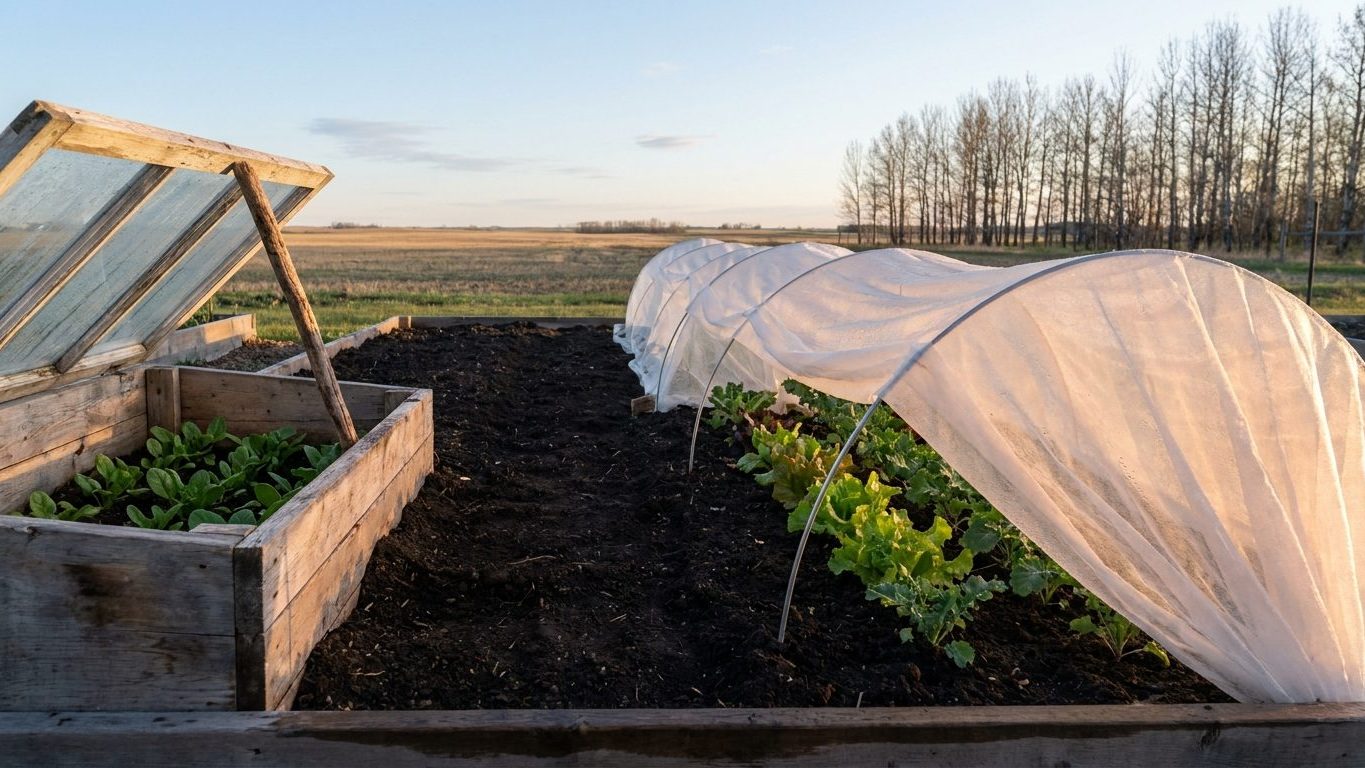

Floating row cover, low tunnels, cold frames, and unheated hoop houses all earn their keep in Maryland, and the first two cost the least. Each buys a few degrees of protection. That stretches spring and fall by a few weeks, but it won’t carry lettuce through a January cold snap. The right pick depends on the size of the gap you want to close. For the wider picture, see Extending the Growing Season in Maryland.
The short answer for Maryland
Use lightweight row cover over wire hoops for the spring and fall shoulders, and a cold frame or unheated hoop house for winter greens. Those two setups cover most of what a Maryland gardener wants from an extender.
The reason is the shape of the local climate. At the Baltimore reference station, the average last spring freeze falls between April 3 and April 16, and the average first fall freeze between October 26 and November 5. Those are the dates when the chance of a 32°F freeze sits in the 30 to 70 percent band, so a freeze after the spring window or before the fall one can still happen. The mean daily low in the coldest month is 25.4°F. That kills tender crops, but spinach, kale, and scallions can sit through it under a modest cover.
How much protection does each extender give?
| Extender | Protection | Best Maryland use |
|---|---|---|
| Floating row cover | A few degrees; light frost | Early spring greens, fall lettuce and brassicas |
| Low tunnel (hoops plus plastic) | More than fabric, but heats fast in sun | Early spring beds that you can vent daily |
| Cold frame | Handles hard freezes in a small footprint | Winter greens, hardening off seedlings |
| Unheated hoop house | Largest buffer; walk-in | Winter harvest, tender transplants set out ahead of the open garden |
Which extender should a Maryland gardener buy first?
Row cover and a set of hoops. The fabric works in March, again in October, and as insect netting in summer, so it earns its price three times a year. A cold frame comes second if you want salad greens in December and February. A hoop house only makes sense once you have already outgrown those two.
What will not work here

Tomatoes and peppers set out in early April under a single layer of fabric are the classic mistake. The average last freeze lands April 3 to 16, but that is an average, and a freeze after it is still on the table. A cover adds a few degrees, and cold soil stalls transplants even when the air stays above freezing. Tender crops belong well past the end of that window. Extenders can pull them forward by a week or two, no more.
Winter is the second trap. The Baltimore reference station sits at 39.17 degrees north, and at that latitude midwinter days drop to roughly 10 hours of light or less. Most greens nearly stop growing in that stretch, whatever sits over them. A cover keeps plants alive through a 25°F night, but it won’t make them put on new leaves in January. Sow fall crops early enough that they are close to full size before the days shorten, then treat the bed as cold storage you harvest from.
Plastic without venting fails in a different way. Maryland springs are humid and swing between cold nights and sunny afternoons. A closed low tunnel on a bright March day can climb far above the outside air and cook seedlings. At night, the trapped moisture settles on leaves and invites fungal disease. Crowding plants under a cover makes it worse, so give them the full spacing on the seed packet. Vent in the morning and close up before dusk. The timing of covering and uncovering is laid out in When to Cover Your Garden in Maryland.
Fabric alone also won’t do the job in the mountains. In Garrett and Allegany counties, spring freezes run weeks later than the Baltimore dates. A single layer of light cover that works near the Chesapeake leaves a lot of room for losses there. And any cover left on through a Maryland summer becomes a heat trap, so pull the plastic and swap fabric for shade cloth or insect netting once warm weather settles in.
What changes across Maryland
Maryland has no single answer. The USDA Plant Hardiness Zone Map (2023 edition, built on the average annual extreme minimum temperature) places the state anywhere from 5b to 8a. That is a spread of six half-zone steps, from the high western ridges to the warm shores of the lower Chesapeake and the Eastern Shore. The dates and numbers above belong to the Baltimore reference station. Treat them as a starting point, not a prescription for every county.
In the west, the mountains run colder and the spring runs later. Gardeners in Garrett and Allegany counties should plan on a heavier setup: a double layer of fabric, a low tunnel with plastic, or a cold frame with straw or leaves banked against the sides. Start spring plantings later than the Baltimore dates and expect less margin on the fall end. At altitude, the extender buys more than it does on the coast, so it is worth the extra cost there.
On the Eastern Shore and in the southern counties, winters are milder and the season opens earlier. Spring covers can go on sooner and fall crops can stay under fabric deeper into the cold months. In turn, the summer problem grows: heat builds fast under hoops, so vent early and keep shade cloth on hand.
Latitude shifts things too. The 39.17 figure belongs to Baltimore, not to the whole state. Someone near the Pennsylvania line or on the Lower Shore should look up their own latitude, because day length is what sets the winter growth slowdown. For hardiness, type your ZIP code into the USDA map instead of guessing from a neighbor.
Where to check this for your own county
Start with University of Maryland Extension, which runs offices and programs in every county. Look for two things: the local planting calendar, and the vegetable varieties that have been trialled near you. A calendar tells you when your county’s average freeze dates fall. A variety trial tells you which lettuces, kales, and tomatoes actually held up under local conditions.
County offices also field questions from gardeners every week, so ask what covers people use in your area and when they pull them off. If your county has a Master Gardener program, its volunteers usually know which neighborhoods run colder, which slopes stay frosty, and which fall crops hold up through winter.
A county recommendation beats a state one. A statewide figure averages a mountain valley and a bay shoreline, and no garden sits in an average. Treat what is written here as the statewide frame, and let your county office tighten the dates. When the two disagree, go with the local source.
Checking this against your own garden
Your own beds outrank every date above. Three signs are worth watching, and none needs any equipment.
- Soil warmth by feel. Push your hand into the bed, a few inches down, in the morning. Cold, clammy soil means seeds will sit and transplants will stall. Compare a covered bed with an open one: if the covered soil feels noticeably warmer by midday, that spot is a good place for your earliest plantings.
- The first male flowers on squash and cucumbers. Male blooms open before female ones, and they show up once plants have had enough warm days. If they come early under a cover, your site warms quickly. Remove the cover once female flowers open so bees can reach them.
- The first true leaves. After the seed leaves, the first set of leaves that look like the adult plant mark real growth. If they appear on schedule in a covered bed, the root zone and air are warm enough. If they lag behind a neighbor’s plants, your site is cooler, probably from shade, a low spot where cold air pools, or heavy wet soil.
Keep notes for a season or two: the date of the last frost you saw, when the soil felt workable, when the first true leaves showed. After two years, those notes will tell you more about your garden than a statewide average ever could.
Common questions
Is row cover or plastic better for a Maryland garden?
Row cover is the safer choice for most people. It breathes, rarely overheats, and lets rain through. Plastic gives more protection on cold nights, but it needs venting on every sunny day, which makes it a poor fit if you are away from home during the day.
Can you grow vegetables through winter in Maryland without heat?
Yes, within limits. With a mean daily low of 25.4°F in the coldest month at Baltimore, hardy crops such as spinach, kale, and scallions can survive under a cold frame or hoop house. Growth nearly stops in midwinter, so the harvest comes from what you planted in early fall.
How early can you plant under cover in Maryland?
Hardy greens, peas, and brassicas can go in a few weeks ahead of the open garden, since the average last freeze at the Baltimore reference station falls between April 3 and April 16. Tomatoes, peppers, and squash still need to wait well past that window, even with a cover.
Do season extenders help in summer?
Different ones do. Shade cloth keeps lettuce and spinach going in July heat, and insect netting protects brassicas from cabbage worms. Clear plastic should come off by late spring, because it overheats plants in Maryland’s humid summers.