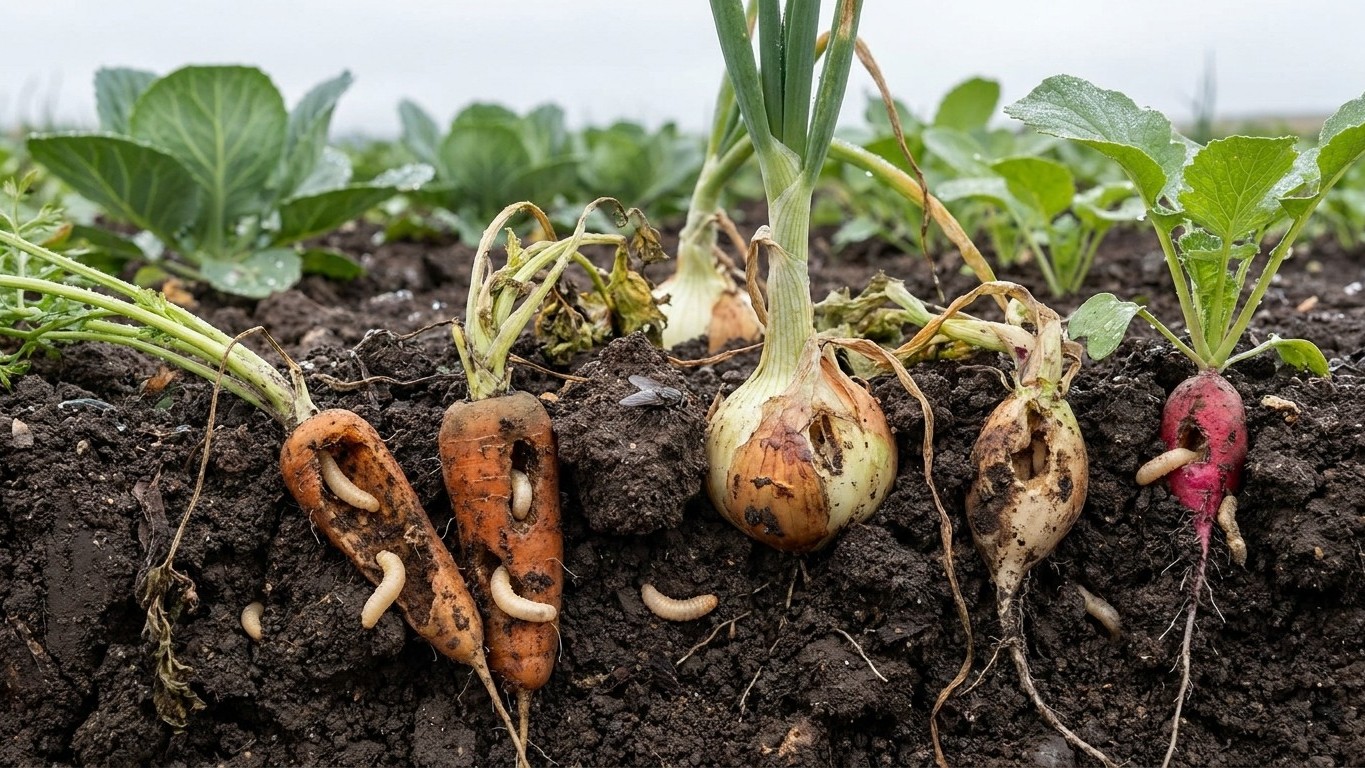

The best unusual roots for Illinois either finish before hard frost or stay in the ground through winter. That favors salsify, scorzonera, celeriac, burdock, daikon, black radish, Jerusalem artichokes and horseradish. Andean tubers such as oca and yacon are a gamble. The season is long enough for most of the list, though the north and south of the state call for different timing.
The short answer for Illinois
The Chicago-area reference station (an airport, so a warmer spot than most yards) puts the mean last spring frost between April 11 and April 22. The mean first fall frost falls between October 24 and November 3. These dates come from the 1991-2020 NOAA climate normals and mark the 30 to 70 percent band of the chance of a 32°F freeze. A freeze can still come outside them. Suburban and rural gardens usually see the last spring frost later and the first fall frost earlier, often by one to two weeks.
That window decides the choice by type. Roots sown in place, such as salsify, scorzonera and burdock, suit Illinois because they tolerate cold soil and light frost. Celeriac is the one transplanted root, started indoors and set out after the last frost. Daikon and black radish belong to the late-summer sowing, since long spring days push them to bolt. Sunchokes and horseradish are planted once and mostly look after themselves.
| Root | How it goes in | Time to harvest | Fit for Illinois |
|---|---|---|---|
| Salsify | Sown in place in early spring | About four months from sowing | Strong |
| Scorzonera | Sown in place in early spring | Four to five months from sowing | Strong, better in the south |
| Celeriac | Started indoors, transplanted after frost | About 100 to 120 days from transplanting | Good with steady moisture |
| Burdock | Sown in place, spring or late summer | Three to four months from sowing | Strong |
| Daikon, black radish | Sown in place, late summer | Roughly two months from sowing | Strong as a fall crop |
| Jerusalem artichoke | Tubers planted in spring | After frost kills the tops | Very strong |
| Horseradish | Root pieces planted in spring | The following fall | Very strong |
Packet days vary by variety, so treat the table as a range. For the sowing dates that go with each root, see When to Plant Unusual Roots in Illinois. For the wider picture, start with Growing Unusual Root Crops in Illinois.
What will not work here
The roots that fail are the ones that need more frost-free months than Illinois offers. Yacon wants a long, warm stretch to bulk up its storage roots. Oca and mashua form tubers only as days shorten in autumn, and a freeze in late October can arrive just as they begin. With rural frost dates running one to two weeks earlier than the reference station, the margin shrinks further. Gardeners with a greenhouse or high tunnel can try them. In an open bed, expect small harvests at best.
Spring-sown daikon is the quieter failure. Rising heat and lengthening days make it bolt, and the roots turn woody or hollow. The same radish sown in late summer sizes up in cooling weather and sweetens after light frost. The fix is a later sowing date, not a better variety.
Weekly watering is a problem for celeriac in a hot summer. It has shallow roots and needs even moisture. A deep soak once a week followed by dry days tends to produce cracked or hollow-centered roots. Mulch and a light, steady supply do far better.
Humid summers punish close spacing. Celeriac is prone to leaf spots when foliage stays wet, and crowded burdock and salsify keep their leaves damp for hours after a storm. Give celeriac about 8 to 12 inches between plants and water at the base in the morning. If rain has soaked the bed for days, hold off on extra water.
Heavy soil is the other common culprit. Many Illinois yards sit on clay, and salsify and scorzonera respond by forking or snapping when dug. A raised bed or a deeply loosened row of at least 12 inches fixes most of it. Clay also holds water through winter, and roots left in the ground there can rot instead of keeping. The coldest month at the reference station has a mean daily minimum of 18.8°F, so roots left in the ground should have a thick straw or leaf mulch, and the bed should drain.
Sunchokes work almost too well. They spread by tubers and come back from any fragment left in the soil, so give them a bed of their own. Horseradish spreads the same way, and both are hard to evict once settled.
What changes across Illinois
No single answer covers the state. The USDA Plant Hardiness Zone Map (2023 edition, built on 1991-2020 normals) places Illinois in zones 5a through 7b. That is a spread of three full zones, so check your own county’s zone. Zones track only the average coldest temperature of the year. A zone says whether a perennial survives winter, and it says little about how long the growing season lasts.
Where should northern Illinois gardeners adjust?
In the north, start celeriac indoors a little earlier so the plants are large enough when set out, and direct-sow salsify and burdock as soon as the soil can be worked. Sow daikon in late summer with a few days of margin for an early freeze. Mulch roots left in the ground more heavily than a southern gardener would. Horseradish and sunchokes sit comfortably inside the northern zones.
Where should southern Illinois gardeners adjust?
Farther south, the season is longer and the summers hotter. Scorzonera and celeriac have more room, and a fall daikon sowing can wait later into the season. Heat and humidity matter more there. Shade cloth for celeriac and wider spacing for everything pay off. A longer season also makes yacon less of a reach, though it still wants protection when a freeze threatens.
To find your own zone, look up your location on the USDA Plant Hardiness Zone Map. Zones can change within a county, especially near the lake, along river valleys and in cities with heat islands.
Where to check this for your own county
University of Illinois Extension is the state’s land-grant extension service, and it runs a local office for each area. Start there for anything this article can only describe in broad terms.
Look for two things in particular. The first is a local planting calendar, which will list frost dates and sowing windows that match your area instead of the airport reference station. The second is the varieties trialled in your county, meaning cultivars grown by local staff or Master Gardeners in the same soil and weather you have. A variety that cracks or bolts in a trial will do the same in your garden. If a root crop is not covered, call the office and ask. Master Gardener volunteers often know which neighbors have grown salsify or sunchokes successfully.
A county recommendation beats a state one. The state-level guidance here covers a range of frost dates and three hardiness zones, and it can only point you in the right direction. Your county office knows your soil, your last frost and what has worked on nearby plots.
Checking this against your own garden
Your own observations outrank any date in print. Three things are worth watching, and none needs a gadget.
- Soil warmth by feel. Push a hand a few inches into the bed in early spring. If it feels cold and clammy, wait. If a handful crumbles after a squeeze instead of forming a sticky ball, it is ready for salsify and burdock. A bed that warms early is well drained or sheltered.
- The first true leaves. Sow a short row of radishes as a test and watch for the first true leaves, the ones after the round seed leaves. Date that moment each year. If your seedlings reach that stage a week later than a neighbor’s, your yard runs cool and your plantings should shift to match.
- The first frost-blackened leaf. Note which tender plants darken first in autumn and which survive. A low spot where cold air pools, or a bed far from the house, will freeze before a sheltered one. That tells you where to plant the slowest roots, and where to put cold-tolerant ones like horseradish.
Write the dates down for two or three seasons. A short notebook will soon tell you more about your plot than any reference station.
Common questions
Which unusual root is easiest for a first-time Illinois grower?
Jerusalem artichokes and horseradish are the least demanding. Both go in once in spring and need little attention. Daikon sown in late summer is the easiest annual.
Can sunchokes survive an Illinois winter?
Yes. The tubers sit below the frost line and regrow in spring, and the 18.8°F mean daily low of the coldest month at the reference station is no threat to them. Poorly drained clay is the main risk because it can rot tubers. Plant in well-drained soil, and leave the bed alone once it is established.
When should I sow daikon for a fall crop?
Count back roughly two months from the first fall frost for your area. The reference station sees it between October 24 and November 3, and rural gardens often see it one to two weeks earlier. Sow in late summer so the roots size up in cooling weather. Your county extension office can confirm local dates.
Do salsify and scorzonera need to be dug before winter?
No. They can stay in the ground and be dug as needed, so long as the soil is not frozen solid. Cover the row with a thick layer of straw or leaves to keep the soil workable. In heavy clay that stays wet, dig them in late fall instead, because they may rot in the ground.