
Georgia gardeners get two shots at collards. Sow or transplant in late winter to early spring, after the soil has lost its chill, and sow again in late summer for the crop that matters most. That fall planting stands through winter in much of the state. It is picked leaf by leaf from November into March, and the winter low decides how long it lasts.
When the soil is warm enough in Georgia

At the Atlanta reference station (NOAA NCEI 1991-2020 Climate Normals, station USW00013874), the last spring freeze at 32°F falls between March 11 and March 29, based on the 30-70% probability band. That is a probability, and a late cold snap in early April is always possible. Treat the range as a starting line for planning, then let the ground confirm it.
The frost date stands in for what the seedlings actually need, which is workable, warming soil. Soil lags the air. A few mild afternoons in February do little to a bed that has spent winter wet and cold, and soil warms after the frost risk ends, not on the day the calendar says it should. Collards are a cool-season crop and shrug off light frost once they are established. Even so, seed sown into cold, saturated ground sits and rots, and transplants set out too early stall.
How do you check soil temperature for collards?
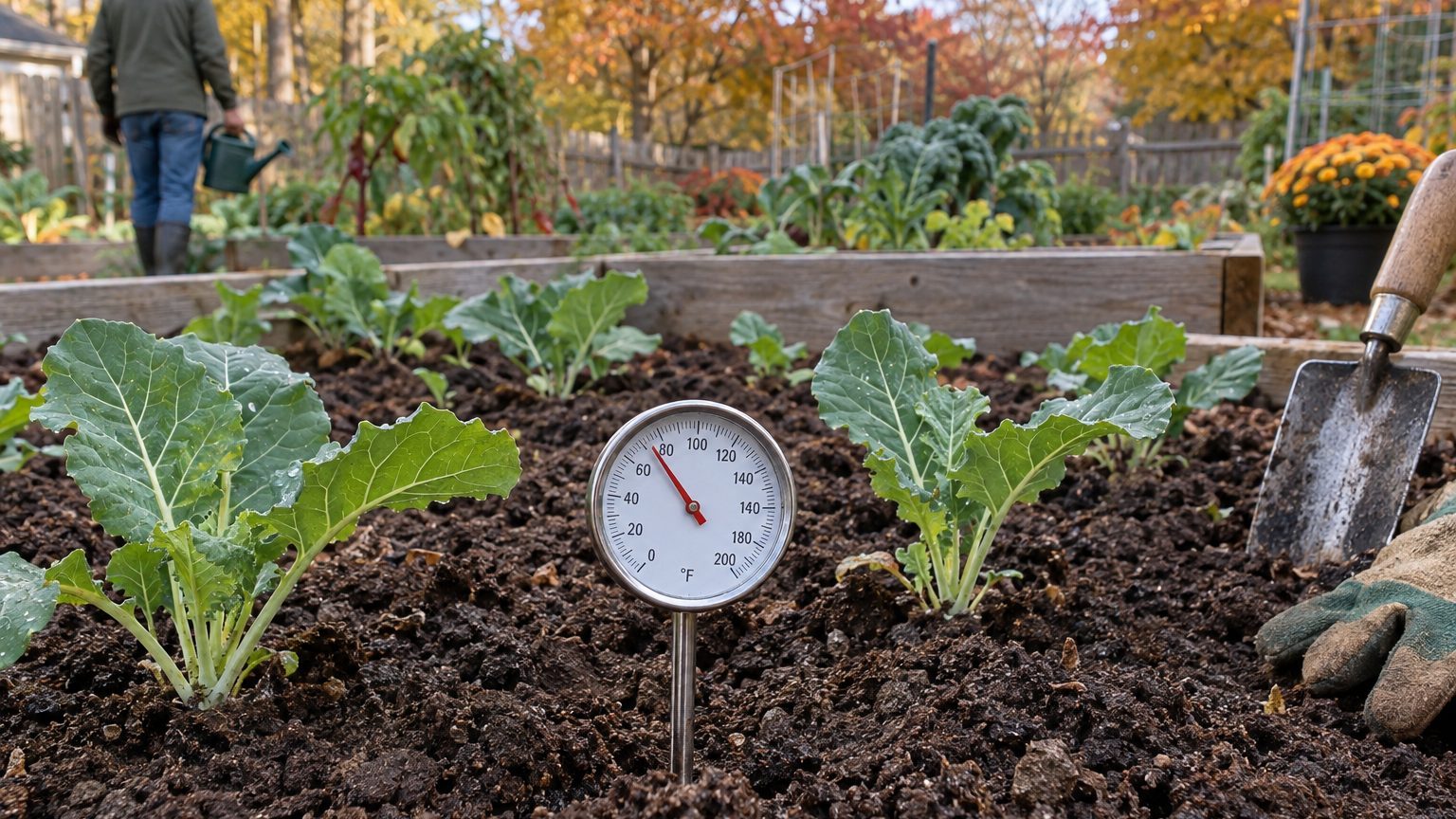
Push a soil thermometer into the bed in the morning, when the soil is at its coolest. Collard seed germinates once the soil has warmed, and it comes up faster as the bed warms. If the reading is stuck in the 30s or low 40s, wait. Drainage matters as much as temperature. Georgia clay holds water, so a handful of soil that smooths into a sticky ribbon is too wet to sow, whatever the thermometer says.
Which dates matter for the fall planting?
The fall crop works backward from the first fall freeze. At the same station that freeze arrives between November 13 and December 1. Plants need weeks of growth in cooling weather to reach harvest size before then, so seed or transplants go in during late summer. The ground is warm by then, and the real risk is a dry spell and heat stress on young plants, so shade and steady watering do more than the calendar.
Two cautions about the station. Atlanta’s airport sits in an urban heat island, so rural neighbors often see colder nights. North Georgia and the mountains freeze several weeks earlier in fall, while the coastal plain runs milder. The state Cooperative Extension office, University of Georgia Extension, publishes planting calendars by region, and a county office can tell you what the local ground is doing.
| Measure | Value at the Atlanta reference station |
|---|---|
| Last spring freeze (32°F, 30-70% band) | March 11 to March 29 |
| First fall freeze (32°F, 30-70% band) | November 13 to December 1 |
| Mean daily minimum, coldest month | 35.6°F |
| USDA Plant Hardiness Zone Map 2023 | 6a to 9b across the state |
How long the season lasts here
Between the last spring freeze and the first fall freeze, the reference station has a growing window that spans the warm months. Few places in the country offer that much room for a cool-season leaf crop, and the useful question is what the extra time lets you do.
Is there time for two sowings?
Yes, and in Georgia they do different jobs. The spring sowing gives you tender leaves in the weeks before heat arrives. The fall sowing gives you the standing crop, which is usually the better one. Cool nights turn the leaves sweeter after a few light frosts, and the plants hold in the garden when the rest of the beds are bare. Planting the same bed twice in one year is easy on a window this long. A staggered sowing in the shoulder weeks lets you pick over a longer stretch instead of facing one overwhelming flush. The Growing Collards: One Planting, Months of Harvest guide on this site covers succession sowing and how to space the rounds.
Is transplanting worth it with a long window?
A long window makes direct sowing a workable choice in spring, since a failed first sowing can simply be reseeded. Transplants still earn their place in two situations. The first is the late-summer planting, when seedlings raised in a cooler, shadier spot go into the bed already sized up and skip the hardest weeks of heat. The second is an early spring start, where a few weeks of indoor growth buy you leaves sooner.
When you transplant, check the roots. Slip a seedling out of its cell and look for a white, loose network that holds the soil together. A coil of roots circling the cell bottom should be teased apart before planting. Starts that have sat too long in a hot greenhouse or on a patio can be root-bound, and those struggle once set in clay.
Brassica crops cannot dodge their shared problems by changing beds within the family. Turnips and rutabagas are brassicas, so they share their pests and diseases with cabbage, kale and mustard. A gardener who rotates collards into a bed that held cabbage has rotated nothing. Move them to a bed that has been free of the whole group for a few seasons.
Heat and water in Georgia

Georgia summers are hot and humid, with regular rain, and that shapes the summer half of the collard year. Collards survive heat better than most leafy greens, but growth slows, the leaves toughen and the plants draw aphids, cabbage worms and loopers. High humidity and wet foliage favor leaf spots and other fungal trouble. Any spring planting has to be ready to pick before that pressure builds, and a late-summer planting has to get through it.
Those conditions suggest a handful of habits:
- Mulch the bed to hold moisture and keep the root zone cooler.
- Water at the base in the morning so leaves dry quickly.
- Cover young plants with floating row cover to keep out egg-laying moths, and hand-pick caterpillars that get through.
- Give each plant room, because crowded leaves stay damp and invite disease.
- Offer afternoon shade to late-summer seedlings while they are small.
How does a Georgia winter change the plan?
The winter low, more than the summer, shapes how this bed is run. At the Atlanta station the mean daily minimum of the coldest month is 35.6°F. Across most of the Piedmont and the coastal plain, then, winter nights stay near freezing without staying far below it. In those places collards behave as a standing crop. You pick a few lower leaves per plant at a time from November into March, and the plant keeps producing from the top.
That reach has a limit. The USDA Plant Hardiness Zone Map 2023 runs from 6a to 9b across Georgia, so a gardener in the mountains faces a very different winter than one near the coast. Higher ground and North Georgia freeze several weeks earlier in fall than the airport station does. A hard freeze there can end the harvest. Plan that bed as an autumn crop, pick heavily before the deep cold, and cover plants during the first sharp nights.
Anyone comparing climates will see the contrast quickly. Growing Collards in Ohio is mostly an autumn story because winters end the crop, and Growing Collards in Arizona turns on desert heat instead of cold. Georgia sits between them, with two sowings a year and a harvest that runs deep into winter.
Which collards suit Georgia
The right collard is chosen by type, and the type depends on what your site throws at the plants. Cultivar names carry local weight, and the lists that matter come from trials run in Georgia soil. University of Georgia Extension, through its county offices, can tell you which varieties its researchers and agents have grown and watched in your region. A name copied from a seed catalog or from another state’s list is far less reliable.
What traits should you look for?
Reason from the conditions you actually have:
- Humid summers: disease resistance comes first. Look for descriptions that mention tolerance to leaf spot and other foliar diseases, and give plants space for air to move.
- Heat at the root: choose types with sturdy, upright growth and thick leaves, set them with airflow around the base, and keep the soil mulched and shaded.
- Short seasons in the mountains: favor the earliest-maturing types so plants size up before the first hard freeze.
- Standing winter crop: pick types that keep producing new leaves from the crown and that hold their quality through cold weather.
Do open-pollinated types and hybrids behave differently?
Open-pollinated collards let you save seed and often carry a long local history, which means they have been selected over generations for the conditions where they were grown. Hybrids tend to be more uniform and sometimes carry specific disease resistance. Either can work. Read the seed packet for notes on bolting, disease and heat, and ask the county office what has held up near you.
One more habit protects the crop. Rotate collards away from every other brassica, including cabbage, kale, mustard, turnips and rutabagas. They share the same diseases and the same insects, and a bed that carried any of them last year has already seeded the problem.
Common questions
When should I plant collards in Georgia?
Sow in late winter to early spring, as soil warms and drains, with the March 11 to March 29 last-freeze band at Atlanta as your guide. Sow the main crop in late summer for fall and winter picking. Mountain gardeners should count back from an earlier fall freeze than the airport station shows.
Will collards survive a Georgia winter?
In the Piedmont and coastal plain they usually do, and many gardeners pick from November into March. Where winters are colder, a hard freeze can end the crop, so treat those beds as an autumn planting and harvest well before the deepest cold.
How do I keep caterpillars and disease off collards?
Cover young plants with floating row cover, hand-pick caterpillars and water at the base so foliage dries fast. Space plants for airflow, rotate away from the whole brassica family and clear old plant debris at season’s end.
How do I know harvested collards are still good?
Look at the leaves and the cut stems. Slimy patches, weeping spots, a sour smell or mold mean the leaves go to the compost, however fresh the rest looks. Rinse leaves well before cooking and keep them cold between harvest and the pot.