
In the low desert around Phoenix, collards are a fall-to-winter crop. You sow when the worst summer heat breaks and pick leaves through the cool months. In the high country around Flagstaff, they follow the northern pattern: spring or late-summer planting, ended by a hard freeze. Arizona covers both climates, so the right plan depends on your elevation.
When the soil is warm enough in Arizona

Start with the frost date, because most gardeners do. NOAA’s 1991-2020 Climate Normals for the Phoenix station (USW00023183) show no freeze in most years. A rare cold snap can bring 32F between late December and mid January, and Phoenix reached 32F in only 6 of 30 springs. Treat that as the odds, since a cold night can still show up.
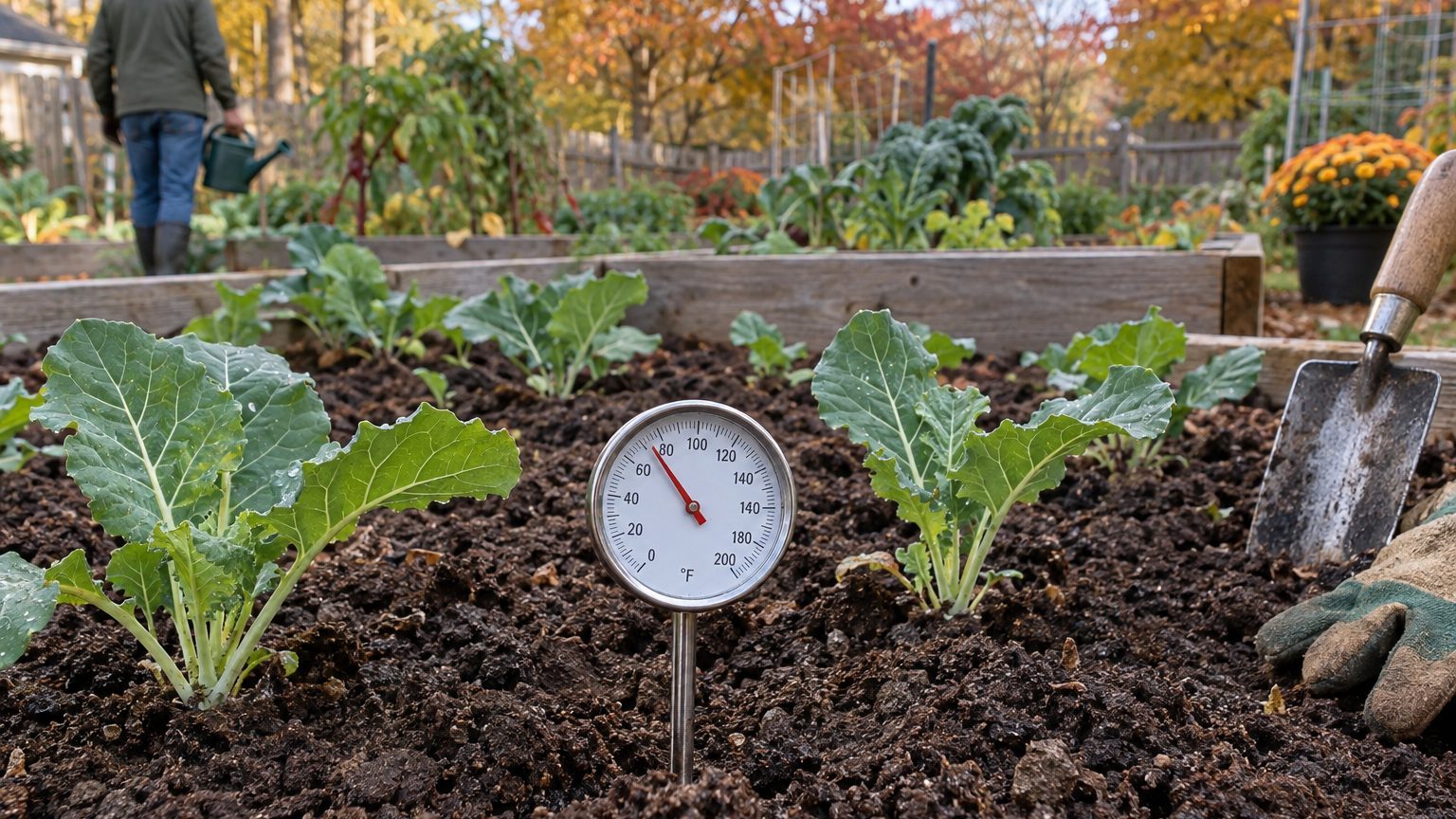
A frost date matters because it stands in for soil temperature. Across most of the country, soil warms after the last frost, and that is when collard seed sprouts quickly and seedlings settle in. In the low desert, that logic runs backward. The soil is warm all year, so the limit is heat rather than cold. Seed sown into scorching summer ground sprouts unevenly, and seedlings that do come up scorch, stall or turn tough and bitter as they grow.
A frost-based planting calendar is therefore useless for Phoenix and the surrounding low desert. Sow in early fall instead, once nights begin to cool and afternoon sun no longer wilts a freshly watered seedling. A simple test works well. If new transplants droop by midafternoon despite moist soil, the bed is still too hot. Shade cloth over the bed in the first few weeks buys a little time.
When should you plant collards in the Arizona high country?
Flagstaff and the rest of the high country freeze hard and behave like a northern garden. The USDA Plant Hardiness Zone Map (2023) spans zones 4b to 10b across the state, so a single recommendation cannot cover everyone. In cold-winter areas, wait until the last spring frost has passed and the soil has lost its chill, then sow or transplant. Collards shrug off a light late frost once established, but seedlings in cold, wet ground sit and do nothing. For dates tied to your own county, the University of Arizona Cooperative Extension is the place to ask.
How long the season lasts here
The Phoenix reference station has a 365-day frost-free season, and no reliable fall freeze marks its end. A window that long sounds limitless, but heat sets the real boundaries. In the low desert, the usable window for collards runs from early fall, once the heat eases, to spring, when warming days push plants toward flowering.
That window allows more than one sowing. A first sowing in early fall can be followed by a second a few weeks later, so the whole bed does not mature at once. A third sowing in late winter can give you tender spring leaves before the heat returns. The Growing Collards: One Planting, Months of Harvest guide explains how to stagger sowings so picking stays steady.
A long window also changes the transplant decision. If you buy or grow seedlings, check the roots first by sliding a plant out of its cell. Firm, white roots that fill the soil without circling are what you want. A root-bound seedling is worth rejecting when the window is long, because you can resow.
The picture shifts in the high country, where freezing weather bounds the season on both ends. There the first sowing may be the only one, so transplanting gives a real head start. The root check matters more too, since a stunted seedling has no time to recover before fall. Gardeners at high elevation can add a second crop in late summer for picking after the first light frosts, which sweeten the leaves.
Heat and water in Arizona

Summers in the low desert are long and hot, and the heat runs for months rather than weeks. Collards are a cool-season crop, and a summer bed in full sun rarely survives. The monsoon season, which brings sudden storms and humid spells, adds moisture without cooling things down much. That combination favors leaf diseases in dense plantings, so spacing matters.
Water is the other half. Desert soil dries fast, and collard leaves toughen when the plant swings between dry and soaked. Drip irrigation or a soaker line delivers water to the root zone steadily, and a few inches of mulch keeps soil temperatures down. Water early in the morning so leaves dry before the afternoon.
Can collards stay in the ground all winter in Arizona?
In the low desert, yes. The mean daily minimum of the coldest month at the Phoenix station is 45.3F, which is cool but nowhere near killing a collard plant. Here collards become a standing crop. You pick the lower leaves one at a time, leaving the growing tip so the plant keeps producing. Mild winters also keep aphids and cabbage loopers active, so check the undersides of leaves. Row cover, hand-picking and a strong spray of water handle most problems without chemicals.
In the high country, winter decides the plan. Hard freezes end the crop, so collards there are an autumn crop that you pick until the temperature plunges. Plan the sowing so plants reach full size before the cold arrives.
Collards are brassicas, and so are cabbage, kale, mustard, turnips and rutabagas. All of them share the same pests and diseases. Rotating collards into a bed where turnips or cabbage grew last season rotates nothing, so move them to a bed that has been free of the whole family.
Which collards suit Arizona
Choose by type, and let the local extension office name the varieties. Cultivar names carry weight only when they come from trials in your own soil and climate, and a variety that thrives in humid Georgia can fail in Arizona’s desert. The University of Arizona Cooperative Extension has county offices that know what has been grown near you.
What type of collard handles low-desert heat?
Look for types described as heat-tolerant and slow to bolt. These keep producing leaf into warm spells and hold off flowering as spring days lengthen. Open-leaf, loosely growing plants are better than tight, dense ones, because airflow between leaves dries them after monsoon moisture or irrigation. Give the root zone shade from mulch, and consider afternoon shade cloth in the first weeks.
What type works best in the high country?
A short season favors the earliest-maturing types, which reach harvest before the first hard freeze. Cold tolerance matters too, since a type that handles light frost will keep producing longer into the fall. If you are comparing climates, the Growing Collards in Georgia guide shows how humid heat changes the choice, and the Growing Collards in New Jersey guide shows what a shorter season does.
Disease resistance deserves attention wherever monsoon humidity or cool damp weather settles in. Ask the extension office which types hold up to leaf spots and mildew in your county, and buy seed or transplants from sources that can tell you what they are.
Common questions
When is the best time to plant collards in Phoenix?
Early fall, once the heat has eased and nights start to cool. Spring sowings also work if they are early enough to mature before the hot weather arrives, but they run out of time quickly.
Do collards survive an Arizona summer?
In the low desert, rarely. Summer heat stalls growth and toughens leaves. Gardeners generally pull spring plants when they flower and start again in fall. At higher elevations, where summers are milder, collards can grow through the warm months.
Will frost hurt my collards?
A light frost does no harm and sweetens the leaves. A hard freeze, which is common in the high country, ends the crop. In the low desert, a freeze is rare, and the occasional cold snap between late December and mid January is usually survivable.
How often should I pick collard leaves?
Where winters are mild, pick a few of the lower, full-sized leaves from each plant every week or so, leaving the growing tip in place. The plant will keep making new leaves as you harvest. Pick only what you need, and wash everything well before cooking.