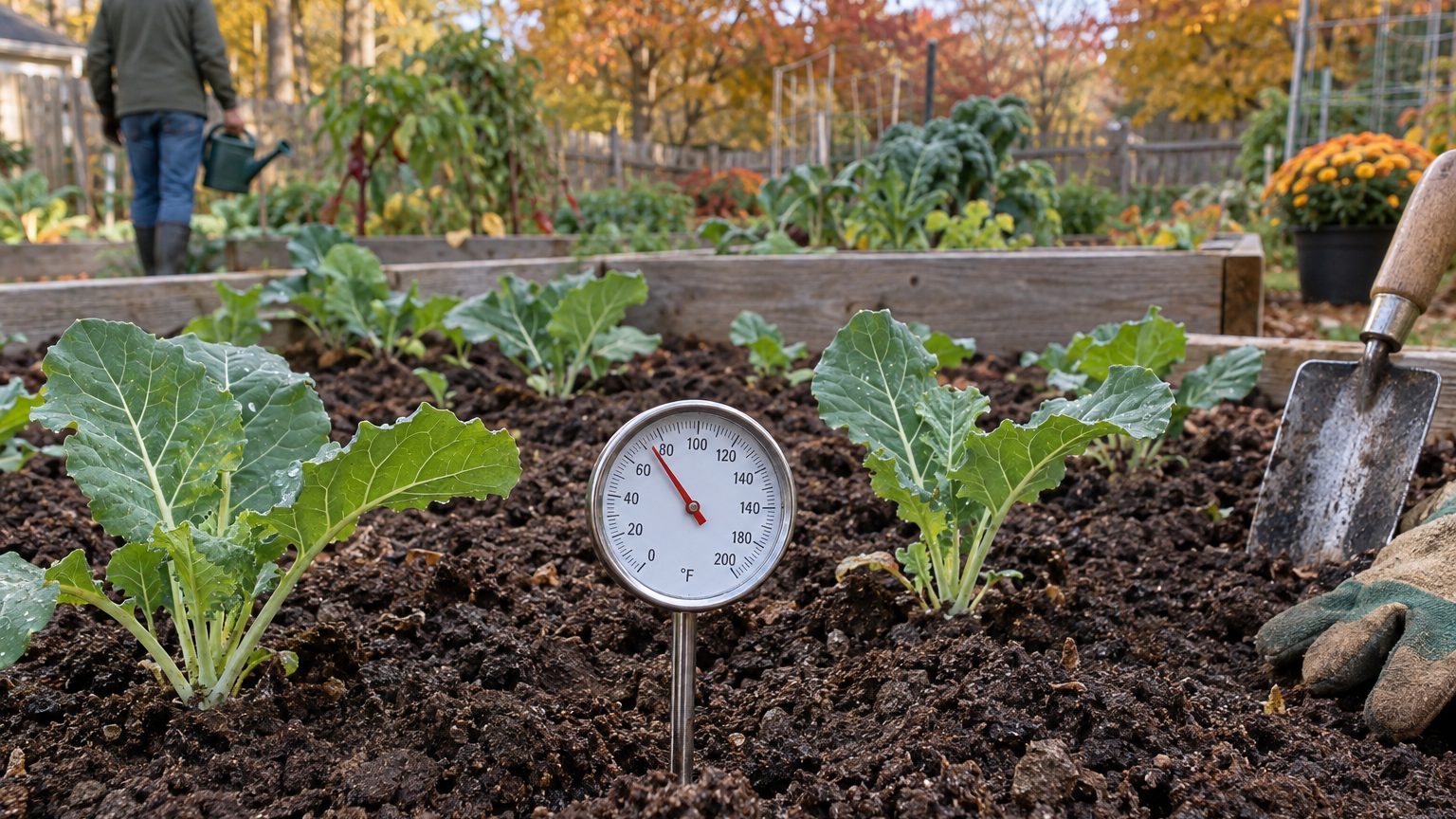

Collards grow well in Idaho, but the calendar depends on elevation. Lower valleys have room for a spring planting and a second one for fall. Higher valleys usually fit a single planting that ends at the first hard freeze. Winter cold limits the crop more than summer heat does, and soil temperature is a better planting signal than the date. Below: when to sow, how long the season runs, and what to buy.
When the soil is warm enough in Idaho

At the Boise reference station (station USW00024131 in the NOAA NCEI 1991-2020 Climate Normals), the last spring frost falls between April 23 and May 7. That range is the 30 to 70 percent probability band for a 32 F freeze, so in any given year frost can show up before or after it.
The frost date says when the air stops freezing at night. Seeds live in the soil, and soil in April is often cold and soggy from snowmelt. Hardened-off collard plants shrug off a light frost. Seed sown into cold, wet ground sprouts slowly and unevenly, and the seedlings that do come up sit still. Soil usually reaches a useful temperature some days to a few weeks after the frost risk ends, depending on slope, mulch and how wet the bed is.
A cheap soil thermometer settles the question. Push it into the bed when the reading is at its lowest. Seed sprouts steadily once the soil has warmed, and faster as it warms further. Three or four mornings in a row at that reading is a better green light than any date.
Transplants offer a second route. Plants hardened off can go out near the frost band, with a sheet or row cover on hand for any night forecast to dip below 32 F. Seed is cheaper and forgiving once the soil is ready. Transplants buy time, which matters more the shorter the season.
Boise sits in a low valley. Most of Idaho is higher and colder, and the last spring frost there can arrive weeks later, with soil that stays cold well past it. Gardeners on the high plateaus and in mountain towns should lean even harder on the thermometer. The county extension office can tell you the local frost dates and what growers nearby have planted successfully.
Soil temperature works the other way in midsummer. A July seedbed is warm enough for fast germination, and the job there is keeping the top inch of soil damp until the seedlings are up.
How long the season lasts here
The reference station has a mean last spring frost between April 23 and May 7 and a mean first fall frost between October 7 and October 21. That is the Boise valley. Higher ground loses weeks at both ends.
Is there time for a second sowing of collards?
In a Boise-type season, yes. A spring planting can be picked through early summer. A second sowing in mid to late summer then matures into the cool weather of fall, which is usually the better crop, because cool nights sweeten the leaves. To time it, count back from the first fall frost band (October 7 to October 21). Use the days to maturity on the seed packet or plant tag, check whether that count starts at sowing or at transplanting, and add a couple of weeks, since growth slows as days shorten and nights cool.
Sowing a short row every few weeks in spring keeps tender leaves coming without a glut. The general guide, Growing Collards: One Planting, Months of Harvest, covers picking leaf by leaf so that one planting keeps producing.
Is transplanting worth it where the season is short?
In a high valley the first sowing is often the only one. Every week matters, which makes transplants attractive, since they skip the slowest stage of growth. The catch is that a weak transplant wastes the head start. Slide a plant out of its cell before you buy or plant it. The roots should be white and firm, holding the soil together without wrapping into a tight coil. Brown, soft or slimy roots, or a plant yellowing at the base, belong back on the shelf.
Gardeners in cold-winter, short-season places can compare notes with Growing Collards in South Dakota and Growing Collards in Ontario, which show how a brief season shapes the whole plan.
Heat and water in Idaho

Summers in the lower valleys run hot and dry, and rain contributes little. Water comes from irrigation or the hose. Collards handle heat better than lettuce or spinach, but in the hottest weeks growth slows, leaves toughen and cabbage aphids and flea beetles show up. A layer of mulch keeps the root zone cooler. Water regularly, more in a heat wave, delivered at the base of the plant by drip line or soaker hose in the morning. Wet foliage going into a cool night invites leaf disease. Floating row cover keeps flea beetles off young plants without any spray.
In the higher valleys the picture reverses. Summers are cooler there, heat is rarely the problem, and the crop grows slowly. A cool, damp stretch brings powdery and downy mildew, leaf spots and slow maturing. Give plants room for airflow, water early in the day, and pull yellowing lower leaves.
Collards are brassicas, and so are turnips and rutabagas. All of them share pests and diseases with cabbage, kale, broccoli and mustard. A gardener who moves collards into a bed that grew turnips last year has rotated nothing. Keep collards out of any spot where a brassica grew recently.
Can collards stay in the garden all winter in Idaho?
Winter decides how this bed is planned. The mean daily minimum of the coldest month is 25.4 F at Boise (NOAA NCEI Climate Normals, 1991-2020). That is an average, so the coldest nights fall well below it. Collards sweeten after light frost, and they tolerate a lot of cold when well hardened, but a hard freeze burns the leaves and can kill the plant. Where winters stay mild, collards stand in the garden and are picked leaf by leaf through the cold months. Boise-type valleys do not reliably give that. Plan on an autumn crop that ends at the hard freeze. Mulch or row cover can stretch the harvest by a few weeks.
The USDA Plant Hardiness Zone Map (2023, built on 1991-2020 normals) places Idaho across zones 3b to 7b. The Boise valley is toward the warmer end of that range. Mountain and high-plateau gardens are far colder, and for them collards are a one-season crop that finishes early.
Which collards suit Idaho
Choose by type, and let the garden’s climate narrow the list. A short season favors the earliest-maturing types, the ones with the shortest days-to-maturity on the packet. A hot, dry summer favors plants with a broad, open canopy that shades their own roots, set far enough apart for air to move between them, and slow to bolt. Cool, damp stretches make disease resistance the first line to read on a seed packet, since mildew and leaf spot spread fast in still, wet foliage.
No cultivar names appear here, deliberately. Idaho spans zones 3b to 7b, and a variety that does well in the Boise valley may not finish in a mountain town. Only varieties trialled in your own area mean anything. Local trials record which ones finished before frost, held up in the heat and resisted disease. A name picked from a national seed catalog does not give you that.
University of Idaho Extension runs county offices across the state. Call or visit the one nearest you and ask three things:
- Which collard varieties have done well in nearby gardens or trials?
- What are the average frost dates for my elevation?
- Which diseases and pests are common this year?
Seed packets and plant tags then work as a filter. Look for early maturity if you garden at elevation, a spreading habit and bolt tolerance if summers run hot, and disease resistance listed on the label if your summers run cool and damp.
Common questions
When should I plant collards for a fall harvest in Idaho?
Sow or transplant in mid to late summer, timed backward from the first fall frost. At the Boise reference station that frost falls between October 7 and October 21, and in higher valleys it comes sooner. Add a couple of weeks to the packet’s days to maturity, because growth slows in the shortening days of fall.
Will collards survive an Idaho winter?
In most of the state, no. The coldest month at Boise averages a daily low of 25.4 F, and higher areas are colder still. Mulch or row cover can carry plants through light freezes. A plant that survives winter will bolt in spring, so most gardeners replant instead.
Does frost make collards taste better?
Light frost does. Cold nights push the plant to turn starch into sugar, which sweetens and softens the leaves. A hard freeze ends that benefit and damages the foliage, so pick generously after the first light frost and before the deep cold arrives.
Can I plant collards where turnips or rutabagas grew last year?
Avoid it. Turnips and rutabagas are brassicas and share diseases with collards, cabbage, kale and mustard. Rotate collards away from the whole group. Radishes, broccoli and Brussels sprouts are brassicas too, so they belong on that same list.