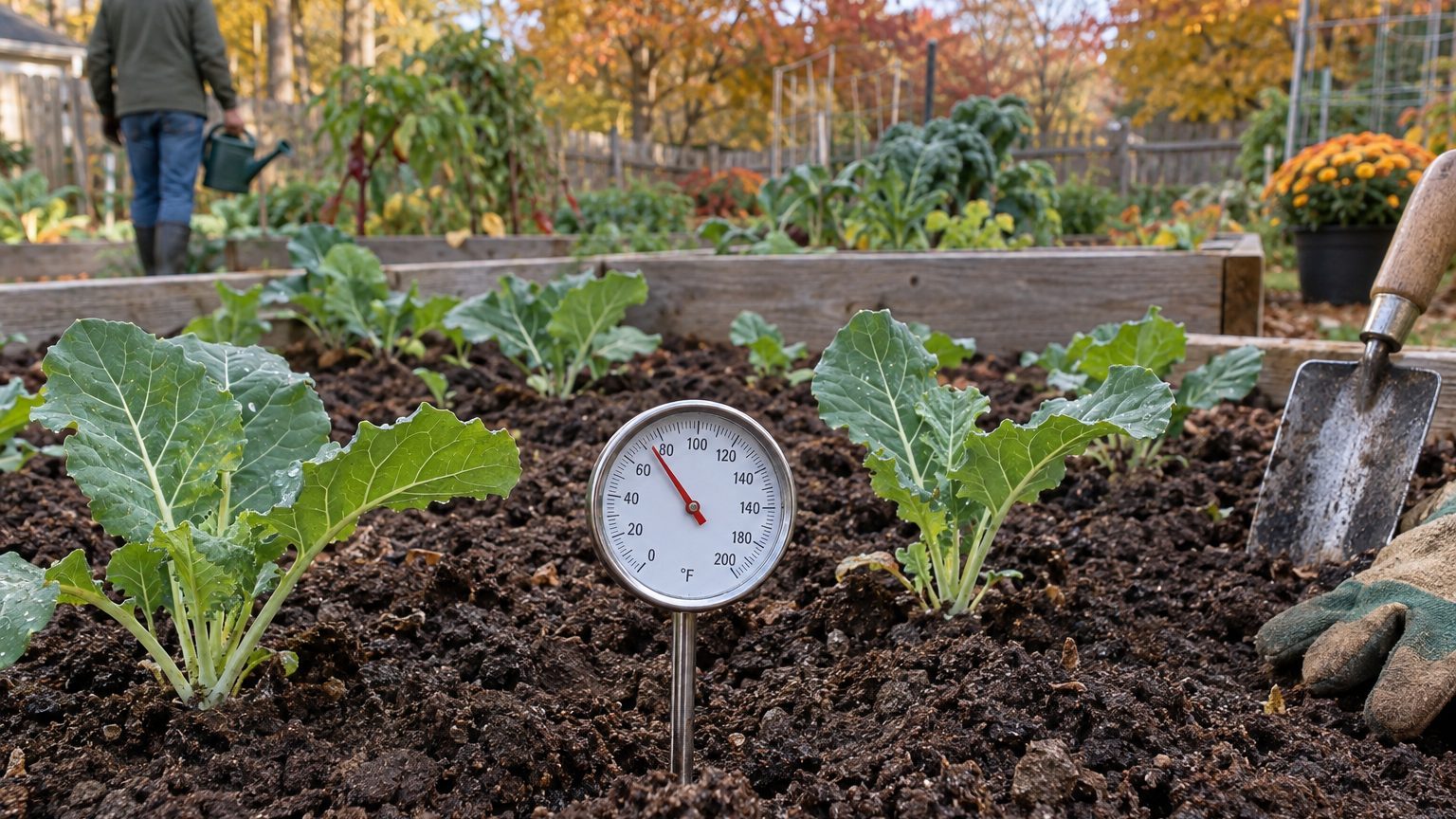

Sow or transplant collards outdoors once Ontario’s soil has warmed past the mid-40s Fahrenheit, typically a week or two after the region’s average last frost in late April. The province’s cool spring and firm frost dates make timing the biggest factor in a good crop, more than heat ever is. This guide covers the exact frost dates, how long the growing window actually runs, how Ontario’s winter shapes the way collards get planted, and which type suits the climate best.
When the soil is warm enough in Ontario

Frost is the number gardeners fixate on, but it’s really a stand-in for something else: soil temperature. Collard roots and seeds don’t respond to the calendar, they respond to whether the ground has shed its winter chill. In Ontario, that shift usually lands a week or two after the frost risk itself has passed, because soil warms slower than air does.
Environment and Climate Change Canada’s 1981-2010 climate normals put the province’s average last spring frost at April 30, based on the Toronto Lester B. Pearson International Airport station. That’s a mean date, not a guarantee. In roughly half the years on record, frost has actually landed later than April 30, sometimes well into May. Treat it as the middle of a window, never as a safe line to plant against.
Geography matters here too. Pearson Airport sits in the warmer, lake-moderated part of the province. Gardeners farther north, around Sudbury or Timmins, or in higher inland districts away from Lake Ontario’s influence, should expect frost risk to linger for weeks past this average. A frost date from one station describes one location, not the whole province.
Once the frost risk has genuinely passed, wait for the soil itself to catch up. Collards germinate and establish best once the ground has warmed past the mid-40s Fahrenheit and is trending upward, not just above freezing for a night or two. Pushing seed or transplants into cold, wet spring soil rarely saves time. It usually costs it, since the plants sit stalled until conditions actually favor root growth.
Collards belong to the brassica family, alongside cabbage, kale, mustard, turnip and rutabaga. Any bed that grew one of those crops last year, or the year before, carries the same pest and disease pressure a fresh collard planting would face. Following cabbage with collards in the same soil isn’t really a rotation at all. The main collard growing guide on this site covers bed history and rotation planning in more detail.
How long the season lasts here
| Milestone | Date or figure |
|---|---|
| Average last spring frost | April 30 |
| Average first fall frost | October 16 |
| Frost-free window | 169 days |
| Canadian hardiness zone | 7a |
Subtract Ontario’s two average frost dates and the frost-free window works out to 169 days, running from that April 30 average last frost through the October 16 average first fall frost recorded at the same Pearson Airport station. That’s a solid window by Canadian standards, though still shorter than most of the northern United States.
A season that long changes the math on planting collards just once. With roughly five and a half months open, many Ontario gardeners can direct-sow or transplant a first round in spring, harvest through summer, then put in a second sowing in mid-to-late summer aimed at a fall crop that matures as the weather cools, which collards actually prefer. That second planting is worth planning for rather than treating as an afterthought, since collards sweeten with a light frost rather than being ruined by one.
Whether to start from seed or transplant depends partly on that timeline. Transplants started indoors give a head start on the spring sowing, useful given how slowly Ontario soil warms in April. For the summer sowing aimed at fall harvest, direct seeding into warm July or August soil usually catches up fast enough that transplants add little advantage.
Root health matters more for that second sowing, since the bed has already carried one crop through a humid Ontario summer. Before setting anything held-over back into that ground, check roots and crowns closely. A soft patch, a weeping spot or a moldy crown ends the question, regardless of how sound the leaves still look.
Gardeners comparing notes across the collard-growing world will find Ontario sits in the middle. In Maine, a colder climate and shorter frost-free stretch usually leave room for only one solid planting. In Hawaii, frost never enters the picture, and collards can go in nearly any month. Ontario’s 169-day window lands between those extremes, generous enough for two sowings but still bounded by a real frost date on both ends.
Heat and water in Ontario

This page’s climate data doesn’t include a summer heat-day count or a rainfall total for the reference station, so the honest read here leans on what is verified: winter cold, not summer extremes, is what actually shapes an Ontario collard bed.
The coldest month at Pearson Airport averages a daily minimum of -10.2°C (13.6°F), a figure from Environment and Climate Change Canada’s 1981-2010 normals. That’s decisively below freezing, not a mild winter dip a few extra plants might shrug off. It places the reference station in Canadian hardiness zone 7a, a system built on seven climate variables that doesn’t translate directly to the USDA zones used on this site’s American pages.
That cold winter answers the question of how collards behave here more than any summer figure could. In climates where the coldest month stays mild, well above freezing on average, collards become a standing crop, picked leaf by leaf from November into March. Ontario’s winter minimum rules that out. Here, collards are strictly an autumn crop, planted for spring or summer growth, harvested through fall, and finished off by the season’s first hard freeze rather than nursed through winter in the ground.
Without a verified heat-day count, the safer planning assumption is Ontario’s well-documented humid continental pattern: warm, muggy stretches under Great Lakes influence rather than sustained desert-style heat, with rainfall that tends to arrive fairly evenly rather than concentrated in a short window. That combination favors different problems than a hot, dry climate would. Instead of scorch and bolt, Ontario collard beds are more likely to face slow-drying leaves after rain and mildew pressure in a still, humid week. Spacing plants for airflow and watering at the base does more good here than any amount of shade cloth.
Humid, still air is exactly the condition that favors diseases collards share with the rest of the brassica family, cabbage, kale, mustard, turnip and rutabaga among them. A few habits reduce that pressure without any product name attached:
- Water the soil directly rather than wetting the leaves, especially late in the day
- Space plants wide enough that a breeze can move between them
- Clear old brassica debris out of the bed at season’s end rather than leaving it over winter
- Avoid following cabbage, kale or other brassicas in the same bed the next year
Which collards suit Ontario
None of Ontario’s numbers point toward a single named variety, and this page won’t pretend otherwise. What the figures do point toward is a type of collard suited to a fairly short, cool-leaning, humid season, and that’s a meaningful narrowing even without a brand name attached.
A 169-day window with a firm frost date at both ends favors collard types bred to reach a harvestable size quickly, rather than long-season types that need a stretched-out summer to bulk up. Given the humidity that comes with Ontario’s Great Lakes climate, disease resistance, especially to the leaf spots and mildews that spread in still, damp air, deserves more weight in the decision than heat tolerance does. Ontario summers rarely test a plant’s ability to shrug off sustained heat the way a Southern garden would, so airflow and spacing matter more here than shade tricks.
The one recommendation this page can make with confidence is where to look instead of a cultivar name: Ontario’s Ministry of Agriculture, Food and Rural Affairs publishes the variety trials and regional advice that actually apply to this climate, updated as new types get tested locally. A collard that performed well in a trial two provinces away, or two states south of the border, isn’t the same recommendation as one tested against an Ontario winter and an Ontario humid July.
That distinction matters more than it sounds. Seed catalogs describe traits, leaf shape, claimed disease resistance, growth speed, under ideal trial conditions that may or may not resemble a particular backyard. The single most useful step a gardener can take before ordering seed is checking that provincial trial data against the limits this page has already laid out: the moderate frost-free window, the humid summer air, and a winter cold enough to end the season outright rather than let plants stand through it.
Collards bought as transplants deserve the same root check mentioned earlier. A soft patch, a weeping spot or a moldy crown at the base is reason enough to leave that tray at the garden center, no matter how promising the variety name on the tag looks.