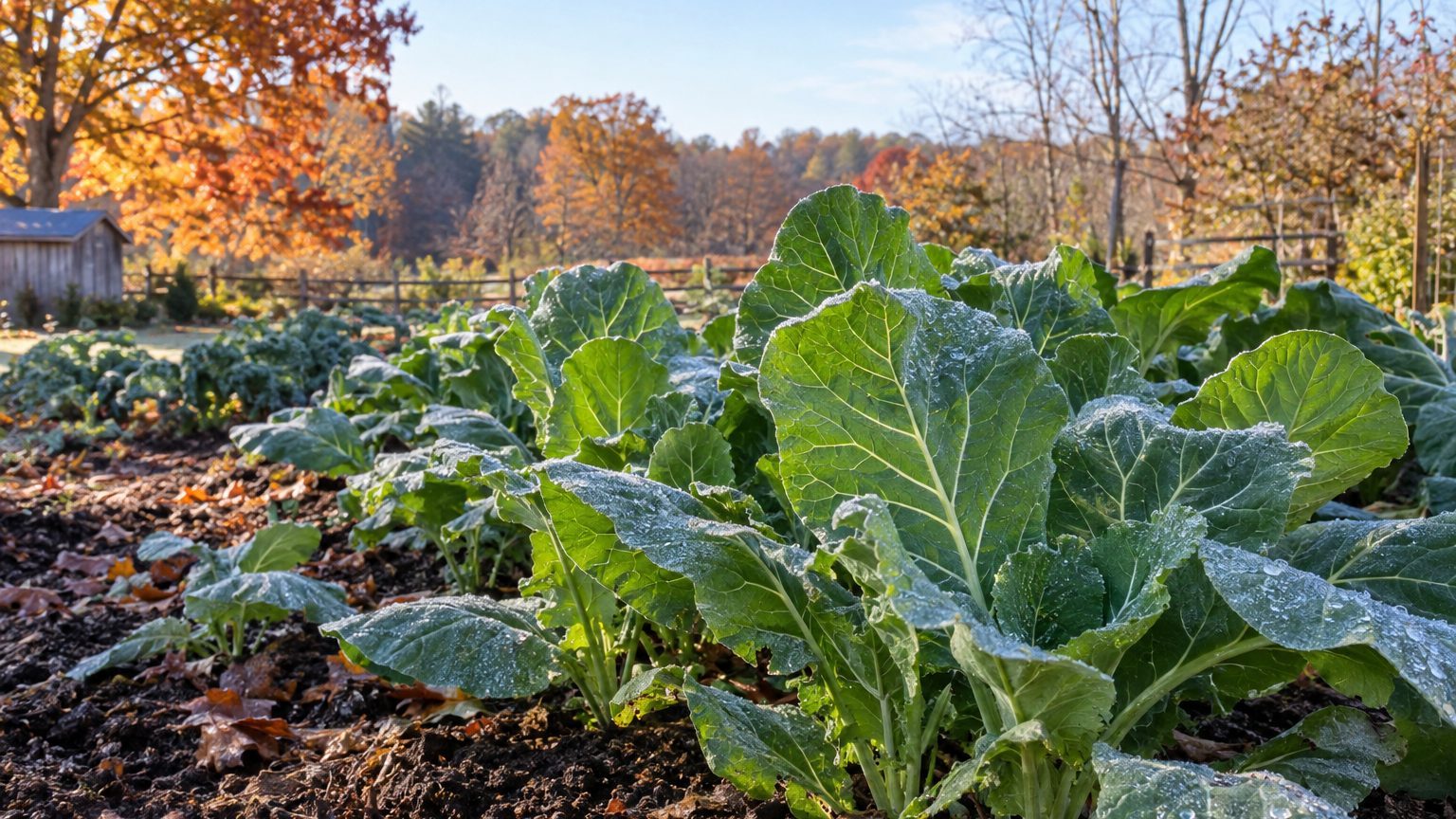

Kentucky gardeners can plant collards twice a year: a spring crop set out in early March, and a fall crop set out in late summer. Collards tolerate frost, so the calendar is built around the freeze dates at each end of the growing season. The fall crop is the one most Kentucky gardeners prefer.
The short answer for Kentucky
Set spring transplants outdoors from early March into mid-April, and set fall transplants out from late July through August. The dates come from Louisville’s NOAA 1991-2020 Climate Normals. The last spring freeze falls between March 24 and April 4, and the first fall freeze between November 2 and November 12. Each range is the band where the chance of a 32°F freeze sits between 30 and 70 percent. Frost on those dates is likely, but it is far from certain.
Louisville is an urban station, and NWS Louisville warns that it behaves differently from the rural countryside around it. Gardens outside the city should expect a tighter window. Plan on the later end of the spring range and the earlier end of the fall range until your own garden proves otherwise.
When do you plant collards in spring in Kentucky?
Start seed indoors in late January or early February. A light frost will not hurt established collard plants. A hard freeze on a newly set transplant can, so keep a row cover or an old bedsheet handy for the first few weeks.
When do you plant collards for fall in Kentucky?
Sow seed in flats from late June through July. Set the transplants in the ground from late July through August. They then have roughly two to three months of growth before the first freeze arrives in early November. Fall collards are usually the better crop here. Cool nights turn the leaves sweeter, and the plants keep producing through the first frosts.
| Crop | Start seed | Set out | Harvest |
|---|---|---|---|
| Spring | Late January to early February, indoors | Early March to mid-April | Late spring into early summer |
| Fall | Late June to July, in flats | Late July through August | October through early winter |
The dates are a starting frame. For variety choices that fit these windows, see The Best Collards and Greens for Kentucky. The wider growing basics are in Growing Collards in Kentucky.
What will not work here

Sowing seed outdoors in January or early February will not work. Even in a mild year, a freeze on March 24 to April 4 is a real risk. Cold, wet soil rots the seed or leaves it sitting for weeks. Start the seed indoors and move the plants out when the ground has warmed a bit.
A spring crop set out in late April or May will not work well either. Kentucky summers turn hot and humid early. A plant that is still small when the heat arrives will bolt, or it will turn tough and bitter before it has produced much. Cabbage worms and aphids also build up as the weather warms. Spring collards are a race against June, so get them in early.
Late fall planting fails for a different reason. Collards set out in mid-September have only a short stretch before the first freeze, which arrives November 2 to November 12 at the Louisville reference station. A rural garden may see it sooner. The plants stay small and put out little leaf before growth slows in the short days of November and December. Waiting until Labor Day to start is the most common mistake.
Tight spacing is a problem in a humid state. Collards crowded into a bed in August stay damp after rain and dew. That invites leaf spot and other fungal diseases, and it hides caterpillars. Give each plant room in the row so air can move through the foliage. Water at the base, not over the leaves, and do it in the morning.
Don’t count on collards to winter over every year without help. The mean daily minimum of the coldest month at Louisville is 27.8°F. On an average January night the plants are working with temperatures just below freezing, which they usually handle. A cold snap well below the average will burn the outer leaves and can kill young plants. A thick layer of straw mulch and a row cover on the coldest nights help. Treat a winter crop as a bonus and not something to bank on.
What changes across Kentucky
Kentucky does not have one hardiness zone. The USDA Plant Hardiness Zone Map (2023, built on 1991-2020 normals) places the state between zone 6a and zone 7a. That system rests on one measure, the average annual extreme minimum temperature, so it says a lot about winter survival and little about the exact day to plant. Because of that spread, there is no single answer for the whole state. The dates above belong to Louisville, the reference city, and other parts of Kentucky differ.
Gardeners in the northern counties along the Ohio River, and anyone in the higher ground of the eastern mountains, are likely to sit toward the colder end of the range. For them, shift both ends of the calendar inward. Set spring transplants out a little later, and get fall transplants into the ground a little earlier, since the first fall freeze can arrive sooner than November 2. A cold valley floor in the hills can frost earlier than a ridge only a few hundred feet higher, because cold air drains downhill and pools.
Gardeners toward the warmer end, in the southern and western parts of the state, can lean on the dates as written and may find the fall crop stays in production longer into winter. Collards in the mildest winters often keep going into January.
To see where your own ground falls, look up your location on the USDA Plant Hardiness Zone Map. Your zone only affects how cold it gets. Your local freeze dates, which come next, matter more for timing.
Where to check this for your own county
Your county office of University of Kentucky Cooperative Extension is the best next stop. Every Kentucky county has one, staffed by agents who see local conditions year after year. A county recommendation beats a state one, and the dates here are the statewide version, anchored to Louisville.
When you contact the office or browse its materials, look for two things:
- The local vegetable planting calendar, which lists spring and fall dates for greens and usually reflects the county’s own frost patterns.
- The varieties that have been trialled in your county, so you pick collards that have already performed in your soil and your summers.
It is also worth asking how local gardeners handle the late-summer slot for fall transplants. County agents often know which pests are active in August, and which weeks have been wet or dry lately. A short call or visit may save a failed planting.
Checking this against your own garden
Your own observations outrank every date above. Three things are worth watching, and none of them needs equipment.
The first is soil warmth, which you can judge by feel. Push your hand a few inches into the bed in early March. If the soil is cold enough to ache and clumps into a wet ball when squeezed, wait. If it crumbles and feels cool but not icy, transplants can go in. A south-facing bed near a wall will warm up days before a low, shaded one, and that difference tells you where to plant first.
The second is the first catkins on nearby trees. Catkins loosen and hang as the season turns, and when they do, the worst of winter is usually over. Compare their timing from year to year, and against what your neighbors see. If yours open earlier than the neighborhood’s, your spot is warm. If later, expect a tighter calendar.
The third is the first true leaves on your seedlings. The first leaves to appear are the seed leaves. The true leaves come after, and they show the seedlings are ready to be hardened off. Seedlings that reach that stage quickly in your bed tell you the spot has good light and warmth. If they lag, consider moving the next batch to a sunnier place. In fall, watch which corner of the yard frosts first. That low pocket is where cold air settles, and it is where your last transplants are most at risk.
The Moon calendar is a separate, older custom: see when to plant collard greens by the moon, written as tradition rather than fact.
Common questions
Can you plant collards in the summer in Kentucky?
You can start seed in flats in late June and July for the fall crop. Set the plants outdoors from late July through August. Planting a spring-style crop in midsummer ground tends to run into heat stress and pests.
Is spring or fall better for collards in Kentucky?
Fall is usually better. The plants grow through cooling weather, the leaves turn sweeter after light frosts, and the first freeze at Louisville does not arrive until November 2 to November 12. Spring collards work too, but they have to be planted early to beat the heat.
Do collards survive a Kentucky winter?
Often, but not always. The mean daily minimum in the coldest month at Louisville is 27.8°F, which established plants generally handle. Hard cold snaps below that can burn leaves. Mulch the base and cover the row on the coldest nights.
How late can you set out fall collards?
August is the safest month. Plants set out in early September have a shorter run before the first freeze, and in northern or higher-elevation gardens that run is shorter still. Late plantings stay small, so use the earliest date that suits your county.