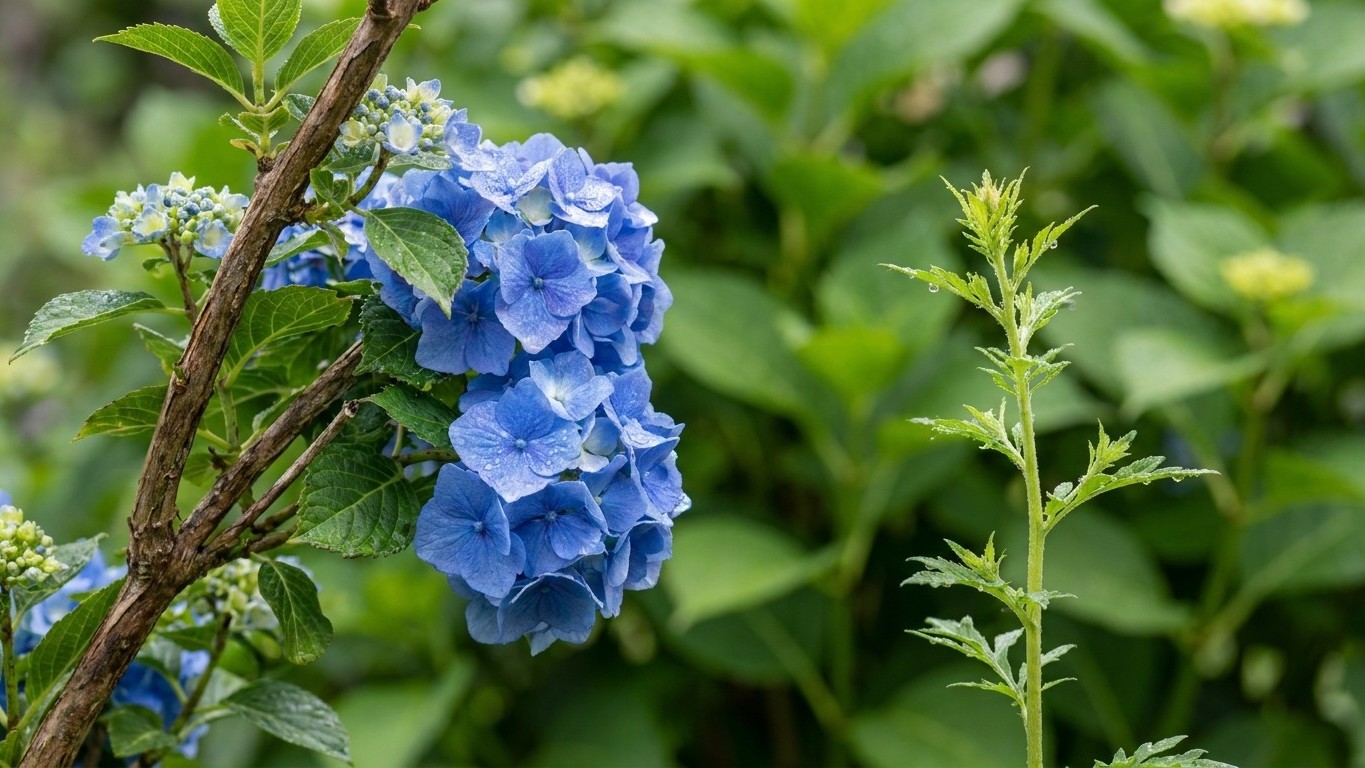

Almost every garden hydrangea sold in the US survives a Louisiana winter. Cold rarely kills the plant. What a freeze takes is flower buds, and only on types that set them the summer before. Panicle and smooth hydrangeas bloom on new growth, so a freeze barely slows them. Bigleaf and oakleaf types can lose a season of flowers. Summer heat, more than winter cold, decides which ones stay healthy.
What this comes down to in Louisiana

Around New Orleans, the typical last spring freeze falls between January 18 and February 8, and the first fall freeze between December 17 and January 8, so every common hydrangea group comes through. Those dates come from the NOAA NCEI 1991-2020 Climate Normals for the New Orleans station, where a 32 F freeze happens in only 86.8 percent of years. Roughly one year in seven has no freeze at all.
Because the fall window runs into the new year, this is not a normal planting calendar. The USDA Plant Hardiness Zone Map spans zones 8a to 10a across the state, and that system rates only the average coldest night of the year. What separates them is when their flower buds form and how long those buds stay exposed. They run here from the most freeze-proof to the most exposed.
Limelight
A panicle hydrangea that blooms on new wood. Buds form in spring after the last freeze, so a cold snap in the window above costs a few leaf tips at worst. It handles summer heat better than most hydrangeas and gives the most dependable flowers in south Louisiana.
Annabelle
A smooth hydrangea, also a new-wood bloomer, so winter cannot take its flowers. The stems can flop in heavy summer rain and heat. Give it afternoon shade, and it returns every year without fuss.
Endless Summer
A reblooming bigleaf that flowers on both old and new wood. If a freeze kills the early buds, the plant makes more later in the season. That second chance makes it the safest bigleaf for a state where warm Januaries tempt buds to swell early.
Snow Queen
An oakleaf hydrangea. Flower buds form the previous summer, but the woody, tough stems tolerate a typical Louisiana winter well. Oakleafs also cope with heat and dry spells better than bigleafs, and the leaves turn bronze and red in fall.
Alice
Another oakleaf, with larger flower clusters and a bigger frame at maturity. The old-wood habit means a hard freeze after buds swell can thin the bloom. The plant itself does not suffer.
Nikko Blue
A classic bigleaf that blooms only on old wood, which makes it the most exposed here. The buds sit unprotected from fall through late winter. A warm spell followed by a freeze can remove the whole year’s flowers, even though the shrub lives on.
Working it out for your own garden
The method is the same in any year. Find where your frost window falls, then compare it with the moment your hydrangea’s buds start to swell. A plant is at risk only when swelling buds meet a freeze, so the question is whether a type carries flower buds through the window.
How do you tell which kind of hydrangea you have?
Check the plant tag first, or the nursery listing. If neither is available, look at the leaves. Bigleaf hydrangeas have glossy, broad, toothed leaves. Oakleaf leaves are lobed like an oak’s. Panicle hydrangeas have rough, pointed leaves and cone-shaped blooms. Smooth hydrangeas carry large, soft round heads, usually white or pale green. Once you know the group, the bloom habit follows.
| Cultivar | Group | Blooms on | Exposure to a late freeze |
|---|---|---|---|
| Limelight | Panicle | New wood | Very low |
| Annabelle | Smooth | New wood | Very low |
| Endless Summer | Bigleaf | Old and new wood | Moderate, recovers |
| Snow Queen | Oakleaf | Old wood | Moderate |
| Alice | Oakleaf | Old wood | Moderate |
| Nikko Blue | Bigleaf | Old wood | High |
Which one finishes the season with flowers, and which does not?
Take Nikko Blue. Its flower buds are set by the time the first fall freeze arrives, somewhere between December 17 and January 8. They must then get through to the last freeze, between January 18 and February 8. In a cool January that works. In a warm January, the buds begin to swell, a freeze arrives in early February, and the flowers are gone. This plant does not make it to bloom in those years.
Now take Limelight. Its flower stems do not exist until after the last freeze. A February cold snap may burn a few early leaves, and the shrub grows on and still blooms. The line falls between plants that carry buds through the window and plants that build them afterward.
If you are unsure whether a stem survived, scratch the bark with a thumbnail in spring. Green underneath means it is alive. Wait for new leaves before cutting anything, and read When to Prune Hydrangeas in Louisiana before you pick up the shears.
What changes across the state
Louisiana is not one climate. The window above belongs to New Orleans and the Gulf side of the state. North Louisiana freezes far more reliably, and its winters stay colder for longer. Elevation changes little across the state, so latitude and distance from the Gulf do most of the work.
In the south, the plants face mild winters and a late-winter risk. Warm spells wake buds early, and a late freeze catches them. Near the coast, salt-laden wind and extreme summer heat add stress, and the bigleafs there suffer more from July than from January. Large bodies of water such as Lake Pontchartrain soften the coldest nights nearby.
In the north, freezes arrive more often, so old-wood bloomers like Nikko Blue lose buds in more years. The cold also keeps plants dormant more steadily, so buds are less likely to swell too soon. Both Limelight and Annabelle do well here with no special care. Gardeners in the north who want bigleaf flowers every year usually do better with a reblooming type than with a single-bloom old-wood variety.
Across the whole state, summer decides more than winter. Morning sun and afternoon shade protect every hydrangea group from scorch. For frost-night care in colder pockets, see Protecting Hydrangeas Through a Louisiana Winter.
The mistakes this state punishes

The first is pruning old-wood hydrangeas in fall or winter. Bigleafs and oakleafs carry next year’s flowers on last year’s stems, and cutting them back removes the bloom. Tidy them right after they flower, or trim only dead wood.
The second is feeding after a warm spell. A few 75 F days in January can tempt a gardener to fertilize, but fresh growth is tender and a freeze can still arrive before the last window closes. Wait until the window has passed.
The third is trusting the long, warm stretches too much. When buds swell in January, cover the plant ahead of any forecast freeze with a sheet or frost cloth draped to the ground, and take it off the next morning. Plastic touching the leaves transfers cold and can do more harm than good.
The fourth is choosing a plant for its color photograph without checking how it blooms. A single-bloom bigleaf in a part of the state that freezes after bud swell is a recipe for green shrubs and no flowers. Match the type to the site.
The fifth is planting in hot, bright afternoon sun. In Louisiana, heat damage on leaves and flowers is more common than freeze damage. Place every hydrangea where it gets shade by mid-afternoon, and keep the soil evenly moist through summer.
Checking this against your county
The dates above belong to one reference city, and your yard may sit earlier or later in the window. Your parish extension office can tell you how your area compares and which cultivars do well locally. Start with the LSU AgCenter, which runs offices statewide. For the basics of planting and care, see growing hydrangeas in Louisiana.
Common questions
Do hydrangeas die back in a Louisiana winter?
They are deciduous, so the leaves drop and the stems look bare. Bigleaf stems may look dead after a freeze. Scratch the bark in spring, and if it is green underneath, wait for new growth before pruning.
Which hydrangea is the most reliable after a freeze?
Panicle types such as Limelight and smooth types such as Annabelle. Both bloom on new wood, so winter cannot remove their flowers.
Should I cover hydrangeas for a freeze?
Cover them when buds have started to swell and a freeze is forecast. Use a sheet or frost cloth that reaches the ground, and remove it the next morning. Dormant plants with tight buds do not need cover.
Why did my hydrangea not bloom after a mild winter?
The most common cause is a late freeze after buds swelled on an old-wood type like Nikko Blue. Other causes are pruning at the wrong time, too much shade, and too much nitrogen fertilizer, which favors leaves over flowers.