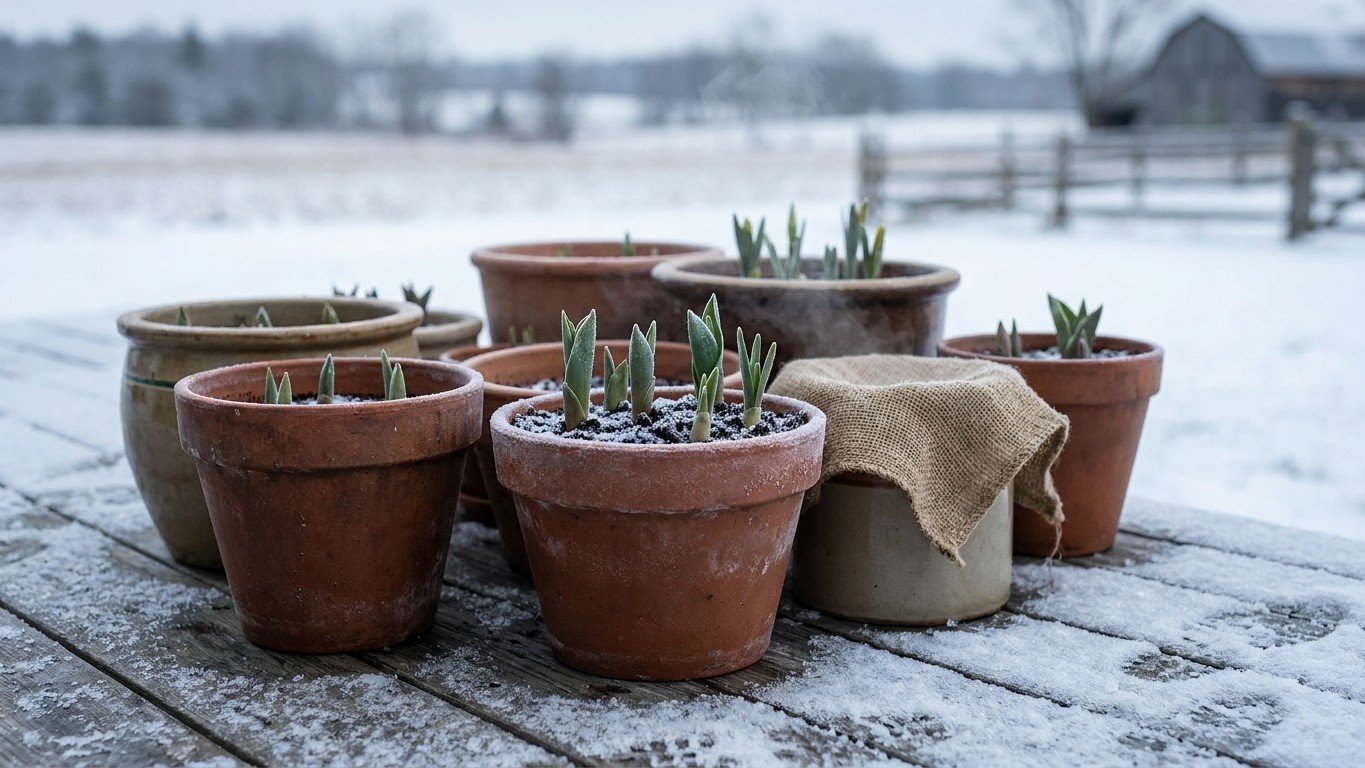

Lift dahlias, cannas and gladiolus after the first frost blackens their foliage, within about a week or two. At the Virginia coast, where the first fall frost lands between November 10 and November 24, that means mid-November into early December. Inland and in the mountains, frost arrives earlier, so the digging does too. Cannas are the most forgiving of the three. Dahlias and gladiolus are the ones not to gamble on.
Do you have to dig them up in Virginia?
Almost everywhere, yes. Virginia covers USDA zones 5a-8b on the USDA Plant Hardiness Zone Map (2023), a rating built on one number, the average annual extreme minimum temperature. Where the ground does not freeze deeply, these three can stay put under a thick mulch. Where it does freeze, the tubers have to come up. In Virginia that line runs between the mild coast and nearly everywhere else, so lift all three unless your bed is near the coast and drains well.
Can they stay in the ground along the coast?
Virginia Beach sits at the mild end of the state. NOAA’s 1991-2020 Climate Normals put the mean daily minimum of its coldest month at 31.6°F. That is barely under freezing, which means nights dip below 32°F but the soil seldom locks up for long the way it does inland. Under a deep layer of shredded leaves or bark, cannas have a good chance of coming back. Their thick rhizomes shrug off cold nights that turn the leaves to black mush. Dahlia tubers are a gamble, and gladiolus corms are the biggest gamble of all.
Cold is not the main danger on the coast. Soggy winter soil is. Heavy clay that stays wet rots tubers faster than a light frost harms them. A raised bed or sandy, fast-draining soil improves the odds a lot. Put the mulch on after frost has killed the tops and you have cut the stalks back, then pull it back gradually in spring as growth begins.
What about inland Virginia and the mountains?
Farther inland, and up in the Blue Ridge and southwest Virginia, winters run colder and the first fall frost comes earlier than it does at the coast. The soil there freezes, and a frozen tuber turns to slime when it thaws. Mulch does not rescue it. A mild winter does not change the call either, because one hard cold snap can wipe out a whole bed that has survived for years.
Hardy bulbs follow different rules. Tulips and daffodils want the cold and stay in the ground, and the Spring Bulbs section covers them. Which Spring Bulbs Survive Your Winter shows how zone ratings play out for that group. Dahlias, cannas and gladiolus are tender bulbs from warm climates, so they earn a spot in the garage or basement instead.
When to lift them
Watch the leaves. The signal is the first frost that blackens the foliage. Dahlia and canna stalks go limp and dark, and gladiolus leaves flop over. Lift within about a week or two after that. At the coast, the NOAA NCEI 1991-2020 Climate Normals for the NAS Oceana station put the first fall frost between November 10 and November 24. That range comes from the band where a 32°F freeze has a 30 to 70 percent chance, and the data are available from NOAA’s climate normals service. Counting a week or two from those dates, coastal gardeners lift from mid-November into early December.
Gardeners farther inland should plan earlier. The Blue Ridge and southwest Virginia run weeks ahead of the coast in fall, so the digging moves up by the same margin. Go by the plants rather than the calendar, because a ridge-top garden can blacken its dahlias while a valley a few miles away still has green leaves. County-level frost dates are laid out in First and Last Frost Dates in Virginia.
Why does lifting before frost cause rot in storage?
While the plant is green, the leaves are still sending sugars down into the tubers. A frost shuts that off, and in the days that follow the tuber firms up and its skin toughens. Dig a clump too early and you get immature tubers with thin skin and a lot of water inside. They shrivel in dry air or hold moisture and rot in damp air, and they often fail at both. Dahlias show this most. A tuber lifted too early may look fine for a month and then go soft at the neck.
The week or two of waiting after frost does the work of finishing the tuber. The wait has a limit, though. Soil that freezes hard around the clump can damage the tubers, so do not let the job drift into a deep freeze. If the forecast shows a hard freeze coming before the first light frost has happened, lifting a day or two ahead is better than losing the bed.
How do you lift them without breaking the roots?
Pick a dry day when the soil is loose rather than muddy. Cut dahlia and canna stalks down to a short stub. Push a garden fork into the ground well out from the stalk and pry the clump up gently, since dahlia necks snap easily and a tuber with a broken neck usually will not sprout. Gladiolus can come up a bit sooner than the others, once the leaves have yellowed on their own, but do not leave the corms in the ground past the frost that blackens them.
Storing them over winter
Cure first. Spread the clumps in a sheltered, airy spot out of rain and frost, such as a garage or covered porch, until the surface dries and the skin toughens. Then brush off loose soil. Skip hard scrubbing, because a wet, scraped tuber is an open invitation to rot. Store them cool, dark and slightly moist, in a place that stays above freezing all winter. An unheated basement, a closet on an interior wall or the cool corner of an insulated garage will work. The goal is to keep the tubers dormant without letting them rot or shrivel.
How do dahlias, cannas and gladiolus differ in storage?
They want the same cool, dark space, but not the same moisture. Gladiolus corms store dry, while dahlia tubers and canna rhizomes want a trace of dampness around them.
| Plant | What you store | Curing | Packing | Moisture |
|---|---|---|---|---|
| Dahlia | Tuber clumps | A few days, until the skin feels dry | Crates or boxes with lightly damp sawdust, peat or vermiculite, tubers not touching | Slightly moist |
| Canna | Rhizomes | Briefly, just until the surface dries | Lightly damp peat or wood shavings in a box | Slightly moist, a bit more forgiving |
| Gladiolus | Corms | Longer, until the husks are papery and the old corm pulls away | Mesh or paper bags, or open trays | Dry, with airflow |
Do not seal dahlias or cannas in airtight plastic, which traps moisture and breeds mold. Gladiolus corms should lose the shriveled old corm underneath and the tiny cormels can be saved separately, though those take a few years to flower.
How often should you check stored bulbs?
Checking them regularly is the step that saves them. Open every box and bag through the winter and look for soft spots, mold and wrinkling. Cut away rotten patches on dahlias and cannas and let the cut surface dry before repacking. If tubers look wrinkled, mist the packing material lightly. If it feels wet, open the box to air out. Pull any gladiolus corm that feels damp or smells sour, since rot spreads fast in a bag.
While the tender bulbs dry in the garage, fall is also the time to plant the hardy ones. Planting Spring Bulbs in Virginia covers what to put in the ground and when.
What goes wrong
Most losses fall into four patterns, and each one gives a warning sign well before the bulbs are gone.
- Rot looks like soft, mushy patches with a sour smell, sometimes with gray or white mold on top. Bad curing, too much moisture and poor airflow cause it. Let the tubers dry fully before packing, use only lightly damp packing material and cull any soft ones right away.
- Shriveling shows up as wrinkled, hollow-feeling tubers that look like raisins. The storage space is too dry or too warm. Lightly mist the packing material, move the box somewhere cooler and check the tubers more often.
- Lifting too early gives thin-skinned tubers that look fine at first, then collapse in storage. The plant was still green and the tubers had not finished maturing. Wait for the frost that blackens the foliage and then allow another week or two.
- Leaving them in the ground too far from the coast ends in mush by spring and nothing coming up. The soil froze or stayed waterlogged. Inland, in the Blue Ridge and in southwest Virginia, lift everything. Near the coast, mulch deeply and make sure the bed drains.
Zone maps can mislead on a given winter, since they average the coldest nights over many years and say nothing about how long soil stays wet. If you are unsure, lift them and store them. A cheap test is to lift some clumps and leave the rest mulched in place, then compare in spring. Your county’s Virginia Cooperative Extension office can tell you how local winters have treated tender bulbs. More local timing for fall chores is gathered in the Virginia guides.
Common questions
Can I leave cannas in the ground in Virginia?
Near the coast, often yes. Cover them with a thick layer of leaves or bark mulch and make sure the bed drains well. Virginia Beach’s coldest month has a mean daily minimum of 31.6°F, so the soil seldom freezes for long. Inland, in the Blue Ridge and in southwest Virginia, lift them. Frozen soil and winter wet will rot them, and a mild winter does not make that risk go away.
What if frost comes before I’m ready to dig?
Soil is a good blanket for a short time, so you do not need to dig the same day. Aim to lift within about a week or two after the foliage turns black. That gives the tubers time to finish maturing without a hard freeze reaching them. If a deep freeze is forecast and you are still in the first week or so, dig a day or two ahead of it.
Do I wash tubers before storing them?
Brush off the loose soil and leave it at that. Wet tubers rot more easily, and scrubbing can scrape the skin and open wounds. If you do rinse a clump to see the eyes or tubers better, let it dry completely in an airy, shaded place before packing. Curing is the more important step, since it dries the surface and toughens the skin.
Where in the house is the best place to store them?
Pick a spot that stays cool, dark and above freezing all winter. An unheated basement, a closet on an interior wall or the cool corner of an insulated garage will do. Avoid a spot beside a furnace or water heater, because warmth makes tubers sprout early and dry out. A spot that swings between freezing and warm is worse than one that is steady, so check the temperature on the coldest nights.