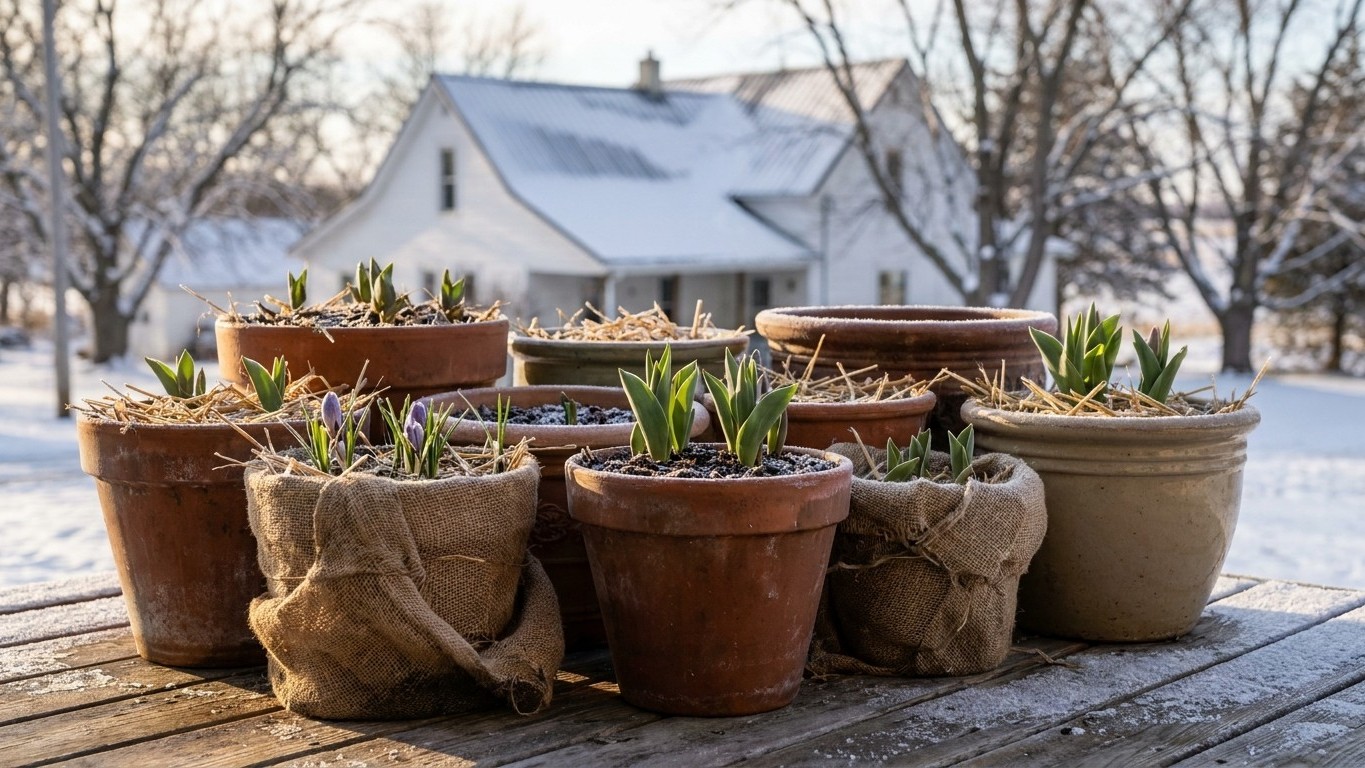

Wait for the first frost that turns the foliage black, then lift the tubers within about a week or two. At the Jackson airport weather station, NOAA’s 1991-2020 normals put the first 32°F reading between November 7 and November 22, so most Mississippi gardeners end up digging in late November or early December. In the milder southern part of the state, cannas and sometimes dahlias can stay put under mulch. The colder north has to dig.
Do you have to dig them up in Mississippi?
The answer follows your winter soil. Mississippi runs from zone 7b to zone 9a on the USDA Plant Hardiness Zone Map 2023, a system built on one number: the average annual extreme minimum temperature. The line that matters falls between ground that freezes hard for days and ground that only crusts over on a cold night. Where the soil does not freeze deeply, leave the tubers in place under heavy mulch; where it does, lift them every fall.
Jackson sits on the mild side of that line. NOAA’s 1991-2020 Climate Normals give the coldest month there a mean daily minimum of 36.6°F, which is above freezing. A typical January night in central Mississippi drops to about 36.6°F, and a deep soil freeze is rare. That figure is an average, though, and individual cold snaps run well below it. A few nights of hard cold still kill foliage and can chill the top inch or two of soil.
Other parts of the state differ. The northern counties and higher ground sit toward the 7b end of the range. They get an earlier first fall frost and a later last spring frost, and the soil there does freeze. Gardeners in those areas should plan on lifting all three plants. The southern counties lean toward 9a, where mulch is usually enough. If you are not sure which side you are on, your county extension office can tell you your local zone and typical frost dates.
Which of the three can stay in the ground?
Cold is only half the story, because Mississippi winters are also wet. Heavy clay holds water for weeks, and a dahlia tuber sitting in cold, saturated soil rots even when the ground never freezes. Dahlias are the most likely of the three to fail in the ground, and they need a raised bed or a slope with fast drainage to have a fair chance.
Cannas are the toughest. Their rhizomes are thick and forgiving, and in the milder parts of the state they usually come back after a mulched winter. Gladiolus corms fall in between. They often overwinter in sandy or well-drained beds in the Deep South, and they rot in soggy clay.
How do you mulch them where they stay?
Wait until frost has killed the tops, then cut the stalks back to a few inches. Cover the spot with a thick layer of pine straw, shredded leaves or bark. Pine straw is cheap across much of Mississippi and drains well. Pull the mulch back in spring as the soil warms, so the new shoots are not smothered.
Winter hardiness works differently for each kind of bulb. Daffodils and tulips are built for cold, while dahlias and cannas are tropical plants that tolerate only so much. Which Spring Bulbs Survive Your Winter explains how that difference plays out across the hardiness map.
When to lift them
The signal is a frost that blackens the foliage. Dahlia and canna leaves go limp and dark after a freeze, and that is your cue. A light touch of frost that only nips a few leaf edges does not count.
NOAA’s 1991-2020 normals for the Jackson airport station list the first fall frost between November 7 and November 22. That band covers the dates when the odds of a first 32°F reading run from 30 to 70 percent. Suburban and rural gardens usually see that first frost one to two weeks earlier than the airport does, and more so at elevation. A garden in the northern part of the state will see it earlier still. Lift within about a week or two after a frost blackens the foliage, which in Jackson points to late November into early December, and earlier in colder or more exposed gardens.
For your own county, check First and Last Frost Dates in Mississippi and adjust. The direction is always the same. The colder your site, the earlier the frost arrives and the earlier you dig.
What if the frost is late, or never really comes?
Some years November stays mild, and dahlias keep blooming into December. There is no reason to hurry. Let the plants grow until frost ends the season on its own. If a hard freeze is forecast and the foliage is still green, cut the stalks and lift the tubers before the cold arrives. Doing that a few days early beats losing them to a freeze that reaches the crown.
Gladiolus follow a different clock. They do not need a frost at all. Once the flower spike has finished and the leaves turn yellow and brown, the corms are ready, and in most Mississippi gardens that comes before the first frost. Lifting them in the fall alongside the dahlias also gives you one cleanup day instead of two.
Why does lifting too early cause rot?
Until frost ends the season, the leaves keep feeding the tubers. The skins are still thin and the tissue is full of water. A dahlia dug in October has soft, immature tubers that bruise easily, and its hollow stalk can carry water straight into the crown. Both are an open door for fungus, and the tubers rot in storage weeks later, when you can no longer do anything about it.
The week or two between the frost and the digging gives the skins time to firm up. It also lets the plant pull its stored energy down into the tubers. When you do dig, work a garden fork well out from the stalk and lift from underneath. A spade is more likely to slice through a tuber, and a cut tuber is a rotting tuber.
Storing them over winter
The three plants want the same basic conditions: cool, dark and slightly moist, so they neither rot nor shrivel. Where they differ is in how much moisture each one tolerates. In a climate with warm, humid winters, the common mistake is storing them somewhere too warm or too damp.
How do you cure and clean them?
After digging, shake off the loose soil but do not wash the tubers hard. A light brush-off is enough, and a hose can push water into the cracks. Let them dry for a few days in a shaded, airy spot such as a garage or covered porch. Direct sun will cook them, and rain will undo the drying. When the skins feel dry and the cut ends have healed over, they are cured.
Cut off any soft or damaged parts with a clean knife before storing. Label each clump with its variety or color while you still remember which is which. Mixed-up labels are the most common regret in spring.
How do dahlias, cannas and gladiolus differ in storage?
Dahlia tubers go into a box or crate packed in a barely damp material such as vermiculite, peat or wood shavings. The goal is to keep them from drying out without letting them sit wet. Cannas get a similar treatment, packed in lightly moist peat or sawdust, and they shrivel faster than dahlias if the medium dries out. Gladiolus corms are the exception. Break off the old, shriveled corm at the base and store them completely dry, in a mesh bag or a paper bag with good airflow. Damp storage turns glads moldy.
A cool place above freezing works for all three. An unheated garage, a basement or a utility room is better than a heated closet, which dries the bulbs out. An open shed can drop below freezing on the coldest nights, so move the boxes inside whenever a hard freeze is forecast.
Check every box and bag once a month through the winter. Look for soft spots, mold or tubers that have gone wrinkled and light. Remove anything rotting before it spreads to its neighbors. If the packing material feels bone dry, mist it lightly. If it feels wet, open the container and let it air out for a day. Replant after the last spring frost, and the dates on the frost page above will help you time that. Fall is also when spring-flowering bulbs go in the ground, so the chores overlap. Planting Spring Bulbs in Mississippi covers that side of the calendar.
What goes wrong
A few problems account for most of the losses, and each one is preventable.
Rot shows up as soft, mushy spots, sometimes with gray or white mold and a sour smell. It starts with tubers that went into storage damp or immature, or with packing material that stayed wet. Cure them properly, cut out damaged sections, and open the boxes to air every month. A rotted tuber that is caught early can be trimmed and saved.
Shriveling is the opposite problem. The tubers turn wrinkled, light and hollow, and the eyes may never sprout. It comes from storing them too warm or too dry, often in a heated room. Move them somewhere cooler and add a little moisture to the packing. A tuber that is wrinkled but still firm at the center can recover.
Lifting too early leaves soft, thin-skinned tubers that bruise and rot, as described above. The remedy is to wait for the frost to blacken the tops. The only exceptions are a forecast hard freeze or gladiolus whose leaves have already yellowed.
Leaving them in the ground one zone too far north is the last one, and it is common. A gardener in the colder part of the state copies advice written for the Gulf side, and the tubers do not survive a hard freeze. Even in milder gardens, tubers that sit in cold, wet clay rot. If your bed stays soggy all winter, lift the tubers regardless of what the zone map says. More Mississippi guides and the Spring Bulbs section cover the rest of the bulb year.
Common questions
Can I leave cannas in the ground in Jackson?
Usually, yes. Jackson’s coldest month has a mean daily minimum of 36.6°F (NOAA NCEI 1991-2020), so the ground rarely freezes deeply. Cut the stalks back after the first blackening frost and mulch heavily. Gardeners with heavy clay that stays soggy may still want to lift them, and so should anyone farther north or at higher elevation.
Do I have to wait for frost to dig gladiolus?
No. Lift the corms once the leaves have yellowed and browned after bloom. In most Mississippi gardens that happens before the first frost. Cure them dry and store them in a ventilated bag.
What if a hard freeze is forecast before the foliage has blackened?
Cut the stalks and lift the tubers ahead of the freeze. They will be slightly less mature, so cure them carefully and check them often in storage. That is a better trade than leaving the crowns exposed to freezing temperatures.
Where should I keep stored tubers in a warm-winter state?
Pick a cool, dark spot that stays above freezing, such as an unheated garage, basement or utility room. Avoid heated rooms, which dry the tubers out. If a hard freeze is forecast and your storage spot is not insulated, move the boxes indoors for the night.