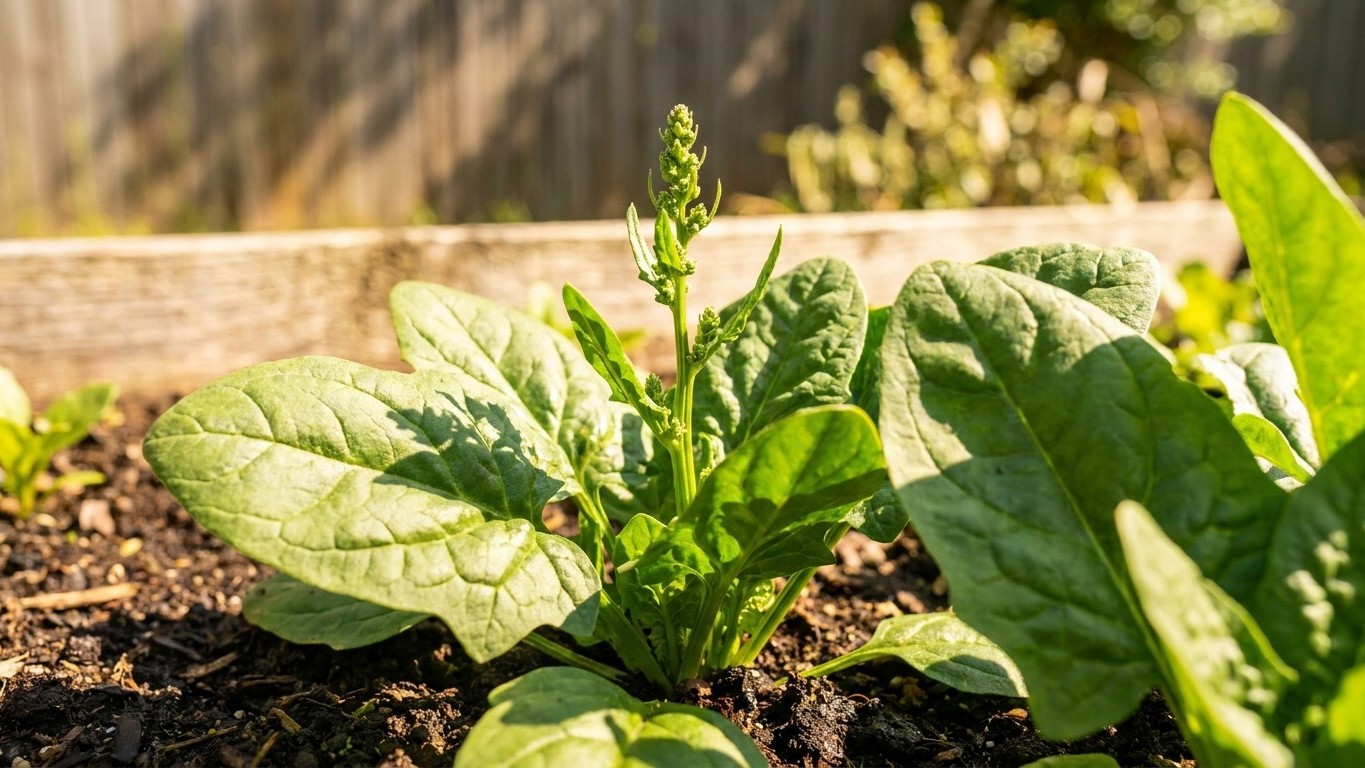

Spinach in Oklahoma gets eaten by chewing insects, small sap-sucking insects, leaf-mining larvae, slugs and snails, and animals big enough to clip a row overnight. Which one you meet depends on where you are in the frost-free window. Cool early weeks are quiet. Warmth brings the insects, and heat ends the crop anyway, since Oklahoma City sees 70.7 days a year at 90 F or higher. Learn the symptom, the timing and the barrier, and you can head most of it off.
Which pests attack spinach in Oklahoma
Oklahoma State University Extension tracks which insects and animals trouble Oklahoma gardens, and its county offices are where a leaf sample gets a name. For a leaf crop like spinach, the damage falls into a few groups, and each group leaves a different mark.
Which insects eat spinach leaves?
Three groups matter. Chewing insects, mostly caterpillars and beetles, take bites out of the blade and leave ragged edges or round holes. Small sap-sucking insects gather on the underside of leaves and on the growing center, where they cause curling, stunting and a sticky film. Leaf-mining larvae live between the two leaf surfaces and leave pale, winding tunnels or blotches. Spinach is grown for its leaves, so even light feeding costs you part of the harvest.
Which animals and slugs hit spinach?
Slugs and snails feed at night and in damp weather, chew irregular holes, and leave dried slime trails. Larger animals clip plants off at the stem or take whole rows of seedlings between dusk and dawn, so the first sign is a bed that looks shorter than it did yesterday.
Heat decides how long insects have to work on you. Spinach grows best where temperatures stay at or below 75 F, and long days plus warmth push it to flower. A bolted plant is no longer worth defending, so pest control is mostly about protecting the weeks before that point.
When each one shows up, and what it does first
The calendar here follows the frost-free window rather than a month. At the Oklahoma City airport weather station, the mean last spring frost falls between March 28 and April 10, and the mean first fall frost between October 29 and November 8, as published in the NOAA NCEI U.S. Climate Normals. Suburban and rural gardens usually see the last spring frost later and the first fall frost earlier than the airport does, often by one to two weeks, and more at elevation. Set your timing against your county’s dates, not the city’s.
Slugs and snails come first in a spring crop. Seedlings sown in the cool weeks around the last frost date are tender, the soil is damp, and the first symptom is small ragged holes in the first true leaves, often with a shiny trail nearby. Larger animals also favor young plants, so a row that thins out overnight points to something with feet, not mouthparts.
Chewing insects and sap-feeders build up as the weather warms. You see holes at the leaf edges for the chewers, or leaves that curl and feel sticky for the sap-feeders. Leaf-mining larvae show up once leaves are big enough to hold a tunnel, so pale winding trails appear on older leaves before the center of the plant. Warmth is also what bolting needs: the longest day at Oklahoma City has 14 h 24 of daylight, so a late spring crop is racing both insects and its own flower stalk.
Fall reverses the picture. Soil above 80 F cuts germination, so the sowing window opens when the soil cools, and seedlings emerge into a garden that still holds whatever insects built up over summer. Expect chewing insects on those first leaves. As the first fall frost gets closer, insect activity drops, which is why a fall crop is often cleaner than a spring one. Plant so the crop matures before the heat of summer arrives. The full timing is laid out in When to Sow Autumn Spinach in Oklahoma.
Telling the damage apart from everything else
Plenty of things that look like insect damage are water, nutrition, disease or weather, and the fix for one is useless for another. Look at the plant after dark with a flashlight before you treat anything, since slugs, snails and several chewing insects only feed at night and are gone by morning.
How do you tell insect damage from other problems?
| What you see | Could also be | What settles it |
|---|---|---|
| Ragged holes, edges chewed | Hail, wind tearing, a hose blast | Weather damage shows up on one side of the bed at once. Insect damage spreads plant by plant, often with droppings or slime trails. |
| Pale winding tunnels or blotches | A leaf disease | Hold the leaf to the light. A tunnel with something living or dark specks inside is feeding. Spots with rings or fuzzy growth are a disease. |
| Yellowing, no holes | Poor soil fertility, soggy or dry soil, sap-feeders | Look under the leaves for insects or a sticky film. Then check soil moisture to the second knuckle. |
| Wilting in the afternoon | Heat stress, dry soil, root damage | If the plant recovers by morning and the soil is dry, it is a water problem. If it stays wilted when the soil is damp, look at the roots. |
| Clean-cut stems, rows thinning | Mechanical damage, a trampled bed | Look for tracks or droppings and check the stem ends for a clean angle. |
| Tall center stalk, narrow leaves | An insect problem at the growing tip | A rising center stalk is the plant flowering. Read Will Spinach Bolt Early in Oklahoma? for the triggers. |
No table can say what is in your own garden. Use the sign that separates one cause from another, photograph it, and take it to your county extension office for a name.
What actually works here, and what is a waste of time
On a crop that lives in the garden for a few cool weeks, a physical barrier set at the right moment beats any treatment. A floating row cover laid over the bed at sowing, before the first leaf is up, keeps flying insects from laying eggs on the plants and keeps larger animals off the seedlings. Bury or weight every edge, because a single gap lets insects in and gives them a protected meal. A cover also holds heat, so vent or remove it as spring warms toward the 75 F ceiling, or the cover itself will push the crop to flower.
Calendar does more than product on a short season. Sowing spring spinach in the cool weeks around the last frost date, and fall spinach once the soil drops below 80 F, puts the crop in the ground when insect numbers are lowest. Handpicking at dusk and clearing debris from the bed edges also cut down slugs, because they hide in damp cover during the day. Water in the morning so the soil surface is dry by evening.
Some common responses waste time. Spraying at the first hole is one: a few chewed leaves cost very little, and spraying the wrong target is the most common mistake in a diagnosis made from damage alone. Kitchen-cabinet sprays have no tested rates for leaf greens, and some burn foliage in warm weather. Covering a row after the pests are already inside only protects them. Planting later to wait out the insects runs into heat and long days, which flower the plant before it gives much to harvest.
Pesticide choices for leafy greens are best confirmed locally. Which products are registered for leafy greens in Oklahoma changes, so ask your county extension office for the current answer.
Where to check this for your own county
Your county office of Oklahoma State University Extension is the place to start. Pest presence changes within the state: what feeds on spinach in a river bottom near the Arkansas border may be absent on a dry hillside in the Panhandle. The frost dates above come from the Oklahoma City airport weather station, and your own last and first frosts may be one to two weeks off.
Go in with a plan. Bring your sowing date, the leaf you saved, and photos of the leaf undersides, the soil surface and any trails or droppings. Ask what the county’s current guidance is for the symptom you found, and whether row cover timing, bed cleanup or sowing dates should change for your part of the state. For the rest of the crop, the broader guide is Growing Spinach in Oklahoma.
Common questions
Is spinach with insect holes safe to eat?
Yes, if the leaf is otherwise healthy. Wash it well, trim any damaged or discolored parts, and throw out leaves that are slimy or smell off. Light holes are cosmetic.
How long does picked spinach keep?
UC Davis Postharvest says spinach keeps best at 32 F and 95 to 98 percent humidity, and will not hold good quality for more than 2 weeks. Wilting, yellowing and decay increase after 10 to 14 days, and faster at 41 to 50 F, which is about what a home fridge door holds. Store it in the back of the bottom shelf, not in the door, and treat two weeks as a ceiling. The details are in the UC Davis spinach fact sheet.
Will a cool summer keep spinach from bolting?
No. Utah State University Extension says spinach bolts during long days and warm temperatures. The longest day at Oklahoma City has 14 h 24 of daylight, enough to trigger flowering even without much heat. Cool weather helps, but it does not cancel the day length.
When can I sow spinach in the fall?
Wait until the soil falls below 80 F, because germination drops above that. Work backward from the date you want to harvest by 50 to 75 days. Check your county’s first fall frost range, since gardens outside the city often freeze earlier than the airport does.