
Sweet potatoes want heat, and Arkansas supplies plenty of it. The real choices are a type that tolerates humid weather and wet soil, and a maturity length that fits your part of the state. Here is how that sorts out, and what to confirm locally before you order slips. For the full growing routine, see Growing Sweet Potatoes in Arkansas.
The short answer for Arkansas
The best sweet potatoes for Arkansas are the moist, orange-fleshed types, with Beauregard and Covington as the long-standing standbys. Summers are hot and the growing season is long enough for a full-length crop, so choose for rot tolerance and keeping quality, and keep an early type such as Georgia Jet as the hedge for cooler corners of the state.
Why does Arkansas heat favor sweet potatoes?
The Little Rock reference station averages 69.2 days a year at 90F or more. That is the kind of heat that stalls lettuce and peas, and it is the kind that drives sweet potato vines to run and the roots to bulk up underneath.
Frost sets the outer edges of the season. NOAA’s 1991-2020 normals put the last spring freeze at 32F between March 12 and March 28, and the first fall freeze between November 7 and November 20. Those dates sit in the 30-70% band of probability for a 32F freeze, so a freeze can still come after the later date. Slips are tender, and they need the light-frost dates at 36F: NWS Little Rock gives April 3 for spring and October 31 for fall. Slips go out well after April 3, once the soil has warmed (see When to Plant Sweet Potatoes in Arkansas), and roots should be out of the ground before that October 31 average.
Which sweet potato type should you choose?
Sorted by type, the decision looks like this. The varieties named are common examples, and your county office can tell you which have done best locally.
| Type | Examples | Why it fits |
|---|---|---|
| Moist, orange-fleshed, mid to late season | Beauregard, Covington | Uses the long hot season fully; the dependable default for most gardens |
| Early orange-fleshed | Georgia Jet | Finishes sooner, which helps in cooler or higher ground and when planting runs late |
| Dry, firm, white or cream-fleshed | O’Henry | Less sugary and chestnut-like when cooked; a good second row for variety |
| Purple-skinned, white-fleshed | Murasaki-29 | Dense and mild; handles heat well but wants well-drained ground |
If you only have room for one row, plant the moist orange type. Add a second variety from another category to spread your risk.
What will not work here
A short season is not the problem. The span between the April 3 and October 31 light-frost dates leaves room even for slow varieties, so shopping for the fastest type is rarely needed outside the cooler north. What fails in Arkansas is mostly a matter of water, soil, and impatience.
Can you plant sweet potato slips in March?
No. The March 12 to March 28 window is the 32F freeze band, and tender slips are damaged at light frost, not just at a hard freeze. Cool soil also stalls them even when no frost arrives. Wait for April 3 to pass, then wait for the soil to warm. Slips set out too early sit and stall for weeks, and the gain over a patient planting is zero.
Why do sweet potatoes rot in wet Arkansas soil?
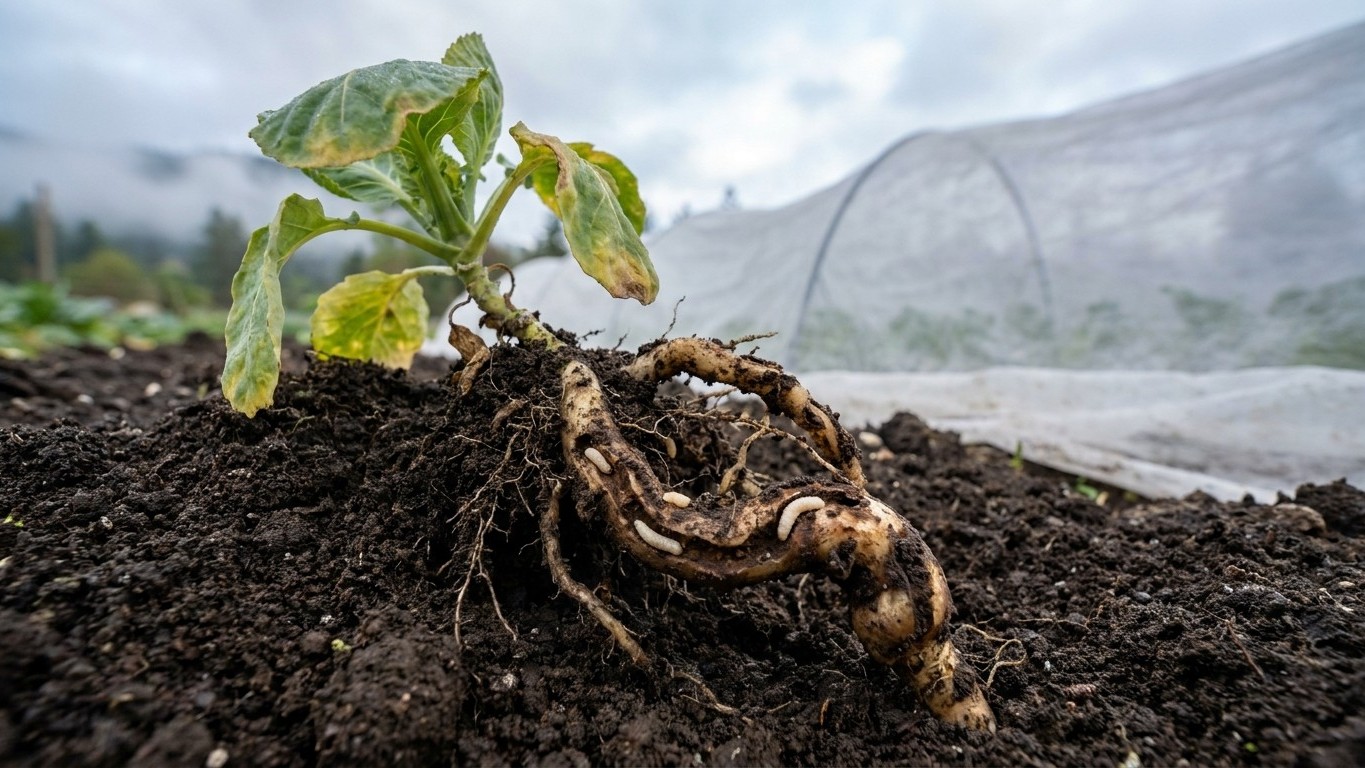
Rain is generous here. About 10.0 inches fall across June, July and August (3.55 in June, 3.33 in July, 3.16 in August, the driest month), out of 50.4 inches over the year. On heavy clay, one good soaking can hold for a week. Roots sitting in saturated soil crack, split, or rot before harvest. Flat beds, crowded slips, and mulch piled against the vines all keep things wetter than they need to be.
Plant on raised rows or mounds, leave each slip room so air moves through the foliage, and avoid planting in the low spot where water collects after a storm.
Does weekly watering work in an Arkansas summer?
It depends on the soil. With 69.2 days at 90F or more, evaporation is high, and a summer thunderstorm often runs off rather than soaking in. Sandy ground drains within the day, so a sandy bed can need water more often than the rainfall numbers suggest. Clay sits at the opposite extreme and holds rain for a week. Young slips need steady moisture for the first couple of weeks either way.
Finally, leaving roots in the ground after the first frost invites trouble. Frost blackens the vines, and cold, wet soil lets rot move into the roots. Dig before the October 31 average, or at the first frost warning.
What changes across Arkansas
The state spans USDA hardiness zones 6b to 8a (USDA Plant Hardiness Zone Map 2023, built on 1991-2020 normals), so no single answer fits every garden. Zone is based on the average annual extreme minimum temperature, and sweet potatoes are grown as annuals, so it does not decide whether a plant survives. It does hint at how the season is shaped: colder zones tend toward later springs and earlier falls. The dates given above are for Little Rock, and other parts of the state will differ.
What should northern and higher-elevation gardeners shift?
Toward the 6b end, the season tightens. Choose an early orange type, plant a little later so the soil has truly warmed, and dig a little sooner. Cool nights at higher elevations slow vine growth, so black plastic over the bed, which warms soil in spring, can help. Keep the late-season harvest plan firm, since a frost can arrive a bit ahead of the Little Rock averages.
What about the southern end of the state?
Near the 8a end, the season stretches and the humid weather is the bigger concern. The mid-to-late types make full use of the extra warmth, and drainage matters more than speed. Raised rows, room between slips, and a watch on how long water stands after a storm do more for the crop than any variety choice.
How do you find your own hardiness zone?
Use the USDA Plant Hardiness Zone Map and look up your ZIP code. Zone boundaries are a guide only, and a slope, a city, or a low frost pocket can place your yard a half-zone away from the map.
Where to check this for your own county
A county recommendation beats a statewide one, and everything above is statewide. The University of Arkansas System Division of Agriculture Cooperative Extension Service has an office in every county, staffed by people who know the local soils and weather.
Look for two things there. The first is the local planting calendar for sweet potatoes, with the dates your county’s extension agents actually advise for setting out slips. The second is the list of varieties trialled in your county, since a variety that does well in one corner of Arkansas can struggle in another. Ask whether a soil test is worth doing before you plant, because drainage and soil texture shape the spacing and bed-building advice more than any other single factor.
Extension agents also hear which diseases and pests showed up in a given season. If sweet potato rot or weevils were a problem near you last year, they will know, and they can tell you which varieties handled it. That kind of local memory does not show up in a statewide summary.
Checking this against your own garden
Your own observations outrank every date above. Three are worth watching.
- Soil warmth by feel. Push your hand into the bed in the morning, a few inches down. If it feels cool, the slips will sit and wait. If it feels like room temperature or warmer, the bed is ready. Beds in sun and well-drained ground warm first, and they tell you how early your own microclimate lets you start.
- The first true leaves on new slips. Fresh growth within a couple of weeks of planting means the roots have taken hold. A slip that holds still has met cool soil, dry soil, or too much water, and it tells you which part of the bed needs help.
- Where water stands and where frost lands. After a hard rain, note which spots stay soggy. In fall, note which vines blacken first. Low ground gets both the puddles and the early frost, so those spots tell you where to plant less or dig early.
A straight-sided jar left out in the garden works as a rain gauge, and a few weeks of readings will show you how much rain your plot truly gets compared with the region’s normals.
Common questions
Is Beauregard the best sweet potato for Arkansas?
It is among the most dependable. It is a moist, orange-fleshed type that suits the long, hot season. Covington is a close second, and your county’s trial results may point to another variety that does even better locally.
Do slow-maturing sweet potatoes have enough time?
In most of the state, yes. The light-frost window from April 3 to October 31 leaves a long stretch of warm weather. In the cooler north, an early type is the safer choice.
Can I grow white or purple sweet potatoes?
Yes. Firm white types like O’Henry and purple-skinned types like Murasaki-29 grow well in the heat. They want good drainage and dislike wet feet, so plant them on raised rows.
How much water do sweet potatoes need in summer?
Water new slips regularly for the first couple of weeks, then ease off. Summer brings about 10.0 inches of rain across June, July and August, which is enough for established vines in many soils, though sandy beds dry faster and may need extra water.