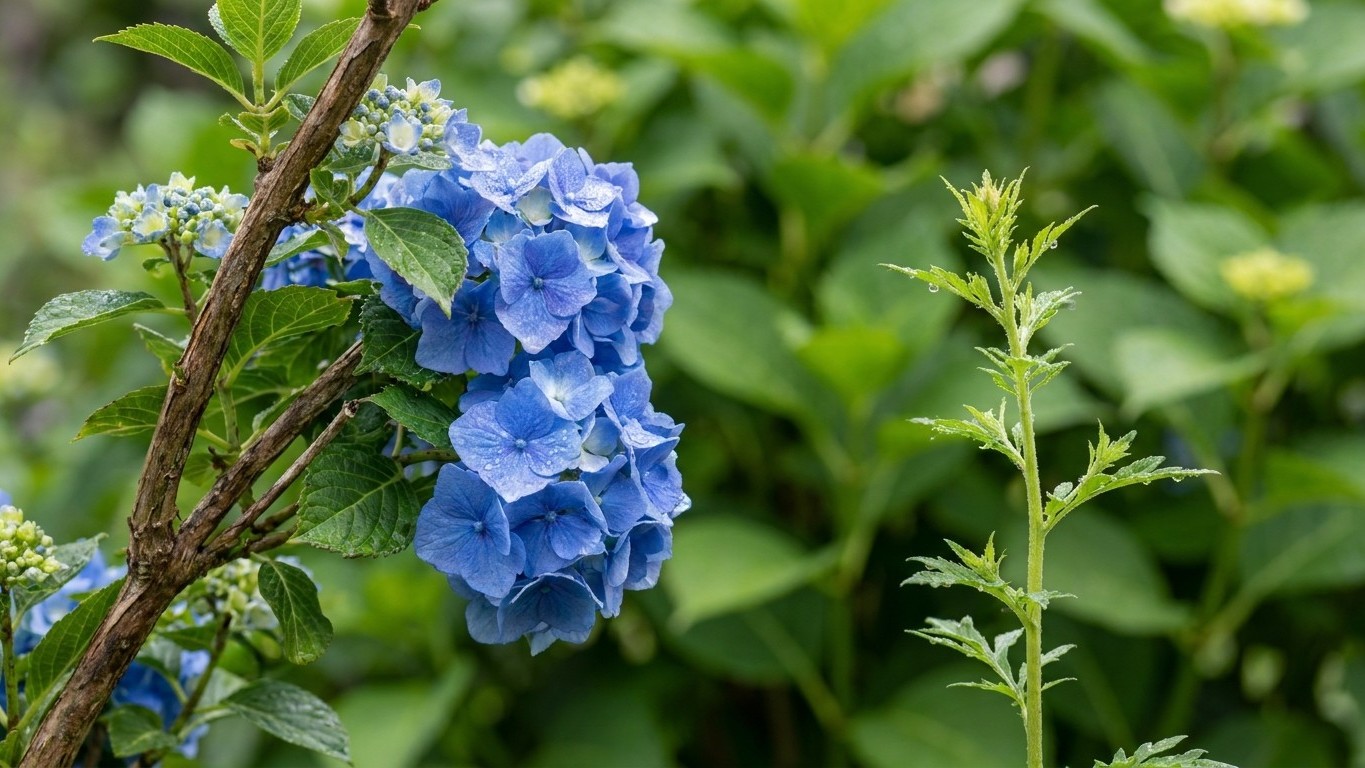

Most hydrangeas in Massachusetts get through winter without help. The ones most likely to need it are bigleaf types, and oakleaf types in exposed spots; both carry next summer’s flower buds on last year’s stems. A loose collar of leaves or straw around the plant, plus a burlap screen in exposed spots, is usually enough. Timing matters more than materials. Wrap too early and you trap warmth and moisture, and unwrap too early and a spring freeze catches soft buds.
What this comes down to in Massachusetts

At Boston’s Logan station, the reference point for these dates, the last spring frost falls between April 1 and April 8, and the first fall frost between November 3 and November 14 (NOAA NCEI 1991-2020 Climate Normals). Winter protection goes on after the fall window has closed and comes off after the spring window has passed. Logan sits on the water and is among the mildest spots in the state, so most inland gardens should expect frost earlier in fall and later in spring.
Those two windows bracket a long stretch of cold that hydrangea roots handle well. The risk sits above ground, in the stems and buds. The USDA Plant Hardiness Zone Map (built on the average annual extreme minimum temperature) puts the state anywhere from roughly zone 5 to zone 7, which tells you a cold snap can be harsh in one town and mild in the next.
What actually kills a hydrangea in winter?
Stem tips and flower buds go first. A shrub hardens off gradually through autumn as days shorten and nights cool. A warm spell in November or a thaw in late winter can pull buds out of dormancy early, and the next hard freeze then burns them. Dry wind adds to the damage on stems that stick up above the snow.
Roots are better insulated. Soil holds heat long after the air turns cold, and a layer of mulch or snow slows its loss further. A plant frozen to the ground by a bad winter will usually resprout from the base, which is why the real question is what it does after that.
Which hydrangeas need protection?
Bloom habit sorts them. Bigleaf (Hydrangea macrophylla) and oakleaf hydrangeas set buds in late summer on the stems that will flower next year. Kill those stems and you lose the flowers, though the plant lives. Panicle and smooth hydrangeas bloom on wood grown in the current season, so a hard winter that cuts them to the ground costs them very little. Those two groups usually get by with a mulch layer alone.
Cold tolerance varies within each group, and the full ranking is covered in Which Hydrangeas Survive a Massachusetts Winter. For the rest of the care routine, the state overview on growing hydrangeas in Massachusetts covers it.
Working it out for your own garden
A fixed calendar date will not hold up across the state or across a cold year. The method below works from the frost window, so you can adjust it for your own town.
When do you put protection on?
Start from the first fall frost and add two to three weeks. At Boston, the frost window runs November 3 to November 14. Adding two weeks to the early end and three to the late end gives roughly November 17 to December 5. By then the leaves have dropped and the plant has taken a few hard freezes, which is the signal that it is dormant. Inland, where the first frost comes sooner, the same arithmetic lands earlier, so shift your own range accordingly.
If the leaves are still green and clinging in late November, wait. Dormancy comes from the plant, and the calendar only estimates it.
How do you build the protection?
Mound several inches of shredded leaves, bark, or straw over the base of the shrub. For a bigleaf, add a cylinder of wire fencing or stakes about as tall as the plant and fill it loosely with dry leaves or straw. Burlap wrapped around stakes works as a windbreak where the plant is exposed. Leave the top partly open so moisture can escape.
When does it come off?
Use the same method in reverse. The last spring frost at Boston falls April 1 to April 8. Add about two weeks and you get mid to late April as the time to start pulling protection away. Open the cylinder first, then remove the filling over a week or so. Inland and in the hills, the last frost comes later, so the same two-week buffer pushes removal into May in some places.
How do you know if your hydrangea needs protection at all?
Run a worked comparison. A bigleaf in an open yard, with flower buds on last year’s stems, loses those buds if a cold January burns the tips. Wrap it and it flowers. A panicle hydrangea next to it gets a mulch ring and nothing else. If the stems die back, it grows new ones in spring and blooms on them anyway.
In spring, check what survived with a scratch test. Nick a little bark from a stem with a fingernail or a pocketknife. Green tissue underneath means the stem is alive. Brown and dry means that section is dead and can be cut off, though it is wise to wait until the leaves emerge, because buds sometimes break lower on a stem than you expect.
What changes across the state
Massachusetts is not one climate, and the Logan dates describe only one corner of it. Distance from the ocean does much of the work. Along Boston’s waterfront, on Cape Cod, and on the islands, the water holds heat into autumn and keeps winter lows less severe. Move inland and the buffer fades: nights get colder, frost arrives earlier in fall, and it lingers later in spring.
Elevation compounds this. The Berkshires and the higher ground of central Massachusetts run colder than the lowlands, with deeper cold snaps and a shorter stretch between frosts. Valleys add a quirk of their own. On clear, still nights, cold air drains downhill and pools in low spots, so a garden at the bottom of a slope can freeze while one fifty feet higher stays above it.
North versus south matters as well, though less than the coast and the hills do. A garden in the north of the state usually frosts a little earlier than one in the southeast at the same elevation. The wide USDA zone span, roughly zone 5 to zone 7, reflects all of these differences together.
The practical rule: treat the Boston dates as a mild case. Inland, wrap earlier and unwrap later, and let the plant tell you. Leaf drop in fall and bud swell in spring are better guides than any printed date.
The mistakes this state punishes

One common error is wrapping too early. A warm spell in early November tempts people to bundle shrubs while the plant is still active, and the trapped warmth and moisture can promote rot and keep growth going when it should stop. Wait for leaf drop and a few hard freezes.
Cutting back old-wood hydrangeas in fall is another. A bigleaf pruned in October or November loses the buds it set for next summer. Leave the stems standing through winter and trim dead wood in spring once you can see what survived. Panicle and smooth types forgive fall pruning, but there is no real gain from doing it early.
Unwrapping on the first warm days of March is another. Massachusetts springs swing hard, and a stretch of mild weather often ends in a freeze. Buds that have started to swell without cover are the ones that get burned. Hold off until the frost window has passed for your area, then remove protection in stages.
Plastic is a quieter problem. It traps moisture and heats up in winter sun, which can wake the plant. Burlap and open-weave materials breathe. Mulch piled directly against the stems can also shelter mice that gnaw bark, so keep it loose and pull it back a bit from the stems if you have had trouble in past winters. A fine-mesh hardware-cloth guard around the base helps keep rodents off, too.
Late-summer feeding pushes soft new growth that has no time to harden. Soil changes aimed at flower color belong in the growing season, and Why Hydrangeas Are Pink in Massachusetts, and How to Turn Them Blue explains how that works.
Checking this against your county
A statewide window is a starting point for a plan, and your county’s conditions will adjust it. Elevation, a nearby pond, or a windy ridge can move your dates by a week or more. Your county’s UMass Extension office can tell you what local winters have done to shrubs in recent years and when frost usually arrives where you live. For plant choice and general care, the state’s hydrangea guide, growing hydrangeas in Massachusetts, covers the rest.
Common questions
Should I cut back hydrangeas in fall?
Leave bigleaf and oakleaf hydrangeas alone until spring, since their buds sit on the old stems. Panicle and smooth hydrangeas can be cut back in late winter or early spring, which is also when you can judge the damage. Fall cutting gains you nothing.
Can I use plastic to wrap hydrangeas?
Avoid it. Plastic holds moisture and can heat up on sunny winter days, which risks rot and early bud activity. Burlap, straw, and loose leaves let air move through while still blocking wind.
How do I protect hydrangeas growing in pots?
A pot gives roots far less insulation than garden soil. Move it to an unheated garage or shed, or set it against the house on the sheltered side and wrap the container. Water it lightly now and then so the soil does not dry out completely.
Does winter protection change flower color?
No. Color comes from soil chemistry, which the plant takes up through its roots, so wrapping and mulching leave it alone. Protection only affects whether the buds survive to open.