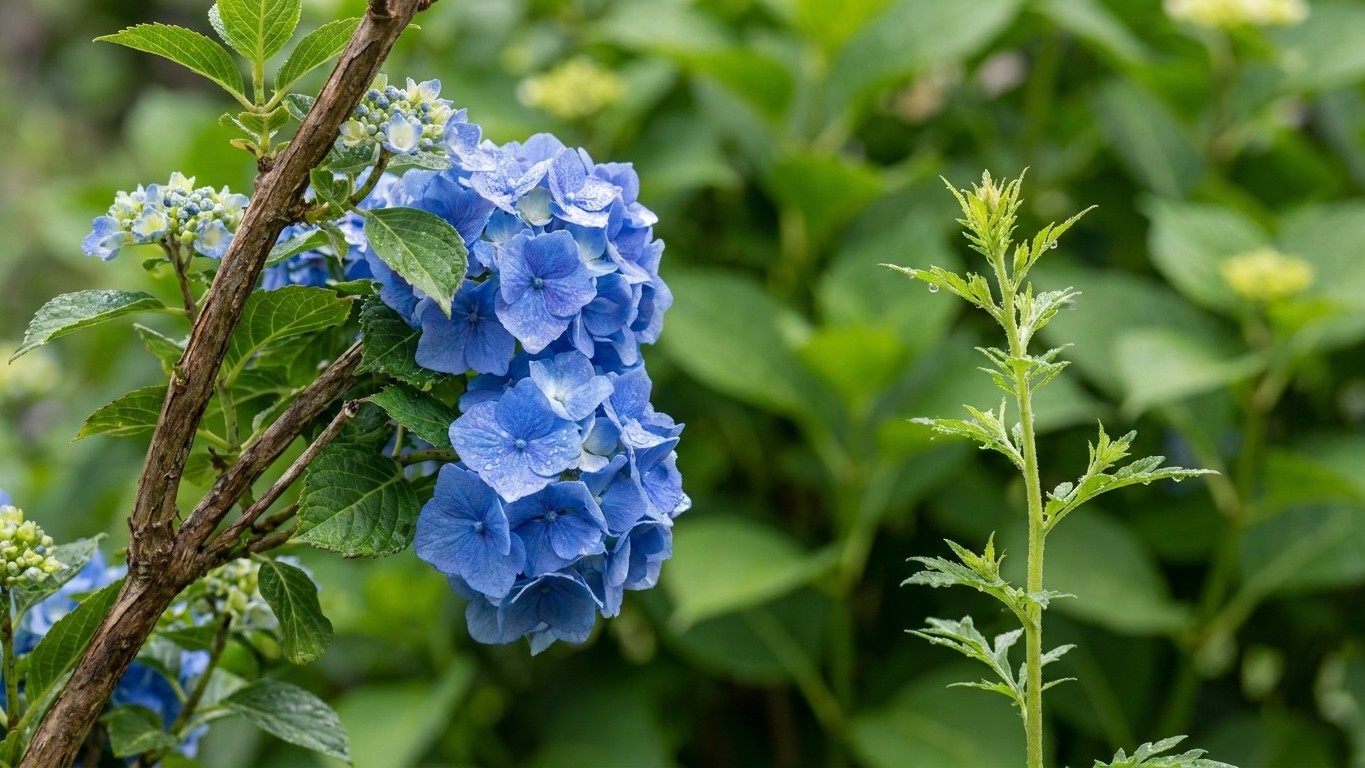

Hydrangeas in Michigan need protection mainly at two moments: after the leaves drop in fall, and again when spring warmth tempts the buds to open before the last frost is gone. Panicle and smooth types rarely need more than a layer of mulch. Bigleaf hydrangeas, which carry next summer’s flowers on last year’s stems, are the ones worth wrapping. Timing the covers around the frost window matters more than how fancy they are.
What this comes down to in Michigan

In the Detroit area, the last spring frost falls in late April on average, and the first fall frost arrives in mid to late October (Detroit is USDA zone 6b on the 2023 map). Across most of the Lower Peninsula the last spring frost slides to early or mid May. Winter protection goes on after that October frost has stripped the plants and comes off as the spring window closes.
That window matters because of how the buds behave. A hydrangea that has been fully dormant can take a lot of cold. One that has been coaxed awake by a few mild April days is much more fragile, and a late freeze can kill the buds on stems that came through January fine. Michigan’s USDA hardiness zones run from 4a to 6b (the USDA system, which rates only the average coldest night of the year). That range says little about the swings in March and April, which cause much of the damage here.
Which hydrangeas need the most protection?
Bigleaf hydrangeas (Hydrangea macrophylla) set flower buds on old wood in late summer. If the stems freeze back, the plant leafs out again from the base but skips flowers that year. Oakleaf hydrangeas also bloom on old wood, though they are tougher. Both deserve a shelter in colder parts of the state.
Panicle hydrangeas and smooth hydrangeas bloom on new wood, so a hard winter costs them some stem length and little else. A thick mulch over the roots is plenty. If you are unsure which category your shrub falls into, Which Hydrangeas Survive a Michigan Winter sorts them by hardiness.
What does winter protection actually consist of?
Three layers do the work. A mulch of shredded leaves, straw, or bark about 4 to 6 inches deep insulates the roots and crown. A wire cylinder set around the shrub and stuffed with dry leaves or straw shields the stems on bigleaf types. Burlap on the windward side cuts the drying wind that pulls moisture out of buds. For bigleaf types the cage matters most, because the buds sit on the stems above the mulch.
Snow also helps. A steady blanket insulates the lower stems better than most wraps, which is why shrubs on the open side of a house often fare worse than those where drifts collect. The covers are there for the winters when the snow comes late or melts early.
Working it out for your own garden
A date copied from a neighbor or a magazine may be two weeks off for your yard. The reliable approach is to work from your own frost window and from what the plant itself is doing.
How do you time the fall steps?
Start with the first fall frost, which falls in mid to late October in the Detroit area. Late feeding pushes soft new growth that has no time to harden. Keep watering through autumn, since a shrub that goes into the freeze dry loses more buds to winter drying.
Mulch and cages come after the leaves have fallen and the first hard frosts have passed, which in the Detroit area usually means the weeks after that October window. Where the season starts earlier, shift everything earlier by the same amount. Waiting also lets the plant finish hardening off. A wrap put on in September just traps warmth and moisture around stems that should be going dormant.
How do you time the spring steps?
Work forward from the last spring frost: late April in the Detroit area, early to mid May across most of the Lower Peninsula. Begin pulling mulch back from the crown as the frost-free window approaches, watching the local forecast. Keep the cages on and the burlap handy. Take cages down once the window has passed, and keep a sheet or old blanket ready for nights when a late freeze is forecast and buds have swollen.
How can you tell whether a bigleaf made it?
Do not cut anything in April. Bigleaf stems often look dead until the leaf buds finally open. Scratch a thumbnail across a stem: green underneath means it is alive. Prune only the stems that are still bare and brown after the leaves have come out on the rest.
Here is a practical comparison. A bigleaf in a sheltered spot in the southeast, caged and mulched, can carry its buds through and bloom on time. The same variety in the open in a colder part of the state may lose its stems to the base, leafing out from the ground but skipping flowers. A panicle in either place will usually bloom regardless. The right level of protection depends on both the type and the exposure. For color questions, which are a separate matter, see Why Hydrangeas Are Pink in Michigan, and How to Turn Them Blue.
What changes across the state
Michigan stretches from the Ohio border to the far end of the Upper Peninsula, and the winter protection routine shifts with it. The Detroit-area dates above describe the southeast. Move north and the first fall frost comes sooner, the last spring frost comes later, and the stretch between them gets shorter. The jump from 6b down to 4a on the USDA map shows how much colder the northern winters run.
The Great Lakes matter as much as latitude. Along the Lake Michigan shore, the water holds heat well into fall and stays cold in spring. That delays bud break, which can keep buds asleep through a late frost that hits inland gardens harder. Lake-effect snow in the western Lower Peninsula and much of the Upper Peninsula also builds a deep, insulating blanket that protects lower stems better than a cage can. Gardeners in those snowbelts often find their shrubs do well in spite of the cold.
Inland and in the Thumb, snow cover is thinner and cold air can pool in low spots. A hydrangea in a frost pocket at the bottom of a slope has a shorter safe season than one on higher ground a few hundred feet away. Open ground with strong wind dries stems quickly, so burlap screens earn their keep there.
Soil matters too. Sandy soils near the western shore drain fast and dry out, so fall watering counts for more. Clay in the southeast stays wet and cold longer in spring, so mulch can be pulled back from the crown a little sooner, gradually, to let the soil warm.
The mistakes this state punishes

Wrapping too early is a common one. When a plastic or burlap wrap goes on, stems stay warm and damp, and mold and rot follow. Wait for the leaves to fall and the first hard frosts to pass.
Plastic is a poor choice altogether. It heats up on sunny winter days and holds condensation against the buds. Use burlap, or a cage filled with dry leaves, which let air through.
Taking everything off during a warm spell is another big error. Michigan can see mild stretches in spring, followed by a hard freeze. Pull mulch back gradually, and keep cover ready until the frost window has closed.
Pruning bigleaf hydrangeas in fall removes the buds that would have flowered. Leave them standing and trim dead wood in late spring. Piling mulch against the stems holds moisture there and gives mice and voles a sheltered path to the bark, so keep it a few inches back from the base. Planting a new shrub late in the season, close to the freeze, leaves roots too little time to settle. Finish planting before the ground cools, or wait until spring.
A last mistake is skipping water in a dry fall. Frozen ground cannot supply moisture, so a shrub that goes into winter thirsty has nothing to draw on. Water deeply until the ground begins to freeze.
Checking this against your county
A state-wide guide is a starting point. Frost dates, snow cover, and winter lows differ from county to county, and sometimes from one side of town to the other. Your MSU Extension county office can give you local frost dates and tell you what has happened to hydrangeas near you in recent winters. For the full picture on choosing and growing the right shrub, see the guide to growing hydrangeas in Michigan.
Common questions
When should I cover hydrangeas in Michigan?
Wait until the leaves have dropped and the first hard frosts have come, which in the Detroit area follows the first fall frost in mid to late October. Mulch first, then add cages to bigleaf types. Earlier covering traps moisture and encourages rot.
When do I take the protection off?
Start pulling mulch back from the crown a couple of weeks before the last spring frost, which falls in late April in the Detroit area and in early to mid May across most of the Lower Peninsula. Remove cages after that window passes, and keep a blanket nearby for late freezes.
Do panicle and smooth hydrangeas need wrapping?
Usually not. They bloom on new wood, so a layer of mulch over the roots is enough. Wrapping is mainly for bigleaf and oakleaf types that carry buds on old stems.
Why does my hydrangea look dead in spring?
Bigleaf stems often stay bare until the leaf buds finally open. Scratch a stem with a fingernail: green tissue means it is alive. Wait until leaves appear on the rest of the plant before pruning anything, and cut only wood that is still brown and dry.