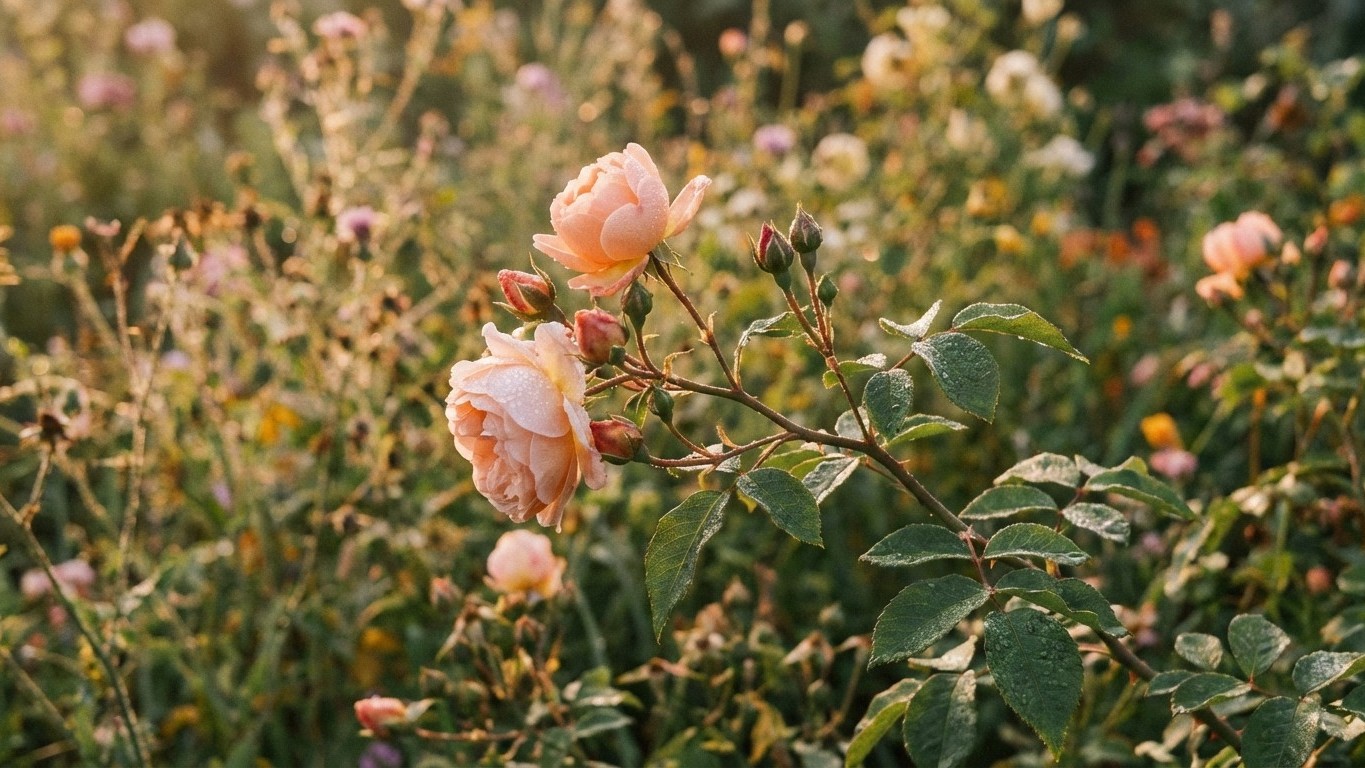

Rugosa roses, Canadian Explorer and Parkland roses, and Knock Out shrub roses (in zone 5 and warmer) handle Nebraska winters with little fuss. Hybrid teas, tree roses, and many English and climbing roses will not, unless you give them real winter work. The label matters more than the picture on the tag. Hardiness, own-root growth, and the plant’s grade decide whether a rose is still alive in May.
Which roses survive a Nebraska winter
The 2023 USDA Plant Hardiness Zone Map puts Nebraska in zones 4b to 6a. That is a wide range. The cold end sits toward the north and the western Panhandle, and the milder end toward the southeast along the Missouri River. The zone number comes from one measurement, the average annual extreme minimum temperature, so it tells you about the single coldest night of a typical winter and nothing about wind, snow cover, or summer heat. Find your own zone before you shop.
Two groups of roses clear the whole range without help. Rugosas, the tough shrub roses with wrinkled leaves and big hips, come through zone 4 with canes mostly intact. The Explorer series, bred in Canada for prairie winters, and the related Parkland roses were developed for exactly this kind of cold. Many other modern shrub roses sit in the middle. They are generally rated to zone 5, which means they thrive in the southeast and may die back to the snow line in the north.
Where do hybrid teas fall short?
Hybrid teas, floribundas, and grandifloras are the roses most people picture when they think of a rose. They are bred for flower form, not for cold. In zone 5b they can make it through with a mound of soil over the crown. In zone 4 they usually need that mound and more, and some years the canes die to the ground regardless. Climbers are similar, because their long canes sit above the snow where wind and sun dry them out.
Nebraska winters are hard on roses in a few ways. Cold snaps arrive with little snow cover. Dry wind pulls moisture from exposed canes. Warm spells in February or March start the sap moving, and then a freeze catches it. Roses bred for colder places have wood that hardens off early and tolerates this swing.
Frost dates matter here too. At the Omaha airport (Eppley Airfield) reference station, the average last spring frost falls around April 23 and the first fall frost around October 15. Those are average dates for one city. Suburban and rural gardens can see the last spring frost later and the first fall frost earlier, and more so at elevation. A rose still pushing soft new growth when the first hard freeze arrives will lose it, so the early-hardening types have a real edge.
Named roses that hold up here
Start with the rugosas. Hansa is a double, magenta-purple, clove-scented rose that grows into a dense, suckering shrub. It survives zone 4 winters, tolerates road salt and poor soil, and sets large red hips in fall. Therese Bugnet, a hybrid rugosa, has pale pink flowers, reddish canes, and good fragrance. It has a reputation for coming through the coldest winters with little dieback. Both are generally grown on their own roots, which helps. Blanc Double de Coubert is another rugosa with white flowers, though it can be slower to settle in.
The Explorer series offers more flower variety. William Baffin is a large, vigorous pink climbing shrub that can be trained on a fence and rarely needs winter protection in zone 4. Other Explorer and Parkland roses, such as John Cabot, Henry Kelsey, and Morden Blush, were selected for the same reason. If you want repeat bloom with real cold tolerance, these are a better bet than most roses a national garden center brings in.
Knock Out and its relatives are among the best-selling shrub roses in the country, and they do well in Nebraska with an asterisk. They are generally rated to zone 5. In zone 5b they usually come through fine. In colder pockets they may die back hard, but because they bloom on new wood, they regrow from the base and still flower the same summer. Prune out dead canes in spring, once buds have clearly swelled, and expect a smaller plant in the first half of the season. Their disease resistance is a bonus; the Rose Diseases in Nebraska: What the Climate Here Actually Brings page covers what still turns up on them here.
New Dawn is the classic pale pink climber, and it is a fair bet in the milder parts of the state. It is generally rated to zone 5. The trouble is the canes: they are long, and in the north they will often die back in a hard winter. Plant it on a protected south or east wall, away from the open prairie wind, and lay the canes down or wrap them before the ground freezes if you want any bloom on old wood. Our main guide to growing roses in Nebraska covers the basics of siting and care.
Sold here, but not for this zone
Big-box stores and many garden centers stock roses from national suppliers, and those suppliers ship the same bundle to Georgia and to Nebraska. The tag may say hardy to zone 6 or 7, or say nothing about zone at all. Take that as a warning. A rose that is perfect in Tulsa or Kansas City can be a one-season purchase in Norfolk or Scottsbluff.
The usual trouble group is hybrid teas. Peace and Mister Lincoln, two of the best known, are good garden roses where winters are mild, and they are on shelves in spring all over Nebraska. They survive here only with real effort. The same goes for most grandifloras and many floribundas. English roses from the David Austin line vary a great deal, and many are rated for zone 5 or 6, so they can struggle in the northern half of the state.
Tree roses, also called standards, are among the least forgiving. A hybrid tea is grafted on top of a tall trunk, and the trunk and graft are fully exposed to the cold. In Nebraska they are usually treated as container plants, moved into an unheated garage or basement for the winter, or buried with the trunk laid flat. Potted florist roses sold around Valentine’s Day and Mother’s Day are forced for the holiday and are not intended for the garden at all.
If you already own one of these, mound soil or compost over the crown after the ground starts to freeze, and do not wait for a deep cold snap that never comes with a warning. The full method is in Protecting Roses Through a Nebraska Winter. If you are choosing now, skip the work and buy something from the previous section.
What to check on the label before buying
Start with the zone. A rating of zone 4 or colder means the rose should get through a typical Nebraska winter in nearly all of the state. A rating of zone 5 works in most of the state, though it may die back in the coldest northern and western areas. A warmer zone rating means more winter work, and in some years the rose will still be lost. If there is no zone on the tag, check the plant name online before you pay.
Next, look at the grade. Bare-root roses are sold in grades, and the top grade has thicker, more numerous canes and a bigger root system. A heavier plant stores more energy for its first winter. Potted roses are not graded the same way, so judge them on the canes: they should be thick, green, and free of black or shriveled patches.
The last check is own-root versus grafted, and it matters more the colder the winter. A grafted rose is a named variety joined to a different, tougher rootstock, and the join shows as a knobby swelling at the base. If a hard winter kills the canes above that knob, the rootstock can send up its own growth, and what blooms next summer is not the rose you bought. An own-root rose regrows from the roots as the same variety, even if it dies to the ground. Look for “own root” on the tag, or check the base for a graft knob before you buy. Rugosas, Explorers, and Knock Outs are commonly sold on their own roots, which is one reason they do so well here.
Checking this against your own county
A state map cannot tell you what happens in your yard. University of Nebraska–Lincoln Extension has county offices serving all 93 Nebraska counties, and the staff there know which roses have lived through local winters and how your area’s frost dates differ from the airport figures. Call or visit with the cultivar names you are considering. Ask for your county’s typical last spring frost and first fall frost before you plant, since both can shift by a week or two between towns that are only a short drive apart.
Common questions
What is the hardiest rose for Nebraska?
Rugosas such as Hansa and Therese Bugnet, along with Explorer roses like William Baffin, are among the hardiest. They are bred for cold climates and need little winter protection in much of the state.
Can I grow hybrid tea roses in Nebraska?
Yes, but with work. Hybrid teas need soil mounded over the crown each fall, and they may die back to the ground in colder winters, especially in zone 4. Gardeners in the milder southeast have the best odds.
Is Knock Out rose hardy in Nebraska?
Generally yes in zone 5, and in colder areas it often dies back but regrows from the base. Because it blooms on new growth, it still flowers the same summer.
Should I buy own-root or grafted roses?
Own-root is the safer choice in Nebraska. If a winter kills the top, an own-root rose regrows as the same variety, while a grafted one can come back as its rootstock instead.