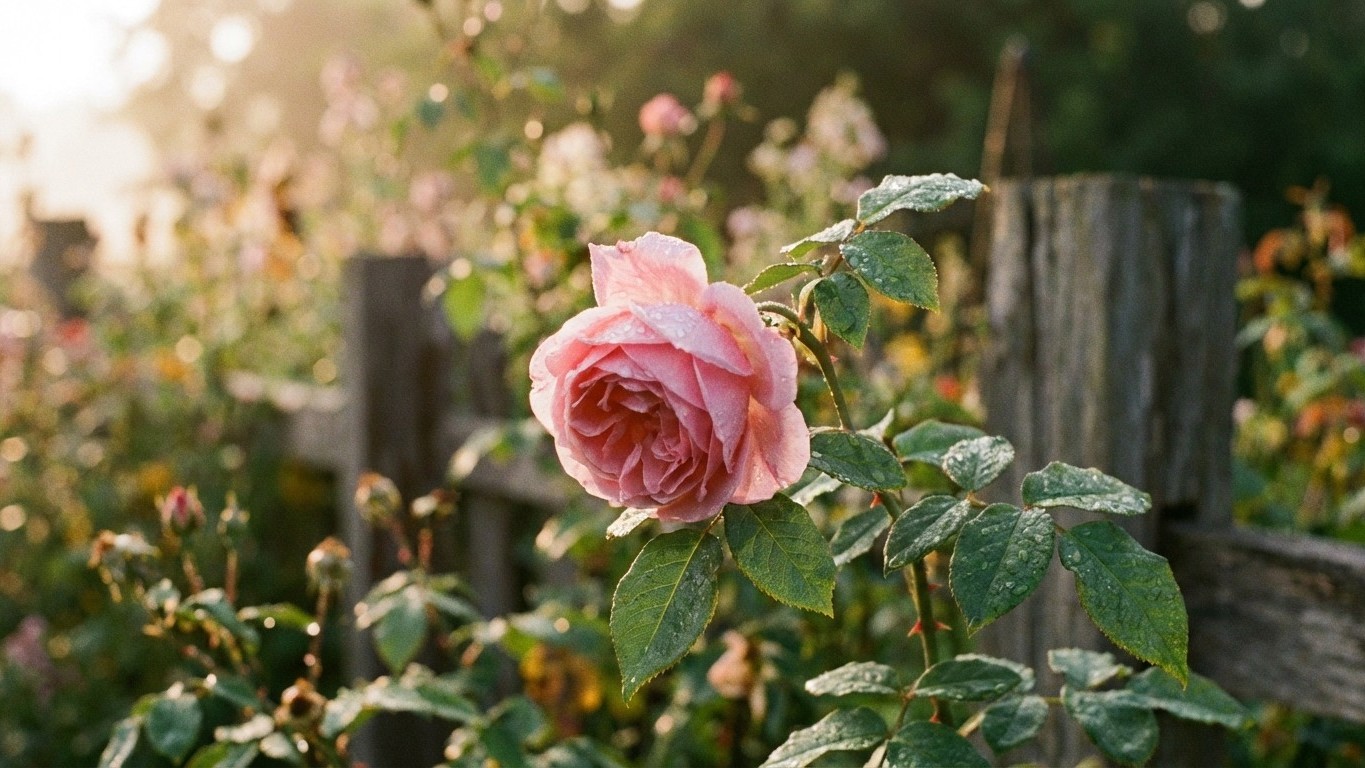

Rugosas and Explorer-series shrubs come through a Nevada winter with little help, and four named roses are easy to buy and reliable here: Knock Out, Therese Bugnet, Hansa and New Dawn. Hybrid teas fill most garden center displays, and they struggle once winter turns cold. The state runs from USDA zone 4a to 10a, so the right rose depends on where you garden. For planting and care basics, see growing roses in Nevada.
Which roses survive a Nevada winter
Nevada spans USDA zones 4a to 10a on the USDA Plant Hardiness Zone Map. The system rests on one variable, the average annual extreme minimum temperature. Las Vegas sits toward the warm end of that range. Northern valleys and high-elevation towns sit toward the cold end. No single zone describes the state, so look up your own town before you shop.
Which rose types clear the cold end of the range?
Rugosas and the Explorer series handle zone 4a without wrapping or mounding. Rugosas are tough shrub roses with wrinkled leaves and big hips. The Explorer roses came out of Canadian breeding programs aimed at prairie winters, which are harsher than almost all of Nevada’s. Species roses and a number of hardy shrub roses also hold up. In a bad year the cane tips may die back, and the plant regrows from lower down.
Hybrid teas, grandifloras and floribundas need help once you are in zone 6 or colder. That usually means mounding soil or mulch over the base and covering the canes before the hard freezes. The details are in Protecting Roses Through a Nevada Winter.
Why does the zone number leave things out?
A zone records the average annual extreme minimum temperature. It says nothing about dry wind, bright winter sun or repeated thawing and refreezing, and Nevada has plenty of all three. Low humidity pulls moisture out of canes, and dry winter soil can leave roots short of water even when the ground isn’t frozen.
Two habits help. Choose a rose rated for a zone colder than yours, so a harsh winter doesn’t take it out. And water deeply during dry spells in winter whenever the soil is thawed.
Named roses that hold up here
Four cultivars cover most of the state. They differ in how much cold they take, so match them to your zone rather than picking the prettiest one.
| Rose | Type | What it survives |
|---|---|---|
| Hansa | Hybrid rugosa shrub | The coldest zones in the state, plus dry wind and poor soil |
| Therese Bugnet | Hybrid rugosa shrub | Cold-end winters, with only tip dieback in hard years |
| Knock Out | Modern shrub rose | Heat and mid-range winters; typically rated for zone 5 and warmer |
| New Dawn | Climber | Mid-range winters; typically rated for zone 5 and warmer |
Which named roses suit the coldest Nevada gardens?
Hansa is a hybrid rugosa with double, magenta-purple, clove-scented flowers and large red hips in fall. It takes cold, wind and lean soil better than almost anything sold at a garden center. Therese Bugnet is a hybrid rugosa with soft pink flowers on reddish canes. It also shrugs off cold winters, and in a rough year it may lose only the tips. Both are large shrubs, so give them room instead of squeezing them against a walkway.
Which named roses suit the milder valleys and the desert?
Knock Out is a repeat-blooming shrub rose that tolerates heat, and it is widely planted in warm-climate gardens. In a colder valley it can still live, but expect some dieback. New Dawn is a pale pink climber that blooms on both old and new wood. A winter that kills some canes doesn’t wipe out a whole season of flowers. On a fence or arbor in a colder spot, prune late and let the plant show you what survived: wait until the buds swell before cutting, because green, plump wood is alive and brown, shriveled wood is not.
Sold here, but not for this zone
Garden centers buy nationally. The roses on the shelf in Nevada are often the same ones sold in Georgia or Oregon, and a tag that says “hardy” may be judging by a milder winter than yours. In the low desert the winter is rarely the problem, because freezes there are short. In northern and higher-elevation gardens, these categories need work to come through:
- Grafted hybrid teas, such as Peace and Mr. Lincoln, which can die to the ground in a hard winter.
- Grandifloras and floribundas, which behave much like hybrid teas in the cold.
- Tree roses, a hybrid tea or floribunda grafted on top of a tall trunk.
- Many English-style repeat bloomers, which are bred for mild, damp winters and vary a lot in cold tolerance.
Tree roses are the clearest trap. The graft sits at the top of the trunk, up in the cold air, so a hard freeze can kill the whole flowering head. Where winters are cold, wrap the trunk and graft union before the deep freezes, or skip tree roses altogether. Grafted hybrid teas need their base covered with a deep mound of soil or mulch.
None of this makes these roses bad plants. They bloom beautifully and plenty of Nevada gardeners grow them. But they ask for work in the colder parts of the state, and a shopper standing in the store usually has no idea of that. If you love one, plant it where you can reach it with a cover and a shovel of mulch, and read the protection guide before the first hard freeze.
What to check on the label before buying
Start with the grade on bare-root plants. A No. 1 plant carries the most and thickest canes, and No. 1½ and No. 2 are smaller and cheaper. In a climate with hard winters the extra reserves matter, because a bigger plant has more to regrow from if the tops freeze.
Next, check whether the rose is grafted or grows on its own roots. A grafted plant has a knobby bud union at the base, where the named rose was joined to a different rootstock. An own-root rose is a single plant from top to bottom, and the tag usually says “own root” or “grown on its own roots.”
The colder the zone, the more this matters. If a hard winter kills a grafted plant to the ground, whatever sprouts below the union is the rootstock, which is a different rose and usually a plainer one. An own-root rose that dies back regrows as the variety you paid for. Choose own-root plants wherever winters reach the colder zones. Own-root roses can be a bit slower in their first year, but that is a small price.
Last, read the zone rating and ask what it assumes. A rating of zone 5 means the rose should survive the zone 5 average annual extreme minimum temperature. Pick one rated a zone colder than yours. Look the plant over as well: plump green canes and clean leaves are what you want. Rose Diseases in Nevada: What the Climate Here Actually Brings covers what to watch for once it’s in the ground.
Checking this against your own county
Nevada’s range is too wide for one answer. A neighborhood in the low desert and a ranch town in the mountains might as well be in different countries. University of Nevada, Reno Extension has offices serving counties across the state, and the staff know local zones, microclimates and which roses do well nearby. They can also tell you the usual frost window for your area, which varies far more than any state average. Call or visit your county office before you buy a rose that isn’t on the hardy list.
Common questions
What USDA zone is my Nevada town?
The USDA Plant Hardiness Zone Map runs from 4a to 10a across Nevada. Look up your ZIP code on the map or ask your county extension office. Neighboring towns can fall in different zones when the elevation changes.
Do rugosas need winter protection in Nevada?
Generally no. Rugosas like Hansa and Therese Bugnet are among the hardiest roses you can plant, and they handle the cold end of the state without wrapping or mounding. Tips may die back in a hard winter. Prune out the dead wood after the buds swell.
Can I grow a hybrid tea if I really want one?
Yes, and in the low desert it’s easy to overwinter one. In colder zones, choose an own-root plant, plant it where you can protect it, and mound the base with soil or mulch before the hard freezes. Expect more upkeep than a rugosa.
Is Knock Out hardy enough for northern Nevada?
It is typically rated for zone 5 and warmer. That covers many northern gardens, though the coldest valleys may be too cold for it. Expect some dieback in hard years and wait until the buds swell before pruning. If your zone is 5 or colder, Hansa or Therese Bugnet is the safer buy.