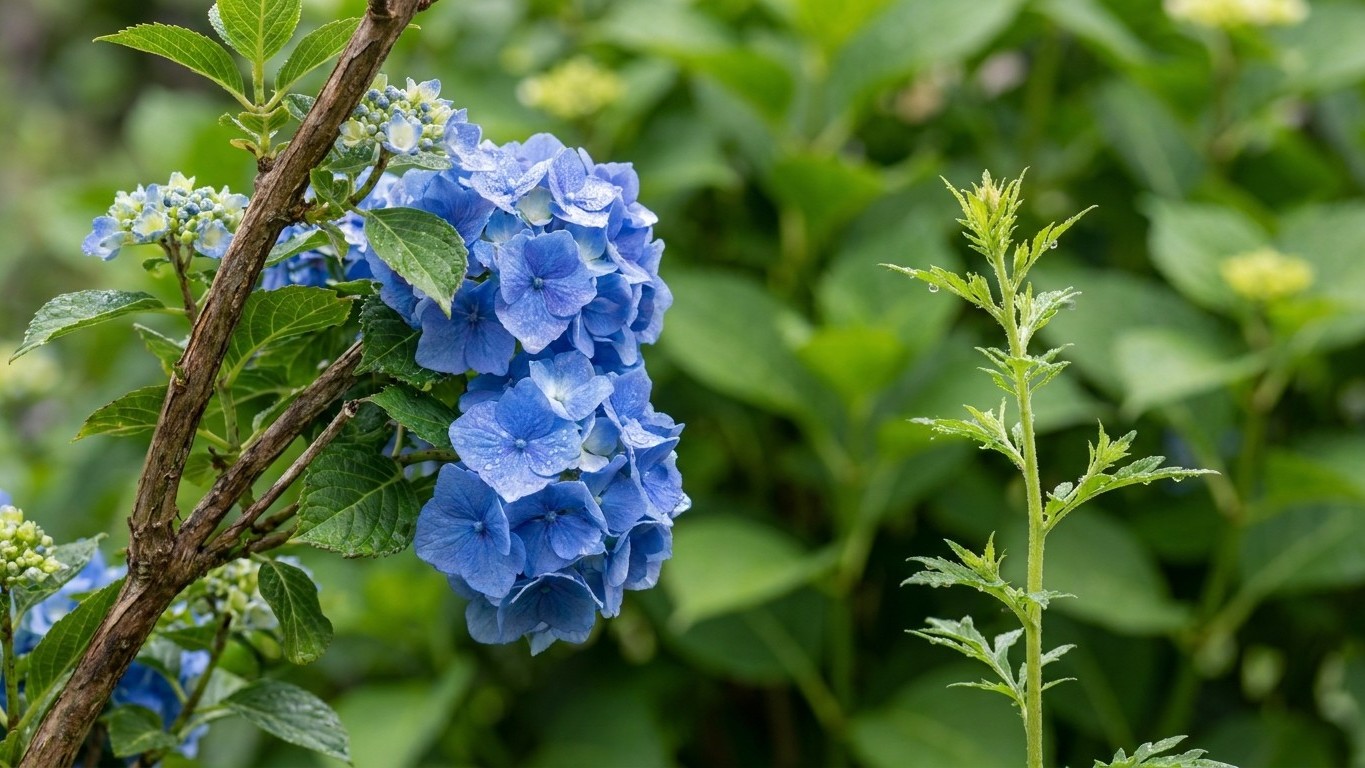

Nearly all of them. Common hydrangea types are hardy to the cold Mississippi gets, which falls in USDA zones 7b to 9a. What separates the types is where the flower buds sit. Smooth and panicle hydrangeas bloom on wood grown this spring, so a hard freeze rarely takes the flowers. Bigleaf and oakleaf types set buds the summer before, and a late freeze can strip them. The question is less “will it live?” than “will it bloom?”
What this comes down to in Mississippi

At the Jackson airport weather station, the last spring frost falls between March 6 and March 22, and the first fall frost between November 7 and November 22, based on the NOAA NCEI 1991-2020 Climate Normals (32F freeze probabilities, 30-70% band). That is the reference-city figure. Gardens outside the city, especially suburban and rural ones, can see the last spring frost roughly one to two weeks later. The danger to a hydrangea sits in that spring window. A warm February wakes the plant, buds swell, and a freeze in March catches tissue that has already left dormancy. Winter cold itself rarely does the damage.
That is why the cultivars below run from the most dependable bloomers to the ones that gamble. All six are sold widely at nurseries across the South.
Annabelle
A smooth hydrangea (Hydrangea arborescens) with big white snowball blooms. If a freeze kills the stems back, it still blooms that summer. The stems flop under heavy flowers, and afternoon shade helps through July and August.
Limelight
A panicle hydrangea (Hydrangea paniculata) with lime-green cones that age toward pink and cream. It blooms on new wood, so late freezes don’t cost the show. Stiff, upright stems rarely need support. It is a very forgiving choice for a gardener who doesn’t want to think about spring weather.
Quick Fire
Also a panicle type, and among the earliest of that group to flower. White blooms open early and turn pink as they age. Because it blooms on new wood, winter has little say in the result, and the early flowering means much of the show happens before peak summer heat.
Alice
An oakleaf hydrangea (Hydrangea quercifolia), a species native to the Southeast, Mississippi included. It blooms on old wood, but the buds are hardier than a bigleaf’s, so it is usually less of a gamble. Big white panicles in early summer, burgundy leaves in fall, and peeling bark in winter make it a four-season plant.
Endless Summer
A bigleaf hydrangea (Hydrangea macrophylla) that blooms on both old and new wood. If a late freeze kills the buds formed last summer, new growth still produces flowers later. Among bigleaf types, it is a good insurance for a gardener in a freeze-prone spot.
Nikko Blue
The classic old-fashioned bigleaf, with blue flowers in acidic soil. It blooms only on buds formed the previous summer. A freeze after the leaves open can mean a year of green foliage and no flowers. The plant survives fine. It just needs a sheltered location and a plan for cold snaps.
Working it out for your own garden
A cultivar list helps today. A method helps after you move or after a strange winter. The method starts with one question: on which wood does this plant carry its flower buds?
How do you tell which type of hydrangea you have?
Check the plant tag or the nursery listing for the species name first. Arborescens (smooth) and paniculata (panicle) bloom on new wood. Macrophylla (bigleaf), serrata (mountain) and quercifolia (oakleaf) carry buds from the year before, unless the label says “reblooming,” which means they also flower on new growth. With no tag, the leaves tell you. Panicle and smooth types have pointed or oval leaves, oakleaf has deeply lobed leaves like an oak, and bigleaf has thick, glossy, coarsely toothed leaves.
How do you check a variety against your frost window?
Start with the reference range, then shift it for your ground. The Jackson station gives March 6 to March 22 for the last spring frost. As a rough rule, add one to two weeks for a suburban or rural garden and the working range becomes roughly March 13 to April 5. On the fall side, the first frost range of November 7 to November 22 shifts earlier by the same margin, to roughly October 24 to November 15.
Now run a bigleaf like Nikko Blue through it. Its buds carry the whole season’s flowers. If a warm stretch in late winter pushes the leaves open in early March, the plant is exposed for several weeks until the frost window closes in early April. One freeze in that stretch can wipe out the flowers. That is the line where a gamble starts.
Run a panicle like Limelight through the same dates. Its flower buds don’t form until the new shoots grow, which happens after the frost window has largely passed. A frozen shoot gets replaced by another, and the bloom is delayed at worst. Endless Summer lands in the middle, since it can fall back on new wood if the old buds are lost. Match the plant to how much exposure your garden carries, and you have your answer.
After any winter, check for life before judging damage. Scratch a thumbnail across a stem. Green underneath means alive. Brown and dry means that stem is gone, though the roots may still send up new shoots. The timing for pruning hydrangeas in Mississippi depends on this same old-wood versus new-wood split.
What changes across the state
The USDA Plant Hardiness Zone Map, which is built on one variable, the average annual extreme minimum temperature, runs from 7b to 9a across Mississippi. That is a statewide range, and the Jackson dates above are one reference point inside it. Other parts of the state differ in both directions.
Along the Gulf Coast, winters are milder and the freeze danger is lower, but warm spells arrive earlier. A bigleaf there can leaf out in a warm January, and the one freeze that follows does more harm than a colder winter would have. Mild winters also mean longer exposure for plants that start growth early.
In the north and northeast, including the hill country, winters are colder, the last spring frost comes later, and the first fall frost comes earlier than at the reference station. Elevation adds to the shift, even a few hundred feet. Gardeners there get more reliable dormancy and fewer false springs, but the frost window stretches into April, so old-wood bloomers need more attention.
The Delta and the Black Belt prairie sit between those extremes, with flat, open ground where cold air settles and a frost can hit harder than the regional numbers suggest. Low spots and open fields run colder on still nights. A hydrangea planted by a south-facing wall, under tree canopy or on a slope, often sits a few degrees warmer than one in a low corner of the same yard. Microclimate on your own lot shifts the odds as much as the region does.
The mistakes this state punishes

The first is trusting a warm spell. When temperatures hit the 70s in February, bigleaf and oakleaf hydrangeas start to move. Buds swell and leaves unfurl. Gardeners relax, remove winter mulch, and then a freeze arrives in March. Leave the mulch in place until the frost window has clearly closed for your area. For nights that threaten a freeze after growth has started, a bedsheet or frost cloth over the plant helps, as long as it comes off in the morning. The full approach is covered in Protecting Hydrangeas Through a Mississippi Winter.
The second is cutting old-wood hydrangeas in fall or winter. Bigleaf, oakleaf and mountain types carry next summer’s flowers on the stems you can see. A tidy-up in November or February removes the buds. Panicle and smooth types can take that cut safely, but only if you know which one you have, which is why the identification step comes first.
The third is feeding late. A nitrogen feeding in late summer or early fall pushes soft new growth right before the first frost range of November 7 to November 22 at the reference station, or earlier in colder pockets. That growth is the first to die in a freeze. Feed in spring and early summer, then stop.
The fourth is giving up too soon. A bigleaf can look dead in March and leaf out from lower on the stems in May. Digging it up before then wastes a healthy root system. Wait until the plant has had time to push growth, and then cut back only what is clearly dead.
The fifth is picking the spot by looks alone. A low corner where cold air pools, or a bare spot open to north wind, raises the odds of damage. A sheltered site with afternoon shade protects both the buds and the summer foliage.
Checking this against your county
The dates and zones here are a starting point. Your county may run a week or two off the Jackson numbers, and a lot or hillside may run off your county’s. Call or visit your county office of Mississippi State University Extension for local frost timing and for what thrives in your soil. For the broader picture of site, soil and care, see the state guide to growing hydrangeas in Mississippi.
Common questions
Will a hydrangea die in a Mississippi freeze?
Rarely. Stems may die back, and flower buds may be lost, but the roots are hardy well below the cold the state sees. Most plants regrow from the base or from lower on the stems.
Which hydrangeas bloom most reliably every year?
Smooth types like Annabelle and panicle types like Limelight and Quick Fire, since they flower on new wood. Among bigleaf types, reblooming selections such as Endless Summer give the best backup.
Do hydrangeas need covering every winter?
No. Cover only on nights when a freeze follows a stretch of warm weather that has pushed buds or leaves into growth. Plants still fully dormant need no cover.
Should I cut back stems that look dead in late winter?
Wait. Scratch a stem to check for green, and give bigleaf plants until new growth shows in spring before removing anything. Cutting too early can remove live buds.