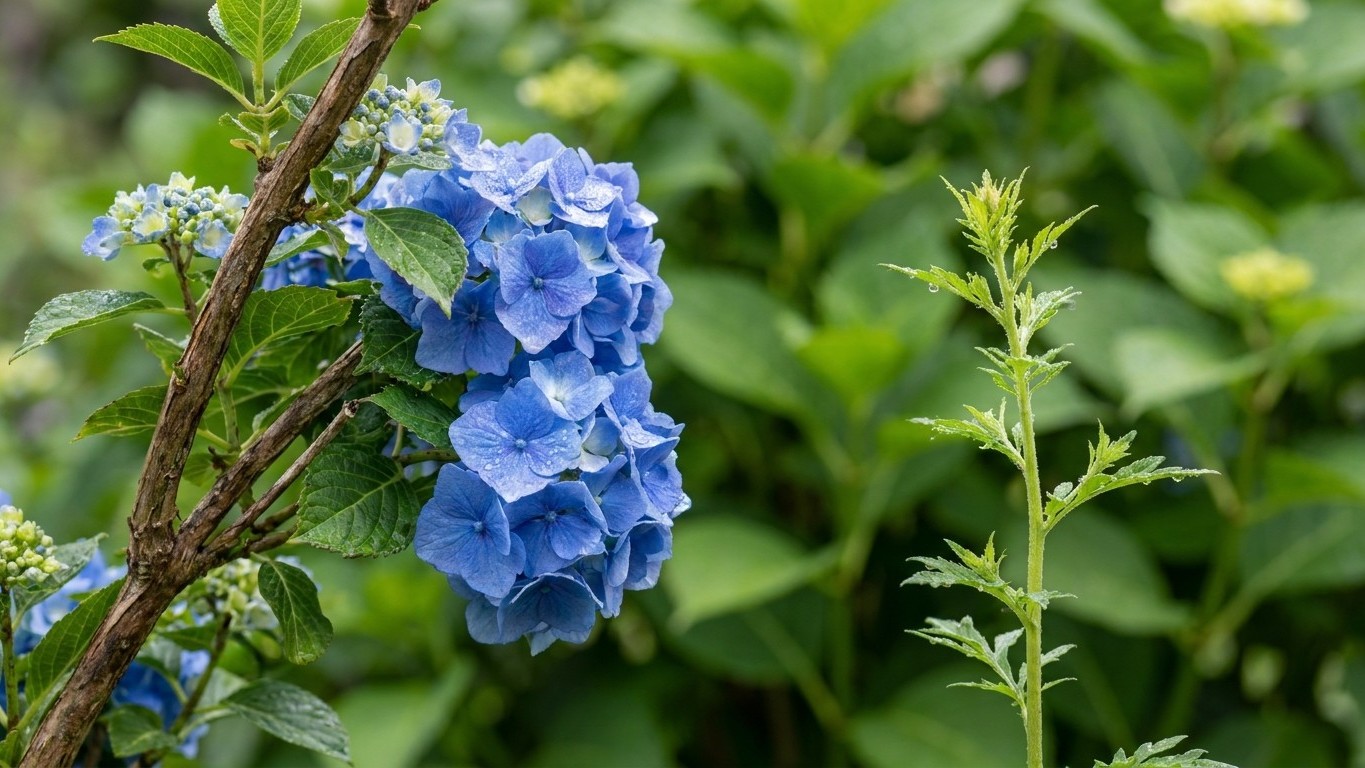

Bigleaf hydrangeas bloom pink whenever the soil around them is close to neutral or alkaline, and many Louisiana beds fit that description. This is especially true near foundations, in builder fill and under hard irrigation water. Blue flowers need acidic soil, where aluminum dissolves and the roots can absorb it. A soil test, a slow pH drop and a few months of patience will move most plants from pink toward blue.
What this comes down to in Louisiana

The timing for color work is anchored by the last spring freeze, which at the New Orleans reference station falls between January 18 and February 8, according to NOAA NCEI climate normals. That is when hydrangeas wake up, roots start drinking, and the soil chemistry you adjust begins to reach the flowers. The first fall freeze at the same station falls between December 17 and January 8, so the whole cool season is short and the calendar straddles the New Year.
Frost is not the main constraint here. A 32F freeze occurs in only 86.8 percent of years at that station, so roughly one year in seven has no freeze at all. Summer heat is what limits hydrangeas in south Louisiana. North Louisiana freezes far more reliably. The pH work described below fits into this long, mild cool season, and the real deadline is the heat that arrives soon after spring growth.
Why do hydrangeas turn pink in Louisiana soil?
The flower pigment in bigleaf hydrangeas is the same one in both colors. It looks blue when it binds with aluminum and pink when it does not. Nearly every soil contains aluminum, but it dissolves into a form roots can take up only when the soil is acidic. Once the soil turns less acidic, aluminum locks into the soil and the flowers go pink.
Phosphorus makes it worse. High phosphorus ties up aluminum inside the plant and in the soil, so a bed that has been fed with a high-phosphorus fertilizer for years will stay pink even if the pH looks borderline. Lime from concrete, stucco and masonry near a house, plus alkaline tap or well water used for irrigation, nudges beds the same direction over time. The table below shows the general pattern.
| Soil pH | Aluminum available to roots | Typical bloom color |
|---|---|---|
| Below about 5.5 | High | Blue |
| About 5.5 to 6.5 | Partial | Purple, or blue and pink on one plant |
| Above about 6.5 | Low | Pink to red |
Which hydrangeas can actually turn blue?
Only some hydrangeas respond to soil pH. White bigleaf cultivars stay white regardless of what you do to the soil. Panicle, smooth and oakleaf hydrangeas also ignore pH. A panicle that fades from white to pink in late summer is just aging, and no amount of aluminum sulfate will change that. If you want a full guide to the species, the overview of growing hydrangeas in Louisiana covers the basics.
Working it out for your own garden
Color is a chemistry problem, so the method matters more than any single product. Start with a soil test, because a pH reading tells you how far you have to move. It also shows phosphorus, the other half of the puzzle. The LSU AgCenter runs a soil testing lab, and a test costs far less than a season of guesswork.
How far does the pH have to drop to get blue?
Say the test comes back at 6.8 and you want 5.5. That is a drop of about 1.3 units. Because pH is logarithmic, one unit is a tenfold change in acidity, so a drop of more than one full unit asks a lot of the soil. Clay and lime-rich soils resist, and they tend to creep back up. Beds that start near 6.0 are much easier, and a modest push often gets them to blue. Beds that start above 7.0 are better handled in a large container filled with acidic potting mix, where you control everything.
Two materials do the work. Aluminum sulfate acts quickly, because it both supplies aluminum and acidifies the soil. Dissolve it in water at the label rate, drench the soil around the plant, and repeat a few times through spring. Never apply it to a dry plant, and never exceed the label, since too much burns roots. Elemental sulfur acts slowly, since soil bacteria must convert it, and that works best in warm soil over a few months. Putting sulfur down in early fall, well ahead of the December 17 to January 8 freeze window, sets up the next spring. Follow the label rate or the lab’s recommendation for your soil.
Counting backward works like this. Aluminum sulfate drenches should begin as growth starts, after the January 18 to February 8 window. Allow a few weeks for the first drench to take effect, and the flowers that open in spring will already show the shift. If you used sulfur, start in early fall so that the soil has had months to acidify before buds swell. In both cases, expect the first full effect on the following bloom cycle, not within weeks.
What else should you change besides pH?
Switch to a fertilizer low in phosphorus and higher in potassium, which keeps aluminum available. Mulch with pine bark or pine straw, which is mildly acidic. Water with collected rainwater when you can, since it is naturally slightly acidic and tap water often is not. Avoid pruning off buds while you are working on color. Bigleaf flower buds form on old wood, so poorly timed cuts remove the very blooms you are trying to turn, which is covered in When to Prune Hydrangeas in Louisiana.
What changes across the state
The reference station sits in the New Orleans area, and the USDA Plant Hardiness Zone Map, which is built on a single variable (the average annual extreme minimum temperature), places Louisiana across zones 8a to 10a. That is a wide band. Everything above, from the freeze windows to soil pH, shifts as you move across it.
South Louisiana has heavy alluvial clays, marsh-derived soils, shell and limestone fill, and plenty of alkaline municipal and well water. Heat and humidity are intense, and a freeze is never guaranteed. Pink is a very common outcome here, and holding blue takes steady attention. Coastal parishes add salt spray and salty irrigation sources, which also push the wrong way.
North Louisiana generally has more acidic, sandier or silty upland soils under pine and hardwood, and freezes come more reliably and later into spring. A plant there may already lean purple or blue with little help, though builder fill and lime near foundations can still produce pink beds. Because the last freeze comes later in the north, treatments and new growth should wait a bit longer than the reference-station window suggests. A late freeze after budbreak can damage buds, and Protecting Hydrangeas Through a Louisiana Winter explains how to cover them.
Rainfall matters in both halves. Heavy rain leaches lime and gradually acidifies open beds, while raised beds, container plantings and beds near concrete tend to drift alkaline faster. Your own yard may differ from the regional pattern, so the soil test settles it.
The mistakes this state punishes

Feeding with a bloom-booster or all-purpose fertilizer is the most common one. High phosphorus ties up aluminum, and the plant stays pink no matter how much sulfate you pour on. Choose a low-phosphorus formula instead.
Another is planting right against the foundation. Concrete, stucco and mortar leach lime into the soil, and the bed next to the wall often tests alkaline. Set plants a few feet out, or use a container, so you are not fighting the house.
Many gardeners treat in summer heat. Aluminum sulfate on stressed plants in hot, dry weather can burn roots. Do the work in the cool part of the year, water the plant well first, and skip the drench when the forecast is extreme.
Warm January spells also catch people out. A stretch of mild days pushes plants into early growth, and because the last freeze at the reference station can come as late as February 8, tender new growth and buds can be killed after you have just invested in color work. Hold off on feeding and hard drenches until the window has passed, and cover plants when a freeze threatens.
A last mistake is expecting white or panicle varieties to change, or expecting blue within a month. Check what you have planted, apply the correction, and judge by the next bloom cycle. Retest each year, because beds drift back toward alkaline.
Checking this against your county
The dates and pH targets above are a starting point for the whole state, anchored to New Orleans. Louisiana runs its extension offices by parish, so contact your local office through LSU AgCenter for a soil test, for advice on local water quality and for your own freeze timing. The statewide overview of growing hydrangeas in Louisiana covers everything beyond color.
Common questions
Can I turn pink hydrangeas blue in one season?
Sometimes partly. Flowers that open after aluminum sulfate drenches may show purple or patchy blue, but a full, steady blue usually takes a full growing season or more, especially in clay or lime-rich soil. Sulfur is slower still.
Do rusty nails or coffee grounds make hydrangeas blue?
Rusty nails supply iron, and the blue pigment needs aluminum, so they do nothing useful. Used coffee grounds are mildly acidic, but the effect is small and slow compared with a measured soil amendment.
How do I turn blue hydrangeas pink?
Raise the soil pH with garden lime (dolomitic lime is common), and use a fertilizer with more phosphorus. Follow the label rate, retest the soil, and expect the change on the next bloom cycle.
Why are my hydrangea blooms purple or two colors?
That is the middle of the range. A moderately acidic soil pH gives partial aluminum uptake, and uneven soil can make one plant bloom in several shades. A soil test shows which direction to move, and steady amendments will even the color out.