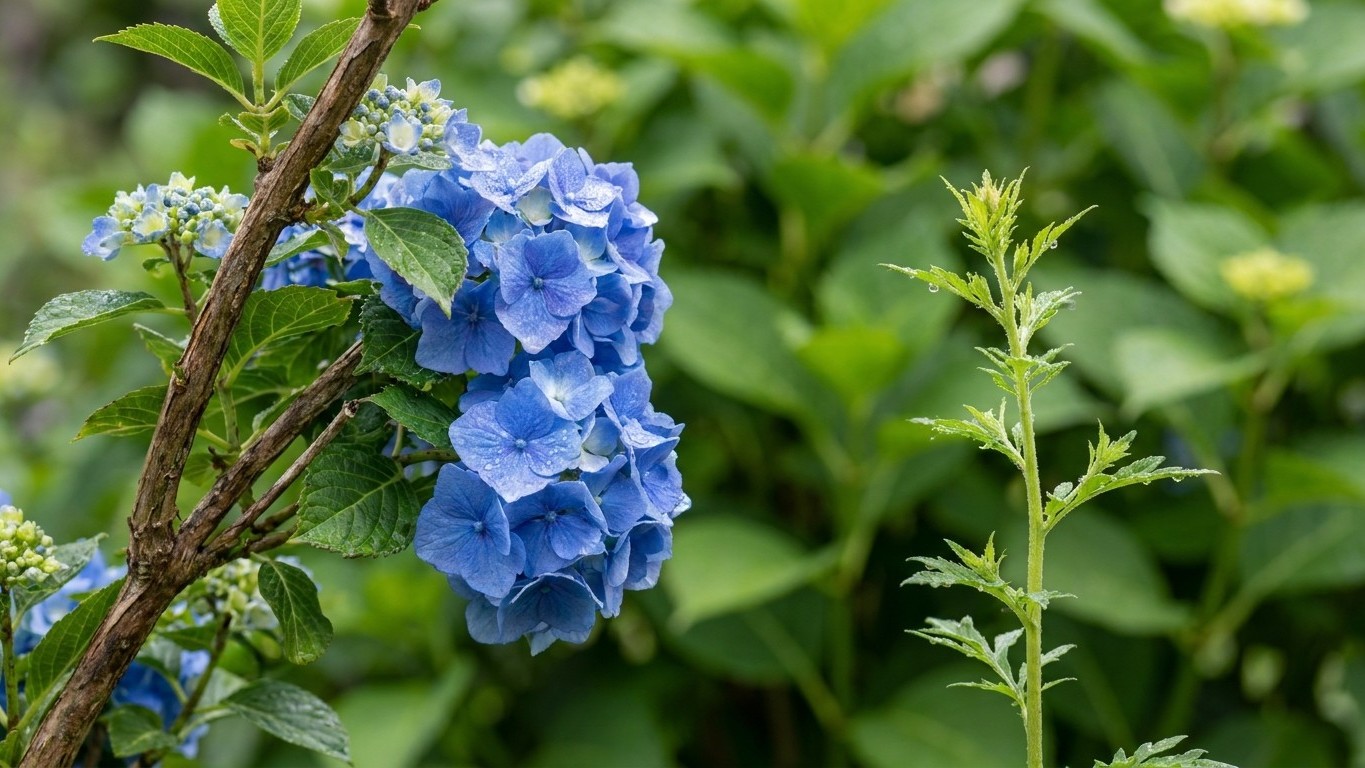

Prune hydrangeas that bloom on old wood right after the flowers fade, and prune those that bloom on new wood in late winter, before buds break. That split matters more than any calendar date. A bigleaf cut in March loses its summer flowers. A panicle left alone until July just gets floppy. Once you know which group your shrub belongs to, the timing is easy.
What this comes down to in Missouri

Kansas City International, the reference station, averages its last spring freeze around mid-April (about April 13), based on NOAA NCEI climate normals. Hydrangeas that bloom on new wood get their pruning while the stems are still dormant, ahead of that window, and old-wood bloomers wait until after they flower.
The reason is where the flower buds sit. Some hydrangeas set next year’s flower buds in late summer and fall, on stems that grew this season. Those buds ride through winter on the stems and open in early summer. Others grow new stems in spring and make their flowers at the tips of that fresh growth. Cutting an old-wood shrub back in winter removes the buds. Cutting a new-wood shrub in winter removes nothing but last year’s stem.
Which hydrangeas bloom on old wood?
Bigleaf hydrangeas (the mopheads and lacecaps) and oakleaf hydrangeas, which have lobed leaves shaped like a red oak’s, bloom on old wood. Prune them within a few weeks after the flowers fade so the plant has time to set new buds. Some reblooming bigleaf types also flower on new growth, but they still do best with light trimming. Bigleaf hydrangeas are also more prone than the other groups to losing stems in a hard Missouri winter, which is covered in Which Hydrangeas Survive a Missouri Winter.
Which hydrangeas bloom on new wood?
Panicle hydrangeas (cone-shaped blooms) and smooth hydrangeas (round white heads) bloom on new wood. Both can be cut in late winter, once the worst cold has passed but before the buds swell. Smooth types can be cut back hard, and they will flower even if winter kills them to the ground. Panicles need only a light trim to keep a good shape.
| Type | Blooms on | When to prune | How much |
|---|---|---|---|
| Panicle | New wood | Late winter, before buds break | Up to about a third of the height |
| Smooth | New wood | Late winter, before buds break | Can be cut back hard |
| Bigleaf | Old wood (some rebloomers also on new) | Right after flowering, by early August | Light; remove spent blooms and dead stems |
| Oakleaf | Old wood | Right after flowering | Very little |
The hardiness map puts Missouri in USDA zones 5b to 7b. That system rests on a single measure, the average annual extreme minimum temperature. It tells you how cold stems may get, and your local frost dates tell you when growth wakes up.
Working it out for your own garden
A chart works until you move, inherit a shrub with no tag, or hit a winter that behaves differently. The method below holds up in all three cases.
How do you tell whether your hydrangea blooms on old or new wood?
Start with the plant’s shape and leaves. Cone-shaped flower heads mean a panicle. Round white heads on a loose, lanky shrub mean a smooth type. Big rounded leaves with pink or blue mopheads point to bigleaf, and leaves that look like oak leaves belong to an oakleaf.
The history of the plant also helps. If a hard winter killed the stems to the ground and the shrub still flowered that summer, it blooms on new wood. If it grew back green and healthy but never flowered, it blooms on old wood.
With an unlabeled shrub, take the cautious route for one season. Remove only dead wood, watch where the first flowers appear, then write the answer on a plant tag for next year.
How do you find dead stems before you cut?
In early spring, live and dead hydrangea stems look the same: gray, bare and stiff. Wait for leaves to open before you decide. Bigleaf hydrangeas often leaf out late, sometimes well after the frost window ends at your location.
Use the fingernail test. Scrape a small patch of bark on a stem. Green underneath means the stem is alive, and dry brown means it is dead. A dead stem also snaps cleanly when bent, while a live one flexes. Cut dead stems back to healthy wood just above a pair of leaves or buds that have started to swell.
The Kansas City average of about April 13 is a reference point. Your own last frost may fall earlier or later, and the county extension office can give you the range for your area. Do your cleanup after that window has passed, so you can see which buds really survived.
How do you plan the pruning year?
Tie each job to something you can see on the plant:
- Late winter, stems dormant: cut panicle and smooth hydrangeas.
- Spring, after leaves open: remove dead stems from bigleaf and oakleaf types.
- Right after flowers fade: trim bigleaf and oakleaf lightly and cut spent blooms.
- Fall: leave stems standing on bigleaf types, because they protect buds through winter.
Take an oakleaf that finished blooming in late June. Its next flower buds begin forming within weeks, so a trim in early July is safe, while a trim in November or March removes them. A panicle works the other way. The same November cut removes nothing important, though the stubs can be hit by winter cold, so late winter is the cleaner time.
What changes across the state
Does north Missouri prune later than south Missouri?
Yes, in most years. The Kansas City figures come from a station that sits northwest of the city. Northern Missouri runs colder and can see frost later in spring, which means buds swell later and winter kill is more likely. Gardeners there can wait a bit longer in spring before judging which stems survived. Southern Missouri is milder, with buds waking earlier, so late-winter cuts on panicle and smooth types come sooner and spring cleanup can start earlier.
The zone range of 5b to 7b reflects this spread. A bigleaf in the colder parts of the state may be cut to the ground nearly every winter and rarely flower. The same shrub farther south may keep most of its stems and bloom reliably. The pruning rules do not change, but the amount of living old wood does.
How do the Ozarks and the cities change the timing?
Hilly ground in the Ozarks creates pockets of cold air in valleys and low spots, while ridges and south-facing slopes warm earlier. Two neighbors with the same shrub may see buds open at different times, depending on slope. Cities add their own effect. The urban core of Kansas City or St. Louis stays warmer than the surrounding country, so growth often starts earlier there than at an outlying airport. Sheltered spots against a south wall behave the same way on a small scale.
Use the plant as your clock. When buds along the stems turn plump and green, dormant pruning is over, whatever the calendar says.
The mistakes this state punishes

What happens if you prune bigleaf hydrangeas in late winter?
The shrub leafs out normally and produces no flowers. This is a common complaint about bigleaf hydrangeas, and it often comes from tidying up in March. Missouri winters already take a share of the buds, so a late-winter haircut can remove nearly all that remain. Leave bigleaf stems standing until you can see which ones are alive. If your soil is alkaline and the flowers come out pink, that is a separate matter, covered in Why Hydrangeas Are Pink in Missouri, and How to Turn Them Blue.
What happens if you prune after a warm spell?
A run of warm days in late winter can start buds swelling weeks early, and freezes still arrive into April. Hard pruning at that point makes the plant push soft new growth, and a frost can burn it. If the buds have already started to move, hold off and wait until the frost window has passed, since the shrub will have to start over if it is hit.
Other errors are smaller. Cutting oakleaf hydrangeas back hard destroys their natural shape and costs flowers. Pruning old-wood types in late summer or fall removes the buds for the following year. And cutting a smooth hydrangea to the ground every year can give big heads on weak stems that flop. Cutting back the height keeps the stems sturdier.
Checking this against your county
The dates above come from one reference station, and Missouri is a large state with a wide spread of conditions. Treat them as a starting point. Your county office of University of Missouri Extension can tell you your local frost window and what winter did to shrubs in your area. For everything beyond pruning, including siting, soil and care, see the state guide to growing hydrangeas in Missouri.
Common questions
Can I prune all my hydrangeas at the same time?
Only if you remove dead wood and nothing else. Panicle and smooth hydrangeas can be cut in late winter, but bigleaf and oakleaf hydrangeas lose their flowers if they get the same treatment. Group the shrubs by type and handle each group on its own schedule.
Is it too late to prune if the buds have already opened?
For panicle and smooth hydrangeas, a light trim is still fine, but a hard cut will delay flowering because the plant has already spent energy on leaves. For old-wood types, cut only dead stems and wait until after bloom for anything else.
What should I do with a hydrangea that never blooms?
Check whether it is a bigleaf that has been pruned in winter or hit by cold. If so, stop cutting it, wait for leaves, and remove only dead stems. If it is a panicle or smooth type, look at sunlight, because too much shade reduces flowering.
Can I cut hydrangeas back in fall?
Panicle and smooth types will survive it, but leaving the stems until late winter protects the crown and costs nothing. Bigleaf and oakleaf should not be cut in fall, since the flower buds for next summer are already on the stems.