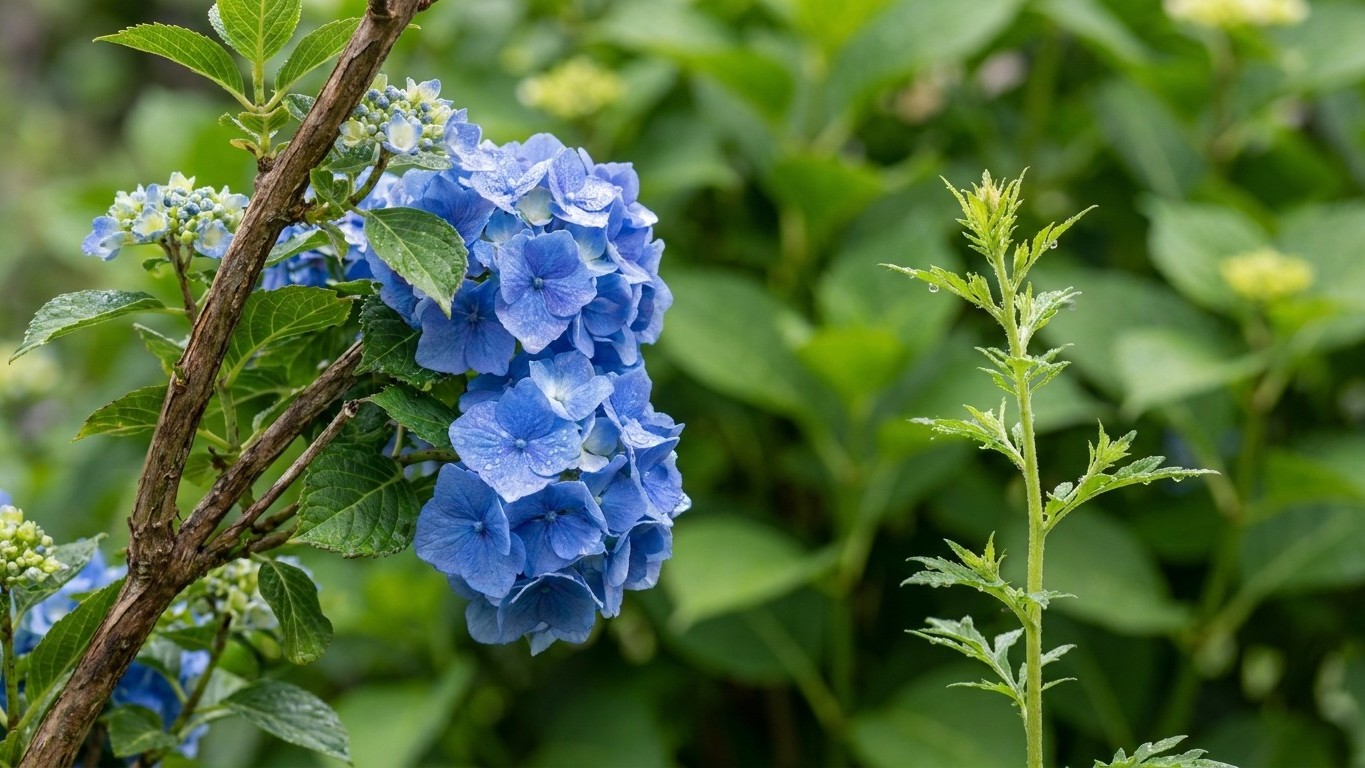

Hydrangeas turn out pink in Missouri because a lot of yards here have soil that is near neutral or alkaline. In that soil, a bigleaf hydrangea can’t get enough aluminum. Blue flowers need acidic soil, with a pH around 5.5 or lower, and aluminum the roots can reach. You can steer the color, but it takes a soil test, a season or more of patience, and the right kind of hydrangea. Panicle, smooth and oakleaf types won’t shift, whatever you add.
What this comes down to in Missouri

The color is set by soil chemistry during the growing season. In Kansas City, the average last spring freeze falls between April 6 and April 20, and the average first fall freeze between October 18 and October 29, so everything that sets flower color happens inside that window. Where the soil is near neutral or alkaline, aluminum stays locked away for most of that stretch, and bigleaf flowers come out pink.
How does soil pH change hydrangea color?
Aluminum dissolves in acidic soil and becomes available to roots. The plant carries it up into the flower sepals, where it combines with the pigment and shifts the color from pink toward blue. When the soil is closer to neutral, aluminum stays bound to soil particles and the pigment stays pink or red.
Phosphorus plays a part too. Heavy feeding for big blooms can work against your acidifying efforts and leave you with pink flowers, so check with your local extension office before adjusting the soil. A fertilizer with low phosphorus and higher potassium is the usual choice for a blue-flower bed.
| Soil condition | Typical flower color |
|---|---|
| Acidic, pH about 5.5 or lower, aluminum available | Blue |
| Slightly acidic, between roughly 5.5 and 6.5 | Purple, or a mix of blue and pink on one plant |
| Near neutral or alkaline, pH about 6.5 or higher | Pink to red |
Those bands are rules of thumb. Cultivars differ in how far they will swing, and a plant with mixed flowers is common in the middle range.
Which hydrangeas can actually change color?
Bigleaf hydrangea (Hydrangea macrophylla), both the mophead and lacecap forms, is the one that responds. Mountain hydrangea (Hydrangea serrata) responds too. Rebloomers sold under names like Endless Summer are bigleaf types, so they follow the same soil rules. White bigleaf cultivars stay white or fade to green, because they lack the pigment to change.
Smooth hydrangea (the Annabelle type), panicle hydrangea and oakleaf hydrangea ignore soil pH. A pink panicle is pink by breeding, and no amount of sulfur turns it blue. If you want a deeper look at the plant itself, the overview on growing hydrangeas in Missouri covers siting, watering and care.
Working it out for your own garden
The method matters more than any one product, because soil, water and weather differ from yard to yard and year to year. Test first, change the soil slowly, and check the result against the flowers.
How do you test soil before adding anything?
Start with a soil test that reports pH, taken from the root zone of the plant, roughly 4 to 8 inches down and a foot or so out from the crown. A county extension office can send samples to a lab and explain the results. A cheap home probe or kit gives a rough read, but a lab number is steadier and also shows phosphorus.
Say the test comes back near neutral and you want blue. The goal is a pH of about 5.5 or lower. The pH scale is logarithmic, so small differences in the number mean large differences in acidity. Moving down by a point or more is a real job, and soils rich in lime resist it. Expect to treat in stages and retest, not to fix it with one application.
What do you add, and when?
Two materials do most of the work. Aluminum sulfate acts fast and supplies aluminum directly, but it can burn roots when overapplied, so follow label rates and dissolve it in water as directed. Elemental sulfur works slowly, because soil microbes have to convert it, so apply it well ahead of planting and check with your local extension office for timing. That slow pace is why many gardeners apply sulfur in fall or very early spring, then follow with aluminum sulfate once leaves are out.
In Kansas City, wait until the April 6 to April 20 frost window has passed before feeding fresh growth, since a late freeze can cut back tender new shoots. Keep the bed acidic through summer, when flower color is developing. Then read the result by the next season’s blooms. If color comes in patchy or purple, that is progress, and a second round of treatment often moves it further. Plan to keep treating, since the pH drifts back up.
Containers are the easiest route. A pot filled with acidic potting mix, watered with rainwater when you can, gives you more control than a Missouri clay bed usually allows. Keep in mind that pruning decides whether you get flowers at all, and the timing is covered in When to Prune Hydrangeas in Missouri.
What changes across the state
Missouri is not one soil. The Ozarks in the southern half of the state sit on older, leached, often rocky soils that tend toward acidic. A gardener there may find hydrangeas already leaning purple or blue with no help. North and west of the Missouri River, much of the ground comes from glacial deposits and wind-blown silt, and it runs closer to neutral. Where limestone lies near the surface or lime has been added over the years, the soil can be strongly alkaline, and pink is likely.
Local conditions inside a single yard can override the regional picture. A bed beside a concrete foundation picks up lime as the concrete weathers. A bed along a gravel drive or a limed lawn does the same. Municipal tap water in many Missouri towns is hard and alkaline, and years of watering from a hose push pH upward even in naturally acidic soil.
Climate shifts too, though more mildly for this question. The USDA Plant Hardiness Zone Map, which is built on a single variable, the average annual extreme minimum temperature, places Missouri between zones 5b and 7b. Southern Missouri is milder than the Kansas City area, so spring growth starts earlier and the season for adjusting soil runs longer. In the colder north, a late freeze is a bigger risk to flower buds, and a plant that loses its buds has no color to manage.
The mistakes this state punishes

The first one is treating the wrong plant. Gardeners add sulfur around a panicle or an Annabelle type and wait for a color change that cannot happen. Check the label or the plant’s species before spending money.
The second is skipping the test. Applying aluminum sulfate to soil that is already acidic can push pH too low, which stresses roots and leaves foliage yellow. Guessing is also how people overdose a bed that was fine to begin with.
The third is expecting speed. Missouri’s heavy clay and limestone-influenced soils buffer against change, and a single spring treatment rarely moves them far. Plan on a full season, and on repeating treatment every year, because lime from concrete, hard water and rain-splashed gravel pull the pH back up.
The fourth is feeding with a high-phosphorus fertilizer. It works against the aluminum you are trying to supply, and the flowers stay pink. Choose a formula with low phosphorus.
The fifth is timing around warm spells. A mild March can push buds open, and a freeze in the April 6 to April 20 window at Kansas City can kill the flower buds on old wood. Then you get leaves and no blooms, and the soil work goes to waste. Mulch the crown, cover plants on frost nights, and read Protecting Hydrangeas Through a Missouri Winter for how to keep those buds alive.
Checking this against your county
The Kansas City frost window and the soil pattern above are a starting point. Your own county may sit earlier or later, and your own bed may be more acidic or more alkaline than your neighbor’s. University of Missouri Extension has county offices that can arrange a soil test and tell you what is typical for your area. For general care of the plant itself, return to the state overview on growing hydrangeas in Missouri.
Common questions
Can I turn a white hydrangea blue?
No. White bigleaf cultivars lack the pigment that reacts with aluminum, and white smooth or panicle types are not affected by soil pH at all. Only pink, red or blue bigleaf and mountain hydrangeas respond.
How long does it take for pink hydrangeas to turn blue?
Most gardeners need a full growing season, and often two. The soil has to shift toward acidic first, and the plant then has to take up aluminum while the flowers form. Sulfur is slower than aluminum sulfate, so a bed treated in fall may show change the following summer.
Do coffee grounds or pine needles make hydrangeas blue?
They do little on their own. Used grounds and pine needle mulch have only a limited effect on soil pH, so test your soil before relying on them. A soil test plus aluminum sulfate or elemental sulfur gives far more reliable results.
Is a pink hydrangea less healthy than a blue one?
No. Pink flowers show that aluminum is not being taken up, which is normal in near-neutral or alkaline soil. A pink plant with green leaves and steady growth is perfectly healthy, and acidifying soil to force blue only makes sense if you want the color.