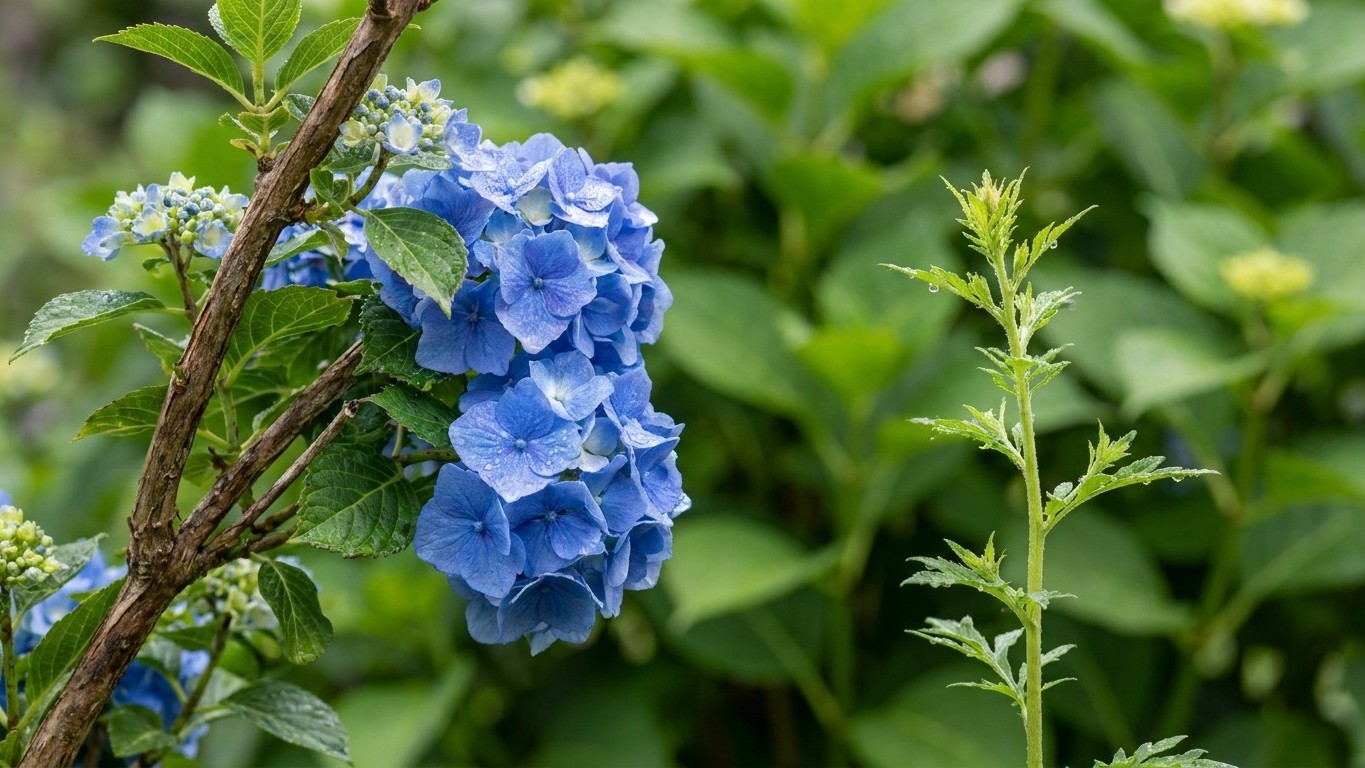

Most hydrangeas in Missouri get through winter without help. The ones most likely to need it are the bigleaf and oakleaf types, which set next summer’s flower buds on old wood, so a hard cold snap or a late freeze can kill the buds while the roots live on. A deep mulch over the crown, a loose cage of leaves or straw around the stems, and some patience in spring cover most of the risk. The timing is what trips people up, and it follows the frost dates.
What this comes down to in Missouri

At Kansas City, the reference station for these dates, the first fall frost falls between October 18 and October 29, and the last spring frost between April 6 and April 20. Hydrangea protection goes on after the fall window and comes off after the spring window, so the covered season runs from roughly early November to late April.
Both ranges are approximate and based on NOAA NCEI Climate Normals (1991–2020). They mark the band where a 32 F freeze is possible but far from certain. Any given year can land on either side of it. The Kansas City airport station sits well northwest of the city, so downtown runs earlier in spring, and southern Missouri is milder still. Across the whole state, the USDA Plant Hardiness Zone Map rates places by their average annual extreme minimum temperature. It runs from 5b in the far north to 7b in the southeast, with a few warm pockets reaching 8a, which means the cold a shrub has to survive differs a lot between a northern yard and a southeastern one.
How does winter actually damage hydrangeas?
The roots rarely die. The damage lands on the stems and the buds they carry. Bigleaf and oakleaf hydrangeas form flower buds in late summer and hold them through winter on last year’s stems. If those stems freeze back, the shrub regrows from the base with healthy leaves and no flowers that summer. Panicle and smooth hydrangeas bloom on new growth, so a killed stem costs them some size and little else. How each type rates for risk is laid out in Which Hydrangeas Survive a Missouri Winter.
Why do late-winter warm spells hurt more than deep cold?
Missouri’s trouble is often less the lowest reading of the season than the swings. A run of mild days in February or March can coax buds to swell, and a freeze that follows hits tissue that has lost its dormancy. A bud that stayed tight and asleep would usually have taken the same cold with little or no harm.
Wind and dry soil add to the toll. Cold wind pulls moisture out of exposed stems, and a root zone that went into winter dry cannot replace it. That is why the protection described below has three jobs: keep the crown insulated, shelter the stems from wind, and hold the cover on until the spring window has closed.
Working it out for your own garden
A date printed in a guide goes stale the first time you move or the first cold year arrives. The method lasts longer. Find out how your shrub blooms, then anchor the work to the frost window of the nearest weather station and add or subtract a few weeks.
How do you tell which of your hydrangeas needs protection?
Begin with the bloom habit. The plant tag usually names the species, and bigleaf and oakleaf shrubs are the ones to cover. If you do not have the tag, watch what happens after a hard winter. A shrub that leafs out only from the base and skips flowers is telling you it blooms on old wood.
In early spring, scratch a stem with a thumbnail. Green underneath means the stem is alive and its buds probably are too. Dry, brown tissue means that stem died back. Cut it to the first live bud and plan a sturdier cage next fall.
How do you turn the frost window into protection dates?
For fall, start from the Kansas City first-frost window of October 18 to October 29. Give the plant about two weeks past it to drop its leaves and let the soil cool. That puts the work in roughly the first half of November. A yard farther north starts a little sooner, and one farther south a little later.
For spring, work backward from the last-frost window of April 6 to April 20. Begin loosening the mulch about two weeks before that, which points to roughly late March into early April. Take the cage down in stages, and keep an old bedsheet or frost cloth within reach until the window has passed.
Here is how it plays out for a bigleaf on the west side of a Kansas City house. In early to mid November it gets a thick layer of shredded leaves or bark over the crown. A ring of wire fencing around the shrub gets filled with loose leaves or straw. In late March the mulch is pulled back from the crown, and the cage stays up. On any night after the buds swell, the sheet goes over the whole plant. A panicle hydrangea in the same bed needs only a layer of mulch, and its pruning waits until late winter.
What changes across the state
Missouri runs far enough from north to south that the same shrub faces different winters. Treat the Kansas City dates as the starting point and shift them. Later in fall and earlier in spring as you go south, and the other way as you go north.
Does northern Missouri need more protection than the south?
Yes, in general. Northern counties see colder lows, an earlier first fall frost and a later last spring frost. Protection there goes on sooner, stays on longer, and matters more for bigleaf shrubs, which are marginal in the coldest zones. In the south, including the Bootheel, winters are milder and the fall frost comes later. The main threat there shifts from deep cold to mild spells that wake the plant early. Mulch depth matters less than the timing of removal and the readiness of a frost cover.
How do the Ozarks, river valleys and cities change the picture?
Elevation matters in the Ozarks. Higher ground runs colder, while hollows and valley floors collect cold air on still nights, so a low corner of a yard can frost while a slope a few yards away does not. Large cities hold heat, which is why the downtown Kansas City station warms up earlier in spring than the airport does. Open farmland in the north and west gives wind plenty of room to dry out exposed stems.
The yard itself is the smallest climate zone and often the most useful. A bed on the south or east side of a house, shielded from the cold west wind, can carry a bigleaf with only mulch. The same shrub in an open lawn may need the full cage. Plant placement can do part of the work of winter protection.
The mistakes this state punishes

What goes wrong when you mulch or wrap too early?
Missouri Octobers can feel like summer, and that invites early action. Mulch piled on before the plant has gone dormant and the soil has cooled holds warmth around the crown. Deep mulch also gives mice and voles a place to nest through winter, and they chew bark and stems. Wait until after the first-frost window and until the leaves have dropped.
Wrapping a shrub in plastic is the other early mistake. Plastic traps moisture and heats up fast on a sunny day, so the stems stay damp and the buds lose their dormancy. Burlap, or a wire cage filled with leaves or straw, breathes better and still blocks wind.
What goes wrong when protection comes off too soon?
A warm stretch in March tempts gardeners to clear the bed. The last spring frost window of April 6 to April 20 is a band of probabilities, and freezes after it are still possible. Pull the mulch back from the crown first, leave the cage up, and keep the cover close until the window has clearly closed.
Three smaller errors cost flowers as well. Cutting back a bigleaf or oakleaf in fall removes the buds that would have bloomed. Late-season fertilizer pushes tender growth that the first freeze burns. And a dry fall leaves roots short of water, so water deeply before the ground freezes if rain has been scarce. Color amendments belong to the growing season, and the details are in Why Hydrangeas Are Pink in Missouri, and How to Turn Them Blue.
Checking this against your county
A frost range tied to one reference city is a starting point for your yard. Elevation, slope, a nearby river or a brick wall can move your own dates by days or weeks. Your county office of University of Missouri Extension knows the local pattern of late freezes and can tell you how your area compares with Kansas City. For everything else about planting and care, growing hydrangeas in Missouri covers the rest of the year.
Common questions
Do hydrangeas need winter protection in Missouri every year?
Panicle and smooth hydrangeas generally do not, beyond a layer of mulch. Bigleaf and oakleaf shrubs benefit most, especially in exposed spots and in northern parts of the state. A mild winter may leave them untouched, but the protection is cheap and a bad winter is not predictable.
Can I use fall leaves as mulch over the crown?
Yes. Shredded leaves work well because they stay loose and let air through. Whole leaves can mat down into a wet layer, so run a mower over them first or mix them with straw. Pull the mulch back from the crown in spring so the buds do not sit in damp material.
Should I cut hydrangeas back before winter?
Leave bigleaf and oakleaf stems alone, because they carry next summer’s buds and shelter the lower stems. Panicle and smooth types bloom on new growth and are usually pruned in late winter. Wait until the worst cold has passed in either case.
What about hydrangeas in pots?
Roots in a container are far more exposed than roots in the ground. Move the pot to an unheated garage or shed after the plant has gone dormant, water it lightly now and then so the soil does not dry out completely, and bring it back out once the last spring frost window has passed.