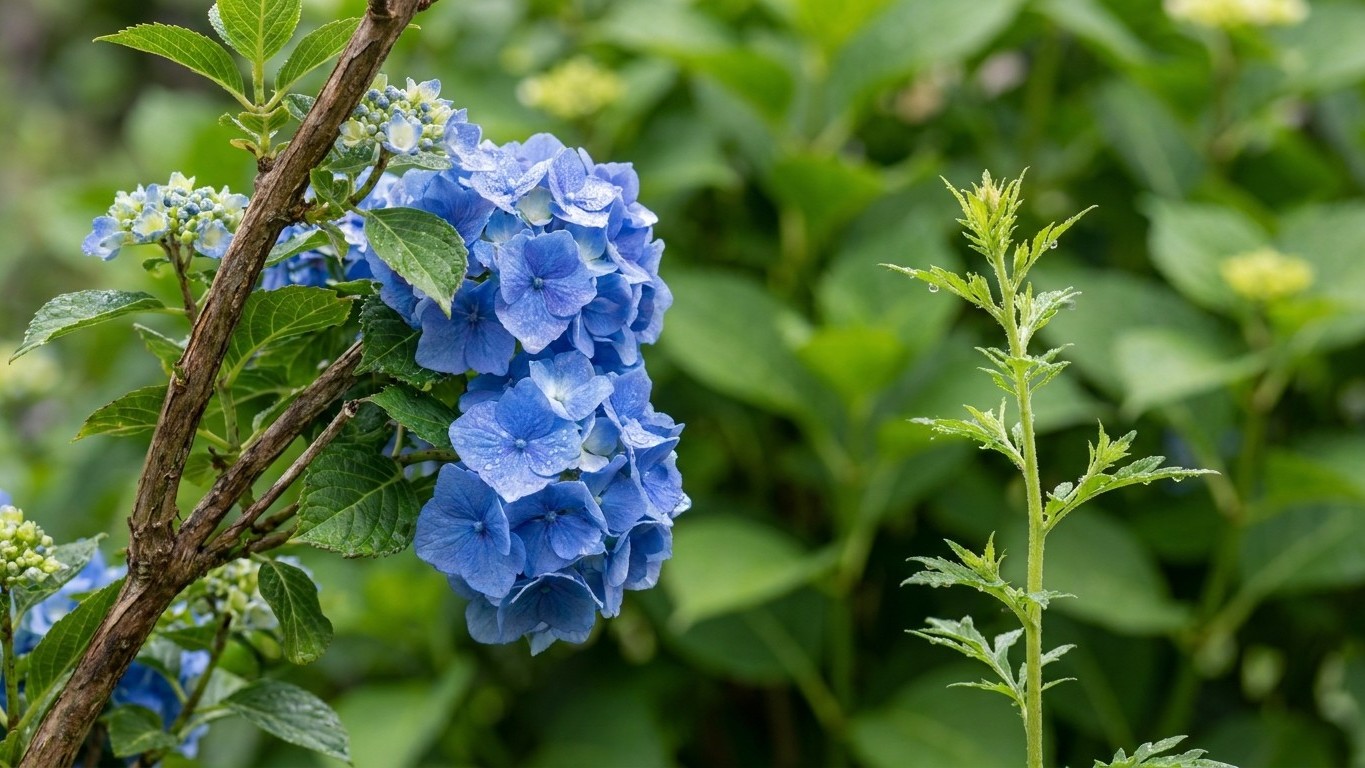

Protecting hydrangeas through a Nevada winter mostly means guarding against three things: flower buds killed by a freeze that follows a warm spell, stems dried out by cold wind, and roots left dry in bare soil. Four jobs cover nearly all of it. Lay a thick mulch over the roots. Water deeply before the ground freezes and again in dry stretches. Cover or cage the stems on the coldest nights. Hold off pruning until spring growth shows what survived.
What this comes down to in Nevada

At Las Vegas, NOAA’s 1991–2020 climate normals put the typical last spring freeze (32°F) around mid-February and the typical first fall freeze around late November. Those dates describe a desert urban heat island, the mildest climate in the state, so Reno, Carson City and any garden at elevation freeze weeks to months earlier in fall and later in spring.
The span between those freezes matters because an old-wood hydrangea (bigleaf or oakleaf) forms next year’s flower buds in late summer. It then carries them through every cold night until spring. In a cold basin or a mountain valley, that stretch is long.
What does a dry, cold winter actually damage on a hydrangea?
Three kinds of damage show up. The first is bud loss. Bigleaf and oakleaf hydrangeas flower on old wood, meaning stems grown the previous year, so a hard freeze can leave a healthy green shrub with no blooms. Panicle and smooth hydrangeas flower on new wood and can lose stems to the cold yet still bloom the same summer.
The second is false spring. A run of warm days wakes the plant, buds swell, and the next freeze kills the tender growth. The third is drying. Low humidity and steady wind pull moisture out of the stems while cold soil keeps the roots from replacing it. In dry-climate winters this can do as much harm as the thermometer reading, and it helps explain stems that die back even in a mild year.
What does the USDA hardiness zone tell you?
The USDA Plant Hardiness Zone Map places the state anywhere from zone 4a to 10a. The system rests on one variable, the average annual extreme minimum temperature. A garden in 4a and a garden in 10a need opposite advice, and the zone says nothing about wind, dryness or how fast temperatures swing in a day. Treat it as a first screen. Which type you plant decides how much of the damage above matters, and Which Hydrangeas Survive a Nevada Winter sorts them by cold tolerance.
Working it out for your own garden
A method outlasts any single calendar. Start with the wood your hydrangea flowers on, because that decides how much protection is worth the effort.
| Type | Flowers on | What winter threatens | Protection that pays off |
|---|---|---|---|
| Bigleaf | Mostly old wood | Buds and upper stems | Mulch, cage and wrap, water, no fall pruning |
| Oakleaf | Old wood | Buds in exposed sites | Mulch, wind shelter, no fall pruning |
| Panicle | New wood | Tip dieback, drying | Mulch and water |
| Smooth | New wood | Stems dying to the base | Mulch the crown, cut back in spring once growth starts |
Next, learn your own freeze dates. Jot down the night of the first hard freeze each fall and the last one each spring. Two or three seasons of notes beat any statewide figure, because a south-facing wall and a low corner of the same yard can differ by weeks. Your county extension office can give you the typical dates for your area.
Then tie each job to an event instead of a calendar day:
- Mulch after the leaves drop and the soil has cooled, with a layer of shredded bark, straw or leaves over the root zone, pulled back from the stems.
- Water deeply before the ground freezes, then again every few weeks in dry spells whenever the soil is not frozen.
- Cage or wrap old-wood bloomers when forecast lows stay below freezing for several nights. A wire cylinder filled loosely with straw or leaves works, and so does burlap staked around the shrub.
- Cover swelling buds with a sheet or frost cloth on a spring frost night, and take it off the next morning.
Late winter brings the last check. Scratch a stem with a fingernail. Green underneath means the stem is alive, and brown and dry means it is dead. Bigleaf types leaf out late, often well into spring, so wait for new growth before cutting anything.
What changes across the state
Nevada is a stack of climates. The south sits in low desert, where winters are mild, freezes are short and sometimes skipped, and the bigger worry is that plants never settle into real dormancy. A hydrangea there may need protection only on the odd cold night, mostly from sun and wind on bare stems. Walls and pavement hold heat, which is why Las Vegas freezes later in fall and ends earlier in spring than almost anywhere else in the state.
The west and north tell a different story. Reno and Carson City sit in high desert at the foot of the Sierra, and the northeast around Elko is colder still. Nights are cold, daily swings are wide, and the air is very dry. Frost arrives early in fall and lingers into late spring, so old-wood bloomers there face both a long cold season and a risk of late freezes that catch swelling buds. Mountain valleys and high-elevation towns sit at the cold end of the zone range, where a bigleaf hydrangea is a gamble even with full protection.
Elevation does most of the work, but small features matter nearly as much inside a single yard. Cold air drains downhill and pools in low spots, which makes them the first places to freeze. A spot against a south or west wall warms earlier in spring, which can trigger early bud break and then a damaging freeze. An east-facing bed with afternoon shade stays cooler and holds dormancy longer, and a fence or hedge on the windward side cuts the drying that does so much of the damage. Choose the planting spot for the winter you expect, not only for the summer shade.
The mistakes this state punishes

Fall pruning is a common mistake. Cutting back a bigleaf or oakleaf hydrangea in October or November removes the buds it will bloom from. Wait until you can see which stems leaf out, then remove only what is dead.
Skipping winter water is another costly mistake. A hydrangea going into a dry winter with parched soil loses stems to drying even when the temperatures are fine. Soak the root zone before the ground freezes, and give it another drink during dry, thawed stretches.
Plastic is a common error. Sheeting wrapped tight around a shrub traps heat on sunny days and cooks the buds, then lets cold straight through at night. Use breathable cover such as burlap, frost cloth or an old sheet, and remove it on mild days.
Timing errors come in pairs. Removing protection after the first warm week invites a late freeze to hit growth that has just started, so keep covers and cages within reach until the last hard freeze has passed in your area. Late fertilizer is the other half. Nitrogen applied in late summer or fall pushes soft new growth that cannot harden before winter. Color adjustments to turn blooms blue, covered in Why Hydrangeas Are Pink in Nevada, and How to Turn Them Blue, belong in the growing season for the same reason.
The last mistake is planting a new shrub late in fall. Roots that haven’t established are more likely to be heaved or dried out. Plant in spring and give the shrub a full season to settle before its first winter.
Checking this against your county
A statewide figure gives a rough idea and no more, because freeze dates shift by weeks from one valley to the next. Your county office at University of Nevada, Reno Extension can tell you the typical freeze dates and the cold-air problems for your area, and which hydrangeas do well locally. For the basics of site, soil and care, the guide to growing hydrangeas in Nevada covers what this article leaves out.
Common questions
Do hydrangeas need covering every winter?
Not always. Panicle and smooth types usually need only mulch and water. Bigleaf and oakleaf types in colder areas benefit from a cage or wrap each year, since a single bad night can take the whole season’s flowers.
When should I take off winter protection?
Remove it gradually once hard freezes are over in your area. Open the top of a cage first, then take everything off gradually. Keep a sheet or frost cloth handy for a late cold night.
Should I water hydrangeas in winter?
Yes, in dry climates. Water when the soil is thawed and has dried out, every few weeks, in the middle of the day so it can soak in before night. Skip it when the ground is frozen solid.
My hydrangea looks dead in spring. Is it?
Probably not yet. Scratch a stem, and if it is green underneath, the stem is alive. Bigleaf types may not leaf out until late spring, and even stems that died to the ground can send up new shoots from the base, though an old-wood bloomer that regrows this way usually skips flowers for that year.