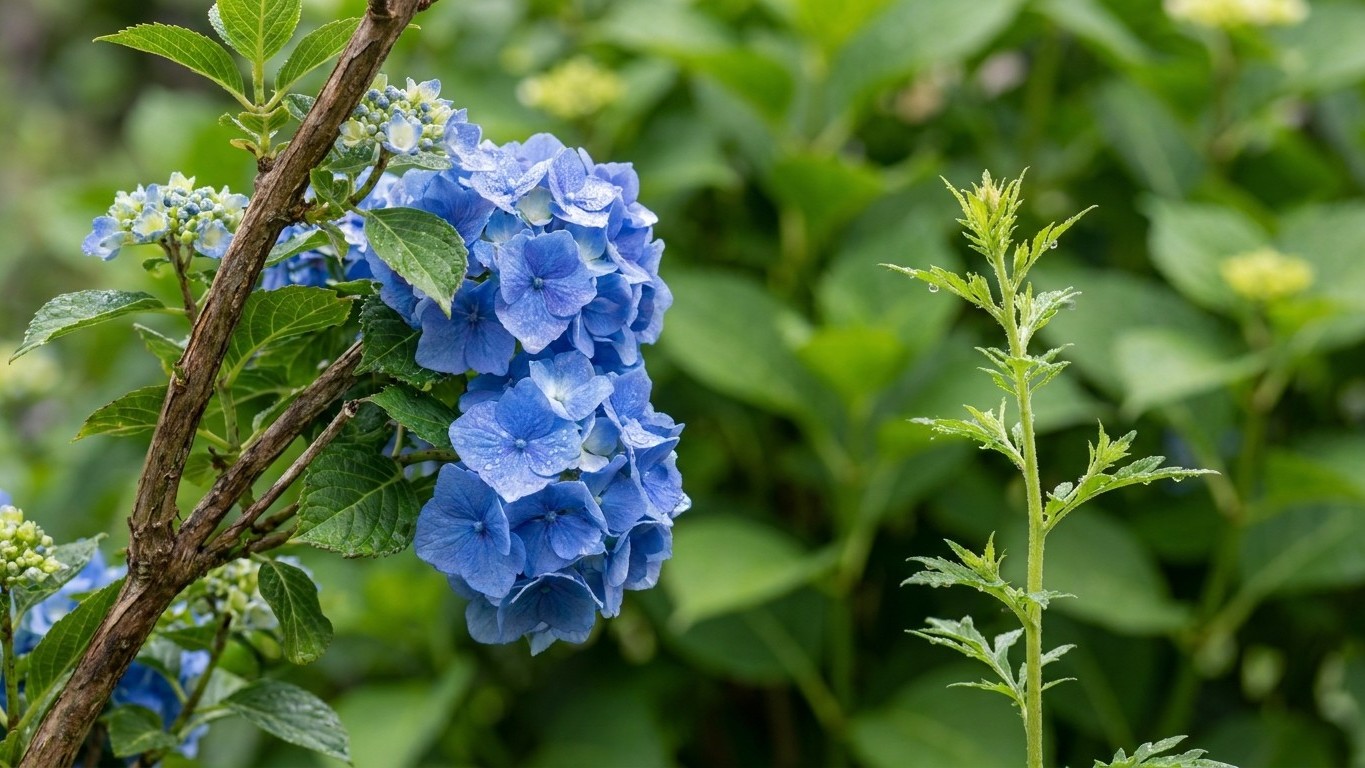

Prune by bloom type first and by the calendar second. Panicle and smooth hydrangeas flower on the current season’s growth, so cut them in late winter before buds break. Bigleaf and oakleaf types set next year’s flower buds on this year’s stems, so prune them right after the blooms fade, by late summer at the latest. Cut at the wrong time and the shrub grows fine but skips flowers. Nevada runs from low desert to Sierra foothills, so the right month shifts a lot across the state.
What this comes down to in Nevada

New-wood hydrangeas get pruned in late winter, after the deepest cold and before buds swell, and the frost window at the Las Vegas airport shows how early that can be: the last spring freeze there averages between January 7 and February 1, and the first fall freeze between December 8 and December 23, based on the NOAA NCEI U.S. Climate Normals 30 to 70 percent probability band for a 32°F freeze. Those dates describe a desert urban heat island at the warm extreme. Reno, Carson City and any garden at elevation see frost months earlier in fall and months later in spring, so treat the Las Vegas range as the earliest end of the state’s calendar.
The state also spans a wide range of cold. The USDA Plant Hardiness Zone Map, which rates a place only by its average annual extreme minimum temperature, runs from zone 4a to 10a across Nevada. A gardener in a 4a pocket and one in a 10a pocket are working with different winters, and their pruning dates will differ by a season.
Frost matters for pruning because a cut tells the plant to push new growth. Tender shoots that open during a warm spell get burned by the next freeze. On old-wood types the stakes are higher, since the flower buds sit exposed on last year’s stems all winter. A spring haircut then removes buds the plant already built.
Which hydrangeas bloom on new wood?
Panicle hydrangeas (cultivars like ‘Limelight’ and ‘Little Lime’) and smooth hydrangeas (‘Annabelle’ and ‘Incrediball’) form flowers on stems grown this season. Prune them in late winter while they are bare. A winter freeze can’t take away their bloom, because the flowers haven’t formed yet, and that is why these two groups are the dependable bloomers in cold parts of the state. For help choosing between types, see Which Hydrangeas Survive a Nevada Winter.
Which hydrangeas bloom on old wood?
Bigleaf hydrangeas (the mopheads and lacecaps), mountain hydrangeas and oakleaf hydrangeas set buds in late summer and fall on stems that will flower the following year. Prune them within a few weeks after the flowers fade. Reblooming bigleafs such as ‘Endless Summer’ flower on both old and new wood, so a mistimed cut costs them less, though the first flush still comes from old stems.
Working it out for your own garden
How do I tell which kind of hydrangea I have?
Start with the flower and the leaf. Cone-shaped clusters that open white or cream and age to pink point to a panicle. Big, round white heads on a shrub with smooth, slightly heart-shaped leaves point to a smooth hydrangea. Glossy, toothed leaves with a mop or flat lacecap flower mean bigleaf. Leaves lobed like an oak’s mean oakleaf. If you inherited a plant with no tag, watch what it does for one season. A shrub that blooms on stems that grew in the same spring is a new-wood type.
How do I time the cut where I live?
Use the frost range as a sequence of markers. For a new-wood type like ‘Limelight’, the window opens once the shrub is dormant and the deepest cold has passed, and closes when buds begin to swell. Using the Las Vegas ranges as the example, the first fall freeze comes between December 8 and December 23 and the last spring freeze between January 7 and February 1, so the cut falls in late winter, near the end of that freeze range and before buds swell. In a colder garden the same sequence plays out months earlier in fall and months later in spring, which puts the cut in late winter or early spring. The rule that travels is simple: wait for dormancy, finish before buds swell, and cut after the worst freezes where winters are hard.
For an old-wood type, the date comes from the bloom. Cut right after the flowers fade, taking out a few of the oldest stems at the base and shortening spent flower stems to the first pair of healthy buds. A bigleaf that blooms in early summer can be pruned by midsummer. A late bloomer needs the work done promptly, because the plant starts forming next year’s buds soon after.
For a reblooming bigleaf like ‘Endless Summer’, leave the winter tangle alone until leaves open in spring. Cut back only stems that stay bare, then trim lightly after the first flush. A scratch test settles doubtful stems. Nick the bark with a thumbnail, and green underneath means alive, while tan and brittle means dead.
What changes across the state
Elevation is one of the biggest factors moving the calendar. Las Vegas sits in low desert where winters are short and mild enough that some hydrangeas hold leaves late and wake early. Reno and Carson City sit in the high desert at the foot of the Sierra, with hard winter freezes and frosts that can return well into spring. Lake Tahoe’s basin and the mountain towns of the north and east are colder again, and parts of the state reach into zone 4.
The practical effect is that the same shrub follows different rules by location. In the south, new-wood hydrangeas can be pruned in midwinter, and the early flush of growth faces only a short risk of a late freeze. At elevation, pruning is better held until late winter or early spring, once the deepest cold has passed, and bigleafs often lose their old-wood buds to the winter regardless of timing. Those gardeners usually get more blooms from panicle and smooth types, and treat a bigleaf as a foliage shrub with occasional flowers.
Heat and sun change the summer side. In the low desert, heavy summer pruning exposes inner stems to scorching afternoon sun, so old-wood types there do better with light cuts after bloom and some afternoon shade. Soil and water differ by region too, and those affect color more than timing (see Why Hydrangeas Are Pink in Nevada, and How to Turn Them Blue).
The mistakes this state punishes

One of the costliest mistakes is pruning a bigleaf in late winter or early spring. The shrub looks scruffy, you tidy it up, and the flower buds go in the trash. Wait for the leaves to open, then remove only what is dead.
Cutting back during a warm spell in midwinter comes next. In the high desert a week of mild weather in January or February is often followed by another hard freeze, and shoots that sprouted after a pruning cut can’t take it. Hold the saw until the cold is truly behind you, even if the calendar says it’s time.
Pruning in fall belongs on the list too. A cut made before the first freeze prompts growth that never hardens off. Leave fall for removing broken stems, and leave the dried flower heads on bigleafs in colder gardens, since they shelter the buds beneath them.
Judging stems by looks alone is another trap. Hydrangeas leaf out late after a cold winter, and a stem that looks dead in March may be fine in May. Do the scratch test before cutting anything.
Finally, avoid cutting everything to the ground out of habit. That works for smooth and panicle types, but it removes all the flower-bearing wood on a bigleaf or oakleaf. If you are unsure of the type, prune lightly and learn what the shrub does.
Checking this against your county
The Las Vegas range is a starting point, since an airport in the desert is not your backyard. Your county’s frost dates, and the microclimate of your own yard, set the real window. University of Nevada, Reno Extension staff can give local freeze dates and advice for your elevation. For the broader picture on siting, soil and care, read growing hydrangeas in Nevada.
Common questions
Can I prune hydrangeas in fall?
Only to remove broken or dead stems. A real pruning cut in fall pushes soft growth that freezes, and on old-wood types it takes off buds that are already set.
Why did my bigleaf hydrangea stop blooming after I pruned it?
Most likely the cut came in winter or spring and removed the flower buds formed the previous summer. A hard winter in a cold garden can do the same damage with no help from pruning. The shrub usually recovers and blooms the next year if you leave the stems alone.
How much can I cut back a panicle hydrangea?
Cutting the plant back each late winter keeps the shape tidy and the flower heads a good size. Harder cuts give fewer, bigger blooms on stems that can flop under the weight. Remove dead and crossing branches first.
Should I cut dead-looking stems in winter?
Wait until the leaves open in spring. Stems that stay bare after the rest of the plant has leafed out are dead, and you can cut them back to green wood or to the base. A scratch on the bark tells you sooner: green underneath means the stem is alive.