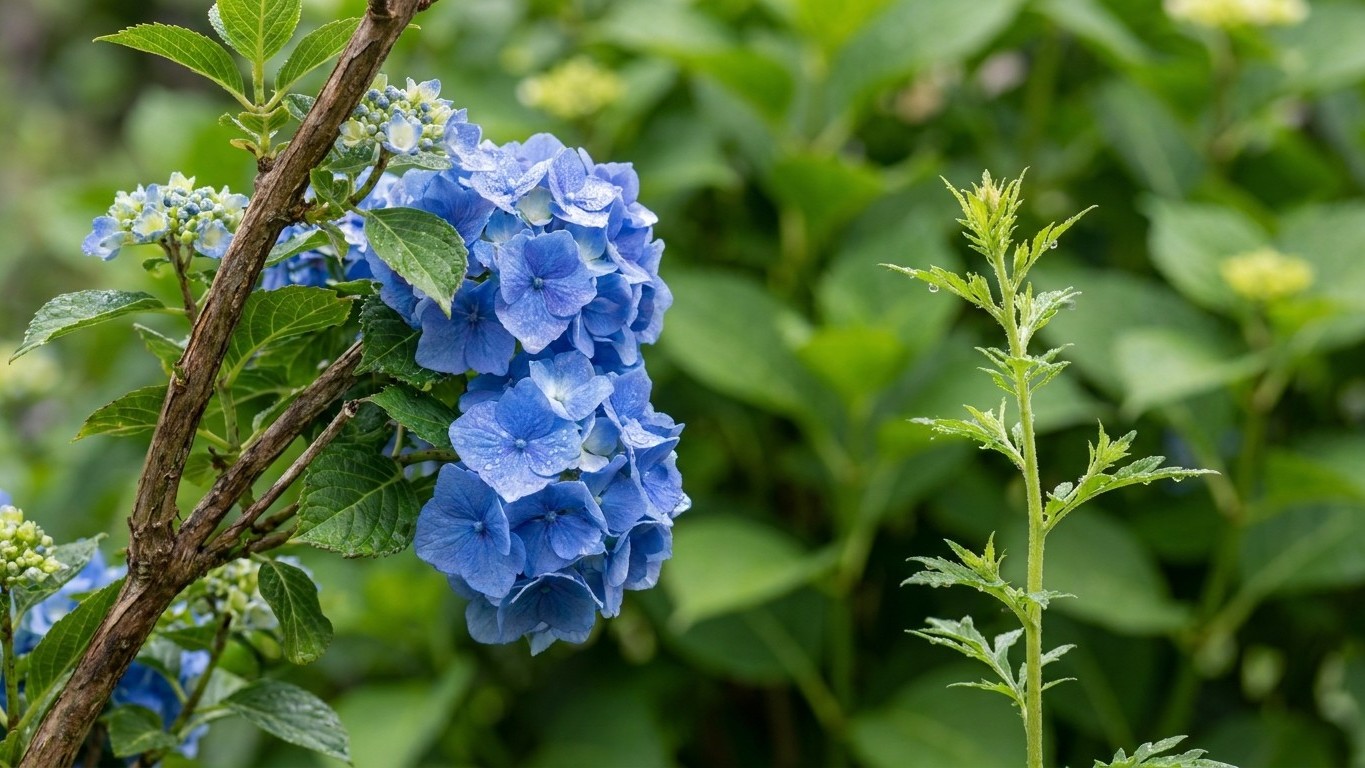

Cold itself rarely kills hydrangeas in North Carolina. What costs gardeners their flowers is a warm spell that wakes the shrub, followed by a freeze that burns the swollen buds. A few habits cover most of the risk: spread mulch after the ground cools, leave old stems uncut through winter, and keep a sheet or frost cloth handy until spring frost danger passes. How much of that you need depends on the type of hydrangea and where in the state you garden.
What this comes down to in North Carolina

In Charlotte, according to the NOAA NCEI 1991–2020 U.S. Climate Normals, the last spring frost typically falls between March 23 and April 5, and the first fall frost between October 30 and November 8. Hydrangeas need attention at both ends of that stretch and very little in the long frost-free months between.
Those dates come from the band where a 32F freeze is 30 to 70 percent likely. A freeze can still show up before or after the band, which is why the dates guide your watching rather than set a deadline. Charlotte sits in the Piedmont, so the mountains and the coast shift the picture, as covered below.
Which part of a hydrangea does winter actually kill?
It depends on when the plant sets its flower buds. Bigleaf, oakleaf and mountain hydrangeas form next summer’s buds on stems grown the previous season. If those stems die back or the buds freeze, the plant leaves out normally in spring and then produces no flowers. Panicle and smooth hydrangeas bloom on growth made in the current season. Winter can kill their stems to the ground and they will still flower that summer.
On the 2023 USDA Plant Hardiness Zone Map, the state runs from roughly zone 6a in the high mountains to 9a on the outer coast. That system rests on a single number, the average annual extreme minimum temperature, so it tells you how cold the worst night gets and nothing about how late a frost arrives. For hydrangeas, the late frost is often the more damaging of the two.
Why does a warm February hurt more than a cold January?
A dormant bud tolerates a great deal of cold. A bud that has started to swell does not. After a run of mild days, the shrub loosens its winter hardiness, and a return to freezing in the last-frost window browns the new leaves and can kill the flower buds inside them. A fall version of this happens when an early freeze hits soft growth that was pushed by late fertilizer or a wet September.
The protection that matters is therefore small and well timed:
- A layer of mulch over the root zone once the ground has cooled.
- Old-wood stems left standing until spring.
- A breathable cover for the nights a freeze is forecast after buds have swollen.
- Water before a hard freeze if the soil is dry.
Working it out for your own garden
When do you put protection on and take it off?
Start from your own frost range, not the state’s. In Charlotte the fall range begins October 30, so that is when to start checking the forecast. Mulch goes on after leaves have dropped and a few frosty nights have chilled the soil. For a yard that runs colder or warmer than Charlotte, shift the whole range by the amount your local last-frost dates differ. A neighbor’s tomato frost date is a good clue.
In spring, the late end of your range is the earliest you can relax. In Charlotte that is April 5, and the Blue Ridge runs several weeks later. Keep covers within reach until a few days past the end of your range, and pull winter mulch back in stages instead of all at once. If your area has a range of a week or two around that late date, plan on the whole range, never one day in it.
How do you tell whether your hydrangea blooms on old wood or new wood?
Check the plant tag or the species first. Bigleaf (the mophead and lacecap types), oakleaf and mountain hydrangeas bloom on old wood. Panicle hydrangeas, with cone-shaped flower heads, and smooth hydrangeas bloom on new wood. Reblooming bigleafs flower on both.
If you inherited an unlabeled shrub, hold off pruning and note where the flower buds form. Buds visible on last year’s stems in spring mean old wood. Old-wood types get pruned right after they flower, not in fall or winter. New-wood types can be cut back hard in late winter before growth starts. In spring, scratch a stem with a fingernail: green underneath means it is alive, and brown and dry means it is dead. Wait for leaves before cutting any living-looking stem.
Will a bigleaf like Nikko Blue bloom after a North Carolina winter?
‘Nikko Blue’ is an old-wood bigleaf, with blue flowers in acidic soil and pink in alkaline soil. In Charlotte it blooms reliably in a normal winter, because the stems survive. The risk is the late freeze after a warm spell, which can take a year’s flowers. At the cold end of the state’s range, where winters are coldest, it is marginal: stems can die back and flowers go with them.
‘Annabelle’, a smooth hydrangea with white blooms on new wood, is a dependable choice. It generally flowers across the state even if winter kills the stems to the ground. A late frost may nip the first leaves, but the shrub simply pushes new ones. Between those two sits the line: with old-wood types you protect the stems, and with new-wood types you mostly stay out of the way.
How do you tell frost damage from disease?
Frost damage shows up fast. After a freeze, tender leaves and shoot tips turn dark and limp, often across the whole top of the plant at once. Disease spreads slowly and usually begins as spots on leaves with a defined edge. If the damage appeared overnight after a cold night, treat it as frost: wait, then prune only what stays dead once new growth begins.
What changes across the state
Three things move the numbers: elevation, distance from the ocean, and how far north or south you are. Everything above is built on Charlotte, which sits in the Piedmont between the other two regions.
In the mountains, spring arrives several weeks later than in Charlotte. That delay can protect old-wood buds, since they wake up later and meet fewer late freezes. The tradeoff is a colder winter, with stems more likely to die back. Valleys and low pockets collect cold air on still nights, so two yards a short drive apart can behave differently. Along the coastal plain, spring comes earlier and winters are milder, so stems survive but buds wake sooner, and a mid-spring cold snap catches them in leaf.
| Region | Main winter risk | What to do |
|---|---|---|
| Mountains (Blue Ridge) | Stem dieback in the coldest winters | Mulch deeply, cage old-wood types with leaves, favor new-wood types |
| Piedmont (Charlotte) | Late freeze after a warm spell | Keep frost cover ready until the end of your last-frost range |
| Coastal plain | Early bud break, then a cold snap | Watch the forecast from late winter, cover swollen buds |
A south-facing wall or a spot sheltered from wind adds a bit of warmth in any region. That helps in winter and hurts in late winter, since it also wakes the plant earlier. For old-wood types, an east-facing bed that gets morning shade often keeps buds dormant a little longer.
The mistakes this state punishes

Mulching too early is common. If mulch goes down while the soil is still warm, it holds that warmth, and mice and voles may settle into it. Wait for the leaves to drop and the first frosts to arrive. Keep mulch back from the stems so it does not rot the crown.
Pruning old-wood hydrangeas in fall or winter removes the buds. Cutting a bigleaf back “to tidy up” is a common way to end up with a summer without flowers. Leave the stems alone until you can see which ones are alive.
Feeding late in the season is another trap. Nitrogen in late summer pushes soft growth that may not harden before the first frost. Stop fertilizing as the season winds down.
Taking cover off at the first warm weekend is a mistake that often costs Piedmont gardeners their flowers. A run of mild days in late winter is not spring. Pull mulch back gradually, and keep the frost cloth where you can reach it until the end of your last-frost range has passed.
Covering with plastic is a quieter error. Plastic traps heat in the sun and then touches the leaves on a freezing night. Use old sheets, burlap or frost cloth, draped over stakes so the fabric does not lie on the foliage, and take it off in the morning.
Checking this against your county
The Charlotte dates are a starting point for the whole state, and your yard may run earlier or later by a week or more. Your county’s office of NC State Extension can tell you the local frost range and what has worked for hydrangeas in your soil and elevation. For planting, soil and general care, the broader guide to growing hydrangeas in North Carolina picks up where this leaves off.
Common questions
Do hydrangeas need to be covered for winter in North Carolina?
Most do not need a full wrap. A layer of mulch over the roots is enough for established plants. A cover matters only on nights when a freeze is forecast after buds or leaves have begun to swell, and it matters most for old-wood bigleafs.
When should I mulch hydrangeas for winter?
After the leaves drop and a few frosty nights have cooled the soil. In Charlotte the first fall frost typically falls between October 30 and November 8, so start watching the forecast then. Pine straw, shredded bark or leaves works, kept off the stems.
Why did my hydrangea leaf out but not flower?
Most likely the flower buds on last year’s stems were killed by a winter freeze or a late frost, while the plant itself survived. This happens with bigleaf, oakleaf and mountain types. Leave the living stems in place, prune only after the plant flowers next year, and think about a reblooming or new-wood variety if it happens often.
Can potted hydrangeas stay outside all winter?
Roots in a pot freeze faster than roots in the ground, so a container needs more shelter. Move it against a house wall, into an unheated garage or a protected corner, and group pots together. Check it every few weeks, because a dormant hydrangea in a garage still needs a little water when the soil dries.