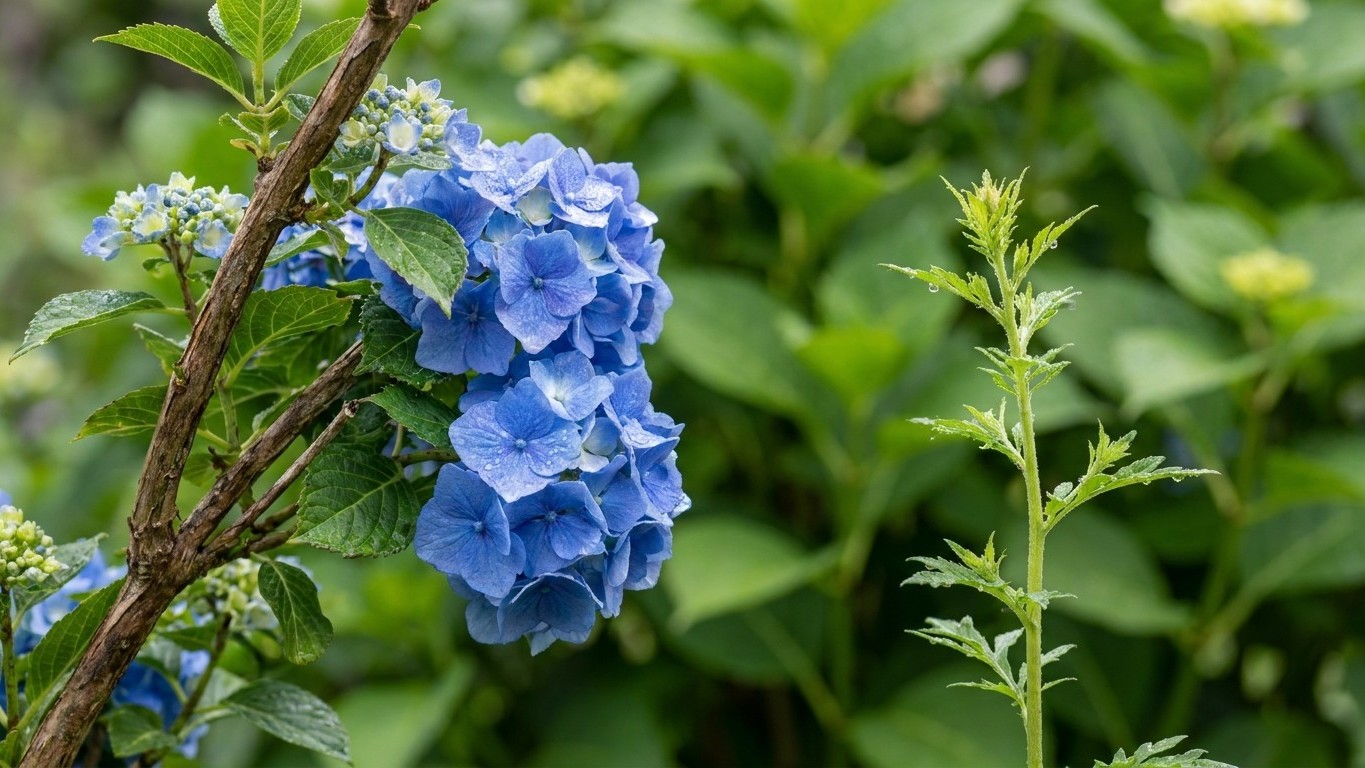

The best time for growing hydrangeas in North Carolina is fall, with spring a close second. In the Piedmont, aim for late September through October, or April once the last freeze has passed. Summer planting works only if you water faithfully. Hydrangeas that settle in during cool, damp months get a full season of roots before their first July heat wave. The basics are in How to Grow Hydrangeas: The Complete Guide. This page covers what changes in this state.
When to plant Hydrangeas in North Carolina

Charlotte is the reference city for every date below, and it sits in the Piedmont. NOAA’s U.S. Climate Normals for 1991-2020 put the last spring 32°F freeze in a band from March 23 to April 5 (the 30-70% probability band). The first fall freeze lands between October 30 and November 8. Those numbers describe one city. The Blue Ridge mountains to the west run several weeks later in spring and see frost earlier in fall, and the coastal plain runs earlier in spring. If you garden in Boone or Asheville, shift everything in this section later in spring and earlier in fall.
Spring planting and hardening off
Most hydrangeas reach you as nursery shrubs grown under cover, and their leaves are soft. Before planting, set the pots outside in shade for 7 to 10 days, then move them into morning sun. Counting back from the Charlotte band, that means starting around March 13 for a March 23 target, or March 26 for April 5. Plant out in early April, and keep an old bedsheet handy. A 32°F night after that band is less likely, but it is not ruled out, and new growth on bigleaf types is the first thing to blacken.
Why fall beats spring here
Fall soil is still warm and the air is cooling, so roots grow while the top stays quiet. A rule of thumb is to get the shrub in the ground at least six weeks before the first freeze. Counting back from October 30 gives September 18. From November 8 it gives September 27. In Charlotte that makes late September through mid-October the sweet spot, and a planting a few weeks later still works with a thick mulch layer. A shrub planted in April has to build roots and survive July in the same year, which is a harder job.
Seed and cuttings
Starting hydrangeas from seed indoors is not how it is done. Named cultivars do not come true from seed, and seedlings take years to flower. Gardeners who want more plants take softwood cuttings in early summer, root them in pots, and overwinter them in a protected spot. They go out the following spring or fall, using the same hardening-off and frost-date arithmetic as above.
Soil and site preparation
Morning sun and afternoon shade is the arrangement that works across most of North Carolina. Bigleaf and oakleaf hydrangeas scorch and wilt when they take full afternoon sun in a Piedmont July. Panicle hydrangeas handle more sun, and smooth hydrangeas sit in between. An east-facing bed, or the west side of a tall tree that casts dappled shade, is a good site.
Drainage matters more than fertility. Much of the Piedmont is heavy clay, which holds water that hydrangea roots dislike. Before you plant, dig a hole about a foot deep, fill it with water, and fill it again the next day. If water is still standing a full day later, pick another spot or build a raised bed 8 to 12 inches high. The same clay holds moisture through dry spells, so improved clay beats sand for these plants.
Start bed prep two to four weeks before planting. Loosen the soil across an area two to three times wider than the root ball, and work in a few inches of compost. Do not backfill the hole with pure potting mix. Roots stay in the rich pocket, and the hole behaves like a bathtub in clay. Dig wide, not deep, and set the top of the root ball level with the surrounding soil. Water it in, then add 2 to 3 inches of mulch kept a few inches off the stems.
Soil pH and flower colour
Colour is chemistry, and only bigleaf and mountain hydrangeas respond to it. Blue flowers need acidic soil, roughly below pH 5.5, where aluminum is available to the plant. Pink flowers need soil closer to pH 6.5 or higher. White varieties do not change. Many North Carolina soils lean acidic, so bigleafs often drift blue on their own. Get a soil test through your county extension office before adding anything, because sulfur or lime works over months, not days. If you want a change by next summer, treat the bed this fall.
Spacing comes from the mature size on the plant tag. As a general guide, mophead and oakleaf types need 4 to 6 feet between plants, and big panicle types like 6 to 8 feet. Crowded hydrangeas collect humidity in their leaves, and that invites the leaf spots covered under common problems.
Varieties that suit North Carolina
For hydrangeas, the trait that matters most here is whether flower buds form on last year’s stems (old wood) or on this spring’s growth (new wood). North Carolina’s spring pattern, with a warm stretch in March followed by a hard freeze, regularly kills exposed buds on old-wood types. New-wood bloomers just regrow and flower anyway. Heat tolerance, stem strength and sun tolerance come next.
| Type and example | Blooms on | Good for |
|---|---|---|
| Smooth: Annabelle | New wood | Reliable white blooms after any freeze; stems flop under rain unless supported |
| Smooth: Incrediball | New wood | Same reliability with sturdier stems |
| Panicle: Limelight, Little Lime | New wood | More sun tolerance; strong in the heat; Little Lime suits smaller beds |
| Bigleaf: Endless Summer line | Old and new wood | Blue or pink mopheads; can flower even after a bud-killing freeze |
| Oakleaf: Alice, Snow Queen | Old wood | Native-type woodland look, red fall leaves, peeling bark, good drought tolerance |
Smooth hydrangea (Hydrangea arborescens) and oakleaf hydrangea are both native to the eastern US, and the smooth type grows wild in the North Carolina mountains. Natives are not automatically easier, but they are used to the humidity and the swings of the Southeast. In the mountains, where late freezes are the biggest risk, favor smooth and panicle types over classic old-wood mopheads. On the coastal plain, heat and salt spray are the bigger concerns, so give oakleaf and panicle types the sun and wind they can take.
A rule I would follow: if you want a bigleaf, buy one of the reblooming types. They set buds on old and new growth, so one bad frost does not cost you the whole season.
What to plant alongside
The best companions share the same conditions: dappled shade, moist but drained soil, and a slightly acidic pH. Hostas, ferns, heuchera, Japanese forest grass and astilbe all fit. They cover the bare soil under a hydrangea, which holds moisture and keeps weeds down. Azaleas and rhododendrons like the same acidity and bloom in spring, long before hydrangeas open. Evergreen shrubs such as boxwood or holly give winter structure behind them.
Pollinator value depends on the type. Panicle and smooth hydrangeas have small fertile flowers that bees visit. Mophead types are mostly showy sterile florets, which offer little. If bees are a goal, plant a panicle or an oakleaf and pair it with a native like coneflower at the sunnier edge of the bed.
Some neighbors cause trouble. Shallow-rooted trees like maples, and thirsty shrubs, will take water before the hydrangea gets it. A plant that needs full sun and dry feet, like lavender, wants the opposite of what a hydrangea needs, so keep them apart. Many gardeners also plant crape myrtles nearby, and both can get powdery mildew, but I have not seen solid evidence that one passes it to the other, so treat that as a space and airflow issue, not a rule.
Several claimed pairings have no real evidence behind them. Marigolds do not demonstrably drive pests off hydrangeas. Coffee grounds and rusty nails buried at the roots do not reliably change flower colour. Soil pH and aluminum availability do the work, and a soil test tells you more than any folk trick.
Watering, feeding and support
Hydrangea means “water vessel,” and the leaves lose water fast in North Carolina heat. Water deeply once or twice a week through the first year, giving about an inch each time, and soak the root zone instead of sprinkling. Established plants in heavy clay need less. A midday droop on a hot afternoon is normal. If the leaves are still limp the next morning, the plant is truly dry. A soaker hose or drip line saves you from wetting the foliage, which helps limit leaf spot.
Mulch is the cheapest insurance. Pine straw, shredded bark or leaf mold, 2 to 3 inches deep, evens out soil moisture and keeps roots cooler. Pull it back from the stems so the bark does not stay damp and rot.
Feed lightly. A slow-release fertilizer in early spring, as growth begins, is plenty. Heavy nitrogen gives you big green leaves and few flowers, and a late-summer feeding pushes tender growth that frost will catch. Stop feeding by midsummer.
Support helps the floppy types. Annabelle and other heavy-headed smooth hydrangeas fold over after a summer storm. Set a peony ring or stakes in spring, before the stems get tall, because it is nearly impossible to add support after the plant sprawls.
Pruning depends on where flowers form. Old-wood bloomers like bigleaf and oakleaf should be pruned right after flowering, by early August, because they set next year’s buds in late summer. New-wood bloomers like smooth and panicle types can be cut back in late winter, which also helps keep them tidy. Hydrangeas do not sucker aggressively, but oakleaf and smooth types spread by shoots. Dig out the extras in spring to keep the clump tidy.
Common problems

Wilting comes first on the list, and it is often not a problem at all. A plant that droops at 3 p.m. in July and recovers by evening is fine. One that stays limp after a deep drink may have root rot from poor drainage. Dig down a few inches. Healthy roots are pale and firm, and rotten ones are brown and soft.
No flowers on a bigleaf is the most common complaint. Four causes cover most cases: a spring freeze killed the buds, the shrub was pruned in winter or spring and the buds went with the branches, there is too much shade, or too much nitrogen. Check which applies before changing anything. If it was pruning, you will see clean-cut stems. If it was frost, the buds look dark and dead when you peel them open.
Yellow leaves with green veins point to iron chlorosis. It happens when soil pH is too high for the plant to take up iron, which sometimes follows heavy lime applications or alkaline irrigation water. A soil test confirms it, and sulfur or an iron supplement corrects it over time.
Brown or purple spots on leaves, usually in humid summers, are fungal. Cercospora leaf spot and anthracnose are two common ones. They disfigure leaves but rarely kill a shrub. Water at the base, give plants room, rake up fallen leaves in fall, and remove badly spotted foliage. Fungicide is seldom needed in a home garden.
White powdery coating on leaves is powdery mildew, which shows up in crowded, shady, humid beds. Thinning branches and improving airflow is the first fix.
Browning flower edges in July and August are usually heat and dry soil, not disease. Deeper watering and more afternoon shade help next year.
Pests that actually show up in North Carolina
NC State Extension’s Extension Gardener Handbook chapter on insects highlights a list of home garden pests for the state. Many of them are vegetable pests: corn earworm, cabbage looper, imported cabbageworm, striped cucumber beetle. Hemlock woolly adelgid attacks hemlock trees. None of those are hydrangea problems. The list is not exhaustive and pressure varies across the state, so your county office is the place to confirm any identification. From the names on it, four matter for hydrangeas.
Japanese beetle. You will first see leaves chewed into lacy skeletons, with metallic green and copper beetles clustered on top. Damage builds in summer. Knock the beetles into a bucket of soapy water in the cool of the morning, when they are sluggish. Skip pheromone traps, which tend to pull more beetles into your yard.
Thrips. Tobacco thrips are an early-season pest, April through May, and western flower thrips become important in June and July. Gardeners see silvery streaks and flecks on petals and leaves, and distorted buds. Insecticidal soap, sprayed so it reaches inside the buds and repeated at intervals, is the home-garden control. Thrips rarely threaten the shrub itself.
Spider mites. They show up mid-to-late season, especially in hot, dry spells. The first sign is leaves that look dusty or stippled with pale dots, and fine webbing underneath. A hard spray of water on the undersides of leaves knocks them down, and you may need to repeat it every few days.
Aphids. Also mid-to-late season, they cluster on new growth and leave sticky honeydew that can turn leaves sooty and black. Wash them off with a firm water stream, or use insecticidal soap on heavier infestations.
Cut flowers and end of season
Hydrangeas are a cut-flower plant, and for drying, timing matters. Wait until the florets turn papery and slightly leathery, usually late summer into fall, when colours have shifted to dusty rose, green or burgundy. Cut a long stem in the morning, strip the leaves, and hang the bundle upside down in a dark, dry spot for two to three weeks. For vase flowers, cut when the bloom is about three-quarters open. Recut the stem underwater and keep the water fresh.
When the first fall freeze approaches (October 30 to November 8 for Charlotte, earlier in the mountains), the goal is to protect next year’s buds on old-wood types. Skip fall pruning, since it removes those buds. Add a fresh 3-inch layer of mulch around the base. On forecast freeze nights, drape a sheet over bigleafs after a warm spell and take it off the next morning. Potted hydrangeas can move to a garage. Leave dried flower heads on through winter. They catch frost and shield the buds beneath.
How much winter protection a bigleaf needs depends on how cold your region gets. The Growing Hydrangeas in Oklahoma: Types, Colour and Winter and Growing Hydrangeas in British Columbia: Types, Colour and Winter guides show how the same shrubs are managed where winters swing differently.
Local help
County-level frost dates, soil tests and pest identification are all handled by NC State Extension. Your county center can tell you how far your local last-frost date runs from the Charlotte numbers, and it can send soil samples to be tested. For more state guides, see our North Carolina guides.
Common questions
Can I grow hydrangeas in the North Carolina mountains?
Yes. Smooth hydrangea even grows wild there. Because spring frost arrives weeks later than in Charlotte, choose new-wood bloomers like smooth and panicle types, or reblooming bigleafs, and plant after your own county’s last frost.
Why won’t my bigleaf hydrangea bloom?
The usual culprits are buds killed by a spring freeze, pruning at the wrong time, too much shade, or too much nitrogen. Prune old-wood types only right after they flower, and look at the buds in early spring to see whether they survived.
How do I make hydrangeas blue instead of pink?
Lower the soil pH. Blue needs acidic soil, roughly below pH 5.5, and pink needs it nearer 6.5 or above. Test first, then apply sulfur in fall, not spring, since it works slowly. White varieties will not change colour.
Do hydrangeas need full sun in North Carolina?
Not for most types. Morning sun with afternoon shade protects bigleaf and oakleaf plants from scorch. Panicle hydrangeas tolerate full sun if they get steady water.
Should I cut hydrangeas back in fall?
Generally no. Old-wood bloomers hold next year’s buds on the stems, so cutting them in fall removes the flowers. New-wood types such as smooth and panicle hydrangeas can be pruned in late winter, so waiting until then is easiest.