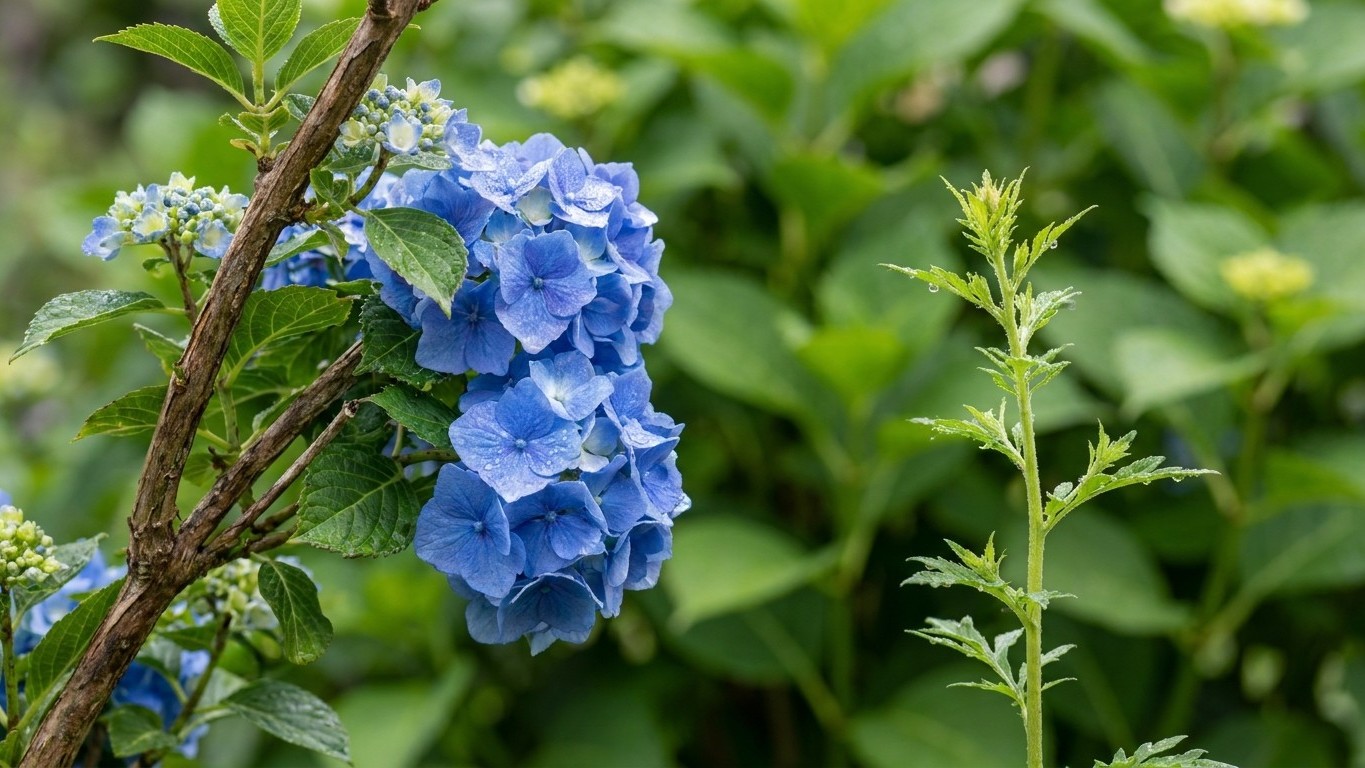

Prune hydrangeas that bloom on new wood in late winter or early spring, and prune those that bloom on old wood right after the flowers fade in summer. In Ontario the type of hydrangea matters more than the calendar. One cut in the wrong season can erase a whole year of blooms. Smooth and panicle types are more forgiving of timing, while bigleaf and oakleaf types are not. Here is how to sort yours and set dates that hold up through a cold spring.
What this comes down to in Ontario

At Toronto Pearson, the main weather station for the Greater Toronto Area, the last spring frost falls on average around April 30 and the first fall frost around October 16 (planning figures; published averages vary a little by source and frost threshold, so treat them as approximate). Because those are mean dates, frost arrives later than April 30 in about half of all springs, so cut new-wood hydrangeas from late March to mid April and old-wood hydrangeas in the weeks after they flower. The station has about 24 weeks between the two dates, which is the stretch of the year when a hydrangea is growing and setting buds.
Pruning works as a timing game inside that window. Cut too early and a frost can nip the soft shoots your cut triggered. Cut too late in summer and you remove buds the plant formed for next year, or push soft growth that the first fall frost then burns.
Which hydrangeas should you prune in late winter or early spring?
Smooth hydrangeas (Annabelle and Incrediball are the best known) and panicle hydrangeas (Limelight, Quick Fire, Bobo) flower on shoots that grow in the same season. Their flower buds do not exist yet in March, so nothing is lost by cutting. Do it while the plant is still dormant, usually between late March and mid April, just before the buds swell. Smooth types can be cut to about 12 inches or even to the ground. Panicle types do better with a lighter hand: remove about a third of the height, and take out crossing or weak stems.
Which hydrangeas should you prune right after they bloom?
Bigleaf hydrangeas (Nikko Blue is a classic), oakleaf hydrangeas (Snow Queen is a common one), mountain hydrangeas and climbing hydrangeas set their flower buds on old wood, the stems grown the previous summer. Those buds form in late summer and sit on the stems all winter. Any cutting should happen just after the blooms fade, which is typically July into early August. After that, leave the stems alone except for dead wood.
Reblooming bigleafs such as the Endless Summer series flower on both old and new wood. They tolerate a mistake better, but a light touch still gives the biggest first flush.
Working it out for your own garden
A date copied from a neighbour’s fence will not survive an odd winter. A method will. Start with the two frost dates for the nearest weather station, treat each as the middle of a window, and count from there in weeks.
How do you set your own pruning window?
For new-wood hydrangeas, count back from the mean last spring frost. At Toronto Pearson that is April 30. Cutting four to six weeks ahead of it puts you between mid March and early April. Cutting at the date itself still works, because these plants bloom on regrowth, but earlier is easier on the plant, since the cuts heal before sap runs hard. A garden that thaws later, say a snowbelt yard, shifts the whole range later by the same number of weeks.
For bigleaf hydrangeas, work the other way and count forward. Winter often kills the upper stems, so the cleanup of dead wood has to wait until the plant shows you what survived. Add two to three weeks to the mean last frost date and you land in mid to late May, when leaf buds have opened along the living stems. Cutting at the first warm week of April is a gamble, because half of springs still carry a later frost.
For the summer cut on old-wood types, count back from the mean first fall frost, October 16. A working rule is to finish all shaping eight to ten weeks before it, which lands between roughly August 7 and August 21. Later cuts remove buds already formed, and the regrowth they trigger has no time to harden.
What does this look like for Annabelle versus Nikko Blue?
Annabelle is a smooth hydrangea. It blooms in mid summer on stems that grow that spring. Toronto sits in Canadian hardiness zone 7a, from Natural Resources Canada (a Canadian system that does not convert to a USDA zone), and a winter in that zone may kill Annabelle’s stems back hard. That makes no difference to the blooms, since new stems produce them. A cut to 12 inches in late March or early April is the whole job, and a spring frost that nips new shoots just delays flowering a little.
Nikko Blue is a bigleaf. Its buds formed last August and are sitting on last year’s stems. The same winter that did not bother Annabelle can freeze those buds, and a March haircut would remove whatever survived. Wait for leaves in May, snip back to the first pair of live buds, and do any shaping after the July bloom.
How do you tell which type you have, or whether a stem is alive?
Look at the flowers and the leaves. Cone-shaped blooms mean a panicle hydrangea, big white globes on a plant with smooth oval leaves usually mean a smooth type, and leaves shaped like an oak leaf mean an oakleaf. Rounded, glossy leaves with mophead or flat lacecap flowers mean a bigleaf. For stems, scratch the bark with a thumbnail. Green underneath means the stem is alive, and brown and dry means it can go.
What changes across the province
Ontario is a large province, so one set of dates cannot cover it; ask a local garden centre or horticultural society for dates in your area. The Toronto Pearson numbers describe the Greater Toronto Area. They do not describe the whole province, and the farther you are from that station, the more your calendar shifts.
Large lakes pull the dates earlier or later. Lakeshore gardens often get a longer growing season than inland ones at the same latitude; a local garden centre or horticultural society can tell you the dates for your area. Southern Ontario, around Essex and Niagara, runs warmer than most of the province, and gardeners there can prune new-wood hydrangeas earlier. Dieback on bigleaf stems is also less common there.
Going north or inland, the season shortens. Muskoka, the Ottawa Valley, Algoma and Thunder Bay all see later thaws, earlier fall frosts, and longer deep winters. Elevation matters too. The Niagara Escarpment and the higher ground north of Toronto stay cooler than the lakeshore below them, so ask a local garden centre or horticultural society for dates in your area.
For pruning, the practical effect is simple. Colder districts should push every date later, and should lean toward hydrangeas that flower on new wood, because those do not depend on buds surviving a hard winter. Deep snow can also protect lower buds on old-wood plants, so stems under the snowline often leaf out even when the tops die.
The mistakes Ontario punishes
Pruning a bigleaf in March is a mistake that can cost a whole season of flowers. A mild week tempts people out with loppers, and they remove stems that carried healthy buds. The plant survives and looks tidy. It simply does not bloom that summer. What to do instead is wait for leaves, then cut only what is plainly dead.
Pruning new-wood types during a warm spell is another error. A run of sunny days in March can wake the plant, and a later freeze then hits tender shoots. Hold off on cutting until the weather settles, or prune in the dormant period before any warmth arrives. Mean last frost on April 30 means roughly half of years see frost after that date.
Late-summer shaping hurts too. A gardener who tidies a bigleaf in September removes next year’s buds. Heavy fall pruning of any hydrangea invites soft regrowth that the first fall frost then burns, and the first fall frost (October 16 on average at Toronto Pearson) comes sooner than most people expect, especially in the north. If you must prune a hydrangea in fall, take only spent blooms and dead stems.
Cutting everything to the ground each year is also common. It suits smooth hydrangeas but sets back panicle types and removes all the flowers from old-wood types. Match the cut to the plant, and when you cannot identify it, prune only dead stems for a year and watch when it blooms.
Checking this against your county
A date from Toronto Pearson is a starting point, not an instruction for your yard. Your local frost timing depends on your lake, your elevation and your slope. Ask a nearby garden centre or horticultural society when their area usually clears its last frost, and see the Province of Ontario’s agriculture and food pages for general provincial agriculture information (they are not specific to home gardens or local frost timing). The full picture of care sits in the guide to growing hydrangeas in Ontario. Natural Resources Canada’s plant hardiness site lists the hardiness zone for your municipality.
Common questions
Can you prune hydrangeas in fall in Ontario?
Only lightly. Remove spent flowers and dead stems if you like, but leave live stems alone. New growth triggered by a cut will not harden before frost, and on old-wood types you would remove next year’s flower buds. Many gardeners leave the dried blooms on through winter.
When should you cut back Annabelle and other smooth hydrangeas?
Late March to early April, before the buds break. Cut stems to about 12 inches, or lower if the plant is crowded or has been flopping. They bloom on new wood, so a hard cut costs no flowers. Skipping the cut entirely also works, but the stems get taller and weaker and tend to flop in rain.
Why did my hydrangea not bloom after I pruned it?
A common cause is cutting an old-wood hydrangea in fall, winter or early spring, which removes the buds formed the previous summer. A hard winter can also kill buds on bigleaf stems, and a late frost can nip them after they open. Either way the plant usually recovers and blooms the following year, if you prune right after flowering from then on.
What should you do if you do not know which type you have?
Prune only dead wood and spent flowers for one season and watch when it blooms. Flowers that open in early to mid summer on last year’s stems point to old wood, and flowers that open in mid to late summer on fresh shoots point to new wood. Nurseries often keep the plant tag, which names the species and sometimes the pruning group, so check that before you cut.