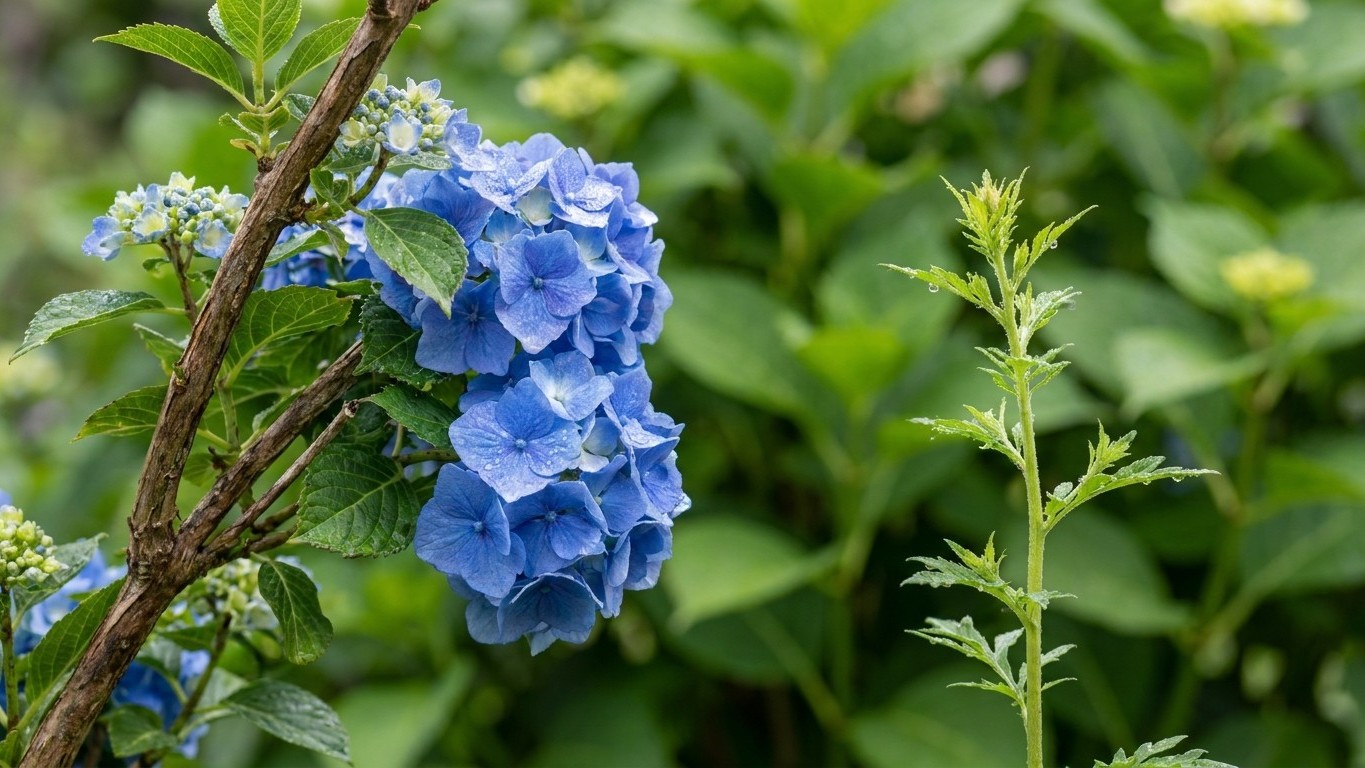

Panicle and smooth hydrangeas come through an Ontario winter without fuss. They flower on wood grown the same summer, so a frozen stem costs them very little. Bigleaf and oakleaf types are the gamble, because their flower buds sit on last year’s stems all winter. Whether those buds live can depend on snow cover, wind and a late-spring frost as much as on the coldest night.
What this comes down to in Ontario

At Toronto Pearson, the airport weather station, the average last spring frost is April 30 and the average first fall frost is October 16. Both are midpoints of a window: in about one year out of two the last frost comes later than April 30, and in about one year out of two the first fall frost arrives before October 16. The station has about 169 frost-free days between those two dates, and Toronto sits in Canadian hardiness zone 7a. That is a Canadian rating built on seven climate variables, so it does not translate into a USDA zone.
The frost-free stretch is long enough for nearly any hydrangea to leaf out and bloom. What decides survival is the wood. A shrub that makes its flowers on new growth shrugs off a hard winter, while one that carries buds on old stems can lose a whole summer of flowers. The cultivars below run from the most forgiving to the most exposed. Hardiness ranges are the ones catalogues print, usually in USDA numbers, so read them as a rough guide next to Canadian zone 7a.
Quick Fire
A panicle hydrangea, listed for roughly zones 3 to 8. White flowers open earlier than on most panicles, often by early to mid July, then age to pink and rose. It blooms on new wood, so winter dieback barely touches it, and its early start suits shorter northern seasons.
Annabelle
A smooth hydrangea, listed for roughly zones 3 to 9. Big white flower heads open in early summer and fade to green. It blooms on new wood and can be cut nearly to the ground each spring, but the heavy heads flop after rain.
Incrediball
A smooth hydrangea related to Annabelle, with the same roughly zone 3 to 9 listing. The white blooms are just as large, on much sturdier stems that hold the heads up. It flowers on new wood, which makes it dependable wherever winters bite.
Bobo
A dwarf panicle, listed for roughly zones 3 to 8, that stays around three feet tall. White flowers appear in midsummer and take on pink as they age. It blooms on new wood, so it suits small beds and containers that get winter protection.
Limelight
A panicle hydrangea, listed for roughly zones 3 to 8. Lime-green buds open to cream and white in midsummer, then blush pink as nights cool in fall. New wood carries the flowers, so even a cold winter leaves it blooming on schedule.
Endless Summer
A bigleaf hydrangea, listed for roughly zones 4 to 9. Flowers come in blue or pink depending on soil acidity, and it blooms on both old and new wood. Frozen buds on old stems cost it the early flush, but new shoots still produce flowers later in the summer.
Snow Queen
An oakleaf hydrangea, listed for roughly zones 5 to 9. White cone-shaped flowers open in early summer and age to pink, and the leaves turn deep red in fall. It blooms on old wood, so it carries the most risk here and does best in sheltered southern spots.
Working it out for your own garden
A catalogue tells you when a cultivar blooms and which wood carries the flowers. Your frost window tells you how much summer you have. Put the two side by side and you can judge any hydrangea you meet, now or after a move.
How do you check whether a cultivar will bloom before fall frost?
Take Quick Fire. Its catalogue bloom time starts in early to mid July. A potted shrub can go into the ground once the soil has warmed, which at a Toronto Pearson-type site means a few weeks past the April 30 average, so mid-May to early June. Counting forward, flowers start roughly four to nine weeks after planting. That leaves a good stretch of bloom ahead of the October 16 average, and even an early frost in the window arrives well after the show has started.
Limelight is a later bloomer, opening in mid to late summer. Planted in the same window, it still has several weeks of color before the October 16 average, and its flower heads handle light frost fine. Both pass the test because both bloom on new wood and both start well inside the frost-free stretch.
What does a hydrangea that will not bloom look like?
Old-wood bigleaf types fail for a different reason. Take a bigleaf that flowers only on old wood, one of the older blue mophead types. Its season length is fine. The trouble is that its flower buds formed last fall on stems that the winter may have killed to the ground. When that happens, new shoots grow from the base, make healthy leaves all summer and never flower, regardless of how many frost-free days you had. Reblooming bigleafs such as Endless Summer dodge part of the problem by also flowering on new wood.
The simple test is to look at the stems in late May. Scratch the bark of a stem with a fingernail. Green underneath means the stem is alive and its buds probably are too. Brown and dry means that stem is finished, and you should cut it back to where you find live buds or green tissue. Leaf buds that stay tight into early June on a bigleaf may signal trouble. Wait until the shrub has fully leafed out before judging, since hydrangeas leaf out late.
The same method works on any cultivar you have not tried. Find out whether it blooms on old wood, new wood or both. Match its bloom start to the days between your planting date and the first fall frost. Anything that blooms on new wood and opens by midsummer passes in most of Ontario. For everything else, wood survival decides the outcome, and your winter matters more than the summer. For the basics of siting and care, see growing hydrangeas in Ontario.
What changes across the province
The Toronto Pearson figures describe the Toronto airport area and are only a rough guide for the rest of the Greater Toronto Area. Ontario stretches from the latitude of northern California to the edge of the subarctic, so the dates move a lot from place to place.
Distance from the Great Lakes matters first. Gardens near Lake Ontario and Lake Erie get a lake effect: spring warms slowly, which delays bud break past the first warm spells, and fall stays mild for longer. Niagara and the Lake Erie shore are among the mildest corners of the province, and they are where oakleaf and bigleaf hydrangeas have the best odds. A few miles inland, nights get colder, frost comes earlier in fall and lingers later in spring.
Snow cover is the second factor. Areas that get steady lake-effect snow, such as the Georgian Bay and Lake Huron snowbelts, hold a thick blanket of insulation over the crown and low stems all winter. That blanket can protect bigleaf buds near the ground even when the air above it is far colder than Toronto’s. Places that lose snow in January thaws or stay bare through cold snaps do worse, whatever the zone number says.
Going north, the frost-free season shortens, and eastern and northern districts run weeks behind the Toronto dates in both spring and fall. The Ottawa Valley and the Near North have colder winters and shorter summers. There, stick to new-wood types such as Quick Fire, Annabelle and Incrediball, and plan on a protected spot for everything else. Elevation and open fields add another layer: low hollows collect cold air and frost earlier than slopes only a few hundred yards away.
The mistakes this province punishes
Planting into cold soil after a warm spell is a common mistake. A run of 60-degree days in April feels like spring, and nurseries start stocking shrubs. But Toronto’s April 30 average means frost comes later in about half of all years, and in some years well into May. Wait until the soil has had time to warm and the forecast shows no frost, then plant.
Pruning bigleaf and oakleaf types in fall or early spring removes the flower buds they carry on old wood. Prune only after they bloom, and in spring remove only wood you have confirmed is dead. New-wood types are the opposite: panicles and smooth hydrangeas can take a hard cut in late winter or early spring without losing flowers.
Picking a variety by photograph rather than by wood is the next trap. A bigleaf bought for its blue mopheads in a snowless, windy yard will leaf out beautifully and never flower. Choose by wood type and zone first, color second.
Feeding late is quieter but costly. Nitrogen applied in late summer pushes soft new growth that has no time to harden before the first fall frost, which can arrive any time around the October 16 midpoint. Stop fertilizing by midsummer and let stems firm up.
Skipping winter protection on young shrubs hurts as well. A first-year hydrangea has a shallow root system. A thick layer of shredded bark or leaves over the crown after the ground has cooled, plus a burlap screen against wind, helps old-wood types hold their buds. Pull it back gradually in spring, as growth starts.
Checking this against your county
A provincial figure is a starting point. The April 30 and October 16 averages belong to the Toronto Pearson station, and your garden may sit weeks away from them. Your local county or regional agricultural office knows the frost pockets, the snowbelts and the soil in your area. The Government of Ontario’s agriculture and food pages are a place to start looking for provincial agriculture resources. For hardiness, you can look up your own municipality on the Natural Resources Canada plant hardiness site. Then go back to growing hydrangeas in Ontario for care details.
Common questions
Which hydrangea is the hardiest for Ontario?
Smooth hydrangeas such as Annabelle and Incrediball, and panicle types such as Quick Fire, Limelight and Bobo, are the most dependable. All bloom on new wood and are listed for roughly zones 3 and up.
Will bigleaf hydrangeas bloom in Ontario?
Sometimes. Old-wood bigleafs often lose their buds in winter, especially away from the lakes or without snow cover. Rebloomers such as Endless Summer give you a second chance by flowering on new wood too.
Is Toronto’s frost window the same everywhere in Ontario?
No. April 30 and October 16 are averages at Toronto Pearson. Northern and inland gardens usually see a later last frost in spring and an earlier first frost in fall.
How can I tell if my hydrangea died over winter?
Wait until it has leafed out, then scratch a stem. Green under the bark means it is alive. If the top is dead, cut back to green tissue and look for new shoots at the base.