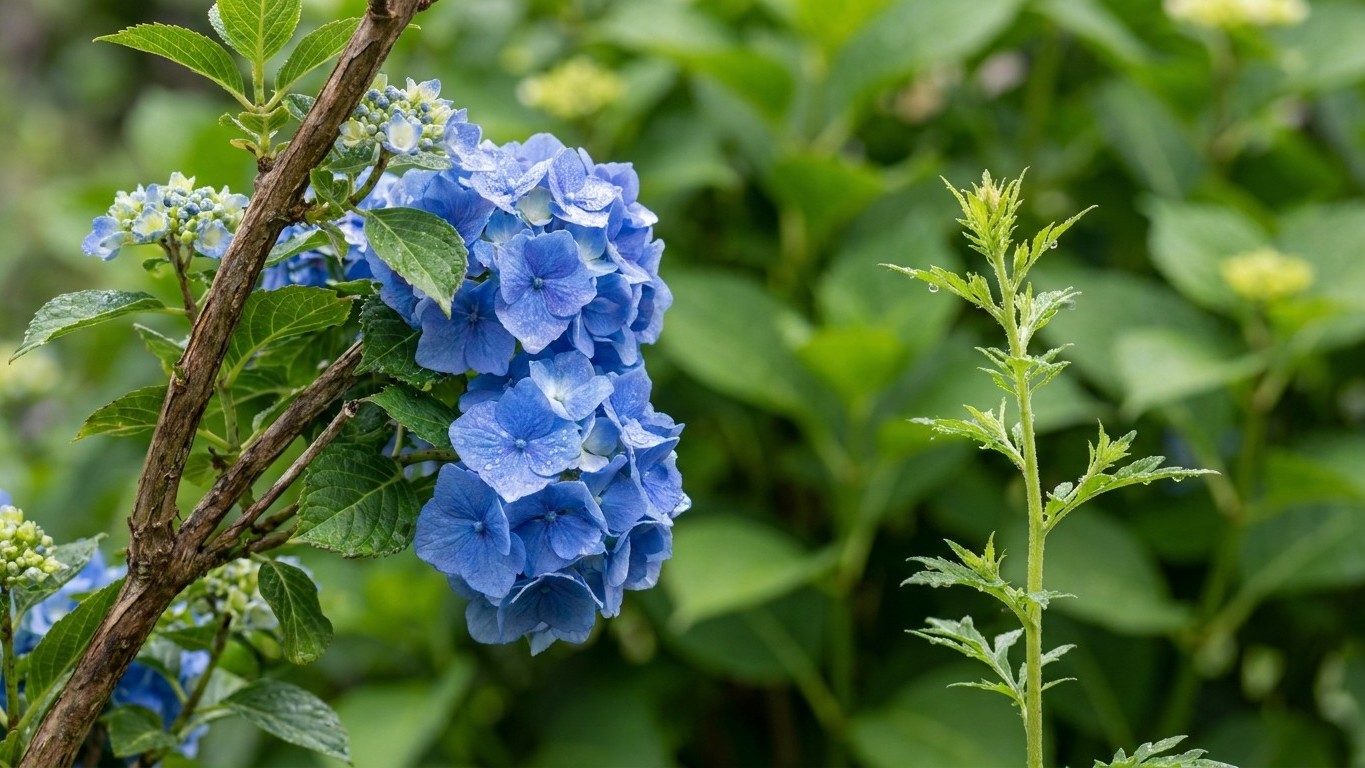

Most hydrangeas in Ontario come through winter without help. The ones that need it bloom on old wood, mainly bigleaf and mountain types, because their flower buds sit exposed on last year’s stems all winter. A mound of leaves or shredded bark over the crown, a burlap screen on the windward side, and deep watering before the ground freezes cover most of the job. Panicle and smooth types can usually be left alone. Timing matters more than materials.
What this comes down to in Ontario

At Toronto Pearson, Environment and Climate Change Canada’s long-term average puts the first fall frost on October 20 and the last spring frost on April 27. Winter cover therefore goes on after the October date and stays within reach until well past the April one. Both are mean dates. In one year out of two the first frost arrives earlier than October 20, and in one year out of two the last frost falls later than April 27, so each is the middle of a window and never a safe date. Toronto sits in Canadian hardiness zone 7a on the Natural Resources Canada plant hardiness site. That is a Canadian zone, and it does not convert to a USDA zone, because the Canadian system weighs seven climate variables and the USDA system weighs one.
Which hydrangeas need winter protection in Ontario?
The deciding trait is where the flower buds form. Types that set buds in late summer on old wood carry next year’s flowers through the whole winter. Types that bloom on new wood grow their flowers from scratch each spring, so a stem killed back to the ground costs them very little.
| Type | Flowers on | Winter risk | What to do |
|---|---|---|---|
| Bigleaf (mophead, lacecap) | Old wood; reblooming types also on new wood | High | Mulch the crown, wrap stems loosely, block wind |
| Mountain | Old wood | Moderate | Mulch the crown, add a wind screen in open yards |
| Oakleaf | Old wood | Lower | Mulch the crown, screen only exposed sites |
| Panicle | New wood | Low | Mulch young plants; mature shrubs need little |
| Smooth | New wood | Low | No wrap; cut back in early spring if needed |
Gardeners who lose bigleaf flowers winter after winter often do better by switching types. The guide to which hydrangea types survive Ontario winters sorts that out.
What actually damages hydrangeas in an Ontario winter?
Cold alone is rarely the whole story. A common culprit is a mild midwinter thaw that softens buds, followed by a sharp drop. Dry wind comes next, pulling moisture out of exposed stems while frozen soil cannot resupply them. The third is a late spring frost, which can catch buds already swelling in a warm week and blacken them. Thin snow cover makes all three worse, since a deep blanket holds the crown at a steady temperature. A mulch mound and a wind screen therefore do more good than a heavy wrap.
Working it out for your own garden
Dates from one city will not fit every yard, so the method matters more than the numbers. Anchor on two dates: the average first fall frost and the average last spring frost for the nearest weather station. Count backward from the first for feeding and watering, and forward from the second for unwrapping. Always work in ranges. Toronto Pearson averages about 174 frost-free days, with a mean last spring frost on April 27 and a mean first fall frost on October 20.
When should you mulch and wrap hydrangeas in Ontario?
Start with the last feeding. Nitrogen late in the season pushes soft growth that will not harden before winter, so stop feeding well before the first frost. Because that frost can arrive early, lean toward the August end. Mulch and wrap come later, after leaves drop and the soil begins to freeze, which usually falls weeks after the first frost. In spring, count forward from April 27 instead. Pull back the mulch in two steps between late April and mid-May, and keep the burlap handy until the shrub is leafing out and nights have settled.
Here is the season in order:
- Late August to early September: last feeding of the year.
- September through October: water deeply when rain is scarce, until the ground freezes.
- Late October into November, once leaves have dropped and soil is cooling: mound shredded leaves or bark over the crown and set up the burlap screen.
- Late April to mid-May: remove mulch gradually, checking the plants as you go.
How do you know if the buds survived?
Wait for leaves. Bigleaf hydrangeas leaf out late, often into late May, and stems that look dead in April are frequently just slow. Cut only what stays bare after the rest of the shrub has leafed out. A shrub that grows but does not flower has lost its old-wood buds yet kept its stems, which is common after a cold, windy winter.
What changes across the province
Toronto Pearson is one point on a province that stretches for hundreds of miles. Three things move the dates and the risk: distance from the Great Lakes, elevation, and how far north you are.
- Near Lake Ontario, Lake Erie, and the southwestern peninsula, the water softens winter and delays the first fall frost. Bigleaf types have their best odds here, though a late spring frost still threatens swelling buds.
- East of Lake Huron and Georgian Bay, snowbelts bury shrubs under a deep, steady blanket. That insulation can protect crowns as well as or better than mulch, but it also means spring thaws come later.
- Higher ground north and west of the Greater Toronto Area, the Ottawa Valley, and northern Ontario run colder, with frosts that come earlier in fall and linger later in spring.
Northern and upland districts can run weeks behind Toronto. Shift both ends of the calendar accordingly: mulch earlier, unwrap later, and lean toward panicle and smooth types if bigleaf buds keep dying. Hardiness zones also change from one municipality to the next. The Canadian zone for your own town may differ from Toronto’s 7a, and it still is not a USDA zone.
Local conditions matter as well. A shrub on the open side of a farm lane takes far more wind than one against a south-facing foundation. Urban lots hold heat. A yard with little snow cover and constant wind can be harder on hydrangeas than a colder yard with a reliable snowpack.
The mistakes this climate punishes
The first mistake is mulching too early. Piling leaves or bark over warm soil in October gives mice and voles a cozy nest, and they chew bark through the winter. Wait until the ground starts to freeze, then mound the mulch over the crown.
The second is cutting bigleaf hydrangeas in fall or early spring. That removes the buds you are trying to protect. Prune old-wood types after they flower, and in spring remove only wood that stays bare once leaves have opened. Late feeding and color-chasing soil amendments cause trouble too. Leave them for spring, and see how soil pH changes hydrangea color for the timing.
Unwrapping on the first warm April day is the third. April 27 is only the midpoint of the last-frost window, so half of all years bring frost after it. Uncover in stages and keep a sheet or burlap ready for a cold night once buds have swollen.
Wrapping in plastic is the fourth. Plastic traps moisture and heats up on sunny days, then drops cold at night. Use burlap, which breathes, set loosely around stakes so it does not press against the stems. Keep hydrangeas back from driveway and sidewalk edges as well, because road-salt spray and meltwater burn bark and roots.
Checking this against your county
A frost window from one weather station is a starting point. Local garden centres and Master Gardener groups often know the local frost pockets, snowbelts, and soil, and Ontario’s agriculture and food resources are a general starting point for provincial information. For planting, siting, and pruning basics, see the full guide to growing hydrangeas in Ontario. Compare what you read with your own yard: where snow lingers, where wind funnels, and how late the soil thaws.
Common questions
When should I cover hydrangeas for winter in Ontario?
Wait until leaves have dropped and the ground is beginning to freeze, usually in November. In Toronto the average first frost is October 20, but mulching that early is premature. Feeding should already have stopped by early September; the first frost is the cue to keep watering until the ground freezes, and the cover goes on weeks later.
Do panicle hydrangeas need winter protection in Ontario?
Rarely. They flower on new wood, so even a stem frozen back to the ground will bloom again. Newly planted shrubs benefit from mulch over the crown for their first winter, and mature plants usually get by without any wrap.
Should I use burlap or plastic to wrap hydrangeas?
Burlap. It lets air through and blocks wind. Plastic traps moisture and heat, which can start buds growing during a thaw and then expose them to the next freeze. Set the burlap loosely on stakes around the shrub instead of tying it tight against the stems.
Why did my hydrangea leaf out but not flower after winter?
The buds most likely died while the stems survived. This is common with bigleaf types after a cold, windy winter or a late spring frost. Reblooming types may still flower later in summer on new growth, after the old-wood bloom.