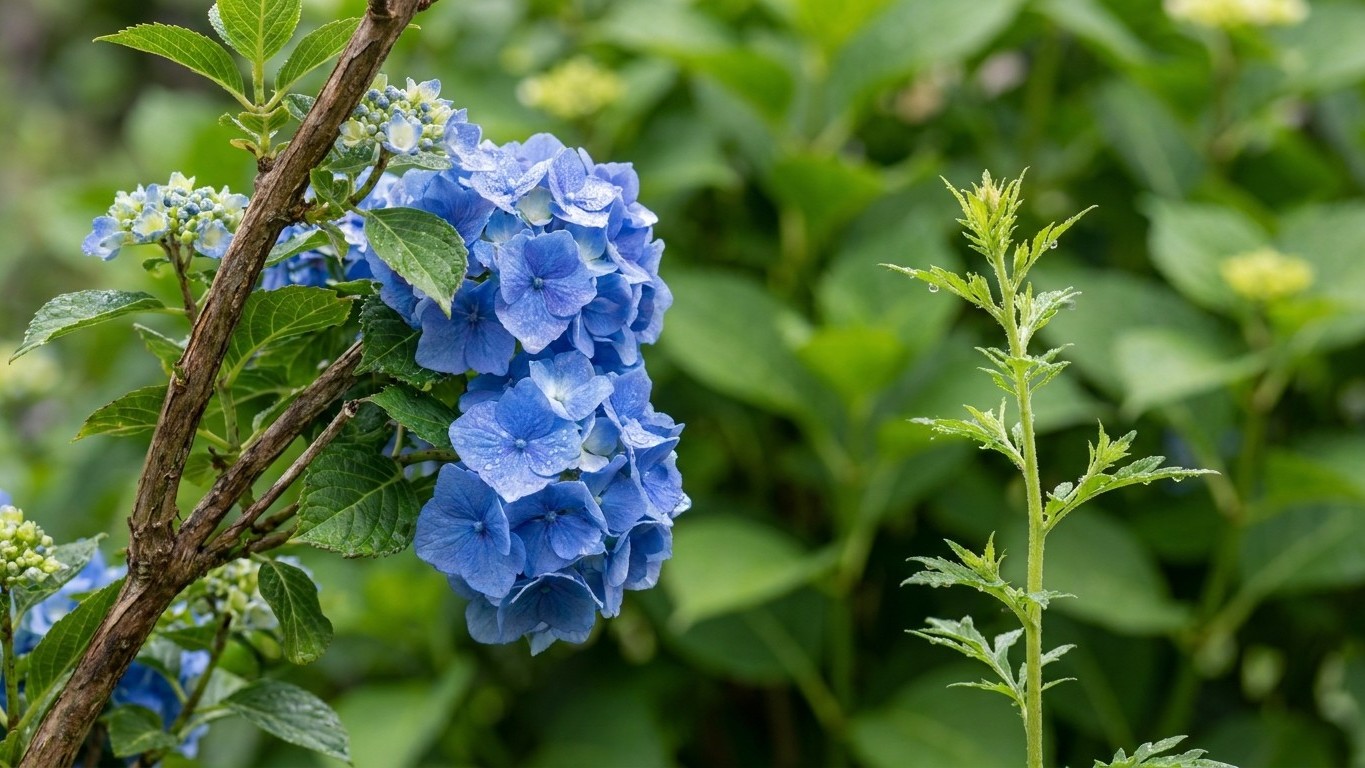

Smooth and panicle hydrangeas generally get through a Prince Edward Island winter without help. The ones most likely to lose flowers are the bigleaf types, because their flower buds sit on last year’s stems and take the full force of cold, wind and thaw. Smooth and panicle hydrangeas bloom on stems they grow that same season, so a rough winter costs them very little. Protection means knowing which kind you have, covering old-wood types once they go dormant, and uncovering in stages while keeping cover ready until the last spring frost has passed.
What this comes down to in Prince Edward Island

At Charlottetown, the reference station for the province, Environment and Climate Change Canada’s climate normals put the average last spring frost at May 16 and the average first fall frost at October 17. Both dates are midpoints. In one year out of two the spring frost falls later than May 16, and in one year out of two the fall frost arrives earlier than October 17. The reference station has about 154 frost-free days between the mean last spring frost and the mean first fall frost.
For a hydrangea, the two ends of that window matter more than the middle. A fall frost that comes before the plant has hardened off, or a spring frost that catches swollen buds, can do more harm than many January cold snaps.
Which hydrangeas need winter protection?
The answer depends on where the flower buds form. Bigleaf and mountain hydrangeas set their buds on old wood in late summer, and those buds sit exposed all winter. Oakleaf hydrangeas also flower on old wood, though their buds tend to come through cold better than bigleaf buds do. Smooth hydrangeas such as ‘Annabelle’ and panicle types such as ‘Limelight’ form buds on new growth in spring. If the stems die back to the ground, they simply regrow and flower.
Reblooming bigleafs such as ‘Endless Summer’ flower on both old and new wood. A winter that kills the upper stems delays their bloom rather than wiping out the year. For a sort by type, see which hydrangea types survive a Prince Edward Island winter.
When does winter damage actually happen?
Natural Resources Canada’s plant hardiness map has placed Charlottetown in Canadian zone 5b (2014 edition, 1981–2010 data); the newer 2023 edition may rate it slightly warmer, so check the current map. That is the Canadian system, built on seven climate variables, and it is not the same as a USDA zone. It describes the city, not the whole province. A zone number says little about how a bud fares, because most injury comes from timing. The usual culprits are an early hard freeze before the plant is dormant, a midwinter thaw that wakes the buds, drying wind on bare stems, and a late spring frost after the buds have swollen. Protection is aimed at those four events.
Working it out for your own garden
The calendar gives a range, and the plant tells you where you are inside it. Once you have the method, it works in a cold year or after a move to another part of the Island.
How do you time covers from the frost window?
Start with the October 17 midpoint and remember that half of years bring frost earlier. Dormancy follows the first hard frost by a few weeks: leaves blacken, then drop. Treat the mid-October midpoint as the middle of a window, not a safe date, and watch the forecast before covering. In a year with early frost, shift it earlier. The plant is the better guide than the date. Cover once the leaves are down and the soil surface stiffens overnight.
Uncovering runs the other way. Treat the May 16 midpoint as the middle of a window, not a safe date, and watch the plant and soil before loosening wraps and pulling back mulch. Take covers off in stages over the following weeks. Keep burlap or an old bedsheet handy until well past mid-May, since in half of years the last frost comes later than that.
Will your cultivar bloom after a hard winter?
Take ‘Annabelle’, a smooth hydrangea that flowers on new wood in midsummer. With about 154 frost-free days at the reference station, it has plenty of time to regrow and bloom long before October. Cut it back in early spring and it needs no wrapping, even after a harsh winter.
Now take ‘Nikko Blue’, a classic bigleaf that flowers only on old wood. Its buds form by late summer and must survive the winter cold. If winter kills the stems down to the snow line, the plant leafs out and gives no flowers that year. That is where the line falls on the Island: new-wood types can be left alone, and old-wood bigleafs earn a cage of leaves or burlap.
How do you tell cold damage from other problems?
Look at the pattern in spring. Leaves coming only from low on the plant mean the upper stems died in cold. Buds that swelled and then turned black point to a late frost. Brown, crisp leaf edges on the windward side suggest wind or salt burn rather than freezing. Stems that stay gray and brittle all the way to the base are dead.
Field check for late April: scratch a small patch of bark on a stem with a thumbnail. Green underneath means the stem is alive, so leave it. Tan or brown means it is dead, so prune it back to the first live buds, or to the ground on a new-wood type.
What changes across the province
Prince Edward Island is long and narrow, so no garden sits far from salt water. Charlottetown is on the south-central shore, and its numbers are a starting point rather than a rule for the whole province. Other districts can run days or weeks ahead of or behind the reference station, which shifts both ends of the frost window.
The surrounding water slows spring warming. Near the coast, buds tend to break later, which can protect them from a late frost. Inland, open farmland warms faster, and early leaf-out can leave tender growth exposed to the same cold snap. Low spots collect cold air on still nights, so a hydrangea in a frost hollow gets caught by spring frost more often than one on a gentle rise.
Wind and snow shape winter damage as much as temperature does. Exposed sites on open ground blow bare, and bare stems dry out and lose buds. Where snow settles along a fence, a hedge or the lee side of a house, it works as insulation, and old-wood hydrangeas there often come through with live buds well up the stem. Gardens close to the shore can also face salt spray on the windward side, which burns buds and bark. A windbreak of burlap on stakes helps in those spots.
A practical way to adjust is to treat your own yard as one of these cases. If it sits inland, open and low, plan for later covering and later uncovering, and keep frost cloth ready in May. If it sits near the shore on a rise, plan for wind and salt first.
The mistakes this province punishes
Covering too early is a common error. A warm spell in October or early November tempts people to wrap the plant, but covers put on while the shrub is still active trap moisture and shelter mice. Wait for dormancy, which usually means several hard frosts and bare branches, then cover.
Sealing a plant in plastic is the next one. Plastic traps damp air against the stems, then heats up on a sunny day in March. Use a cage of chicken wire or stakes filled loosely with leaves or straw, or breathable burlap tied loosely around it. Pile the mulch around the base after the ground starts to freeze, not before.
Pruning old-wood types in fall removes next year’s flowers. Wait until spring, when dead wood is easy to tell from live. Late feeding is another trap. Fertilizer after midsummer pushes soft growth that the first hard frost kills. Adjust color in spring, and see soil pH and hydrangea color for how.
Removing covers completely on the first mild spell in April is a mistake the Island’s spring punishes. The May 16 midpoint means half of years bring frost later. Loosen covers early, but keep light cover ready until the window is well past. And choosing an old-wood-only bigleaf for an exposed, inland spot sets you up for leaves with no flowers. A new-wood type avoids the problem.
Checking this against your county
The dates above come from one station, so they are a starting point, not an instruction. Your garden may sit weeks away from Charlottetown in either direction. Prince Edward Island’s provincial agriculture department is a good place to ask how local frost timing compares with the reference city. For the broader picture on soil, siting and general care, the full guide to growing hydrangeas in Prince Edward Island covers the rest.
Common questions
Do hydrangeas need winter protection on Prince Edward Island?
Smooth and panicle types generally do not, because they flower on new wood. Bigleaf, mountain and oakleaf types benefit from a loose cover of leaves or burlap, especially in exposed, windy or inland sites.
Should I cut hydrangeas back in the fall?
Leave old-wood types alone until spring, so the buds on last year’s stems survive. Smooth and panicle hydrangeas can be cut back in early spring, once you can see which stems are alive.
What is the best material for covering hydrangeas?
A wire or stake cage filled loosely with dry leaves or straw works well, as does breathable burlap. Avoid plastic, which holds moisture and overheats on sunny days. Keep mulch off the stems until the ground begins to freeze.
When should winter covers come off?
Begin loosening them gradually once April turns mild, and remove them in stages. Keep frost cloth nearby until well after May 16, the average last spring frost at Charlottetown, since in half of years the last frost arrives later than that.