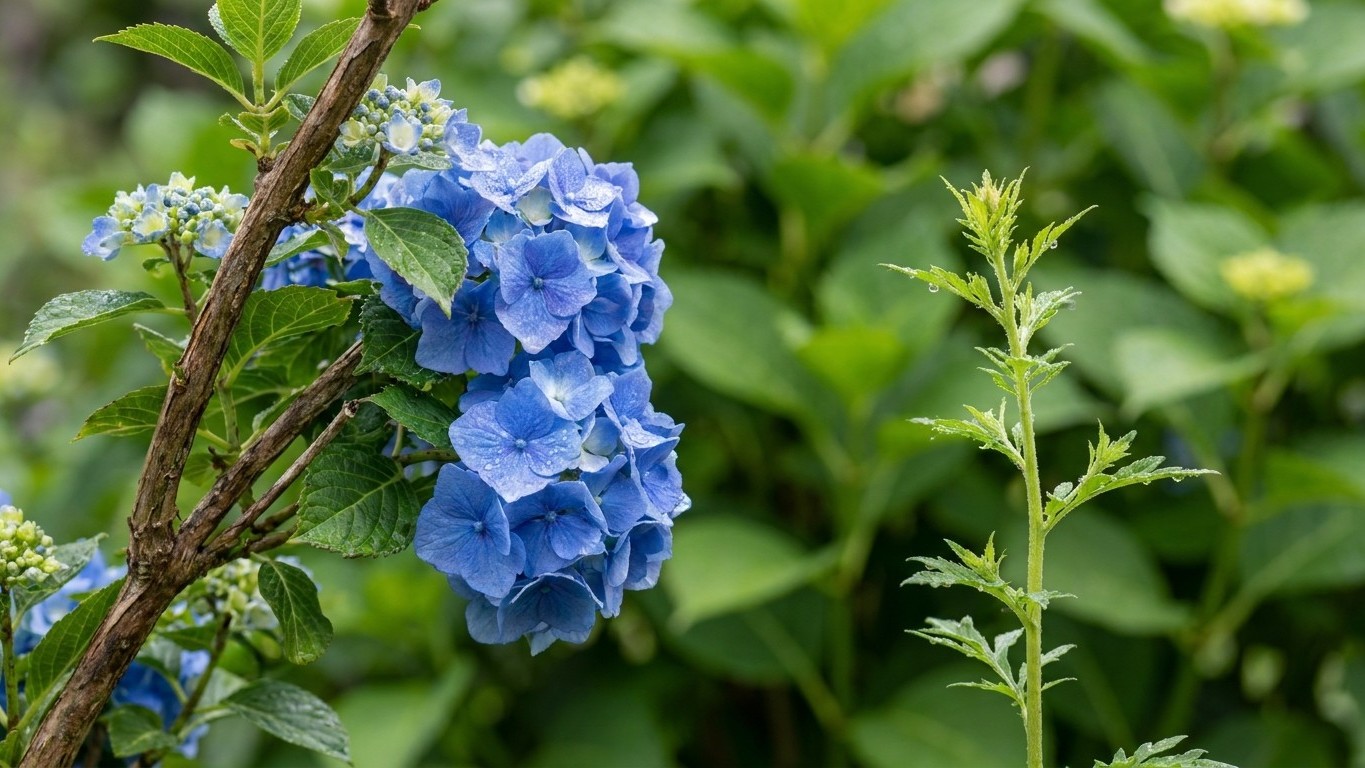

Panicle hydrangeas (Hydrangea paniculata) and smooth hydrangeas (Hydrangea arborescens) are the ones that come through a Quebec winter and flower the next summer. Both bloom on new wood, so a hard winter that kills stem tips costs them very little. Bigleaf and oakleaf types form their flower buds the summer before, and those buds are what the cold takes. For a broader look at the shrub itself, see the guide to growing hydrangeas in Quebec.
What this comes down to in Quebec

At the Montreal/St-Hubert reference station, the mean last spring frost is May 6 and the mean first fall frost is October 5, about 152 frost-free days. That is plenty for any new-wood hydrangea to leaf out, grow and flower. The real question is whether the flowering wood survives winter.
Both dates are means, so in one year out of two the last frost falls after May 6 and the first fall frost arrives before October 5. Treat each as the middle of a window. The Montreal area sits in Canadian hardiness zone 5b on the older map, and parts of it moved to 6a in Natural Resources Canada’s 2025 update. The rating is built on seven climate variables and does not convert to a USDA zone. Nursery tags usually print USDA-style ranges, so the numbers below are rough guides for comparison. Ranges and bloom times come from typical catalogue descriptions and vary a little between growers.
The cultivars run from shortest season to longest, so you can see where the line falls.
Quick Fire
A panicle hydrangea, listed for roughly zones 3 to 8. White flowers open early, then age to pink and red, and bloom comes on new wood. It is among the earliest panicles to flower, so it suits short seasons, cold sites and gardeners who want color by early summer.
Annabelle
A smooth hydrangea, listed for roughly zones 3 to 9. Big white domes open on new wood in early to midsummer. Even if stems freeze to the ground, it regrows and flowers the same year. Heavy heads tend to flop after rain.
Incrediball
A smooth hydrangea in the same roughly zone 3 to 9 range, with white flowers on new wood. It was bred for stiffer stems than Annabelle, so the heads stand up better. Bloom timing is close to Annabelle’s, and the two are equally dependable through a cold winter.
Limelight
A panicle hydrangea, listed for roughly zones 3 to 8. Flower cones open lime green in midsummer, turn cream, then flush pink as nights cool. They form on new wood. It is one of the most common choices for cold gardens, and the season allows it comfortably.
Tardiva
A late panicle hydrangea, listed for roughly zones 3 to 8, with creamy white cones on new wood. Flowers open in late summer and carry into fall. Here the season starts to matter: in a year with an early hard frost, the display gets cut short.
Endless Summer
A bigleaf hydrangea (Hydrangea macrophylla), listed for roughly zones 4 to 9, blue or pink depending on soil acidity. It flowers on old and new wood. In zone 5b the old stems often die back, so the bloom comes late from new growth, and it is lighter than catalogue photos suggest. Good snow cover and a sheltered spot improve the odds.
Snow Queen
An oakleaf hydrangea (Hydrangea quercifolia), listed for roughly zones 5 to 9. White cones age to pink and come only from old wood, so a hard winter or a late frost on swelling buds can erase a whole year of flowers. It sits at the edge of what zone 5b allows and needs shelter from wind.
Working it out for your own garden
The method works anywhere and in any cold year. Start with the planting window. Take the mean last spring frost, May 6, and add one to two weeks, because the frost falls later in half of all years. That puts planting in roughly mid to late May.
Then take the catalogue bloom time and add it to that window. Quick Fire typically opens its first flowers in late June to early July. The mean first fall frost is October 5, which is only a midpoint, so the season can end earlier. Quick Fire blooms with a wide margin, even in a cool year.
Tardiva is the stretch case. Its first flowers open in mid to late August, well after planting. The cones tolerate a light frost and brown only after a hard one, so an early frost shortens the show without ruining it. The cultivar flowers in this season. The margin is thinner, and the color may last only a short while rather than two months.
Now run the same arithmetic on a bigleaf like Nikko Blue, an old-wood bloomer listed for roughly zones 6 to 9. The calendar looks fine: a spring planting and summer bloom. But those flower buds formed the previous late summer on stems that sit exposed all winter. In winter here, the stems may die back toward the snow line and take the buds with them. The shrub leafs out, grows well and produces no flowers. The season was long enough. The wood was not.
The check for any cultivar is two questions. First, does it flower on new wood? If yes, winter damage to stems barely matters. Second, if it flowers on old wood, does it have reliable cover from snow or a sheltered wall? If not, expect leaves without blooms in many years.
What changes across the province
A single station cannot describe a province this large. The Montreal/St-Hubert numbers describe a low, relatively mild plain in the St. Lawrence Valley, and districts elsewhere run weeks behind it in spring and ahead of it in fall.
Elevation matters a great deal. Upland areas such as the Laurentians and the higher parts of the Eastern Townships warm later in spring and cool earlier in fall, and cold air pools in valleys on clear nights. Planting dates in these places shift later, and tardy cultivars like Tardiva carry more risk.
Distance north matters too. Gardens around Quebec City, the Saguenay and farther north have shorter, colder seasons than the Montreal plain. Abitibi and the northern regions are colder still, so smooth and early-panicle types are the safe picks.
The St. Lawrence River moderates temperatures near its banks, and a big lake or river can delay a frost by days in the right spot. Snow cover also changes the winter picture. A reliable blanket insulates the base of the shrub, which is why a garden with consistent snow can sometimes keep old-wood buds that a windswept, thin-snow site loses. The same plant can behave very differently two valleys apart.
The mistakes Quebec punishes
A common error is planting into soil that only looks ready. A warm spell in April can tempt you to put a shrub in, and a later frost follows. Frost on new leaves is survivable for most hydrangeas but sets them back. Wait for the window to pass, usually mid to late May, and keep a sheet or bucket handy for a surprise cold night.
Choosing for the catalogue photo rather than the climate is next. Blue bigleaf hydrangeas are widely sold, and many gardeners buy them hoping for mopheads. In zone 5b, they are the gamble. If you want one, treat it as a sheltered, mulched plant that may bloom late. Make your dependable shrubs the new-wood types.
Pruning at the wrong time hurts too. Cutting back old-wood hydrangeas in fall removes the buds they spent the summer forming. Panicle and smooth types take a hard cut in late winter or early spring without losing flowers, so prune those then.
Late fertilizer is another trap. Feeding in late summer pushes soft growth that early frost damages. Stop feeding by midsummer and let stems harden. Mulch after the ground starts to freeze, not before.
Finally, don’t plant too late in the year. A shrub planted in fall needs time to root before the ground freezes, and the mean first fall frost on October 5 is only a midpoint. Plant earlier than you think you need to, or wait until spring.
Checking this against your municipality
A reference-station figure is a starting point for your own property. Your garden may sit weeks away from Montreal/St-Hubert in climate even if it is close on the map. The provincial agriculture ministry, MAPAQ, and your regional horticultural society can tell you how local frost dates and winters differ. Natural Resources Canada also publishes a hardiness zone lookup by municipality. Pair that local information with the broader guide to growing hydrangeas in Quebec before you buy.
Common questions
Do hydrangeas need winter protection in Quebec?
Smooth and panicle types generally do not. A layer of mulch after the ground freezes is enough. Bigleaf and oakleaf types benefit from a sheltered spot, extra mulch and sometimes a wrap of burlap around the stems.
Can I grow blue hydrangeas in Quebec?
Yes, but with less certainty. Bigleaf types give blue flowers in acidic soil, and in zone 5b they often bloom only from new growth. Some years they flower lightly or late, and in a hard winter they may skip a year.
When do panicle hydrangeas bloom here?
Early cultivars such as Quick Fire open around late June to early July. Midseason types like Limelight follow in midsummer, and late ones such as Tardiva flower from late summer into fall. The earlier the bloom, the more margin before the first fall frost.
Is Canadian zone 5b the same as USDA zone 5b?
No. The Canadian system uses seven climate variables and the USDA system uses one, so the two do not convert. Nursery tags often print USDA-style ranges, which is why a plant listed for a given zone is a rough guide in Quebec and not a guarantee.