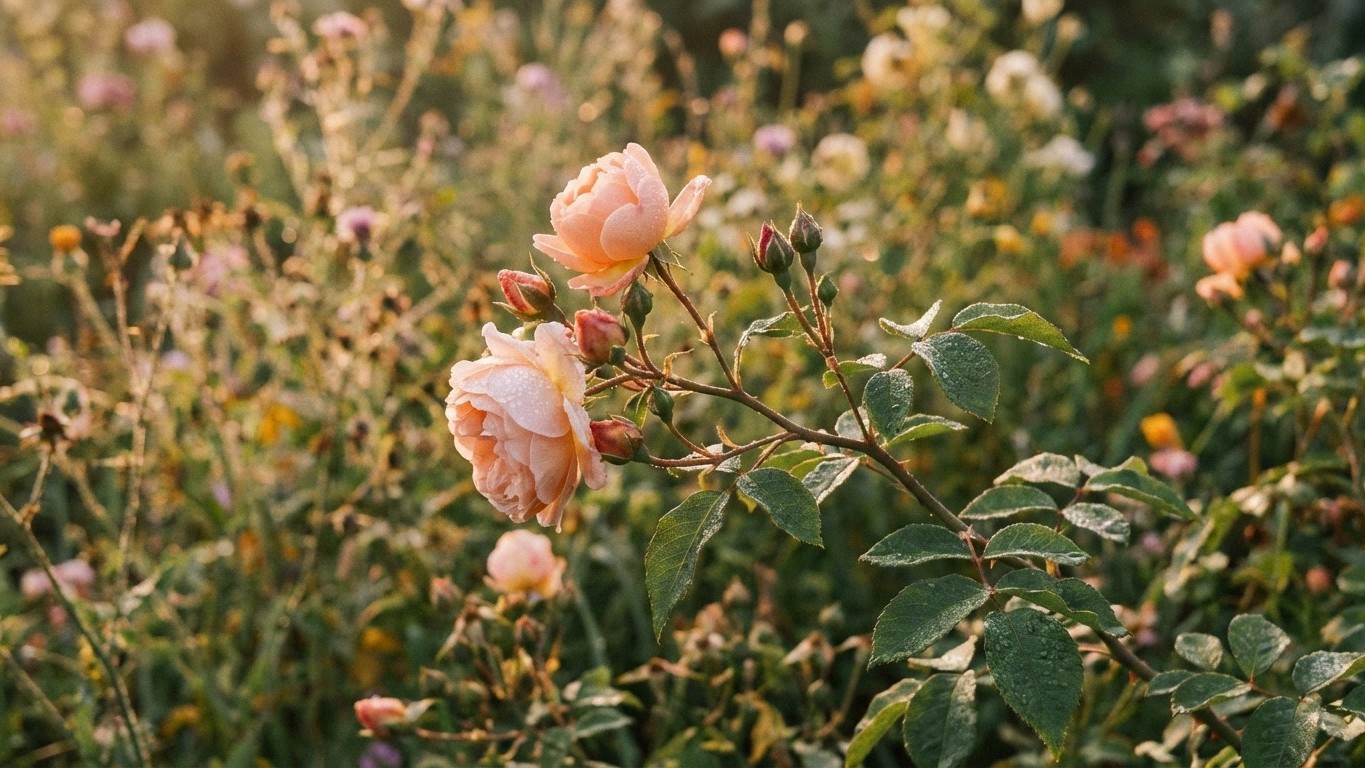

Most roses in Virginia get pruned in late winter or early spring, once the hardest freezes have passed and the buds begin to swell. On the coast that means mid-March to early April. In the Piedmont it runs a bit later, and in the mountains later still. One group breaks the rule: roses that bloom only once a year are pruned right after flowering rather than in late winter.
When to prune roses in Virginia
What is the pruning window at the coast?
A useful reference point is NAS Oceana in Virginia Beach. NOAA’s NCEI Climate Normals put the last spring 32°F freeze there somewhere between March 20 and April 3 (the 30 to 70 percent probability band). That is a range, and a given spring can land on either side of it. Pruning starts a little ahead of that range and wraps up around the end of it, which gives a coastal window of mid-March to early April.
The timing follows what the plant is doing. In midwinter a rose is dormant, with canes that look the same from tip to base. As days lengthen and the soil warms, the buds along the canes swell and turn reddish. Pruning at that stage lets you see which buds are alive and which canes died over winter. It also means the plant has not yet spent stored energy on leaves you are about to cut off.
How much later does the date run inland and in the mountains?
Virginia covers USDA hardiness zones 5b to 8b, a system built on a single variable, the average annual extreme minimum temperature. Virginia Beach sits at the mild end. The Blue Ridge and southwest Virginia run weeks later in spring, so the same buds that are swelling at the coast in late March may still be tight in mid-April. For high valleys and ridges, plan on mid-April to early May and let the plant tell you when.
How can you tell the roses are ready?
Calendars are a starting point. Plants are more reliable. When forsythia is in full bloom in your neighborhood, roses are usually ready. Look at the canes: if the buds have swelled and show a touch of red, you are in the window. If they are still tight and brown, wait a week and look again. If leaves are already open a few inches, you are late but not in trouble. Prune anyway, since a rose recovers far better from a late cut than from none at all.
A warm spell in February can fool both you and the plant. Roses may push buds in a week of 60°F days, and the freezes that follow are common in Virginia. A warm week in February is a reason to keep the pruners in the shed.
The date is not the same for every type of rose
Everything above applies to roses that flower on new wood, meaning stems that grow this spring and bloom this summer. Hybrid teas, floribundas, grandifloras, and most modern shrub roses (including Knock Out) all work this way. Cutting them in late winter does no harm to the season’s flowers, because the flowers have not formed yet.
Ramblers and once-blooming old garden roses work the other way around. They set their flower buds on wood grown the previous summer. Prune them in March and you remove this year’s flowers along with the canes. The old garden roses in this group include gallicas, albas, damasks, and centifolias, the heavily scented, often pink and mauve shrubs that bloom for a few weeks in late spring and then stop. For these, prune right after the flush of flowers ends, usually in June, so the new canes have the rest of the season to grow and set buds for next year.
Climbers sit between the two. Repeat-blooming climbers flower on side shoots that grow from last year’s main canes. Leave the main canes in place, and in late winter shorten the side shoots to two or three buds. Climbers that bloom only once a year are treated like ramblers and pruned after flowering. If you are unsure which kind you have, remember when it bloomed last year: one big burst in late spring means old wood, repeated flowers through summer means new wood.
| Type of rose | Flowers on | When to prune |
|---|---|---|
| Hybrid tea, floribunda, grandiflora | New wood | Late winter to early spring, as buds swell |
| Knock Out and other repeat-blooming shrub roses | New wood | Late winter to early spring |
| Repeat-blooming climber | New side shoots on older canes | Shorten side shoots in late winter; keep main canes |
| Rambler, once-blooming climber | Old wood | Right after flowering |
| Once-blooming old garden rose | Old wood | Right after flowering |
The only cuts safe on a once-bloomer in late winter are dead or broken canes, which carry no buds worth keeping. Everything else waits until the flowers fade.
How far back to cut here
Why does the cut depend on winter damage?
Dieback comes out first, and the cut is made below it. After a cold winter, canes often have dead tips that look brown or shriveled. Cut back along the cane until you see white pith in the center. Brown or dark pith means the tissue is dead, so keep going until the center is clean and white. Cut about a quarter inch above an outward-facing bud, angled so water runs off the bud.
That is why the final height differs across the state. At the coast, where winters are milder, canes often come through with little damage and you can cut by shape and size. In the mountains and colder valleys, more of each cane is typically killed, so the cut lands lower. A hybrid tea in the Blue Ridge may end up noticeably shorter than the same variety at Virginia Beach, simply because more wood had to go. Cut to healthy tissue and the plant will fill in.
What heights should you aim for?
Knock Out roses are cut to about 12 inches. They are forgiving and bloom on new growth, so a hard cut produces a rounded, full shrub rather than a tall, leggy one. Hybrid teas and floribundas are cut harder than most gardeners expect, down to roughly knee height, leaving three to five strong canes about as thick as a pencil or larger. Remove canes that cross, rub against each other, or grow toward the center of the plant, so air moves through the middle.
On climbers, the main canes stay, tied to the support as horizontally as you can manage, since horizontal canes send up more flowering side shoots. Cut those side shoots back to two or three buds. Once-blooming ramblers and old garden roses are thinned after flowering, with the oldest, grayest canes taken out at the base.
Use sharp bypass pruners, and wipe the blades between plants if any canes show cankers or dark spots. If any canes showed cankers or dark spots, bag up those prunings and discard them rather than composting.
What pruning too early costs in Virginia
A cut tells the rose to wake up. The buds below it swell and push new shoots, and those shoots are tender. If a hard freeze arrives after pruning, it kills that new growth. Virginia gets such freezes well into March along the coast and later in the cooler parts of the state. The Virginia Beach range of March 20 to April 3 for the last freeze is the mild end, so the risk is greater inland.
The damage is easy to recognize. Fresh red shoots turn limp and then black or brown. Leaf tips look scorched and curl. Young stems shrivel from the tip down. The older canes beneath may be fine. The plant has lost a few weeks of growth, not the whole season.
Wait a few days after the freeze to see how far the damage goes. Then cut back to green, healthy wood, just above an outward-facing bud with a clean white center. The rose will send out new shoots from lower buds. Hold off on heavy fertilizer until growth looks normal again, since a stressed plant does not need a push. If another freeze is forecast after buds have started to open, a frost cloth or an inverted bucket over small plants overnight usually gives enough protection in a light freeze.
Fall pruning carries the same risk, since cuts also trigger growth. The first fall freeze at the reference station falls between November 10 and November 24, and inland it comes earlier. In autumn, trim only long canes that could whip in winter wind and leave the real pruning for spring.
Checking this against your own county
Every date above is built from one coastal station and a state-wide hardiness range, and Virginia is long and varied. Elevation and distance from water move the date by weeks: a garden in a cold mountain hollow, one on the Piedmont, and one near the Chesapeake Bay or Atlantic can each have a different window. For your area, contact your county extension office through Virginia Cooperative Extension, which has local agents and Master Gardener volunteers who know the typical last-freeze timing near you. For a broader look at rose growing, see our guide to growing roses in Virginia.
Common questions
Can I prune roses in fall in Virginia?
Only lightly. Shortening very long canes in late fall keeps wind from loosening the roots, but a hard cut encourages tender growth that the first freeze will kill. Save structural pruning for spring.
Is it too late to prune roses in May?
For roses that bloom on new wood, no. Cut dead and damaged canes, reduce the plant, and expect it to flower a little later than usual. For once-blooming roses and ramblers, May may be before bloom, so wait until the flowers finish.
Do Knock Out roses need pruning every year?
They tolerate neglect, but annual pruning keeps them compact and full of flowers. Cut them to about 12 inches in late winter or early spring, removing any dead wood first.
What if my rose is already leafing out?
Prune anyway. A late cut is better than none, and the plant will recover. Remove dead or crossing canes and shorten the rest, accepting that flowering may be slightly delayed.