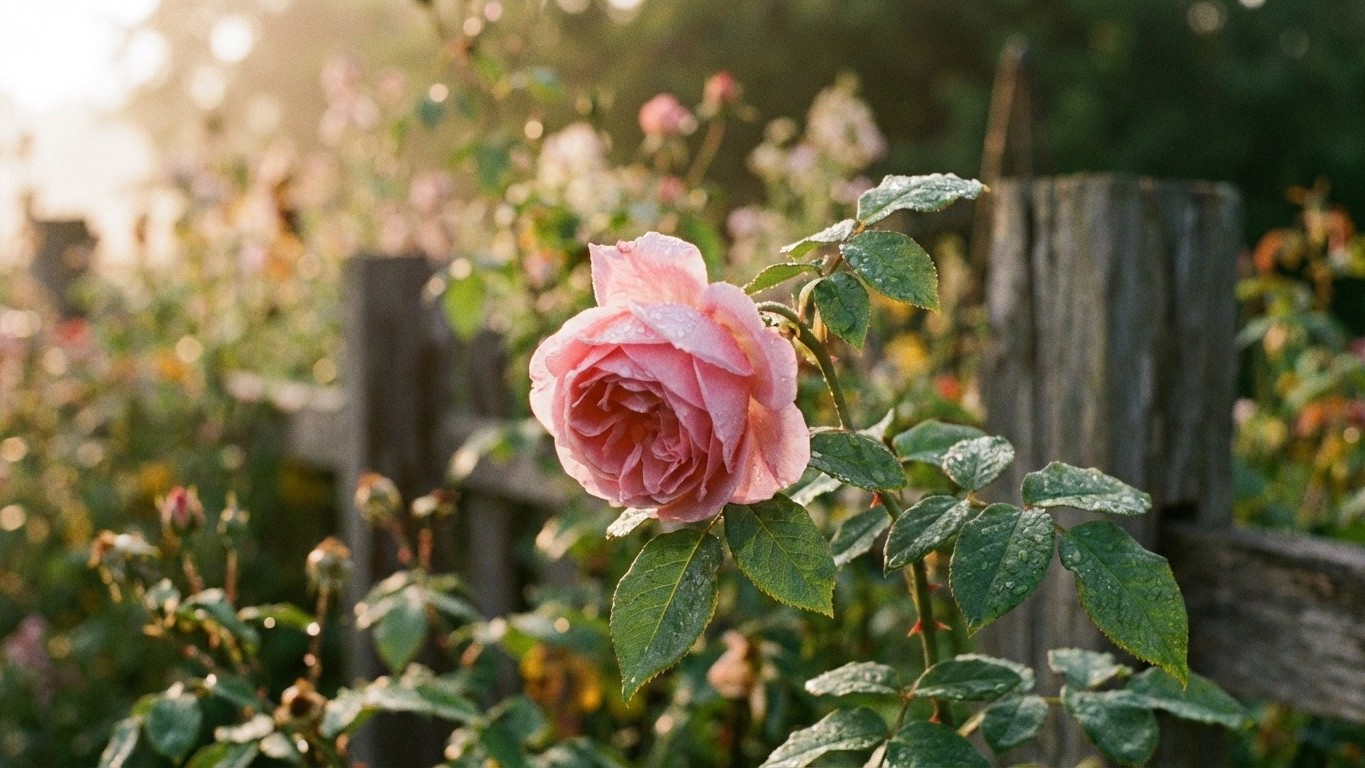

Rugosa roses and the Canadian-bred Explorer series come through a Quebec winter with little fuss. Therese Bugnet, Hansa and William Baffin are the dependable names. Knock Out and New Dawn manage in the milder pockets, usually with some dieback. Grafted hybrid teas, tree roses and many English roses on the garden center shelf need real winter work, or they die to the ground.
Which roses survive a Quebec winter
Start with the number. Natural Resources Canada puts the Montreal reference city in Canadian hardiness zone 5b, using 1991-2020 climate data. That is the Canadian system, which is not USDA. It is built from seven climate variables, where USDA uses one, and the federal hardiness site says plainly that the two have no simple conversion. Its own example: Canadian zone 4a overlaps nine USDA zones, from 3a to 7a. So when a plant tag says “zone 5,” find out which system it means. The Canada’s Plant Hardiness Site lets you look up your municipality.
Which rose types clear zone 5b?
Three groups handle it without help. Rugosas, the tough, wrinkle-leaved shrubs descended from a coastal Asian species, are among the hardiest roses grown anywhere. The Explorer series was bred by Agriculture and Agri-Food Canada for prairie and eastern winters, and most are built for cold winters. The Parkland roses and a few species roses, such as the burnet rose, round out the list. All of them are usually sold on their own roots, which matters more than it sounds (see the label section below).
Hybrid teas, grandifloras and most floribundas are comfortable in warmer Canadian zones. At 5b and colder they need protection every winter, and the colder the site, the more work it takes.
What about frost dates?
Zone numbers measure winter cold. Spring and fall frosts decide how much of the season a rose gets. At the Montreal/St-Hubert airport station, the average last spring frost is May 6 and the average first fall frost is October 5. That leaves about 150 frost-free days between them. These are midpoints, so in one year out of two the last frost comes later than May 6, and in one year out of two the first fall frost comes earlier than October 5. Northern and upland districts run weeks behind this station. Published frost dates differ by a few days depending on the station and the years used, so treat all of it as a rough window.
Snow is part of the picture too. A steady blanket insulates the base of the plant, and that is why a rose can survive a brutal cold snap in January and still be damaged by a thaw that melts the cover and a freeze that follows it.
Named roses that hold up here
Here are five roses you can find at nurseries and mail-order sources, with what each one tolerates. Treat the notes as typical behavior, because a sheltered city backyard and an open field forty miles north are different tests.
| Rose | Type | What it survives in Quebec |
|---|---|---|
| Therese Bugnet | Rugosa hybrid shrub | Severe cold with no protection; among the hardiest named roses sold in Canada |
| Hansa | Rugosa shrub | Hard winters, road salt and poor soil with no fuss |
| William Baffin | Explorer climber | Cold at the zone 3 end; canes can stay on the trellis |
| Knock Out | Repeat-blooming shrub | Usually regrows from the base in zone 5b, with some cane dieback |
| New Dawn | Repeat-blooming climber | Borderline; upper canes often die, and the plant flowers on regrowth |
Therese Bugnet came out of an Alberta breeding program, and it shows. The double pink flowers are fragrant, the red-brown canes carry few thorns, and it blooms heavily in early summer with a lighter scattering later. Hansa is the rose to plant where nothing else will grow. Its double magenta flowers carry a strong clove scent, and big orange-red hips follow. Both rugosas spread by suckers, so give them room.
William Baffin is the answer for anyone who wants a climber without wrapping and burying it. It is a vigorous Explorer with bright pink flowers, and it carries the series’ cold tolerance. Knock Out earns its reputation by blooming from early summer until frost, and in the Montreal area it generally comes back from the base each spring. Expect brown, dead-looking canes in April. Cut dead canes back to live green wood once the buds swell, and the plant fills out again by midsummer. Farther north, plan on it behaving like a perennial that dies back to the ground each winter.
New Dawn is the one to buy with eyes open. It is a lovely pale pink climber and gardeners in cold regions love it, but its upper canes often freeze above the snow line. Where that happens it blooms later and lighter. Choose a spot protected from north wind, and don’t count on a full wall of flowers every year.
Sold here, but not for this zone
Garden centers stock roses nationally, and the pallet that arrives in Quebec in spring was often grown for a milder climate. Walk into a big-box store and the roses at eye level are usually hybrid teas and grandifloras, with floribundas close behind. Beside them you may find tree roses, which are standard roses grafted onto a tall trunk, and some tender climbers and old tea or Noisette types. None of these were bred for zone 5b winters.
The usual failure goes like this. The top dies, sometimes to the snow line and sometimes to the ground. If the graft union survives, the plant resprouts and you lose a season of bloom. If the graft dies, the rootstock below it often lives and sends up canes of its own. Those canes grow vigorously, produce a single flush of different flowers, and slowly take over while you wonder what happened to the hybrid tea you paid for.
Many English roses fall in a gray area. Some are sturdy enough, and some are not, so check the cultivar by name before assuming the label’s claim is right. That claim is also suspect when the plant was packaged in the United States, because its zone number probably follows the USDA scale and cannot be read as a Canadian zone.
If you want a hybrid tea anyway, the standard method works. Once the ground starts to freeze, mound soil over the graft union, then add a layer of mulch or leaves on top. Do it every year, because a plant that spends its winters unprotected is unlikely to last long.
Tree roses are harder. The graft sits high on the trunk, so there is nothing to mound. Growers either wrap the whole plant, lay it down and bury it, or accept the loss and replace it. Plenty of Quebec gardeners treat them as a summer extravagance, much like a potted tropical. That is a reasonable call if you know it going in.
What to check on the label before buying
Read four things before you pay.
- Grade. No. 1 is the top grade for bare-root and packaged roses. Lower grades have fewer and thinner canes and take longer to settle in.
- Own-root or grafted. A grafted plant has a swollen knob near the base where the variety was joined to a rootstock. An own-root plant is the cultivar all the way down.
- Zone system. A Canadian rating is the one to trust. A bare “zone 5” from a US grower may be a USDA number.
- Series or breeder. Names like Explorer or Parkland tell you the rose was bred for cold climates.
Own-root matters more the colder it gets, and the reason is simple. In a hard winter, a grafted rose can lose everything above the graft. What regrows may be the rootstock, not the rose you chose. An own-root rose can lose all its canes and still regrow as the same variety from its own crown. The same rose planted in a colder zone is more likely to be cut to the ground, so the difference between the two kinds is larger here. If the tag does not say, ask before you buy. A good nursery will know the answer.
Checking this against your own county
The hardiness zone and frost dates above describe one reference city and one airport station. Quebec is not one climate, and a farm in the Laurentians or the Eastern Townships can sit a full zone away. Quebec does not run a US-style county extension system. The provincial agriculture ministry, Ministère de l’Agriculture, des Pêcheries et de l’Alimentation du Québec (MAPAQ), has regional offices, but they mainly serve commercial farmers; for home-garden advice, local nurseries and horticultural societies are a better first stop. Before you buy, look up your own municipality on the federal hardiness site and compare the result with what the tag says. For the basics of care once the rose is in the ground, see our guide to growing roses in Quebec.
Common questions
Do Knock Out roses survive winter in Quebec?
In the Montreal area they usually do, with cane dieback that you prune out in spring. Farther north, expect them to die to the ground and regrow from the base, which still gives a bushy plant by midsummer if the roots are healthy.
Can I grow hybrid tea roses in Quebec?
Yes, with work every year. They need soil mounded over the graft union and mulch once the ground freezes. Many gardeners find the effort worthwhile for a few favorites and switch to hardy shrub roses for the rest of the yard.
Is Canadian zone 5b the same as USDA zone 5?
No. The Canadian system uses seven climate variables and the USDA uses one, and Natural Resources Canada says there is no simple conversion. Read a label’s zone only after you know which system it uses.
Do rugosa roses need winter protection?
Generally no. Therese Bugnet and Hansa are among the hardiest named roses, and they tolerate road salt and poor soil. Prune out dead wood in spring and expect sucker shoots around the base.