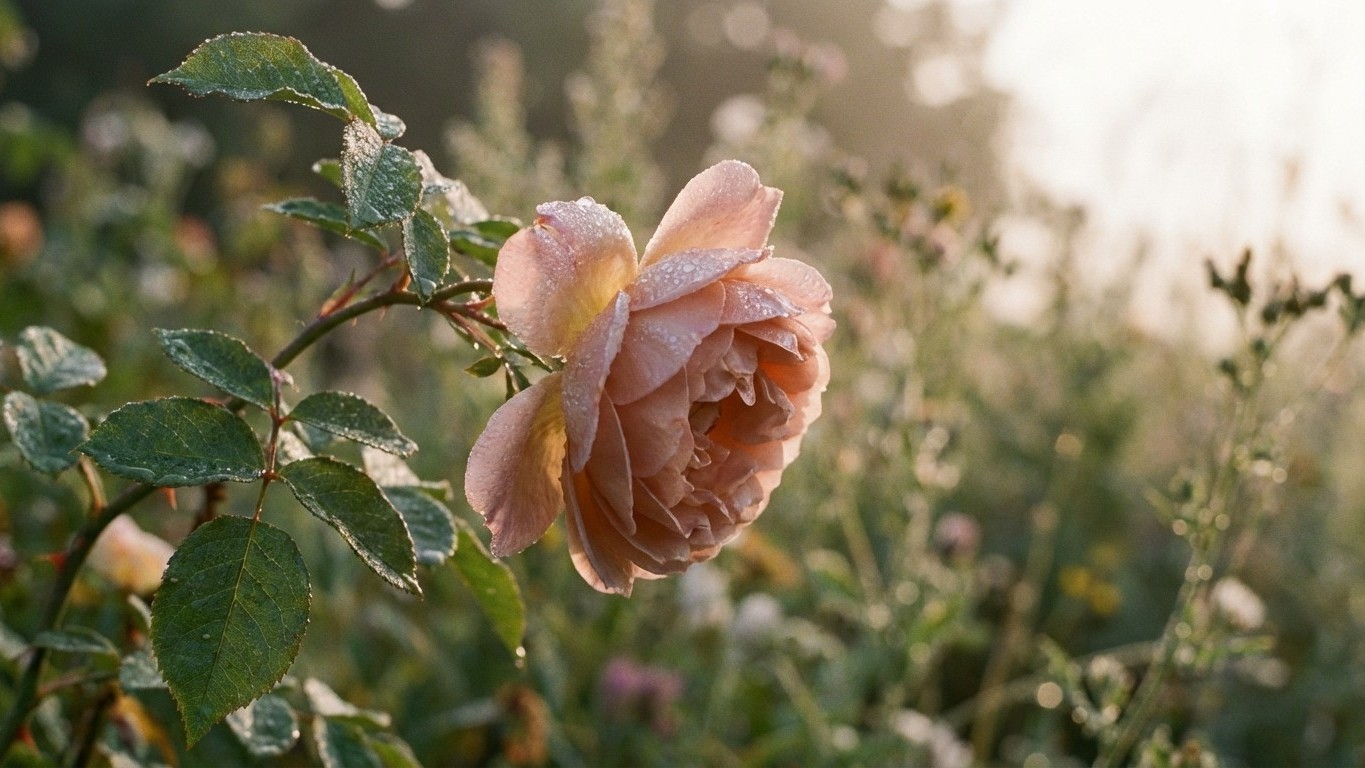

Rugosa roses, Explorer series roses, Knock Out and New Dawn come through a Virginia winter with little protection. Hybrid teas and other grafted roses sold at the same garden centers often need a foot of mounded soil in the mountains, and some help in a cold snap anywhere. The deciding number is the USDA hardiness zone. Virginia covers a wide spread of zones, so the right rose depends on which end of the state your yard sits at.
Which roses survive a Virginia winter
Virginia runs from USDA hardiness zone 5b to 8b. That system rests on a single variable, the average annual extreme minimum temperature, which means the coldest night of a typical winter rather than the winter average. The cold end is the high country of the Blue Ridge and southwest Virginia. The warm end is the coast around Virginia Beach. A rose rated only for zone 7 has no safety margin in the mountains.
Which rose types clear the cold end of the state?
Rugosas are among the toughest groups. Hansa and Therese Bugnet are rated well below the coldest corner of Virginia, so they need no winter protection anywhere in the state. The Explorer series, bred in Canada for prairie winters, is rated to zone 3 or 4 for most of its members. Modern shrub roses such as Knock Out are rated to zone 5, so they clear every part of the state, though only just in the highest valleys.
Hybrid teas, grandifloras and floribundas are a different story. Some tags list them to zone 5, but in practice they need winter help below zone 7. That means mounding soil or mulch over the base and accepting that canes may die back. In zone 7 and warmer, most of them come through a normal winter without fuss.
Does the warm end of the state change the picture?
Yes, mostly by changing the calendar. At the Virginia Beach reference station (NAS Oceana), NOAA NCEI 1991-2020 Climate Normals put the last spring 32°F freeze between March 20 and April 3, in the 30 to 70 percent probability band. The first fall freeze falls between November 10 and November 24. That is the mild end of the state. The Blue Ridge and southwest Virginia typically see their last spring freeze later and their first fall freeze earlier.
For a rose, a short autumn can matter as much as a low winter minimum. Canes need time to harden off, and an early freeze catches soft late growth. Heat is the other pressure. The cold-proof roses are not always comfortable through a humid Piedmont or Tidewater summer, and the disease side of that is covered in Rose Diseases in Virginia: What the Climate Here Actually Brings.
Named roses that hold up here
A short list of named roses covers most Virginia yards. All of these are sold widely, and most are sold on their own roots, which helps in cold winters (more on that below).
| Rose | Type | Coldest zone rated | What it handles |
|---|---|---|---|
| Hansa | Rugosa shrub | 3 or colder | Deep cold, poor soil, salt spray |
| Therese Bugnet | Hybrid rugosa shrub | 3 or colder | Mountain winters, repeat bloom |
| William Baffin | Explorer climber | 3 | Cold slopes, trellises, fences |
| Knock Out | Modern shrub | 5 | Most winters statewide, blooms until frost |
| New Dawn | Climber | 5 | Cane dieback, regrows from the base |
Which roses suit the mountains and cold pockets?
Hansa is the one to pick if you want fragrance and a rose you can forget about in January. It is a rugosa with double, magenta-purple flowers and wrinkled leaves, and it shrugs off winters far colder than Virginia produces. Rugosas also tolerate the salt spray along the Chesapeake Bay and the Atlantic shore, so Hansa is a good choice for coastal yards.
Therese Bugnet is a hybrid rugosa with the same cold tolerance and a lighter pink flower. It repeats its bloom through the season, which makes it a good pick when you want color after June. William Baffin, from the Explorer series, is a climber for a fence or trellis. It lets you grow a rose upward in the high valleys, where tender climbers rarely last.
Which roses suit the rest of the state?
Knock Out earned its popularity by blooming from spring until frost with almost no deadheading, and its zone 5 rating covers every county. It is not immune to everything, though. Rose rosette disease hits Knock Out like any other rose, and the diseases page covers what to look for. In zone 5 pockets, the tips may die back in a hard winter, so wait until the buds swell in spring before pruning off dead wood. Cutting early removes canes that would have leafed out.
New Dawn is a pale pink climber that has stayed on the market for generations because it is dependable. It is rated to zone 5, and if a bad winter kills the upper canes, it usually pushes new ones from the base. That recovery makes it a safe choice for a first climbing rose anywhere east of the mountains.
Sold here, but not for this zone
Garden centers buy rose stock nationally, so the display on the shelf in Roanoke or Winchester looks much like the one in Virginia Beach. The tags often say “zones 5 to 9” or “zones 4 to 9,” and that range is generous. A rose can survive the minimum on paper and still lose most of its canes every winter.
One large group is grafted hybrid teas and grandifloras, usually sold as large, bagged or potted plants with a bright photo on the tag. In zone 7 and warmer they do fine. In zone 6 and colder, which takes in the mountain counties and the high valleys, they often die to the ground. The grafted rootstock may then send up its own shoots, which means you end up with a different rose than the one you bought.
Tea roses, China roses and Noisettes are a second group. They are bred for warm climates, and they grow beautifully along the coast and in the southeastern corner. Moved to the mountains, they are a gamble. Climbing hybrid teas fall in the same category as their bush forms, since their canes are the part that freezes.
Potted miniature roses sold around Valentine’s Day, and florist-style roses in grocery stores, are a third trap. Greenhouse growers force them for indoor bloom, and they are soft, with little cold tolerance. They can sometimes be planted outdoors, but treat them as short-lived unless they are specifically labeled for landscape use.
If you already own a tender rose, or want one for its flowers, plan on protection. In late fall, mound a foot of soil or mulch over the base so the graft union and the lowest buds stay insulated. The canes above may still die back, but the base survives and the plant regrows in spring. Without that step, a hard winter in the mountains can kill the whole plant.
What to check on the label before buying
The label carries three details that predict how a rose will do through a Virginia winter: the grade, whether it is grafted or own-root, and the zone range.
Grade comes first. Bare-root and packaged roses are sold as Grade 1, 1½ or 2, and Grade 1 is the largest, with the most and thickest canes. Lower grades are smaller plants that can need an extra season to catch up. Grade does not apply the same way to potted roses already leafed out, so for those, look at the canes and the roots.
The grafted versus own-root label matters more than most gardeners expect. A grafted rose is a named variety joined to a separate rootstock, with the swollen graft union near the soil line. An own-root rose is the same variety growing on its own roots, from a cutting. If a hard freeze kills a grafted rose to the ground, what regrows may be the rootstock rather than the named rose. If an own-root rose dies back to the ground, the new growth is still the variety you paid for.
That difference grows with the cold. In zone 7 or 8, a grafted hybrid tea rarely freezes to the union. In zone 5 or 6, it happens often enough that own-root is the safer buy. The same logic holds for cold-hardy shrubs, which is why Hansa and Therese Bugnet are so often sold on their own roots.
Then read the zone range, but read it as a floor. Choose a tag rated one zone colder than yours, so that a freak winter does not become the rose’s last.
Checking this against your own county
Zones, frost dates and microclimates shift from one county to the next, and a valley floor can run colder than a ridge a few miles away. Virginia Cooperative Extension has offices serving every county and independent city, and local agents know which roses are doing well in your soil and elevation. Ask your county Extension office which zone your address falls in before you buy anything marked for a warmer climate. For the basics of planting and care, see growing roses in Virginia.
Common questions
Can I grow hybrid teas in the Virginia mountains?
You can, but expect winter dieback and plan on mounding a foot of soil or mulch over the base in late fall. Own-root plants are the safer choice there, because regrowth from the roots is still the variety you bought. If you want low maintenance, a rugosa or an Explorer rose will be easier.
Is Knock Out hardy enough for all of Virginia?
Its zone 5 rating covers every county in the state. In the coldest valleys the tips can die back in a hard winter, and the plant regrows in spring. It still gets diseases like any other rose, so hardiness does not make it trouble-free.
Do I need to protect roses for winter in Virginia?
Rugosas, Explorer roses, Knock Out and New Dawn generally do not. Grafted hybrid teas need protection in zone 6 and colder, and benefit from it in colder parts of zone 7. Mound the base after the leaves drop and the weather turns cold.
Do rugosa roses like Virginia summers?
They tolerate salt well and handle heat reasonably, but they are bred for cold, so the long, humid summers of the Piedmont and Tidewater test them more than the winters do. In those regions, give them full sun and good air movement, and choose Hansa or Therese Bugnet over less proven rugosas.