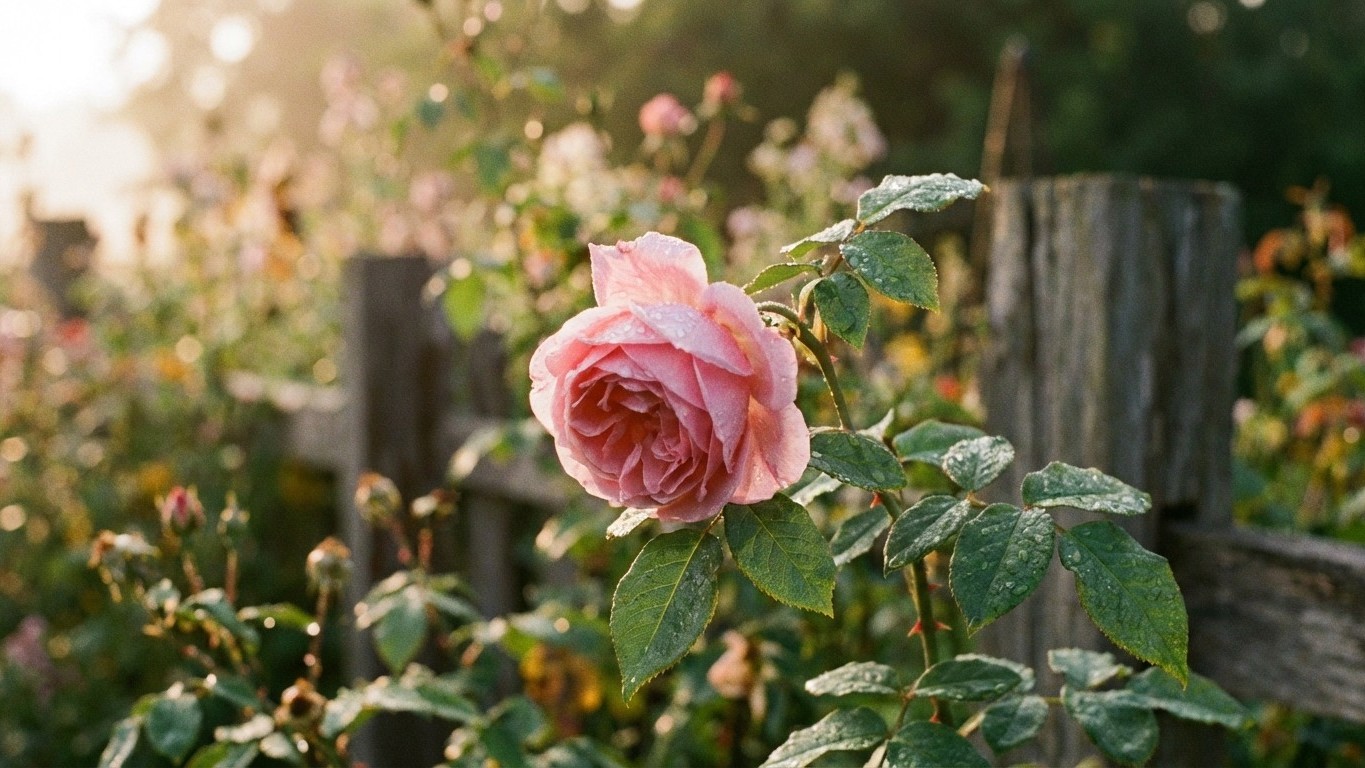

The roses that hold up in Washington are the tough, own-root shrubs: rugosas such as Hansa and Therese Bugnet, Explorer series climbers, Knock Out, and the old climber New Dawn. Hybrid teas, tree roses and tender Chinas sit on the same garden center shelves but need protection or a mild site. This guide sorts the two groups by hardiness. For planting steps and general care, see growing roses in Washington.
Which roses survive a Washington winter
The USDA Plant Hardiness Zone Map puts the state at roughly zone 4 to zone 9. That spread is wide, and the system rests on one variable: the average annual extreme minimum temperature. The cold zones sit east of the Cascades and up in the mountains. The warm ones hug Puget Sound and the coast. A rose that sails through a winter in Tacoma can be a dead stick in the Okanogan.
Seattle is the reference city for the mild, maritime west side. There, the last spring freeze falls somewhere between February 27 and March 18, and the first fall freeze between November 13 and November 30 (NOAA NCEI 1991-2020 Climate Normals, 30-70% probability band). Those windows do not carry over to eastern Washington, which is high desert with a much shorter season and harder winters. A mild frost window on the west side also does not mean roses can go in early. Cold, wet soil and low light slow them well past the last freeze.
Which rose types handle the cold end of the range?
Rugosas are among the toughest groups. Rosa rugosa and its hybrids shrug off wind and poor soil, and tolerate salt spray on the coast. The Explorer series, bred in Canada for prairie winters, comes next. Many of its climbers and shrubs are grown on their own roots, which matters for reasons covered in the label section below. Species roses and the old once-blooming types (albas, gallicas) also take cold well, though they bloom only once a season.
Do hybrid teas make it through?
West of the Cascades, in zones 7 to 9, most hybrid teas come through ordinary winters. Their enemy there is damp, not deep cold, and the wet climate brings its own problems, covered in Rose Diseases in Washington: What the Climate Here Actually Brings. In zone 6 and colder, hybrid teas, floribundas and grandifloras need help. That means mounding soil over the base, wrapping canes, or accepting that they will die back to the ground and rebuild each year. East of the mountains, the rugosa and Explorer groups are the safer first choice.
Named roses that hold up here
Four names cover most of what a buyer needs, and each survives something different.
Hansa is a rugosa with double, fragrant, magenta-purple blooms and a thorny, dense habit. It gets through the coldest eastern winters with no cover at all. It also produces orange-red hips in fall. Therese Bugnet is another rugosa hybrid, with long reddish canes and loose pink flowers. It repeats its bloom through the season. Both are strong picks for exposed, windy sites.
Knock Out is one of the best-known landscape roses in the country, and it earns the reputation. It thrives through the western lowlands and the milder valleys east of the Cascades. In zone 5 sites, canes may die back in a hard winter, but the plant regrows from the base and still blooms the same year. In the first winter after planting, mound mulch or compost over the crown and the plant is likely to carry less damage into spring. The series also comes in several colors and sizes, all with similar toughness.
New Dawn is a pale pink climber. It is a sport of an older rose and has been a reliable repeat bloomer for nearly a century. On a south or west wall, it handles the western lowlands well. The canes are flexible and easy to tie to a fence or arbor.
For the coldest sites, add the Explorer climbers. William Baffin, for instance, grows into a large arching climber that blooms through the summer. Explorer roses suit gardeners east of the Cascades who want a climber that tolerates hard winters far better than most.
A practical pairing: Hansa or Therese Bugnet as a hedge, Knock Out in front of it for color, New Dawn on the fence behind. All four prefer full sun.
Sold here, but not for this zone
Garden centers in Washington buy from national growers. The same pallet that goes to Georgia can land in Spokane, and the label rarely says which of Washington’s zones a rose can actually take. Several groups regularly turn up on shelves that will not come through a cold winter without work.
- Hybrid teas and grandifloras: grafted, and prone to cane death in a hard freeze.
- Tree roses (standards): a rose grafted on top of a tall trunk, so the graft union sits high in the air with no soil to protect it.
- China and Noisette roses: they belong on the mild west side or against a warm wall.
- Lady Banks (Rosa banksiae): a vigorous climber that is a poor bet where winters are cold.
The simplest rescue for a hybrid tea in a cold zone is to mound soil or compost over the graft union before the first hard freezes. A tree rose needs more work: wrap the head, or lay the whole plant down and bury it in a trench. Gardeners who skip this step often find a live rootstock in spring and nothing but a wild shoot above it. The full routine is in winter protection for roses in Washington.
What to check on the label before buying
Two things on the tag or the bag tell you most of what you need to know.
First, the grade. Bare-root roses are sold in grades, and the grade reflects how many canes the plant has and how thick they are. A No. 1 starts with more cane mass and settles in faster. A No. 2 can still grow into a good plant, but it takes longer and a cold winter can set it back further.
Second, whether the rose is grafted or grown on its own roots. A grafted rose is a named variety joined onto a different, vigorous rootstock. The knob where the two meet is the graft union. An own-root rose is a single plant, with one set of genes from tip to root. Most hardy shrub roses, including Knock Out and most Explorer types, are sold own-root. Hybrid teas are usually grafted, and the label will often say so.
The reason this matters grows with the cold. When a hard winter kills a grafted rose to the ground, any shoots that come back often come from the rootstock. Rootstock canes bloom differently, or not at all, and the named variety is gone. When an own-root rose freezes back to the ground, the new growth is the same rose you bought. Choose own-root for any rose you do not plan to protect.
If the label is silent, ask a staff member or look at the base of the plant. A thick, knobby swelling just above the roots is a graft union.
Checking this against your own county
A zone number on a map averages over a lot of ground. Valleys trap cold air, south-facing slopes hold warmth, and elevation changes the answer within a few miles. Washington State University Extension keeps an office in every county, and its staff and Master Gardeners know which roses have lived and died locally. Contact your county Extension office before buying anything rated near the edge of your zone, and ask which cultivars have done well in your town.
Common questions
What is the hardiest rose for eastern Washington?
Rugosas such as Hansa and Therese Bugnet, and Explorer climbers such as William Baffin, are rated to zone 3 or colder. They are the safest choices for the coldest, windiest sites east of the Cascades.
Will Knock Out roses survive a Washington winter?
Yes, across most of the state. Knock Out is rated to zone 5, so it fits the western lowlands and the milder valleys east of the mountains. In the coldest zones, expect cane dieback and pick a rugosa or Explorer instead.
Can I grow hybrid teas in Washington?
West of the Cascades, yes, since most winters there are mild enough. In colder zones, plan to mound the graft union each fall and accept some dieback. Own-root plants and hardier shrub roses are less trouble.
How do I know if a rose is grafted?
Check the label first, which often says “grafted” or “own root.” If it does not, look at the base of the plant for a swollen knob just above the roots. That knob is the graft union.