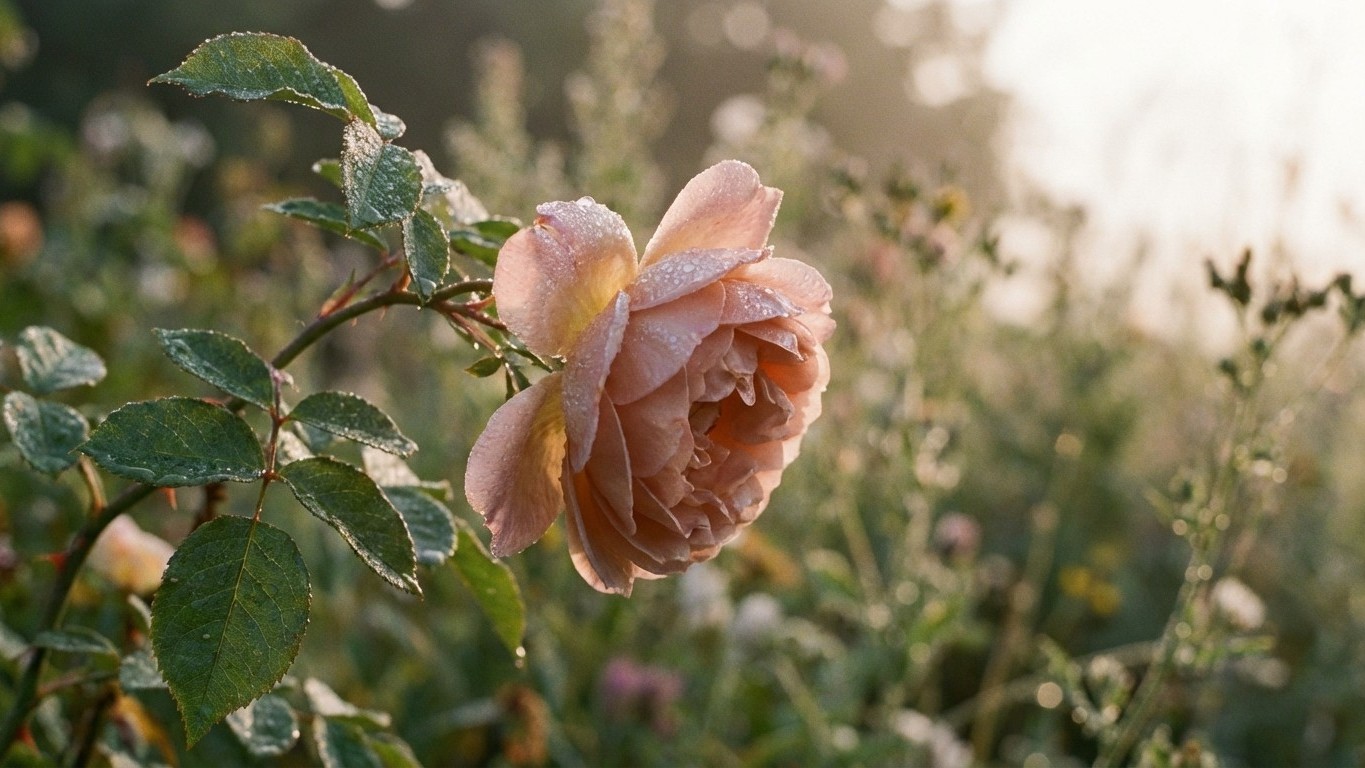

The roses that hold up in Wisconsin are rugosas such as Hansa and Therese Bugnet and the Canadian Explorer series, all bred for zone 3 cold, and Knock Out in the milder southern counties. Hybrid teas, tree roses and most English roses are the ones that fail. The state’s climate is so varied that a rose that blooms for years near Lake Michigan can die to the ground in a northern county. Knowing which group a rose belongs to settles most of the question before you reach the checkout.
Which roses survive a Wisconsin winter
Wisconsin runs from USDA hardiness zone 3b to 6a. The USDA system rates a location by a single measure, the average annual extreme minimum temperature, so it says nothing about wind, snow cover or how fast a January thaw gives way to a hard freeze. Zone 6a sits at the warm end along Lake Michigan, and 3b is the cold end in the far north. Most gardeners fall somewhere between, and a rose rated for your zone is only the starting point. The practical test is whether the rose’s canes (its woody stems) live through the winter, because the plant that regrows from the roots after the canes die is often a different plant from the one you bought.
Which rose types clear zone 3b?
Rugosas are the toughest group. They are shrub roses descended from Rosa rugosa, a species from the cold coasts of northeast Asia, and they typically come through zone 3b with little or no cover once established. The Explorer series gives you shrubs and climbers that are generally rated hardy to zone 3 as well. Species roses and the hardy old garden classes, such as albas, also hold up at the cold end. The Buck roses do well in the middle of the state and southward.
Where do hybrid teas fall short?
Hybrid teas, floribundas and grandifloras are generally rated for zone 5 or 6 and need their canes mounded and covered to get through the cold. That puts only the lakeshore and the southern edge of the state comfortably inside their range. Frost timing adds a second hazard. At Milwaukee, NOAA NCEI 1991–2020 Climate Normals put the median first fall freeze (32°F) in mid-to-late October and the median last spring freeze in the second half of April, though any single year can fall well outside those dates. Lake Michigan delays the first fall freeze at the shore. Inland southern Wisconsin typically freezes in early October, and the north freezes far earlier. A rose pushing soft new growth into a freeze loses it, and a rose whose buds break in a warm April spell can lose those buds to the late frost.
Named roses that hold up here
These five are sold widely, so you can find them at nurseries and through mail-order catalogs. They are not equal, though, and the table shows how each one behaves once the snow melts.
| Rose | Type | Sold as hardy to | What it comes through here |
|---|---|---|---|
| Hansa | Rugosa shrub | Zone 3 | Canes survive uncovered, and the plant shrugs off road salt. |
| Therese Bugnet | Hybrid rugosa | Zone 3 | Upright canes with fragrant pink double flowers. A hard winter may nip the tips. |
| William Baffin | Explorer climber | Zone 3 | Climbs on a trellis through winter with no laying down. |
| Knock Out | Shrub | Zone 5 | Canes often die to the snow line in colder zones, but it regrows and blooms on new wood. |
| New Dawn | Climber | Zone 5 | Canes live through southern winters, and in the north they die back and take the bloom with them. |
What makes the rugosas the safest buy?
Hansa is a rugosa with double magenta-purple flowers, a strong clove scent and a repeat bloom. Rugosa foliage generally resists the fungal problems that plague many smoother-leaved roses, and its tolerance of road salt makes it a fair choice along a driveway or a county road. Therese Bugnet is a hybrid of the same family with more refined flowers and a looser habit. Both are the roses to choose if you live in the north and do not want to think about winter.
How do Knock Out and New Dawn perform in the cold?
Knock Out is sold as hardy to zone 5, which leaves the northern half of the state beyond its rating. It still earns a place there because it flowers on new growth. Dieback only means a spring haircut, so after the buds swell in spring, cut back to live green wood and the shrub will rebuild itself by midsummer. New Dawn is a different case. It is a vigorous pale-pink climber that blooms on older canes, so if the canes freeze to the ground you lose the show along with the wood. It does best in the south and along the lakeshore, where its canes survive. Elsewhere it is worth growing only if you protect the canes.
Sold here, but not for this zone
Garden centers in Wisconsin buy from national suppliers, so the spring display includes roses that were bred for milder places. They look fine in a pot in May, and the tag may even show a range that reaches your zone. That range often reflects where the plant can survive with protection, which is a lower bar than where it will thrive year after year. A rose that needs work to survive is a different purchase from a rose that does not.
Several groups regularly turn up on shelves here and struggle without help:
- Hybrid teas such as Peace and Mr. Lincoln, the classic long-stemmed florist type.
- Grandifloras like Queen Elizabeth, which are tall and generally rated like hybrid teas.
- David Austin English roses, many of which are rated for zones warmer than the north can offer.
- Tree roses, which are a hybrid tea or floribunda grafted at the top of a tall trunk, leaving the whole plant exposed to wind and cold.
- Potted miniature roses sold as gift plants, grown for the greenhouse and rarely for a winter outdoors.
None of these is a wasted purchase if you treat it correctly. In the southern counties and on the lakeshore, a hybrid tea will often live if you mound soil or shredded leaves over the base after the ground freezes. In the north, the same rose is best treated as an annual and replaced each spring. Tree roses are the hardest to carry through, since the trunk cannot simply be mounded over. Winter damage also matters for plant health: dead and split canes are where fungal canker gets in, a problem covered in Rose Diseases in Wisconsin: What the Climate Here Actually Brings.
What to check on the label before buying
Three details on the tag or the packaging tell you more than the photo does. The first is grade. Bare-root roses are sold in grades, and the top grade has more and thicker canes. A bigger plant starts with more stored energy, which counts for a lot when it faces a cold first winter. Potted roses are not graded the same way, so judge those by the number of sturdy, green canes.
The second is how the rose is rooted. An own-root rose is grown from a cutting and has the same plant above and below the soil. A grafted rose is a named variety joined to the roots of a tougher rose, and the join shows as a swollen knob at the base, called the bud union. If a hard winter kills a grafted rose to the ground, what regrows can only come from the rootstock, so you end up with a wild-type rose that can look nothing like the one you paid for. The colder your location, the more often the canes die back and the more likely you are to lose the variety. In the colder counties, choose own-root plants and read the tag or the catalog listing for the words “own root.”
The third is the zone rating. Look for a rose rated colder than your own, since the rating is a minimum and not a guarantee. Make sure the tag gives a variety name. A pot labeled only “red rose” gives you no way to look up its hardiness at all.
Checking this against your own county
A zone map averages over large areas, and Wisconsin’s lakeshore, river valleys, sandy soils and northern forests all shift what a rose will take. Frost dates move with them, which is why the Milwaukee figures cannot stand in for Superior or Eau Claire. The University of Wisconsin-Madison Division of Extension has an office in every county, and its staff and Master Gardener volunteers know which roses came through last winter nearby. Call your county Extension office before you buy and ask which of the roses above have held up locally. For the basics of getting a rose established once you have chosen one, see growing roses in Wisconsin.
Common questions
Is Knock Out hardy in northern Wisconsin?
It survives, but not unscathed. In the colder counties the canes usually die back to the snow line, and the plant regrows from the base in spring. Because it blooms on new growth, it still flowers by midsummer. Expect a smaller shrub there than in the south.
Can you grow hybrid teas in Wisconsin?
Yes, in the southern counties and along the lakeshore, with protection. Mound soil or leaves over the base after the ground freezes and pull the cover back in spring. Farther north, most gardeners treat them as annuals or pick a hardier rose.
Do rugosa roses need winter protection?
Generally not. Hansa and the other rugosas usually come through the coldest winters with no cover. Spring pruning only removes the occasional dead cane.
How can I tell if a rose is own-root or grafted?
Look at the base of the plant. A grafted rose has a swollen knob where the canes meet the roots. An own-root rose has canes rising straight from the root system, with no knob. The tag or catalog listing will usually say “own root” as well.