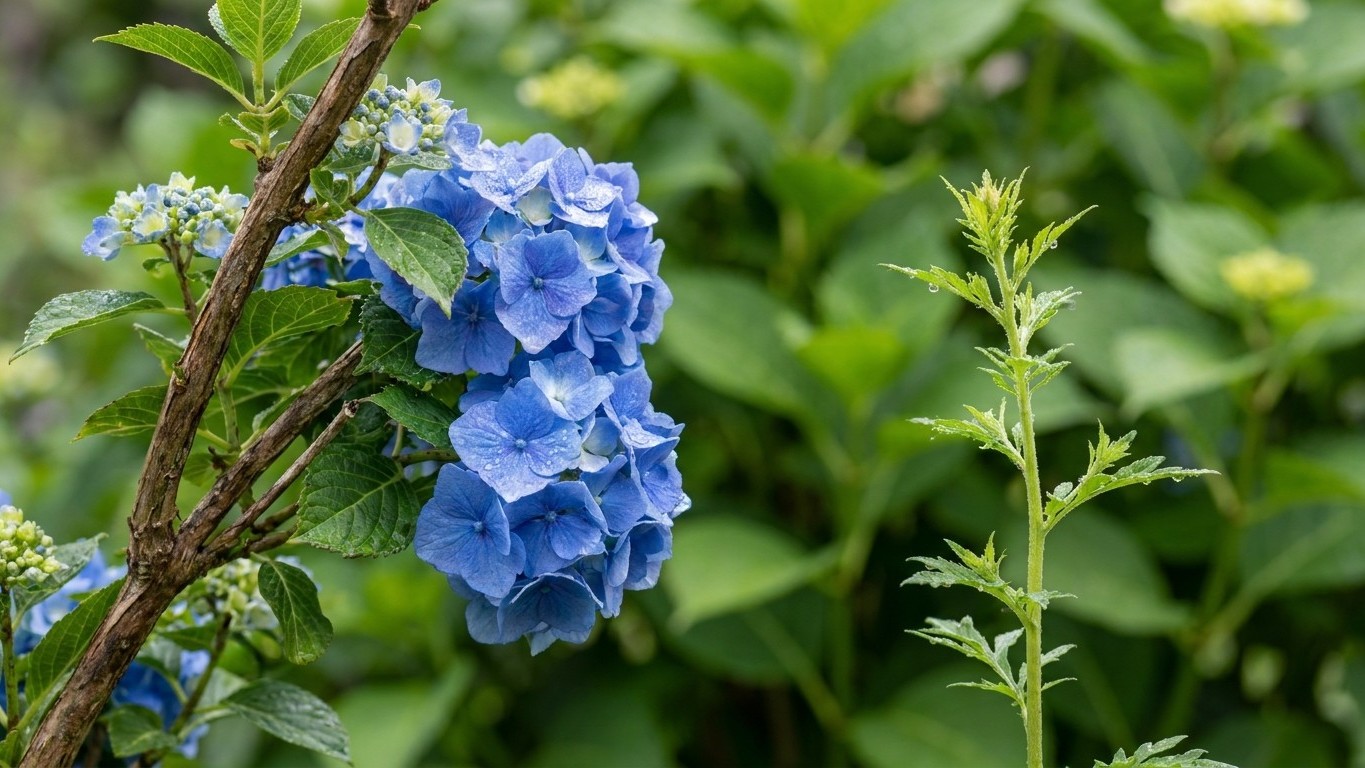

Hydrangeas are pruned on the schedule of their flower buds. Types that bloom on old wood, the stems grown the previous year, get cut right after flowering in summer. Types that bloom on new wood, the stems grown this spring, get cut in late winter. Cut an old-wood bloomer in February and you remove the flowers before they open. Cut a new-wood bloomer in July and you cut off flower buds already forming on this year’s shoots, so flowering is reduced or delayed. Which group your shrub belongs to settles the date.
What this comes down to in Washington

In western Washington, the last spring freeze at the Seattle-Tacoma reference station falls between February 27 and March 18, so new-wood hydrangeas get pruned in late winter, just ahead of that window, and old-wood hydrangeas get pruned in summer, right after the flowers fade. The first fall freeze there arrives between November 13 and November 30, which means flower buds set on old wood have to sit through that freeze and a long wet winter before they open. Those dates come from NOAA NCEI climate normals for the Seattle-Tacoma station. They describe the mild, maritime side of the state, not the interior east of the Cascades.
The reason the calendar splits this way is when the buds form. Bigleaf, mountain and oakleaf hydrangeas carry next year’s flower buds on the tips and upper nodes of the stems all winter. Any cutting that removes those buds, or a hard cut in winter, takes them off. Panicle and smooth hydrangeas do the opposite. They start from dormant wood in spring, push new shoots, and make flower buds on those shoots, so a late-winter cut only shapes where the new growth comes from.
Western Washington’s mild winters make the late-winter job easy to start early, and a warm spell in February can tempt you to cut everything. The type decides what is safe, so match it against the table below.
| Type | Example cultivar | Flowers on | When to prune |
|---|---|---|---|
| Bigleaf (Hydrangea macrophylla) | Nikko Blue | Old wood | Right after the flowers fade, by early August |
| Reblooming bigleaf | Endless Summer The Original | Old and new wood | Light trim after the first flush; remove dead wood in spring |
| Mountain (Hydrangea serrata) | Bluebird | Old wood | Right after bloom, lightly |
| Oakleaf (Hydrangea quercifolia) | Snow Queen | Old wood | After bloom, only to shape or thin |
| Panicle (Hydrangea paniculata) | Limelight | New wood | Late winter to early spring, before buds swell |
| Smooth (Hydrangea arborescens) | Annabelle | New wood | Late winter to early spring |
Reblooming bigleaf types such as Endless Summer The Original flower on both old and new wood. They forgive a mistimed cut better than a standard mophead, but a heavy cut in late winter still costs you the first flush of flowers.
Working it out for your own garden
Start by identifying what you have. If the plant tag is gone, look at the leaves and flower heads. Large rounded leaves with mophead or lacecap flowers point to bigleaf, lobed leaves like an oak’s point to oakleaf, and cone-shaped flower clusters on upright stems point to panicle. A second clue is last year’s performance. A shrub that flowered well after a mild winter but not after a hard cold snap was blooming on old wood.
Next, check the wood itself in late winter. Live stems have plump buds in pairs along them. To check a stem that looks dead, scratch a little bark with a thumbnail. Green underneath means it is alive, and tan or brown means it is dead. Hydrangeas leaf out late, so a stem with no leaves in March is not necessarily dead. Wait until the shrub has had a chance to show its growth before you cut anything you are unsure about.
How do you pick a pruning date for a new-wood hydrangea?
Take Limelight, a panicle hydrangea. It blooms on shoots that grow this season, so the date only has to fall after the worst of winter and before buds swell. With the Seattle-Tacoma last-freeze window running February 27 to March 18, cutting just ahead of that window fits, though cold wet soil and low light hold spring growth back well past the last freeze. The new shoots then have the whole spring and early summer to grow and bloom, long before the November 13 to November 30 fall freeze window opens. If a freeze nips the cut tips after pruning, the shrub simply pushes growth from lower on the stem.
What happens if you apply that same date to an old-wood hydrangea?
Take Nikko Blue, a bigleaf. Its flower buds are already formed on last year’s stems by the time you would be pruning Limelight, so a February cut removes them and you get leaves but few flowers. Its correct timing is right after the blooms fade, which is generally in summer, with a deadline of early August so that new buds have time to form before fall. In spring, cut only wood that is confirmed dead, once leaves have opened on the living stems. Old-wood types are the group where a sharp tool in the wrong month causes the damage.
What changes across the state
The dates above belong to the Seattle-Tacoma area, the mild, wet side of the state. Washington is not one climate. The Cascades split it into a maritime west and a dry interior, and the USDA Plant Hardiness Zone Map, which rates a place only by its average annual extreme minimum temperature, runs from zone 4 in the coldest mountain and northeastern areas to zone 9 on the mildest coastal and Puget Sound shores. Many places away from Puget Sound will differ from the Seattle-Tacoma window.
East of the Cascades, winters are colder and drier, and spring freezes arrive later than the Seattle window. Bigleaf hydrangeas there often lose their upper stems, and with them their flower buds, to winter cold. Many gardeners in the Spokane, Yakima and Tri-Cities areas therefore treat panicle and smooth hydrangeas as the reliable choice and handle bigleaf types as plants that may die back and rebloom only on new growth. In those gardens, wait to prune until buds actually break in spring, which is later than in the west, and cut away what stayed brown.
Elevation moves things too. Foothill and mountain gardens run cooler than lowland ones even within the same part of the state, so spring growth starts later and a late-winter cut on a panicle should be pushed later as well. Near the coast and the Puget Sound shoreline, the water moderates winter lows, so old-wood buds survive more reliably and the old-wood schedule works as written. The rule of thumb is simple. The colder the winter, the later you start pruning in spring, and the more you should favor types that bloom on new wood.
The mistakes this state punishes

A common mistake in western Washington is cutting a bigleaf in late winter. Mild weather in February makes the garden feel ready, but the buds on a mophead are already set and a tidy “cut it all back” job removes them. Wait until the leaves open and the stems show you what is alive, then take only what is dead, and do the real pruning right after bloom.
The second mistake is late summer or fall pruning of old-wood types. Cutting after early August removes next year’s buds, and cutting in fall pushes soft growth just as the November 13 to November 30 freeze window approaches. If you did not remove the spent flower heads on bigleaf and oakleaf shrubs right after bloom, you can leave them through winter, where they may help shield the buds below them, and remove them in spring.
The third is a hard cut on a shrub that does not need one. Cutting panicle or smooth hydrangeas to the ground every year can produce large flowers on weak stems that flop under the first heavy rain. Cut back to a healthy pair of buds and keep a sturdy framework.
Finally, east of the Cascades, gardeners sometimes copy the western calendar for pruning. Cutting early there means cutting before you can tell what the winter killed. Wait for the buds to break open, then prune back to live wood.
Checking this against your county
The Seattle-Tacoma dates are a starting point for western Washington. Your own garden may run earlier or later, depending on elevation, shelter and how close you are to the water. Your county office of WSU Extension can tell you the typical local freeze timing and what winter dieback looks like in your area. For the rest of the growing season, including siting, soil and feeding, see our guide to growing hydrangeas in Washington.
Common questions
These answers assume western Washington unless the question says otherwise.
Can you prune hydrangeas in fall?
It is best to avoid it. Old-wood types carry their buds into winter, and cutting them in fall removes the flowers. Panicle and smooth types can be cut, but waiting for late winter leaves the old stems in place to shelter the crown through the wet months.
Why did my hydrangea leaf out but not bloom?
The usual cause is that the flower buds were cut off or killed. A bigleaf pruned in winter or late summer loses them, and a hard cold snap can kill buds on exposed stems even if the plant itself survives. The shrub will usually bloom the next year if you leave it alone and prune only after flowering.
How hard can you cut a panicle hydrangea?
Remove some of the height, cutting to a pair of healthy buds. Stronger cuts give bigger but floppier flower heads. Do the work in late winter, before buds swell.
How long should you wait before cutting dead-looking stems?
Wait until the shrub has had a chance to leaf out, then scratch the bark of any stem that stayed bare. Green tissue under the bark means the stem is alive and carries buds. Cut only what is tan or brown, back to the first live pair of buds.