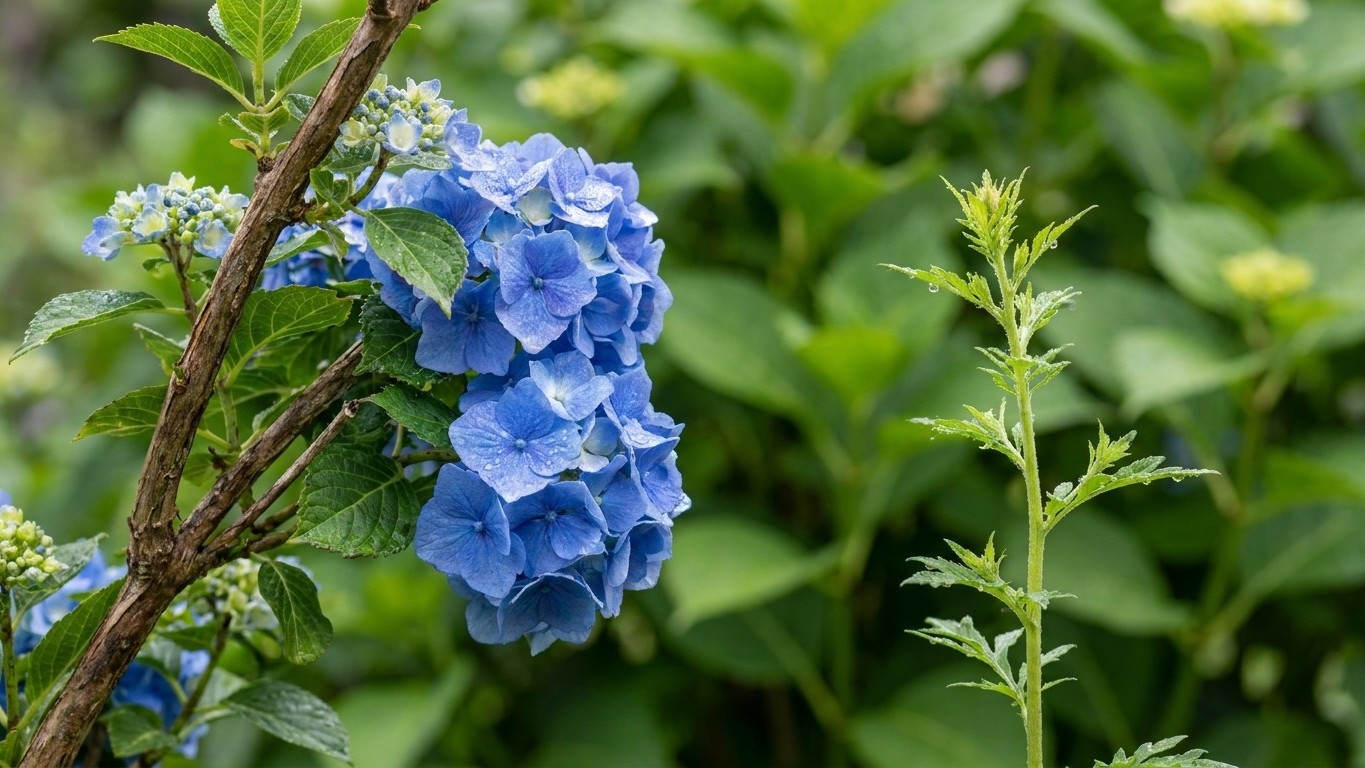

Nearly every hydrangea sold in the Northwest will live through a winter west of the Cascades. Living and flowering are different outcomes, though. Panicle and smooth hydrangeas are among the hydrangeas that flower reliably in this climate, so a freeze rarely costs them flowers. Bigleaf types carry next summer’s buds on last year’s stems, and a hard freeze can kill those buds. East of the mountains, the list of safe choices gets much shorter.
What this comes down to in Washington

At the Seattle reference station, the last spring freeze falls between February 27 and March 18, and the first fall freeze between November 13 and November 30, according to NOAA NCEI climate normals. That leaves a long, mild season in which a hydrangea that blooms on new wood finishes its growth and flowers well before winter. Whether a hydrangea flowers comes down to when it sets its flower buds. New-wood types have nothing exposed to lose. Old-wood types leave their buds out all winter.
The Seattle window describes only the Seattle area and similar western lowland sites. The USDA Plant Hardiness Zone Map, which rates a place by its average annual extreme minimum temperature, runs from roughly zone 4 to zone 9a across the state, and the cold end of that range sits in the high Cascades and northeastern Washington, with a far shorter season. A hydrangea rated for zone 4 can lose every stem to the cold and still regrow. A hydrangea that depends on old wood for its flowers gets no such second chance.
Two moments matter more than the dates themselves. One is an early hard freeze in November, before the shrub has gone fully dormant. The other is a warm spell in late February or early March that wakes the buds, followed by a freeze before the March 18 end of the window.
| Cultivar | Species | Zones | Blooms on | Winter outlook |
|---|---|---|---|---|
| Annabelle | Smooth (Hydrangea arborescens) | 3 to 9 | New wood | Stems may die back, but it flowers every year |
| Incrediball | Smooth (Hydrangea arborescens) | 3 to 8 | New wood | Same reliability, with sturdier stems |
| Limelight | Panicle (Hydrangea paniculata) | 3 to 8 | New wood | Reliable bloom on both sides of the Cascades |
| Quick Fire | Panicle (Hydrangea paniculata) | 3 to 8 | New wood | One of the earliest panicles to bloom, so it suits short seasons |
| Bobo | Panicle (Hydrangea paniculata) | 3 to 8 | New wood | Compact and dependable, good for small gardens |
| Snow Queen | Oakleaf (Hydrangea quercifolia) | 5 to 9 | Old wood | Buds usually come through western winters, but they are at risk in the coldest eastern sites |
| Endless Summer The Original | Bigleaf (Hydrangea macrophylla) | 4 to 9 | Old and new wood | Reblooms on new growth after bud loss |
| Nikko Blue | Bigleaf (Hydrangea macrophylla) | 6 to 9 | Old wood | Loses its flowers after a hard freeze, so keep it to mild western sites |
The table runs roughly from the most cold-tolerant to the least. Annabelle and Incrediball die to the ground in hard winters and rebuild before summer. The panicles, Limelight, Quick Fire and Bobo, hold their woody stems through cold and still bloom on spring growth. Snow Queen has hardy stems, but its buds form the previous season, so a bad winter can thin the show. Endless Summer comes next because it can bloom on either kind of wood, and Nikko Blue has no such backup.
Working it out for your own garden
Start with roots. A newly planted shrub needs time to root in soil that has not yet chilled to settle in before winter. Plant early enough before the first-fall-freeze window of November 13 to November 30 that roots can settle in before winter; check with your local extension office for timing in your area. A shrub that goes in after that is better held in its pot or planted the following spring. In spring, count forward from the February 27 to March 18 freeze window, then wait for the soil to warm. Soil often stays cold and wet for a while after the last freeze.
Next, test the cultivar. Limelight blooms on new wood, with flowers opening in summer. Planted early enough before the first fall freeze, it has no flower buds at all during winter, because they do not exist until the shrub leafs out. Even if a cold snap damages some stems, the flowers form on shoots that grow after the last freeze, so bloom is reliable.
Run the same check on Nikko Blue, a bigleaf rated for zones 6 to 9 that blooms on old wood. Its flower buds form on the stems in late summer and sit exposed through the winter. A mild winter in western Washington brings flowers. A hard freeze in a cold snap, or one that follows a late-winter warm spell, leaves a healthy green shrub with no flowers. East of the Cascades, where zones can drop below 6, the stems themselves may die back, and the result can be a shrub that leafs out but does not bloom.
To tell what actually happened, wait until the buds should be breaking in spring. Scratch the bark of a stem with a fingernail. Green underneath means the wood is alive. Brown and dry means it is dead and can be cut out. A living stem with plump buds that open into leaves but no flower clusters points to bud loss from cold, and the fix is to leave those stems alone until the new growth shows where they end.
What changes across the state
Western Washington sits in a maritime climate. Puget Sound and the Pacific keep this a mild, maritime climate, which is why the Seattle window runs so late into fall and starts so early in spring. Coastal sites and the areas near Puget Sound are milder still on the coldest nights, while inland valleys west of the mountains can run a bit colder and see frost linger longer on clear nights.
The Cascades change things quickly with elevation. A garden at the foothills or in a mountain pass sees colder winters and more snow than a garden at sea level, even on the same side of the range. Snow can be an advantage for the plant, sheltering the crown and lower stems and the buds near the ground.
East of the mountains the climate becomes high desert. Winters are colder and drier, the swings between day and night are wider, and the growing season is far shorter than the Seattle window. This is where the colder end of the state’s zone range applies. Even within eastern Washington, the northeast is colder than the south-central basin, and a garden in a sheltered spot against a south-facing wall behaves differently from one in open ground with a prevailing wind.
For gardeners east of the Cascades, new-wood species are the dependable choice: smooth and panicle hydrangeas. Bigleaf and oakleaf types can work in protected spots with mulch over the crown, but the bloom is less certain. In the western lowlands almost the whole range grows, and the choice is more about the look you want than about winter survival.
The mistakes this state punishes

Planting into cold soil after a warm spell is a common error. A week of mild weather in late February tempts people to plant, but the last freeze at the Seattle reference station typically falls between February 27 and March 18, and a later freeze is still possible, and wet soil stays cold and sluggish well after that. The roots sit idle, and a hard freeze catches the new leaves. Wait for the soil to drain and warm, and plant when buds on neighboring shrubs are swelling for good.
Choosing a bigleaf for a cold eastern site is another. A bigleaf with old-wood buds in the cold part of the state leafs out but does not bloom. Pick a smooth or panicle hydrangea there, or at least a rebloomer such as Endless Summer, which can bloom on new growth.
Planting too late in fall also costs plants. A shrub that goes in late in the season has little time to root before the first freeze, and western Washington’s wet winter soil can rot roots that have not yet spread. Plant in spring instead.
Pruning at the wrong time removes next summer’s flowers. Cutting bigleaf or oakleaf stems in fall or winter removes the buds already formed. The When to Prune Hydrangeas in Washington guide gives the timing for each type.
Late-season nitrogen is a quieter mistake. Fertilizer in late summer pushes soft new growth that a November freeze can burn. And leave mulch and any frost cloth in place until after the March 18 end of the window, covering bigleaf buds whenever a freeze is forecast after they have swollen.
Checking this against your county
A single reference-station window is only a starting point, and your own site may run colder or warmer. Your county office of Washington State University Extension can tell you how your elevation, soil and exposure shift these dates and which hydrangeas have done best nearby. For the basics of siting, soil and watering that sit behind these choices, see the state guide to growing hydrangeas in Washington.
Common questions
These are the questions gardeners ask most often about hydrangeas and winter in Washington.
Do hydrangeas die back in a Washington winter?
They are deciduous, so the leaves drop after the first frost. Smooth hydrangeas such as Annabelle often die to the ground in a hard winter and regrow from the crown in spring, and that is normal. A scratch test on the stems in spring will show which wood is still alive.
Can I grow bigleaf hydrangeas east of the Cascades?
They can live in a sheltered spot with a thick mulch over the crown, but old-wood bloomers like Nikko Blue often fail to flower after a cold winter. Endless Summer The Original, which can bloom on new wood, is the better bet there.
Should I wrap hydrangeas for winter?
Mild western winters rarely call for it. In colder spots, mound mulch over the crown and drape frost cloth over bigleaf stems when a freeze is forecast after the buds have started to swell.
Which hydrangea is the safest choice for a first winter?
Limelight and Annabelle are among the safest picks, both rated for zone 3 and both blooming on new wood. A freeze that kills their stems does not kill their flowers.