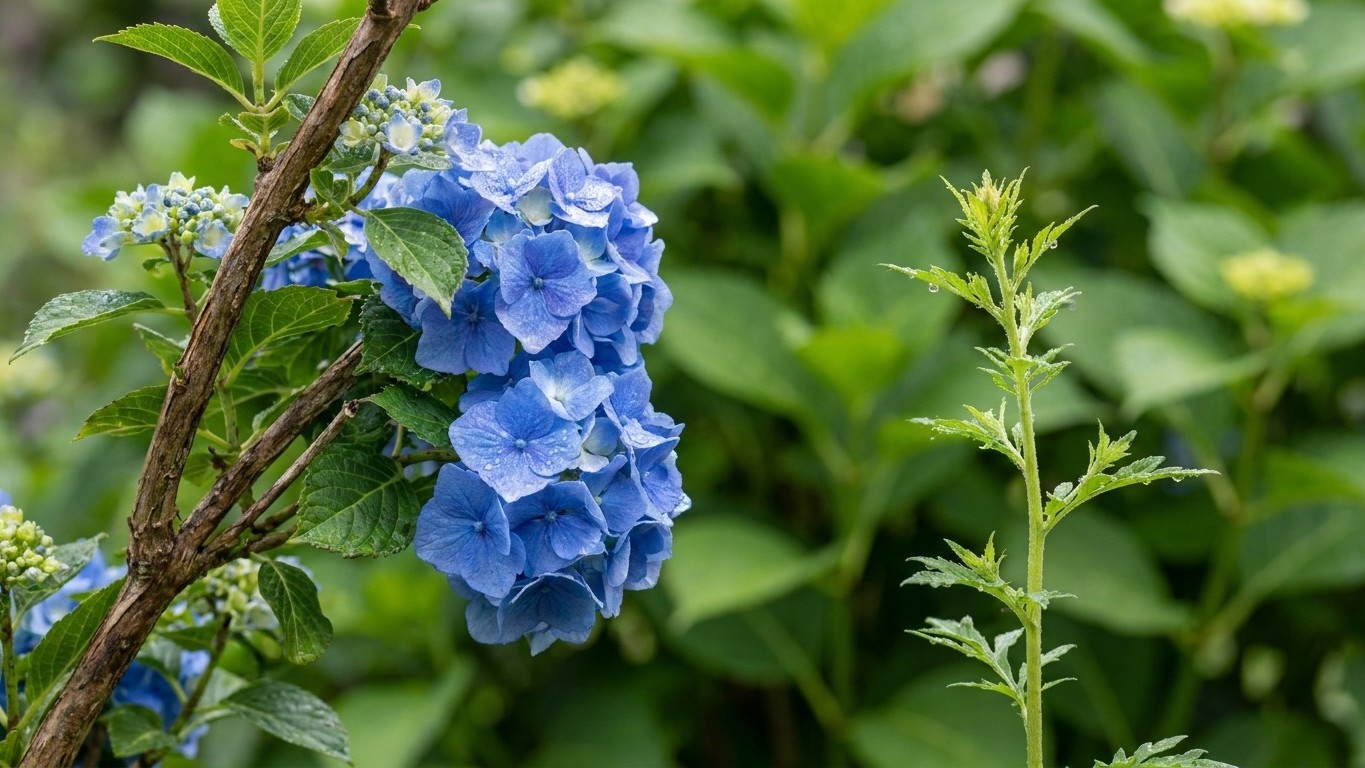

Panicle hydrangeas (Hydrangea paniculata) and smooth hydrangeas (Hydrangea arborescens) are the two groups that come through winters across the whole state and still bloom. Both flower on stems grown that same summer. Bigleaf and oakleaf types set their flower buds the year before, so a hard winter or a late spring freeze can take the season’s flowers with it. They do well in the south and near the lake, and they flower unreliably farther north.
What this comes down to in Wisconsin

At Milwaukee, the reference city for the NOAA NCEI climate normals, the last spring freeze falls between April 16 and April 29 and the first fall freeze between October 17 and October 29. That leaves about six months of growing season. Hydrangeas that bloom on new wood fit inside that window easily, while those that carry flower buds through winter depend on how cold the winter turns out. The USDA Plant Hardiness Zone Map rates the state 3b to 6a, and that rating rests on one number, the average annual extreme minimum temperature. A shrub rated for zone 4 or colder is the safe baseline for most of the state. The cultivars below run from the easiest fit to the most demanding.
Annabelle
A smooth hydrangea rated for zones 3 to 9, with white, rounded flower heads on new wood. A winter that kills every stem to the ground changes nothing, because the plant regrows from the crown and blooms the same summer. The big heads flop after heavy rain, which is its main flaw.
Quick Fire
A panicle hydrangea rated for zones 3 to 8. It opens white and ages to pink and red on new wood, and it starts flowering earlier than most panicles. That early start gives it a long show before the first fall freeze, so it suits cool northern sites with short summers.
Incrediball is a smooth hydrangea rated for zones 3 to 8, white on new wood, bred from the Annabelle type with sturdier stems. It handles the same cold and gives the same dependable bloom, with less flopping.
Limelight is a panicle hydrangea rated for zones 3 to 8. Its flowers open lime green, turn white, then pink as they age, all on new wood. Bloom starts in midsummer and runs into fall, and the stems are woody enough to carry through most winters without dying back.
A bigleaf hydrangea (Hydrangea macrophylla) rated for zones 4 to 9. It is pink or blue depending on soil pH, and it flowers on both old and new wood. Where winter kills the stems to the snow line, the old-wood flowers are lost and only the later new-wood flowers remain. That works along the southeastern lakeshore and in sheltered southern yards. It is marginal in the north.
An oakleaf hydrangea (Hydrangea quercifolia) rated for zones 5 to 9, with white, cone-shaped flowers that age to pink and burgundy fall foliage. It blooms on old wood, so its buds sit on stems exposed to winter. It belongs only in the warmest southern part of the state, in a spot sheltered from wind.
Working it out for your own garden
The method has three steps: find your frost window, subtract the time a plant needs, then check whether its flowers form on new or old wood. Take Limelight, which is rated for zones 3 to 8 and blooms on new wood. A shrub planted after the last spring freeze has May and June to make the shoots that carry the flowers, which open in midsummer. That leaves a long stretch of bloom before the first freeze. Winter cannot touch the flowers, because they have not formed yet.
Fall planting works the same way in reverse. A new shrub needs time to establish roots before the ground freezes. Plant early enough that roots can settle in before the first freeze window of October 17 to October 29.
Now run Endless Summer through it. Planted on the same spring dates, it flowers on both old and new wood, but only the new-wood flowers are left if winter kills the old-wood buds. In a zone 4 or 5 garden, winter often kills the stems above the snow line, so old-wood buds are lost in many years. The new-wood flowers open later and have less time before the October freeze. Where the winter minimum is mild enough, as it can be near the lake, the old-wood buds survive and the plant blooms well. Where it is not, the plant lives but disappoints.
To tell winter damage from other trouble, wait until the oaks have leafed out. Scratch a stem with a thumbnail. Green tissue underneath means the stem is alive, and brown and dry means it is dead. Dead stems on top with fresh shoots from the base point to winter dieback, which is normal for smooth types and can happen to panicle types in a harsh winter. A plant that leafs out but never flowers has probably lost old-wood buds. A plant that stays bare everywhere, with a soft or discolored crown, has a root or drainage problem instead. Cut dead wood only once the live buds show, as explained in When to Prune Hydrangeas in Wisconsin.
What changes across the state
The Milwaukee window describes a city on Lake Michigan. The lake holds summer heat into fall, so the lakeshore gets its first freeze later than places a few miles inland. Inland southern Wisconsin typically freezes earlier than the Milwaukee window. Farther north, the first freeze comes far earlier still, and winters are colder and longer. Winter minimum temperatures follow the same pattern, which is why the hardiness range runs from 3b to 6a. The colder zones sit in the north and the milder ones along the southeastern lakeshore.
Snow cover changes the picture inside any zone. A deep, steady snowpack insulates the crown and the lower stems, so a hydrangea in a snowy northern yard can come through a cold winter better than the same plant on a windswept, nearly bare farm field farther south. Wind and low spots matter too. Cold air pools in hollows, and open ground in the west and south dries stems and exposes buds. A planting against a south or east wall, close to the house, is usually warmer than the open yard.
For gardeners, this sorts the cultivars simply. Annabelle, Incrediball, Quick Fire and Limelight are reliable across most of the state. Endless Summer and Snow Queen need the lakeshore or the far south, and a protected site.
The mistakes this state punishes

Planting into cold soil after a warm spell is a common one. A run of mild days in April can tempt gardeners to set out shrubs, and a freeze inside the last-frost window can still follow. Wait for the window to close, then give the soil another two to three weeks. Shrubs planted early can struggle to catch up, and tender new growth on bigleaf types gets burned back.
Choosing a long-season or old-wood variety where the season will not support it is the second. A bigleaf hydrangea in the northern half of the state will usually leaf out but give few flowers, year after year. Gardeners keep it, wait, and wonder what they are doing wrong. The plant is doing what it can with the climate. Swap to a panicle or smooth type and the flowers appear.
Cutting back old-wood hydrangeas in fall takes off the flower buds. Bigleaf and oakleaf types should stay untouched until spring, when you remove only what is dead.
Planting too late in fall is the last mistake. A shrub that has not had time to establish roots before the ground freezes can heave out of the soil in the freeze and thaw cycles of late winter. Late planting also leaves little time for the plant to settle in. After the ground freezes, a loose layer of shredded leaves or bark mulch over the crown helps. Putting mulch down earlier only keeps the soil warm and invites rodents to nest.
Checking this against your county
The Milwaukee dates are a starting point, and your own yard can sit weeks away from them. Your county office of the University of Wisconsin–Madison Division of Extension can tell you how local freezes, snow cover and soils run where you live. For the basics of siting and care, see growing hydrangeas in Wisconsin.
Common questions
- Will Annabelle die back to the ground in winter? Often, yes, and that is fine. It blooms on new wood, so stems that die in winter are replaced by shoots from the base that flower the same summer.
- Can I grow bigleaf hydrangeas in northern Wisconsin? The plants usually survive, but flowers are unreliable, because winter kills the stems that carry the buds. A reblooming type such as Endless Summer will flower later on new wood, with a shorter show. A panicle type gives far more bloom for the same space.
- Should I cover hydrangeas for winter? Smooth and panicle types need no cover. For marginal types such as bigleaf, a loose wire cage filled with shredded leaves, set up after the ground freezes, protects the lower stems. Take it off in spring once the last-frost window has passed.
- Should I fertilize late to help hydrangeas get through winter? No. Nitrogen after midsummer pushes soft growth that the first freeze kills. Finish feeding by midsummer and let the shrub harden off on its own.