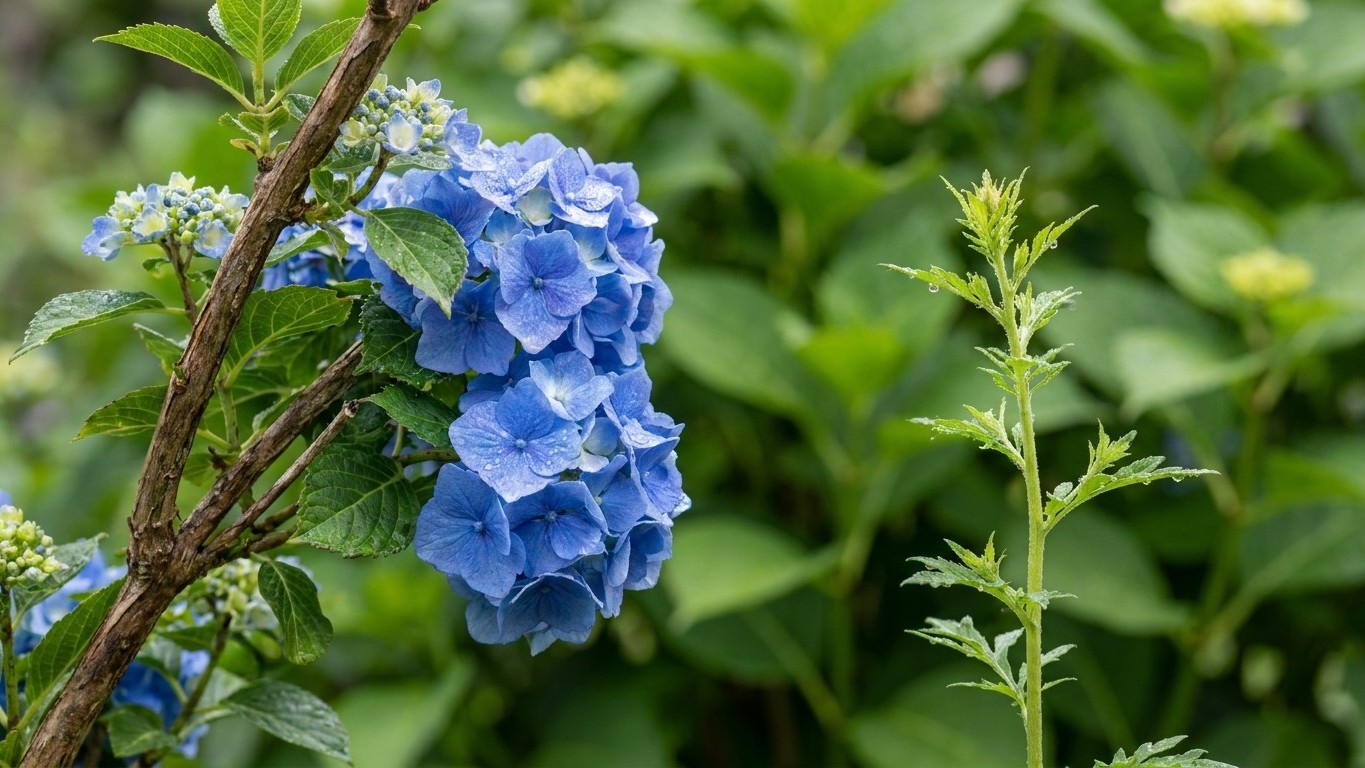

Smooth and panicle hydrangeas bloom on new wood and get through a Wisconsin winter with no wrapping. Bigleaf and oakleaf types set flower buds the summer before, so they need a wire cage packed with dry leaves and a mulched crown. Put it on after the leaves drop and the soil surface starts to firm, then take it off once the last spring frost has passed. Skip that step and the shrub usually leafs out fine but gives few or no flowers.
What this comes down to in Wisconsin

At Milwaukee, based on NOAA NCEI climate normals, the first fall frost falls between October 17 and October 29 and the last spring frost between April 16 and April 29. The window between those two dates is the stretch when the stems and buds have to survive on their own.
Cold alone rarely does the damage. Wisconsin spans USDA hardiness zones 3b to 6a, a system built on the average annual extreme minimum temperature, and the lakeshore sits at the milder end of that range. Bigleaf flower buds, though, can die at temperatures that the roots and lower stem tolerate easily. Three other things add to the loss:
- Freeze and thaw swings in March, which wake buds early and then kill them.
- Dry winter wind that strips moisture from exposed stems.
- Rabbits and deer that chew stems down to the snow line.
A steady blanket of snow is excellent insulation for a hydrangea, which is why a cage full of leaves works: it imitates that blanket in winters when the snow comes late or melts early.
The need follows the type, and it follows where the flower buds sit. Which species a given garden can carry at all is sorted out in Which Hydrangeas Survive a Wisconsin Winter. For the winter work itself, the groups sort like this:
| Type | Where buds form | Winter work in Wisconsin |
|---|---|---|
| Smooth (Hydrangea arborescens, such as Annabelle) | New wood, grown this spring | None. Cut back in late winter. |
| Panicle (Hydrangea paniculata) | New wood | None once established. A short wire guard keeps rabbits off young plants. |
| Bigleaf (Hydrangea macrophylla) | Old wood; rebloomers such as Endless Summer also bloom on new wood | Leaf-filled cage and mulched crown. |
| Oakleaf (Hydrangea quercifolia) | Old wood | Leaf-filled cage and mulched crown; plant in a sheltered spot. |
Rebloomers still lose their first flush when the old-wood buds die, but they bloom later in summer on the new growth, so a cold winter costs them less than it costs a once-blooming bigleaf.
Working it out for your own garden
Two questions decide most of it: where does this shrub carry its flower buds, and when does the ground in your area freeze? The first tells you whether to protect at all. The second sets the dates, and you can recalculate them for any location or any odd year.
For the fall date, start from the first fall frost range of October 17 to October 29 at Milwaukee. Add the time it takes for leaves to drop and the soil surface to firm up, and you land in early to mid November. For the spring date, start from the last frost range of April 16 to April 29 and begin removing cover only after that window closes. Move both dates earlier or later with your own freeze pattern.
A worked example shows where the line falls. Annabelle blooms on new wood, so even if every stem freezes to the ground it regrows and flowers that summer. An old-wood bigleaf with the same dieback grows green leaves and no blooms, because the buds that would have flowered died with the stems. The first plant needs a pruning cut, the second needs a cage.
How do you protect a bigleaf hydrangea in fall?
Water deeply through the autumn dry spells until the ground freezes, since a dry root zone makes stems more prone to winter desiccation. Then follow the sequence below.
- Leave the stems unpruned. The old canes carry next year’s buds.
- Wait for the leaves to fall and the soil surface to begin freezing before adding any cover.
- Set stakes or a cylinder of wire fencing around the shrub, with a few inches of clearance.
- Fill the cylinder with dry shredded leaves. Oak leaves are a good choice because they do not mat down into a wet mass.
- Add mulch over the crown, and wrap burlap around the cage on the windward side if the site is exposed.
When do you uncover a hydrangea in spring?
Open the cage in stages rather than all at once. After the last frost window of April 16 to April 29 has passed, pull back the top layer of leaves, then remove the rest over the following days. Keep a bedsheet or frost cloth handy in case a freeze arrives after the buds have started to swell.
What changes across the state
The Milwaukee dates describe one place. Wisconsin runs from the Illinois line to Lake Superior, and the same hydrangea faces a different winter depending on where it grows. Three things shift the calendar: the lakes, the latitude and the local lay of the land.
- The Lake Michigan shoreline holds heat into autumn, so the first fall freeze comes later there. Winter lows are also milder, and bigleaf shrubs near the lake have a better chance of keeping their buds.
- Inland southern Wisconsin, around Madison and the Rock River valley, freezes earlier in fall and swings colder in winter.
- In the north, toward Wausau, the Northwoods and the Lake Superior shore, frost arrives far earlier and leaves later. Winter is longer and colder, and deep snow often provides the insulation.
Moving north, cover goes on earlier and comes off later. Panicle and smooth types stay reliable almost everywhere, but a bigleaf in the northern third of the state often fails to bloom reliably even with a cage.
Local terrain matters too. Cold air drains into low spots and river valleys, so a hydrangea at the bottom of a slope can be hit by frost earlier in fall and later in spring than one on the ridge above. A south-facing wall, a house foundation or a windbreak can in effect give a planting a milder spot. A gap in the snow cover near a driveway or a south wall that melts early can undo a good cage.
The mistakes this state punishes

Many winter losses in Wisconsin trace back to timing rather than to the plant. The calendar is short and the weather swings hard, so small errors cost a whole season of flowers.
- Mulching during a warm spell. A mild week in October invites a heavy cover, and voles and mice move into the warm leaves and chew bark. Wait for the soil surface to cool and firm.
- Wrapping in plastic. It traps moisture and heat on sunny days, which wakes buds, then lets them freeze on the cold night. Use burlap or a wire cage with leaves.
- Pruning bigleaf or oakleaf in fall. The canes you cut carry next summer’s flowers, so cut only dead wood, and only after the plant leafs out.
- Late fertilizing. Nitrogen after midsummer pushes soft growth that does not harden before the frost range of October 17 to October 29.
- Uncovering during the first warm days of March or early April. The last spring frost typically falls between April 16 and April 29 at Milwaukee and can come later, and a freeze on swollen buds kills them.
- Skipping fall water in a dry autumn, so the shrub enters winter with parched roots.
Soil pH and aluminum changes that shift bloom color are a growing-season task. They do nothing for winter survival, and the details are in Why Hydrangeas Are Pink in Wisconsin, and How to Turn Them Blue.
Checking this against your county
The dates above come from the Milwaukee station, and they are a starting point for any other county. Your county office at University of Wisconsin-Madison Extension can tell you how your area differs, from lakeshore moderation to cold hollows. For site, soil and routine care before the first winter, read growing hydrangeas in Wisconsin.
Common questions
- Do hydrangeas need to be covered in Wisconsin?
- Only the old-wood types. Bigleaf and oakleaf shrubs need a cage with leaves and mulch over the crown, and smooth and panicle types need nothing once established.
- When should I cut back hydrangeas?
- Smooth and panicle types go back in late winter or very early spring, before new growth starts. Bigleaf and oakleaf should be left alone until they leaf out, and then only dead wood comes off.
- How do I protect a hydrangea growing in a pot?
- Roots in a container freeze much harder than roots in the ground. Move the pot to an unheated garage or shed after the leaves drop and water it lightly now and then so the soil does not dry out completely. Bring it outside again after the April frost window closes.
- Why did my hydrangea leaf out but never bloom?
- The flower buds on old wood most likely died over winter while the stems and lower buds survived. Bigleaf is the usual case, and a spring freeze after the buds swell can do the same damage.