
Cool-season unusual roots go in during late winter or late summer. Warm-season ones wait until spring frost danger has passed. Alabama’s long stretch between frosts leaves room for both, but the dates below come from a single airport weather station, so a garden outside town should shift them later in spring and earlier in fall. What follows covers how the windows work, what fails, and how to adjust.
The short answer for Alabama
Sow cool-season unusual roots as the last spring frost window of March 19 to April 3 arrives, and again in late summer so they finish before the first fall frost window of November 2 to November 16. Plant warm-season roots only after April 3, which in many yards means mid-April or later.
What those dates measure
Both ranges come from the NOAA NCEI 1991-2020 Climate Normals, specifically the 32°F freeze probabilities in the 30 to 70 percent band, recorded at one airport station (ID USW00003856). So each range is a probability of a 32°F freeze, not a deadline. On March 19, another freeze is still more likely than not. By April 3, the odds of one more have fallen to roughly three in ten. A 30 percent chance of rain wouldn’t keep most people from hanging laundry, but it would make them glance at the sky.
Fall works the same way in reverse. By November 2, the odds that a first freeze has already arrived are about three in ten. By November 16, they are about seven in ten.
The caution that comes with these numbers matters. An airport sits in a warm, paved, open spot. Suburban and rural gardens typically see the last spring frost one to two weeks later and the first fall frost one to two weeks earlier, and more than that at elevation. Treat the dates as the reference-city figure, not a statewide guarantee.
Windows by crop type
| Crop type | Planting window | Anchor |
|---|---|---|
| Cool-season roots, spring sowing | Late winter into early spring, once soil is workable | Around the March 19 to April 3 window; don’t drift past it |
| Cool-season roots, fall sowing | Late summer into early fall | Count back from November 2 to November 16 so roots size up in cooling weather |
| Warm-season roots (sweet potato-type slips, tropical rhizomes) | After the spring window closes | After April 3; mid-April or later for rural and higher-ground beds |
Treat the table as a starting frame. Each crop has its own days to maturity, and the seed packet or slip supplier’s number should adjust the dates.
What will not work here
Slow roots sown too late in spring
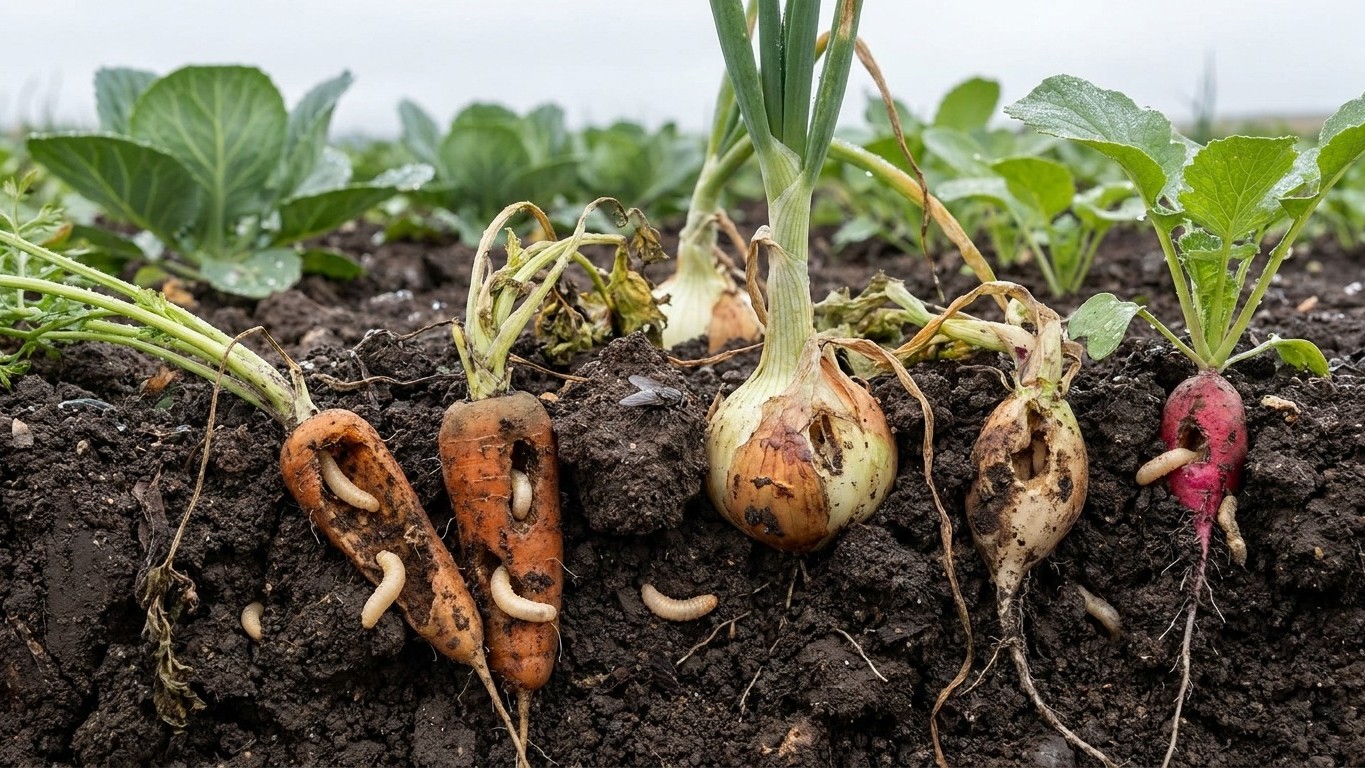
The slowest cool-season roots, the parsnip and celeriac types, need many months from seed to harvest. Sow them in April or May and they finish growing in July and August heat, which tends to leave them woody, stunted or bolting. Alabama gives these crops a narrow spring opening and a better fall one. The calendar wants them either in the ground at the front edge of the March 19 to April 3 window or started in late summer.
Warm-season roots at the early edge
March in Alabama can feel like May for a week. Planting frost-tender slips or rhizomes on March 19 because the afternoons are warm is a bet against the numbers, since a freeze is still the likelier outcome that day. Even at the April 3 end, the roughly three-in-ten chance of a later freeze is why many gardeners keep row cover on hand or wait another week or two.
Close spacing in humid summers
Alabama summers are hot and humid, and humidity punishes crowding. Roots spaced tightly, the way a short-season northern garden might plant them, keep foliage wet longer and invite rot and fungal trouble. Many Alabama gardens also sit on clay that holds water after storms. Wider spacing and raised or well-amended beds do more good here than extra fertilizer.
Counting on a hard winter chill
The mean daily minimum of the coldest month at the Huntsville reference station is 33.1°F. That figure is not a record low, but it tells you winters are mild enough that roots left in the ground rarely face a solid freeze. It also means crops prized for sweetening after cold weather get less of it, and the farther south you garden, the less. Don’t plan around a deep-winter flavor shift that Alabama may not deliver.
Which crops handle these limits best is covered in The Best Unusual Roots to Grow in Alabama.
What changes across Alabama
Alabama is not one garden. The USDA Plant Hardiness Zone Map (2023 edition, built on 1991-2020 normals) places the state in zones 7a to 9a. There is no single answer for the whole state, only a spread, with the colder end generally toward the north and higher ground and the warmer end toward the south.
Hardiness zones rest on one variable, the average annual extreme minimum temperature. That makes the zone a guide to winter survival, meaning whether a perennial root, a rhizome left in the bed or a mulched crop comes through the cold. It says little about planting dates. A reader at the cool end of the range needs to ask more of mulch and lifting for tender roots. A reader at the warm end faces fewer freeze risks but earlier heat.
For planting dates, shift by location. Northern Alabama and higher elevations should push spring planting later and pull fall sowing earlier, starting from the one-to-two-week adjustment for non-airport sites and adding more as the ground climbs. Gardens toward the south get a longer runway at both ends, but the reference dates on this page do not describe them, and this page has no frost figures for other parts of the state.
Which zone your garden falls in is a question for the USDA map, not for this page. Type in your ZIP code and read the result. For the wider view of the crops themselves, see Growing Unusual Root Crops in Alabama.
Where to check this for your own county
The Alabama Cooperative Extension System is the state’s land-grant extension service, and it is the right next stop. Look for two things there: the local vegetable planting calendar for your county or region, and any varieties trialled in your county or a nearby one.
A county recommendation beats a state one. This page is the state one, built from a single reference station and a territory-wide zone range. It cannot see your soil, your slope or your frost pocket. This page also does not have an extension-published planting calendar for unusual roots specifically, so what you find locally may be more detailed than anything here.
When you call or visit, ask what the typical last spring frost and first fall frost are for your area and which root crops have done well in local trials. Extension offices can also point you to soil testing, which matters for clay, drainage and pH before you sow anything slow.
Checking this against your own garden
Your own observations outrank every date above. Three are worth tracking, and none needs equipment.
- Soil warmth by feel. Press a bare hand a few inches into the bed. If it feels cold and stays that way, warm-season slips should wait. Compare a sunny bed with a shaded or low one. The difference is your microclimate.
- The first male flowers. If you grow squash or cucumbers, the first male blooms open before the female ones. Note the date each year. An early date in one bed and a late date in another shows how unevenly your yard warms.
- The first true leaves. The first pair of leaves a seedling shows are seed leaves. True leaves come after. If root seedlings sit at the seed-leaf stage for weeks, the soil is likely too cold, too crusted or too wet. If they move quickly, you picked a good window.
Jot the dates in a notebook. After two or three seasons, those notes will be a calendar built for your garden.
Common questions
Can I plant unusual roots in Alabama in the fall?
Yes, for cool-season types. Count back from the November 2 to November 16 first-frost window so roots grow in cooling weather. With a 33.1°F mean daily minimum in the coldest month at the Huntsville reference station, many roots can stay in the ground through winter in much of the state.
Is March 19 safe for planting?
For cool-season roots, yes if the soil is workable. For warm-season roots, no. March 19 is the early edge of the frost window, when another 32°F freeze is still more likely than not.
Do these frost dates apply to my county?
Not exactly. They come from one airport station. Suburban and rural gardens typically see the last spring frost one to two weeks later and the first fall frost one to two weeks earlier, and more at elevation. Check with your county extension office.
Does my hardiness zone tell me when to plant?
No. The USDA zone is based on the average annual extreme minimum temperature, so it speaks to winter survival, not sowing dates. Alabama spans zones 7a to 9a. A coldest-month mean minimum near freezing can also coexist with the occasional hard freeze, so tender roots still need protection in a cold snap.